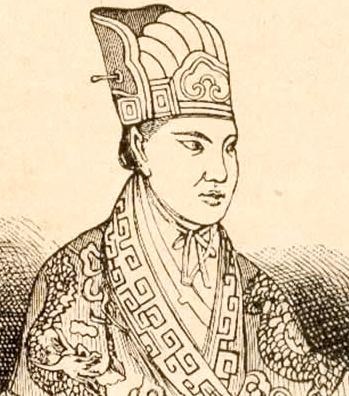
Hong Xiuquan
 China
Chinarevolutionary•religious leader
Also known as: Hong Huoxiu, Heavenly King, Tianwang
Birthday
January 1, 1814
Birth Sign
Capricorn
Birthplace
Huadu District, Guangzhou, Guangdong Province, Qing Dynasty China
Age
Died at 50
Height
5 ft 6 in (168 cm)
About
Hong Xiuquan was a Chinese revolutionary and religious leader who ignited the Taiping Rebellion, one of the deadliest conflicts in human history. Born into a Hakka peasant family in Huadu, Guangzhou, he trained as a teacher and repeatedly failed the imperial examinations, a frustration that fueled his radical turn. Claiming mystical visions, he believed himself to be the younger brother of Jesus Christ, tasked with eradicating demon worship and restoring faith in Shangdi. Rejecting Confucianism, he blended Christianity, Daoism, and millenarianism into a potent creed. His associate Feng Yunshan founded the God Worshipping Society to spread his teachings, and by 1850, the sect had over 10,000 followers, clashing with Qing authorities.
In January 1851, Hong organized a rebel army at Jintian, routing Qing forces and launching the Taiping Rebellion. Declaring himself the Heavenly King of the Taiping Heavenly Kingdom, his forces captured Nanjing in March 1853, renaming it Tianjing and making it his capital. From his palace, Hong ruled through proclamations, growing paranoid of fellow leader Yang Xiuqing. He orchestrated Yang's murder in the 1856 Tianjing Incident, which spiraled into a purge of other Taiping leaders, weakening the kingdom. As Qing forces advanced, Hong fell ill and died on June 1, 1864, at age 50. His son Hong Tianguifu succeeded him briefly, but Nanjing fell a month later, ending the rebellion.
Early Life & Background
Hong Xiuquan was born in Fuyuan Springs Village, a small Hakka settlement in Huadu District. His father, Hong Jingyang, was a farmer and village elder who scraped together funds for his son's education. From age seven, Hong studied at a local school, mastering the Confucian classics by fifteen. The family hoped he would pass the imperial examinations and bring honor to their name. Between 1828 and 1843, Hong sat for the exams four times, traveling to Guangzhou each time, and failed every attempt.
His third failure in 1837 triggered a nervous breakdown. During a 40-day illness, Hong had vivid visions: he ascended to heaven, met an old man he later identified as God the Father, and received a mission to exterminate demons. He wrote poetry declaring his divine calling. After his fourth failure in 1843, a cousin gave him Christian missionary tracts, Good Words to Admonish the Age. Hong reinterpreted his visions through this lens, concluding he was Jesus's younger brother. He baptized himself and began preaching to family and neighbors, laying the groundwork for the God Worshipping Society.
Career Growth
In 1844, Hong and his cousin Feng Yunshan traveled to Guangxi to preach. While Hong returned to Huadu to teach, Feng founded the God Worshipping Society in Thistle Mountain, which grew rapidly among disaffected peasants and Hakka people. Hong rejoined in 1847 and wrote theological works like The Book of Heavenly Decrees and Proclamations, blending Christian elements with anti-Manchu nationalism and radical social reforms.
On January 11, 1851, Hong's 37th birthday, he proclaimed the Taiping Heavenly Kingdom at Jintian Village, mobilizing about 20,000 followers. The rebel army swept north, swelling to over 500,000 by capturing defectors and secret society members. In March 1853, they seized Nanjing, which Hong renamed Tianjing and made his capital. He issued the Land System of the Heavenly Dynasty, promising equal land distribution, and established a strict hierarchy with five kings under him. After the Tianjing Incident in 1856, where Eastern King Yang Xiuqing was murdered on Hong's orders, Hong grew paranoid and withdrew into religious mysticism. He appointed his incompetent brothers to key positions, alienating capable generals like Li Xiucheng. As Qing forces encircled Nanjing, Hong refused to evacuate, insisting God would protect the city. He died on June 1, 1864, likely from poisoning or starvation. His teenage son Hong Tianguifu was captured and executed in November, ending the rebellion.
Career Timeline
Public Image & Style
Hong Xiuquan is remembered as a complex figure: a visionary revolutionary to some, a fanatical cult leader to others. In mainland China, the Communist Party officially recognizes him as a progressive peasant revolutionary and a precursor to the Communist movement. His birthplace in Huadu features a memorial hall and a bronze statue. Historians emphasize his radical social reforms, including land redistribution and gender equality, alongside the immense human cost of the rebellion. Western accounts often portray him as a mad prophet, citing his claims of being Jesus's brother and his increasingly erratic behavior. The Taiping Rebellion remains a subject of intense scholarly debate, with Hong at its center as a symbol of both liberation and destruction.
Fame & Fandom (iFAMOUS Rankings)
The historical footprint of Hong Xiuquan remains substantial across centuries, with global attention tracked through the iFANN Global Fame Rankings reflecting his enduring status as a pivotal figure in Chinese history and religious studies. Current data places him as the 78th most famous person from China, a position that represents an upward shift from the 79th rank recorded in the previous cycle. This standing underscores his continued relevance in academic discourse and cultural memory rather than modern celebrity culture. While some historical movements may have revered him as a prophet or revolutionary icon, no formal fanbase or organized fandom exists today. The concept of a dedicated group engaging in modern fan activities does not apply to a 19th-century leader whose legacy is defined by historical analysis and state-sanctioned commemoration rather than contemporary adoration. His audience consists primarily of scholars, historians, and those studying the intersection of religion and revolution, rather than a community of fans generating campaigns or rituals.
Interesting Facts and Legends
Hong Xiuquan was originally named Hong Huoxiu before adopting the name Hong Xiuquan following his visions in 1837, where "Xiuquan" signifies complete perfection. During a mystical ascent, he reportedly encountered a volume titled The True Mandate of Heaven. As ruler, he prohibited foot-binding and opium while permitting women to serve within military units. He composed more than 500 poems detailing his divine mandate. The conflict he ignited resulted in an estimated 20 to 30 million deaths, marking it as the second deadliest war in human history after World War II. Following the fall of Nanjing, Qing forces exhumed his body, cremated the remains, mixed the ashes with gunpowder, and fired them from a cannon. Historical records further note his claim of being the younger brother of Jesus Christ, a belief that fueled his rebellion against the Qing Dynasty. The capture of Nanjing in 1853, which he renamed Tianjing, stands as the defining moment of his reign and the center of his radical social reforms.
Notable Quotes
“I am the Heavenly King, the second son of God the Father, sent to save China from demons.”
“All men are brothers and all women are sisters under God.”
“The Qing are demons; they must be exterminated to restore the true faith.”
“I have seen heaven and received the mandate to rule.”
Family & Personal Life
Hong Xiuquan was the youngest of four children born to Hong Jingyang, a farmer and village elder, and his wife, Wang-shi. His elder brothers, Hong Renfa and Hong Renda, were later appointed to high positions in the Taiping government, contributing to the kingdom's decline through incompetence. His sister, Hong Yiyue, is mentioned in family records. Hong married Lady Wang in an arranged marriage around 1830, but little is known about her. His primary wife during the Taiping period was Lai Lianying, a Hakka woman from Guangxi who bore his only surviving son, Hong Tianguifu. After capturing Nanjing, Hong took 88 concubines, living in the opulent Heavenly King's Palace. His sons Hong Tianming, Hong Tianguang, and Hong Tianyou died young. Two daughters' names and fates are unrecorded. All his wives and concubines were either executed or committed suicide when Nanjing fell in 1864.
Notable Connections
Hong Xiuquan is associated with Feng Yunshan, who founded the God Worshipping Society; Yang Xiuqing, the Eastern King he had murdered; and his son Hong Tianguifu, who briefly succeeded him. The Taiping Rebellion is linked to the Qing Dynasty, the Hakka people, and Western missionaries like Issachar Roberts.
Relationships & Dating History
Hong Xiuquan's first marriage was an arranged union around 1830 to Lady Wang, about whom little is known. She likely died or was left behind before the uprising. His primary wife during the Taiping period was Lai Lianying, a Hakka woman from Guangxi whom he married around 1847. She bore his only surviving son, Hong Tianguifu, and was given the title Heavenly Queen. After capturing Nanjing in 1853, Hong took 88 concubines, following the polygamous practices of Chinese emperors. These women were selected from captured territories or offered by officials; none are individually named. All of Hong's wives and concubines were either executed or committed suicide when Nanjing fell in 1864. As of 2026, Hong Xiuquan is deceased.
- MarriedLady Wang1830 - 1847Arranged marriage; little documented, likely died or left behind before uprising.
- MarriedLai Lianying1847 - 1864Primary wife; bore son Hong Tianguifu; executed after Nanjing fell.
- Married88 concubines1853 - 1864Taken after capturing Nanjing; none individually named; all died in 1864.
Death & Aftermath
Died
June 1, 1864 (aged 50)
Death Place
Nanjing, Jiangsu, China
Cause of Death
Starvation and illness
Hong Xiuquan died on June 1, 1864, within the Tiannan Palace in Nanjing, the capital of the Taiping Heavenly Kingdom. His final days were marked by a refusal to consume ordinary food while Qing forces tightened their siege around the city, leading to a decline attributed to starvation after he subsisted for weeks on a medicinal syrup of honey and wild herbs which he claimed was divine sustenance. While traditional accounts occasionally suggest suicide by poison to avoid capture, modern historical consensus holds that he simply perished from the combination of religious fasting and extreme famine conditions just before the imperial army breached the walls on June 19.
The reaction to his passing was immediate and hostile rather than mournful, with the victorious Qing dynasty viewing him as a dangerous heretic and actively seeking to erase his legacy. The imperial authorities exhumed his body after the fall of Nanjing, cremated it, and scattered his ashes to prevent veneration.
In the decades that followed, particularly during the 20th century, Hong Xiuquan's reputation underwent a significant transformation. The Communist Party of China later re-evaluated him as a precursor to the peasant revolution. Posthumously, Hong Xiuquan has become a subject of extensive historical study and literature, featuring prominently in works such as Jonathan Spence's biography God's Chinese Son and various documentaries detailing the Taiping Rebellion.
Net Worth (Estate Value)
$0
iFANN Editorial Team estimate
Per iFANN's editorial analysis, the net worth of Hong Xiuquan is $0. As a deceased historical figure, he holds no living estate or personal assets today. During his tenure as Heavenly King, he commanded the Taiping treasury, which held gold and silver seized from Qing cities, estimated at between 5 and 10 million taels of silver. His palace in Nanjing featured over 1,000 rooms adorned with gold leaf and jade. Upon the collapse of the capital, Qing forces recovered 1.5 million taels of silver and more than 10,000 gold ingots. No private estate survives to this day, as his descendants were either executed or died young. All historical sites associated with Hong are owned by the Chinese government, and his writings reside in public museums, generating no personal income.
Awards Won (2)
Hong Xiuquan received no formal awards during his lifetime. The Qing Dynasty considered him a rebel. Posthumously, the Chinese Communist Party recognized him as a progressive historical figure in 1983. A memorial hall opened in Huadu in 2001, and his former residence was designated a Major Historical and Cultural Site in 1988.
1983 · Historical Recognition
Leadership of Taiping Rebellion
1988 · Cultural Heritage
Former Residence in Huadu
Known For
Taiping Rebellion
1851 · Leader and Heavenly King
Founding of Taiping Heavenly Kingdom
1851 · Founder and ruler
God Worshipping Society
1847 · Spiritual leader
Keywords
Quick Facts
Personal Details
- Full Name
- Hong Huoxiu
- Height
- 5 ft 6 in (168 cm)
- Spouse
- Lai Lianying
- Children
- Hong Tianguifu, Hong Tianming, Hong Tianguang, Hong Tianyou, two daughters
- Education
- Village school in Fuyuan Springs, studied Confucian classics; self-taught in Christian theology
Frequently Asked Questions
Who was Hong Xiuquan?
How did Hong Xiuquan die?
What was the Taiping Rebellion?
Why did Hong Xiuquan start the rebellion?
What is Hong Xiuquan's legacy?
Similar People
Join the community
fans discussing