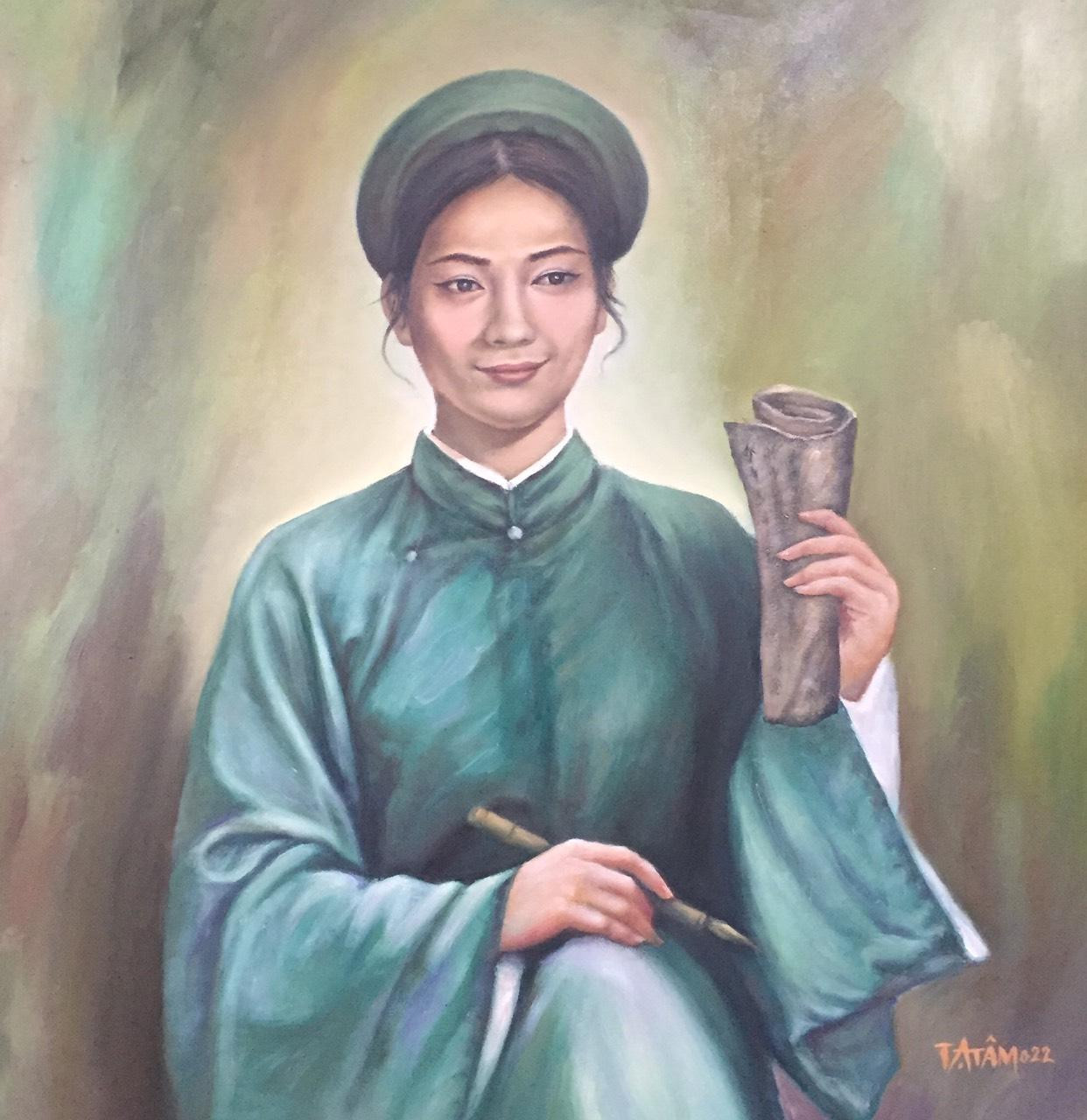
Hồ Xuân Hương
 Vietnam
Also known as: Hồ Phi Mai, Queen of Nôm Poetry
Birthday
July 10, 1772
Birth Sign
Cancer
Birthplace
Quỳnh Lưu district, Nghệ An province, Vietnam
Age
Died at 49
About
Hồ Xuân Hương was a Vietnamese classical poet, widely regarded as one of the greatest literary figures in Vietnamese history. She wrote in chữ Nôm, the vernacular script that gave voice to everyday Vietnamese, and her work stands as a bold, witty, and often erotic critique of the social constraints placed on women in 18th and 19th century Vietnam. Modern poet Xuân Diệu called her "The Queen of Nôm Poetry," a title that reflects her unmatched mastery of the form and her enduring influence.
Her poetry, characterized by clever double entendres and a subversive edge, has made her a feminist icon and a national treasure. She lived through the collapse of the Lê dynasty, the Tây Sơn rebellion, and the rise of the Nguyễn dynasty, yet her verses transcend her turbulent times, speaking directly to universal themes of desire, injustice, and resilience. Today, her poems are studied in schools, translated into many languages, and celebrated as a cornerstone of Vietnamese literature. Her legacy continues to inspire new generations of readers and writers worldwide, and her work remains a vital part of Vietnam's cultural heritage.
Early Life & Background
Hồ Xuân Hương was born on July 10, 1772, in Quỳnh Lưu district, Nghệ An province, during the waning years of the Lê dynasty. Her father, Hồ Phi Diễn, was a mandarin and scholar who taught classical Chinese to local children, and he gave her the birth name Hồ Phi Mai, evoking apricot blossoms over a lake. Her mother, Lady Hà, was a second wife, a position that would later shape her daughter's sharp critique of polygamy.
When she was still a child, the family moved to Hanoi, settling near West Lake. There, she grew up in a house she called Cổ Nguyệt Đường, a clever wordplay on her surname Hồ, split into the Sino characters for "ancient" and "moon." Her father's death when she was young left the family in a precarious position, and her mother remarried. Despite these hardships, Hồ Xuân Hương received an education in both classical Chinese and Nôm script, a rare privilege for a girl of her time. Her early exposure to poetry and her sharp wit were evident from a young age, and she reportedly composed impromptu verses for visitors at a tea shop she ran, earning a reputation for her humor and subtlety. She also traveled to beautiful sites, wrote picturesque poetry, and engaged in poetic repartee with famous male poets of her time.
Career Growth
Hồ Xuân Hương's literary career blossomed during the reign of Emperor Gia Long (1802–1820), a period of relative stability after decades of war. She wrote in the Đường luật (lüshi) style, but she transformed it by infusing the rigid seven-syllable, eight-line form with the rhythms and vocabulary of everyday Vietnamese. Her signature was the double entendre, layering erotic imagery beneath descriptions of ordinary objects and scenes, a technique so clever that it shielded her from punishment under the era's strict Confucian codes even as it delighted court mandarins.
Her poems took aim at the hypocrisy of social institutions, especially the treatment of women. She challenged polygamy, derided corrupt officials and ignorant scholars, and mocked impious monks. She traveled widely, visiting Hạ Long Bay between 1815 and 1818, and engaged in poetic repartee with leading male poets of her day. In 1814, her close friend and former suitor Tốn Phong Thị wrote a foreword to her manuscript Lưu Hương Ký, a collection that would not be rediscovered until 1964, containing 24 poems in classical Chinese and 28 in Nôm. After her death, her work spread through woodblock prints, and in 1893, French administrator Antony Landes commissioned the earliest surviving hand-copied volume of her Nôm poetry. In 1916, scholar Nguyễn Hữu Tiến published the first biography, Giai Nhân Dị Mặc, cementing her place in Vietnamese letters. Her poems contain virtually no Chinese literary allusions, being essentially Vietnamese in inspiration and form.
Career Timeline
Public Image & Style
Hồ Xuân Hương is remembered as a woman ahead of her time, a sharp-tongued provocateur who used poetry to expose the hypocrisies of a patriarchal society. Her public persona is one of wit, irreverence, and fearless candor. She is celebrated as a feminist icon, and her verses are recited in Vietnamese schools and studied in world literature courses. Translations by John Balaban have brought her work to English-speaking audiences, and streets in Hanoi and Ho Chi Minh City bear her name. Her image, immortalized in a 1916 portrait, continues to inspire artists and writers who see in her a symbol of resistance and creative genius. Her tone is witty, irreverent, and provocative—often shocking for her era.
Fame & Fandom
Hồ Xuân Hương is currently the 91st most famous person from Vietnam, a standing confirmed by the iFANN Global Fame Rankings that track global attention across media coverage, search, and consumption signals worldwide. This position holds steady from the previous cycle, cementing her status not as a fleeting trend but as a perennial pillar of Vietnamese cultural identity. While she never walked red carpets or hosted viral livestreams, her literary presence commands a reach that rivals modern celebrities, sustained by generations of students reciting her verses and scholars debating her life.
The collective group of admirers surrounding Hồ Xuân Hương does not operate under a formal fandom name; there are no organized fan clubs, streaming parties, or birthday billboards typical of contemporary pop culture. Instead, her "fanbase" is an institutionalized reverence found within the Vietnamese education system and academic circles. Known universally by the honorific title "Bà Chúa Thơ Nôm" (The Queen of Nôm Poetry), bestowed by the poet Xuân Diệu, she is celebrated by scholars, students, and the general public who view her work as a cornerstone of national heritage. Her legacy is kept alive through continuous scholarly analysis of her biographical mysteries and cultural tributes, such as the naming of landmarks like Hồ Xuân Hương Lake in Da Lat, ensuring her spirit remains a vibrant part of Vietnam's cultural landscape rather than a commercial product.
Interesting Facts and Legends
Some critics have long argued that Hồ Xuân Hương was merely a fictional persona crafted by rogue male scholars, though most researchers reject this theory in favor of dense biographical evidence woven into her poems and contemporaneous records. Her name, meaning "spring fragrance," has sparked endless speculation about her birthplace, with scholars placing her origins anywhere between 1735 and 1869 across multiple provinces. She lived alone following her second husband's death, an unusual display of independence for a woman of her era, and was known for challenging societal norms with fierce wit. Her home, Cổ Nguyệt Đường, served as both a pun on her surname and a tea shop where she reportedly composed poetry on demand.
A popular legend surrounds her poetic style, which used bold double entendres to critique social hypocrisy and explore female desire, often scandalizing the Confucian elite of the time. One enduring story tells of her ability to compose verses instantly at her tea shop, captivating patrons with clever wordplay that turned everyday objects into profound metaphors. Another tale speaks of her resilience after losing her husbands, choosing solitude over remarriage to maintain her autonomy in a patriarchal society. These narratives, blending verified history with folklore, ensure her reputation as a fearless provocateur remains intact nearly two centuries later.
Notable Quotes
“Being a second wife is like being the maid, but without the pay.”
“Intellectually adept but modest and deferential.”
Family & Personal Life
Hồ Xuân Hương's father, Hồ Phi Diễn (1703–1786), was a mandarin and scholar who taught classical Chinese. Some scholars instead propose Hồ Sỹ Danh (1706–1783) as her father. Her mother, Lady Hà, was a second wife, a status that deeply influenced her daughter's poetry. Hồ Xuân Hương was likely the youngest daughter in the family. After her father's death, her mother remarried, and Hồ Xuân Hương later lived independently near West Lake in Hanoi, where she worked as a teacher and tutor. She had no known children.
Notable Connections
Hồ Xuân Hương's father, Hồ Phi Diễn, was a mandarin and scholar who taught her classical Chinese. Her husbands, Vĩnh Tường and Tống Cóc, were officials. Scholar Tốn Phong Thị, a close friend and one-time suitor, wrote the foreword to her manuscript. She was a contemporary of Nguyễn Du, author of The Tale of Kiều, and her work was later championed by modern poet Xuân Diệu, who gave her the title "Queen of Nôm Poetry." Translator John Balaban brought her verses to English readers.
Relationships & Dating History
Hồ Xuân Hương's personal life is known through her poetry and historical records. She married twice, both later in life. Her first husband was Vĩnh Tường, a local official. Her second husband was Tống Cóc, a higher-ranking official, but he died just six months after their wedding, possibly executed for bribery. She described being a second wife as "like being an unpaid maid," reflecting her disdain for the institution of concubinage. She had no known children. After her second husband's death, she lived independently near West Lake in Hanoi, a choice that was unusual for women of her time. She also had a brief youthful connection with the poet Nguyễn Du, though it never developed into a lasting relationship.
- MarriedVĩnh TườngFirst husband, a local official.
- MarriedTống CócSecond husband, died six months after marriage.
- RumouredTốn Phong ThịClose friend and one-time romantic suitor.
- RumouredNguyễn DuBrief youthful acquaintance.
Death & Aftermath
Died
February 3, 1822 (aged 49)
Death Place
Unknown
Cause of Death
Unknown
In the final years of her life, Hồ Xuân Hương resided near West Lake in Hanoi, maintaining her independence as a teacher and tutor while continuing to refine the vernacular verse that would define her legacy. The historical record places her passing in 1822, though the specific circumstances surrounding her final days remain shrouded in the same scholarly debate that characterizes much of her biography. While some modern accounts attempt to pin a precise date like February 3, 1822, these specifics lack corroboration in the surviving chronicles, leaving the exact moment of her departure to the realm of tradition rather than verified fact.
Following her death, there was no immediate public funeral or recorded burial site, as her resting place remains unknown to this day. Her immediate circle likely mourned quietly, but the broader reaction unfolded over centuries rather than hours. She became universally revered in Vietnamese literature, earning the enduring title of "The Queen of Nôm Poetry" (Bà chúa thơ Nôm) from admirers who recognized her subversive wit and mastery of the language. Her works survived through woodblock prints and hand-copied volumes, including the 1893 edition commissioned by French administrator Antony Landes, which preserved her voice for future generations.
Modern recognition has elevated her status far beyond the local circles of the early 19th century. In November 2021, UNESCO officially honored her alongside Nguyễn Đình Chiểu as World Cultural Figures, cementing her place in global history. Geographical landmarks such as Xuan Huong Lake in Da Lat now bear her name, serving as permanent tributes to her spirit. Her estate, consisting entirely of her literary works, exists in the public domain, managed not by family heirs but by cultural institutions and academic scholars who continue to publish and study her poems.
Net Worth (Estate Value)
$0
iFANN Editorial Team estimate
iFANN currently estimates the net worth of Hồ Xuân Hương at $0. As a poet who passed away in 1822, she left behind no contemporary monetary estate, and her literary works exist entirely in the public domain. While her poems remain in print in both Vietnamese and English, generating modest royalties for publishers and translators, there is no commercial entity managing her assets or collecting fees on her behalf. Her true wealth lies not in currency but in her enduring legacy as one of Vietnam's greatest literary figures, whose influence continues to shape national identity and feminist discourse without financial mediation.
Awards Won (1)
Hồ Xuân Hương received no formal awards during her lifetime, but her posthumous recognition is profound. She has been honored with the title "Queen of Nôm Poetry" by modern poet Xuân Diệu, and her works are recognized by UNESCO's Memory of the World Programme as part of Vietnam's documentary heritage.
Literary Honor
Her body of poetry
Known For
Poetry in chữ Nôm
18th-19th century · Poet
Keywords
Sources
Quick Facts
- Profession
- poet
- Born
- July 10, 1772
- Birthplace
- Quỳnh Lưu district, Nghệ An province, Vietnam
- Died
- February 3, 1822
- Death Place
- Thăng Long (Hanoi)
- Gender
- Female
- Birth Sign
- Cancer
Personal Details
- Full Name
- Hồ Phi Mai
- Spouse
- Vĩnh Tường, Tống Cóc
- Education
- Educated in classical Chinese and Nôm script
Frequently Asked Questions
Was Hồ Xuân Hương a real person?
How many times was Hồ Xuân Hương married?
What does Hồ Xuân Hương's name mean?
Why is Hồ Xuân Hương called 'The Queen of Nôm Poetry'?
What happened to Hồ Xuân Hương's second husband?
Similar People
Join the community
fans discussing