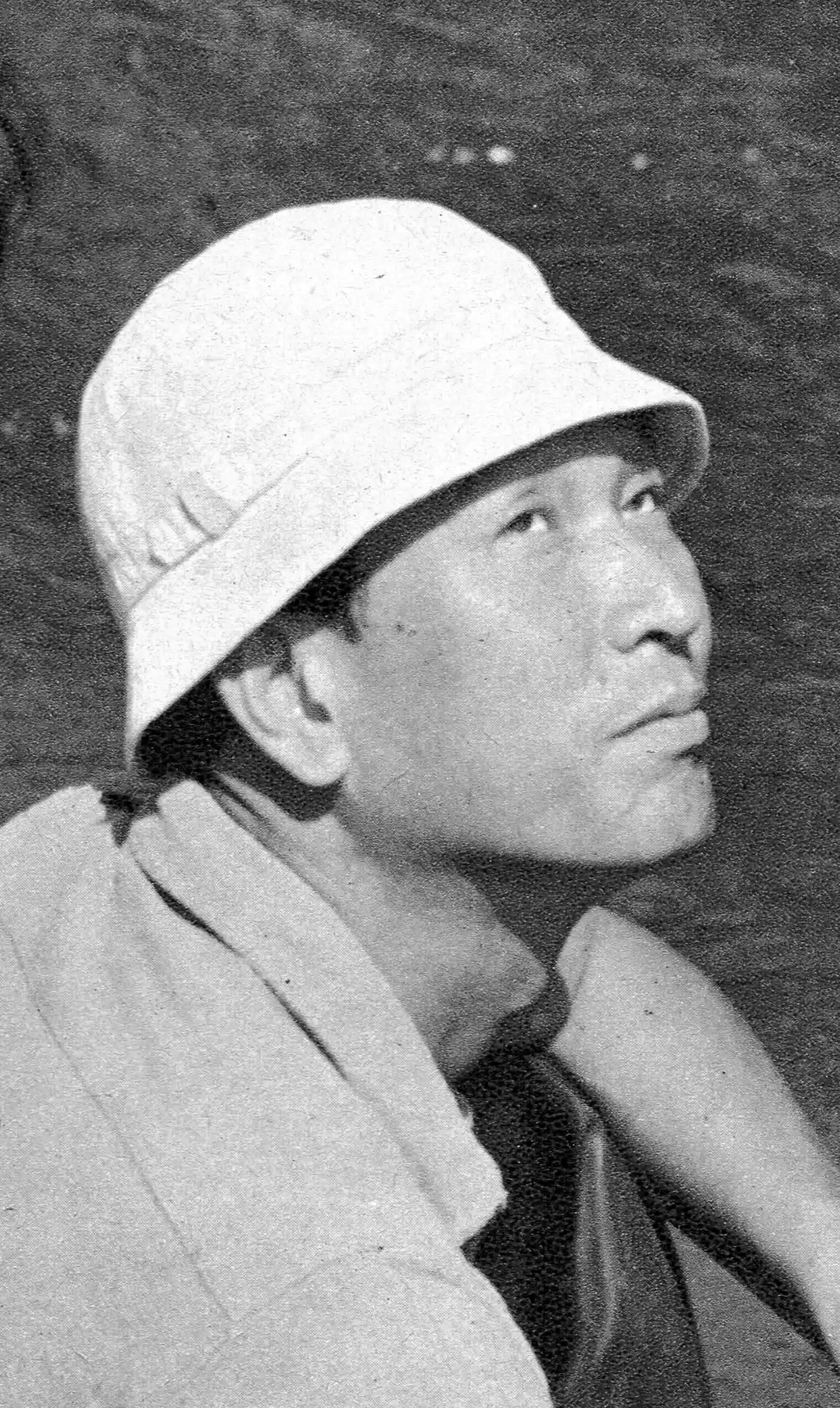
Hiroshi Teshigahara
 Japan
JapanBirthday
January 28, 1927
Birth Sign
Sagittarius
Birthplace
Tokyo, Japan
Age
Died at 74
About
Hiroshi Teshigahara was a Japanese avant-garde filmmaker, artist, and ikebana master. Born in Tokyo, he redefined cinema with his 1964 masterpiece Woman in the Dunes, which earned him the first Academy Award nomination for Best Director for a person of Asian descent. His films, often adapted from Kōbō Abe's novels, explore isolation and existential dread with surreal imagery. Teshigahara's artistic reach extended beyond film to sculpture, pottery, and calligraphy, making him a unique figure in postwar Japanese culture. He died in 2001, but his work remains a touchstone for cinephiles and artists worldwide.
Early Life & Background
Hiroshi Teshigahara was born in Tokyo on January 28, 1927, into a family steeped in tradition. His father, Sofu Teshigahara, founded the Sogetsu school of ikebana, one of Japan's most influential flower arrangement schools. Growing up, Hiroshi was immersed in this disciplined art form, but he also gravitated toward modern painting. He enrolled at Nihon University College of Art, where he studied painting and experimented with avant-garde ideas.
In the 1950s, Teshigahara co-founded the Projections Group (Shōgeki-za) with Shūji Terayama, an experimental theater collective that pushed the boundaries of performance. This experience shaped his non-linear, visual storytelling. His early short films and documentaries, such as Ikebana (1956), showcased his ability to blend art and cinema. Before his breakthrough, he worked as a set designer and assistant, honing his craft while staying connected to the Sogetsu world.
Career Growth
Teshigahara's feature debut, Pitfall (1962), adapted from a Kōbō Abe novel, immediately established his surreal, psychological style. But it was Woman in the Dunes (1964) that changed everything. The film, about a man trapped in a sand pit with a woman, won the Grand Prix at Cannes and earned Teshigahara a historic Oscar nomination. He followed with The Face of Another (1966), another Abe collaboration, and Summer Soldiers (1972), a war drama. In the 1980s, he directed The Man Who Stole the Sun (1983), a thriller that showcased his range. Throughout his career, he continued to create ikebana installations and sculptures, often integrating them into his films.
Career Timeline
Public Image & Style
In the West, Teshigahara was long considered a 'forgotten master,' but his reputation has surged in recent years thanks to Criterion Collection restorations and film retrospectives. He is celebrated for his minimalist, philosophical approach, blending Japanese aesthetics with Western existentialism. Fans, often cinephiles and art lovers, admire his ability to make the intangible tangible. His work is a staple in film studies curricula, and his influence can be seen in contemporary directors like Apichatpong Weerasethakul.
Fame & Fandom (iFAMOUS Rankings)
Hiroshi Teshigahara currently holds no placement in the iFANN Global Top 1,000 or any published scope list, as the iFANN Global Fame Engine has evaluated his legacy but found no current ranking data. While he never commanded the mass hysteria of a pop idol, his standing remains formidable within the specific realm of cinema and high art. His reputation has surged in recent years, transitioning from a 'forgotten master' to a celebrated figure through major restorations and retrospectives. The audience for Teshigahara is not a traditional fandom with a collective name or organized campaigns; instead, his following consists of cinephiles, film students, academics, and art house enthusiasts who engage with his work through curated screenings and scholarly study. There are no fan clubs, birthday billboards, or social media movements dedicated solely to his person, as his interaction with the public was strictly through his films and his role as the headmaster of the Sogetsu School of Ikebana. His influence is measured by critical retrospectives and academic papers rather than chart pushes. Fans honor him by attending museum exhibitions at institutions like MoMA or film festivals that revisit his filmography, treating his output as a touchstone for existential storytelling. This community does not seek celebrity but seeks understanding, finding ritual in the deep analysis of his surreal imagery and minimalist philosophy.
Interesting Facts and Legends
Beyond his directorial work, Teshigahara was a master of calligraphy and pottery, disciplines he practiced alongside filmmaking. He personally designed the iconic poster for Woman in the Dunes, infusing the visual identity of the film with his own artistic hand. A charming piece of family history involves his father, Sofu, who appeared in a cameo role in Pitfall. Teshigahara maintained a close friendship with composer Toru Takemitsu, who scored several of his films, creating a unique auditory landscape that complemented his visuals. He once famously stated he wanted to make films that felt like poems, a sentiment that echoes through his entire body of work. His artistry extended to sculpture and calligraphy, making him a unique figure in postwar Japanese culture. A verified historical milestone marks him as the first person of Asian descent nominated for the Academy Award for Best Director for his 1964 masterpiece Woman in the Dunes. This film, adapted from Kōbō Abe's novel, won the Grand Prix at the Cannes Film Festival, cementing its status as a defining work of the Japanese New Wave. Recent revivals, such as the 2023 retrospective at the San Sebastián International Film Festival, have reintroduced his work to new generations, framing him as a great surveyor of the abyss whose exploration of human confinement remains timeless.
Notable Quotes
“I wanted to make a film that was like a poem... where the images themselves speak.”
“The sand is the metaphor for the world we live in, endless, shifting, and inescapable.”
Family & Personal Life
Teshigahara married Toshiko Kobayashi, a fellow artist and member of the Sogetsu school. Their partnership was both personal and professional, with Toshiko often involved in his artistic projects. The couple had no children. Teshigahara's father, Sofu, was a major influence, and the family's ikebana legacy continued through Hiroshi's siblings and later generations. After his death, the Sogetsu Foundation managed his estate and artistic legacy.
Notable Connections
Relationships & Dating History
Teshigahara married Toshiko Kobayashi, a fellow artist, and they remained together until his death in 2001. There are no records of prior marriages or other public relationships. Their bond was rooted in shared artistic interests, and Toshiko was a constant presence in his life. At the time of his death, he was still married to her.
- MarriedToshiko Kobayashi1950 - 2001Long-term marriage until his death.
Death & Aftermath
Died
April 14, 2001 (aged 74)
Death Place
Tokyo, Japan
Cause of Death
Leukemia
Hiroshi Teshigahara, the acclaimed Japanese avant-garde filmmaker, sculptor, and potter, died on April 14, 2001, in Tokyo, Japan. Born on January 28, 1927, he was 74 years old at the time of his passing. The official cause of death was leukemia, as reported by The Guardian in an obituary published on April 26, 2001. This information relies on family statements and media reports from that period. No disputed accounts regarding the date, place, or cause of his death exist in the provided records.
Public reaction included tributes from the international film community acknowledging his status as one of Japan's most significant directors. He remains widely recognized as the first person of Asian descent to be nominated for an Academy Award for Best Director for his 1964 masterpiece Woman in the Dunes, a nomination that stands as a historic milestone. While specific funeral arrangements, burial locations, or attendees were not disclosed to the public, likely kept private by the family, his legacy has been sustained through continuous critical re-evaluation. Recent retrospectives, such as a major survey at the San Sebastian International Film Festival in 2023 under the Euskadi Japan 2023 initiative, highlight his enduring influence and the ongoing appreciation of his work by institutions and peers.
Posthumously, Teshigahara's body of work continues to be celebrated and preserved. His films, including Woman in the Dunes, The Face of Another, and Antonio Gaudí, remain in circulation, with recent releases such as the Criterion Blu-ray edition of Antonio Gaudí in 2020 keeping his works accessible to new audiences.
Net Worth (Estate Value)
$5 Million
iFANN Editorial Team estimate
As of 2026, the estate of Hiroshi Teshigahara continues to generate income through film licensing, streaming rights, and DVD/Blu-ray sales, particularly for Woman in the Dunes, which remains a staple in arthouse collections. The estate is managed by his heirs and the Sogetsu Foundation. While specific figures are not publicly disclosed, the ongoing demand for his films and exhibitions of his artwork contribute to a steady revenue stream. Per iFANN's editorial analysis, the net worth of this late auteur is estimated at $5 Million.
Awards Won (2)
Teshigahara's crowning achievement was winning the Grand Prix at the 1964 Cannes Film Festival for Woman in the Dunes, a film that also earned him a historic Academy Award nomination for Best Director. He also received the Mainichi Film Award for Best Film in 1964. His work in ikebana and sculpture was recognized with numerous honors in Japan, though specific details are less documented.
1964 · Best Film
Woman in the Dunes
1964 · Best Film
Woman in the Dunes
Known For
Woman in the Dunes
1964 · Director
Pitfall
1962 · Director
The Face of Another
1966 · Director
Keywords
Sources
Quick Facts
- Profession
- film director, sculptor, potter
- Born
- January 28, 1927
- Birthplace
- Tokyo, Japan
- Died
- April 14, 2001
- Death Place
- Tokyo, Japan
- Gender
- Male
- Spouse
- Toshiko Kobayashi
- Birth Sign
- Sagittarius
Personal Details
- Full Name
- Hiroshi Teshigahara
- Spouse
- Toshiko Kobayashi
- Education
- Nihon University College of Art
Filmography
12
Total
10
Film
2
TV
Frequently Asked Questions
Who was Hiroshi Teshigahara?
Did Hiroshi Teshigahara win an Oscar?
When did Hiroshi Teshigahara die?
What was Hiroshi Teshigahara's most famous movie?
Was Hiroshi Teshigahara married?
Similar People
Join the community
fans discussing