 Romania
About
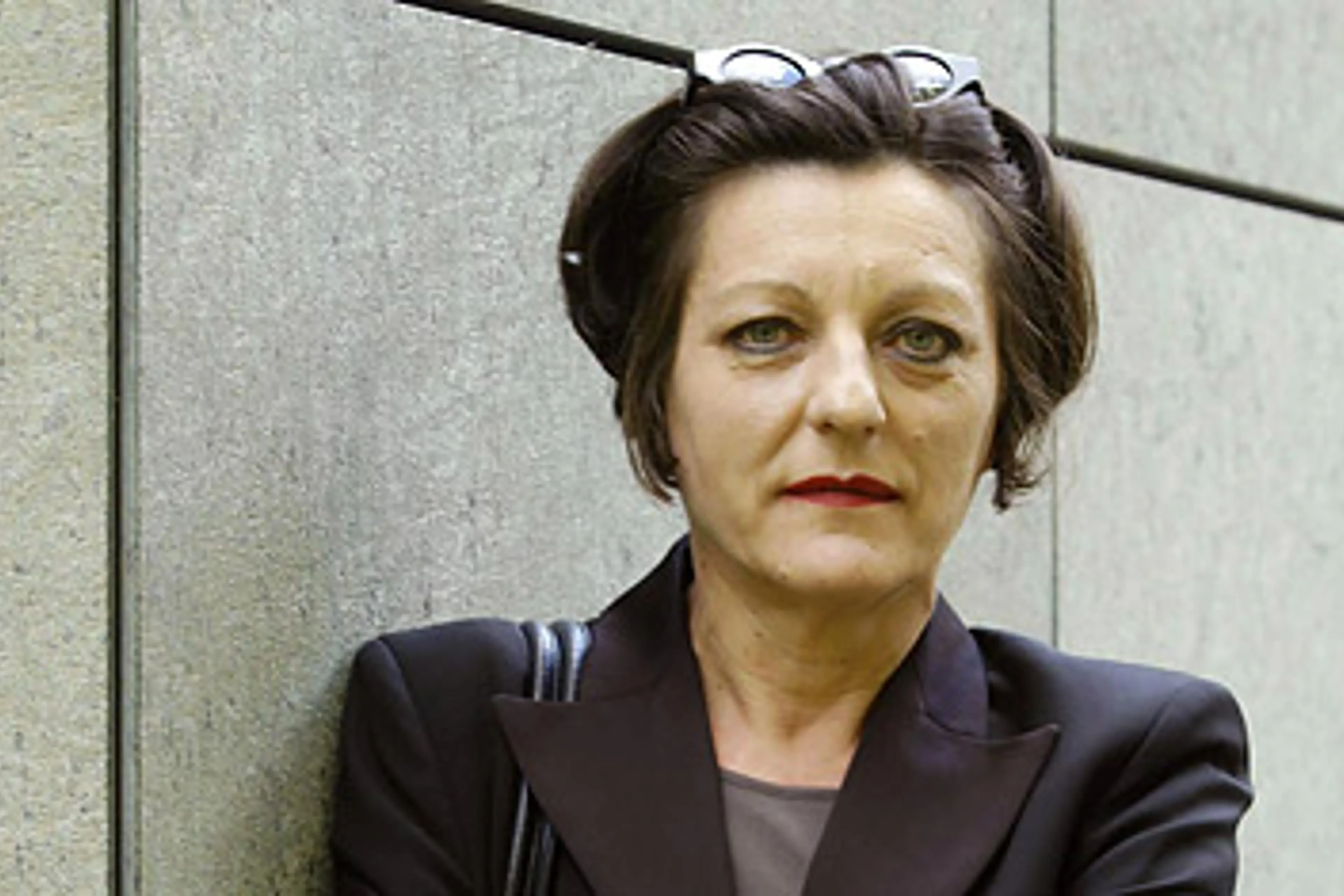
Herta Müller is a Romanian-born German novelist, poet, and essayist who won the 2009 Nobel Prize in Literature. The Swedish Academy praised her for depicting "the landscape of the dispossessed" with "the concentration of poetry and the frankness of prose." Her novels, including The Hunger Angel and The Land of Green Plums, draw on her experiences growing up under Nicolae Ceaușescu's dictatorship and have been translated into more than twenty languages.
Müller lives in Berlin and continues to write in German. Her 2026 memoir, The Village on the Edge of the World, revisits her childhood and the daily humiliations of life under a police state. She is regarded as one of the most important living witnesses to totalitarianism, and her work is studied in universities around the world.
Early Life & Background
Herta Müller was born on August 17, 1953, in Nițchidorf, a small village in the Banat region of western Romania. Her parents were Swabian farmers, part of the German-speaking minority whose ancestors had settled there centuries earlier. Her father served in the Waffen-SS during World War II, and her mother was deported to the Soviet Union for five years of forced labor. Those experiences shadowed her childhood, which she has described as marked by poverty and a repressive atmosphere.
At the West University of Timișoara, where she studied German and Romanian literature from 1973 to 1976, Müller joined the Aktionsgruppe Banat, a circle of young German-speaking writers critical of the regime. The group was closely watched by the Securitate, Romania's secret police. After graduating, she worked as a translator at a machine factory, but her refusal to become an informant led to harassment and the loss of her teaching job. Her first collection of short stories, Niederungen, was published in Romania in 1982 in a heavily censored edition; the uncensored version appeared in West Germany two years later and won the Aspekte Literature Prize.
Career Growth
Müller's breakthrough came with the uncensored publication of Niederungen in 1984, which established her as a fearless voice against dictatorship. Facing mounting persecution, she emigrated to West Germany in 1987 with her then-husband, writer Richard Wagner. Her novel The Land of Green Plums (1994) won the International Dublin Literary Award in 1998. In 2009, the same year she published The Hunger Angel, a novel about the deportation of Romanian Germans to Soviet labor camps, she was awarded the Nobel Prize in Literature.
In January 2026, her memoir The Village on the Edge of the World appeared in English translation, receiving widespread acclaim. The Wall Street Journal called it an account of "how the state insinuated oppression into every corner of life," and the Financial Times praised it as "a searing chronicle of resilience and humanity."
Career Timeline
Public Image & Style
Müller is seen as a serious, principled literary figure rather than a celebrity. She does not engage with social media or popular culture, and her public persona is defined by her moral authority as a witness to totalitarianism. Critics consistently describe her prose as unflinching, poetic, and precise. Her readership includes academics, students, and readers of literary fiction, but she has no organized fandom or public fan culture. Her Nobel Prize cemented her status as a global voice against oppression, and her 2026 memoir has introduced her work to a new generation of readers.
Fame & Fandom (iFAMOUS Rankings)
Herta Müller's readership is a scholarly and literary one, drawn to her unflinching examinations of totalitarianism and exile. There is no formal fandom name, no organized fan clubs, and no documented fan campaigns or rituals surrounding her work. Her admirers engage with her through literary criticism, academic study, and public discourse, such as the extensive critical attention given to the 2026 English translation of her memoir The Village on the Edge of the World, which was named among the best reviewed nonfiction books of May 2026. Her 2009 Nobel Prize in Literature broadened her audience considerably, but her public persona remains that of a principled moral witness, not a celebrity with a fan culture. Müller's interactions with readers occur primarily through her books, public readings, and interviews, and her open letter on Gaza in 2026 shows her continued willingness to engage in political commentary. As of August 2026, iFANN's Global Fame Engine has evaluated her, but she does not currently hold a placement in the published rankings, including the Global Top 1,000 or any Top-100 scope list. This absence of a formal ranking reflects her status as a respected literary figure rather than a globally ranked celebrity.
Interesting Facts and Legends
Müller's mother used to ask her daily, "Do you have a handkerchief?", a question that became a motif in her memoir about surviving Ceaușescu's Romania. Despite being born in Romania, Müller writes in German and has said she knows almost no Romanian. Her father served in the Waffen-SS, a fact she has addressed openly in interviews. The Aktionsgruppe Banat, her literary circle in Timișoara, was infiltrated by the Securitate, and several members were pressured to inform on each other. Müller's works have been translated into over twenty languages, and she has received honorary doctorates from several universities, including the University of Paderborn. A defining legend is her refusal to cooperate with the Securitate in the 1970s and 1980s, which cost her teaching job and brought threats, yet she continued writing, a story that culminates in her 2009 Nobel Prize. Another iconic moment is her emigration to Germany in 1987, which she has described as a form of liberation. The 2026 publication of her memoir renewed global attention, with reviewers framing it as an essential act of historical resistance.
Notable Quotes
“Do you have a handkerchief?”
“I write because I have to. It is my way of making sense of the world.”
“The past is never over. It lives in the present, in the smallest details.”
Family & Personal Life
Müller's parents were Swabian farmers in the Banat region. Her father served in the Waffen-SS during World War II, and her mother was deported to the Soviet Union for five years of forced labor after the war. Those experiences left deep marks on the family. Müller has been married twice: first to writer Richard Wagner, with whom she emigrated to West Germany, and later to Harry Merkle, a German film editor. She has no children. She lives in Berlin with her husband.
Notable Connections
Müller is closely associated with writer Richard Wagner, her first husband and fellow member of the Aktionsgruppe Banat. She is also linked to the dissident literary circle itself, which shaped her early career. Her second husband, Harry Merkle, a German film editor, has been a supportive presence in her life in Berlin.
Relationships & Dating History
Müller married writer Richard Wagner, a fellow member of the Aktionsgruppe Banat, in the late 1970s or early 1980s. The couple emigrated to West Germany together in 1987, but the marriage later ended in divorce. She later married Harry Merkle, a German film editor. As of 2026, she is married to Merkle and lives with him in Berlin.
- MarriedRichard Wagner1980 - 1990Fellow writer and member of the Aktionsgruppe Banat; they emigrated together to West Germany in 1987.
- MarriedHarry Merkle1995 - presentCurrentGerman film editor; they live in Berlin.
Salary, Net Worth In 2026
$5 Million
iFANN Editorial Team estimate
iFANN currently estimates Herta Müller's net worth at $5 million. Her income comes primarily from book royalties, which span translations into more than twenty languages, as well as speaking fees and literary prizes. The Nobel Prize in Literature in 2009 carried a cash award of roughly $1.4 million. Her other major awards, including the International Dublin Literary Award, which came with a €100,000 purse, have also contributed. Müller leads a modest life in Berlin and does not have significant public investments or real estate holdings.
Awards Won (5)
Herta Müller has won some of the most prestigious literary awards in the world. In 1984 she received the Aspekte Literature Prize for Niederungen. The Kleist Prize followed in 1994, and the Aristeion Prize in 1995 for The Land of Green Plums. In 1998 she won the International Dublin Literary Award. The pinnacle came in 2009 when she was awarded the Nobel Prize in Literature.
2009 · Literature
For her body of work
1998 · Literature
The Land of Green Plums
Known For
The Hunger Angel
2009 · Author
Nobel Prize in Literature
2009 · Recipient
The Land of Green Plums
1994 · Author
The Village on the Edge of the World
2026 · Author
Keywords
Sources
Quick Facts
- Profession
- Writer, linguist, poet
- Born
- August 17, 1953
- Birthplace
- Nițchidorf, Romania
- Gender
- Female
- Spouse
- Harry Merkle
- Birth Sign
- Leo
- Nationality
- German
- Education
- West University of Timișoara
Personal Details
- Spouse
- Harry Merkle
- Education
- West University of Timișoara
Frequently Asked Questions
Is Herta Müller married?
What did Herta Müller win the Nobel Prize for?
Does Herta Müller have children?
What is Herta Müller's most famous book?
Where does Herta Müller live now?
Similar People
Join the community
fans discussing