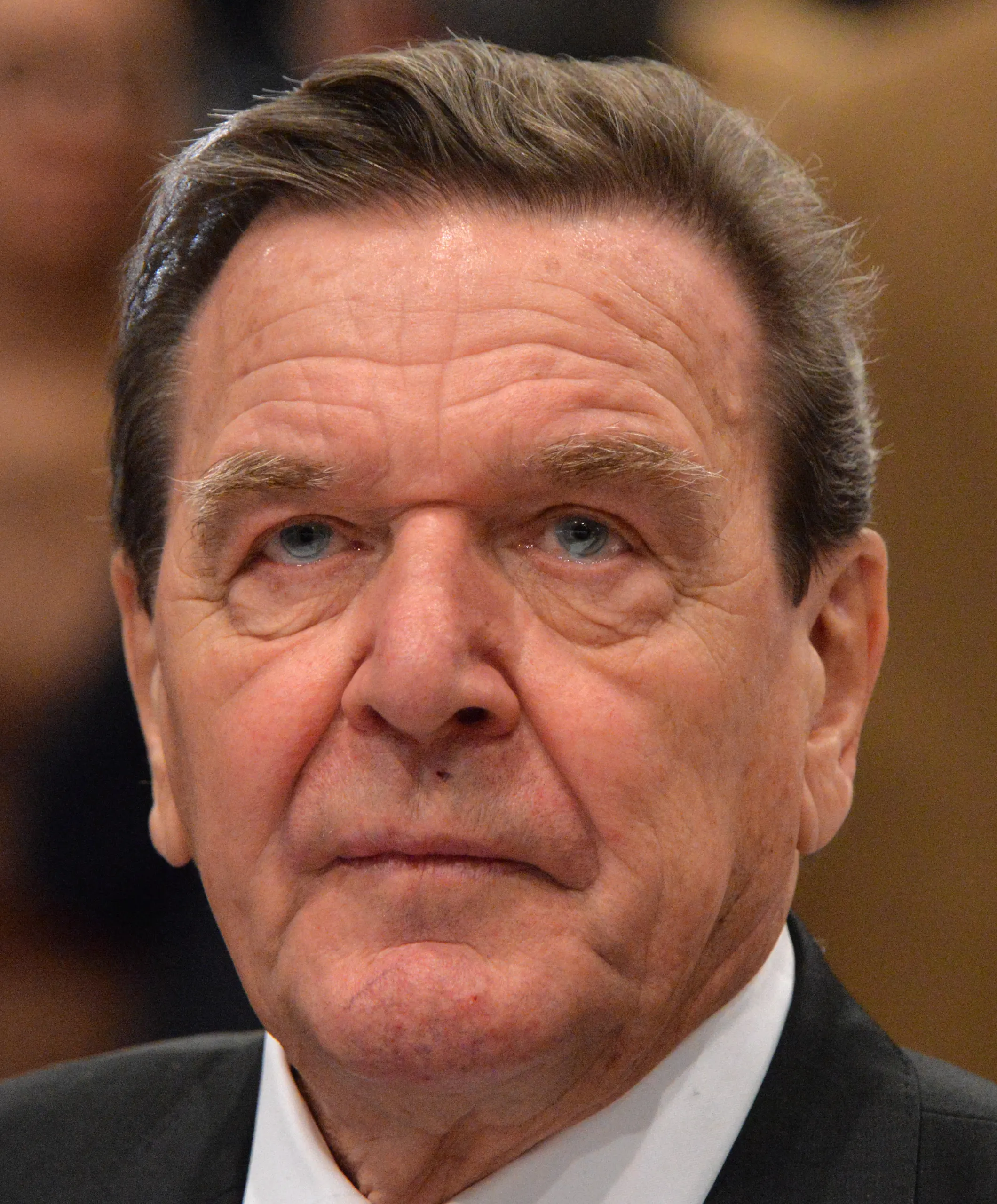
Gerhard Schröder
 Germany
Also known as: Gerd Schröder, Gerhard Fritz Kurt Schröder
Birthday
April 7, 1944
Birth Sign
Aries
Birthplace
Mossenberg-Wöhren, North Rhine-Westphalia, Germany
Age
82 years old
About
Gerhard Fritz Kurt Schröder, born on April 7, 1944, in Mossenberg-Wöhren near Detmold, is a German former politician who served as the seventh Chancellor of Germany from 1998 to 2005. A member of the Social Democratic Party (SPD), he remains one of the most influential and controversial figures in modern German history. His legacy is defined by sweeping domestic economic reforms known as Agenda 2010, a firm opposition to the 2003 Iraq War which strained relations with the United States, and his subsequent deepening ties with Russia that have drawn intense international scrutiny.
As of 2026, Schröder lives in retirement in Hanover, though he remains a subject of global news due to his health struggles and political commentary. Reports indicate he suffers from severe exhaustion and memory problems, leading to his withdrawal from many public activities. Despite these challenges, he continues to be mentioned in high-level diplomatic discussions, particularly regarding his complex relationship with Vladimir Putin. In August 2026, he publicly accused former Chancellor Angela Merkel of making fatal mistakes in energy policy, reigniting debates about Germany's strategic autonomy.
Early Life & Background
Born into a working-class family in Mossenberg-Wöhren, Schröder faced significant hardship early on. His father, a teacher, died during World War II when Gerhard was just two years old. Following this loss, his mother worked as a cleaner to support the family, and they lived in poverty. To help make ends meet, Schröder worked as a bricklayer in his youth. He demonstrated remarkable resilience by attending night school to earn his Abitur while working during the day.
After completing his secondary education, he studied law at the University of Göttingen and the Free University of Berlin, eventually earning his doctorate. Before entering full-time politics, he practiced as a lawyer specializing in labor law. This legal background laid the groundwork for his future political focus on social welfare and labor market issues. He joined the Social Democratic Party in the late 1960s, beginning his ascent through local and state positions before becoming Minister President of Lower Saxony in 1990.
Career Growth
Schröder's political career reached its zenith in 1998 when he defeated long-serving Christian Democrat Helmut Kohl to become Chancellor of Germany. He led a "Red-Green" coalition government comprising the SPD and Alliance 90/The Greens. His tenure was defined by ambitious domestic reforms and assertive foreign policy. Domestically, he introduced the "Agenda 2010" reform package in 2003, a series of sweeping changes to the labor market and social welfare system aimed at reducing unemployment and revitalizing the stagnant German economy. These reforms were highly controversial, sparking massive protests from trade unions and causing a split within his own party, but are widely credited by economists with laying the foundation for Germany's later economic recovery.
In foreign policy, Schröder took a firm stance against the 2003 invasion of Iraq, aligning Germany with France under President Jacques Chirac to oppose U.S. military action. This decision significantly strained relations with the United States but bolstered his standing in Europe. However, the combination of domestic unpopularity due to Agenda 2010 and the rise of Angela Merkel as the CDU/CSU candidate led to the SPD's defeat in the 2005 federal election. Schröder stepped down as Chancellor in November 2005.
Career Timeline
Public Image & Style
Schröder is known for a pragmatic, folksy style that connected with voters in beer tents, contrasting sharply with his later image as a global lobbyist with deep ties to authoritarian regimes. His signature look often included casual attire during campaign events, reinforcing his connection to the working class. Media perception of him shifted dramatically after his chancellorship, moving from a respected statesman to a polarizing figure associated with Russian energy interests. His recent health issues have further altered his public presence, casting a shadow over his remaining influence.
Fame & Fandom (iFAMOUS Rankings)
Attention to Gerhard Schröder is tracked worldwide across media coverage, search, and consumption signals, and the resulting placements place him among the most recognized figures in his country. According to the iFANN Global Fame Rankings data from September 2026, the status is EVALUATED_UNRANKED, meaning the engine has evaluated him but he does not currently hold a placement in the published rankings or Top-100 scope list. This neutral assessment reflects his enduring public profile shaped by his chancellorship and ongoing notoriety in international affairs. Schröder's fame, however, does not translate into an organized fanbase. No formal fandom name exists for him; there are no documented fan clubs, campaigns, or rituals. His public following has always been tied to political support rather than celebrity culture, and in recent years, his associations have made him a polarizing figure rather than a beloved icon. The closest thing to fan engagement are the beer-tent appearances from his election campaigns, where he connected with voters in a folksy manner, but these were political rallies, not fan events. His legacy is contested, particularly within his own party, and his post-chancellorship activities have overshadowed any positive fan culture. Thus, while his fame is measurable and significant, it exists without a dedicated fandom.
Interesting Facts and Legends
Among the legends that persist around Gerhard Schröder, the most prominent is his friendship with Vladimir Putin. Schröder famously called Putin a "flawless democrat" in 2004, a quote that has become a recurring point of criticism. After leaving office, he took paid board positions with Russian energy companies, reportedly earning nearly $1 million annually. In May 2026, Putin proposed Schröder as a mediator in the Russia-Ukraine war, a suggestion immediately rejected by EU officials, including Kaja Kallas, who deemed him unfit for such a role due to his past ties to Russian energy interests.
His rags-to-riches story is also part of his lore: born to a working-class family, his father died in World War II, and his mother worked as a cleaner. Schröder worked as a bricklayer and attended night school to earn his Abitur before studying law. This self-made narrative, however, has lost luster given his later Russia ties. Recent reports of his severe exhaustion and memory problems, as cited by his doctor, add a somber note to his legacy. In April 2026, a Guardian article noted that many Germans still pine for Schröder's era despite forgetting his errors and ties to Putin.
Notable Quotes
“Vladimir Putin is a flawless democrat.”
“We must do what is necessary, even if it is unpopular.”
Family & Personal Life
Gerhard Schröder has been married four times, with a complex personal life that has often intersected with his political career. His first marriage was to Eva Schubach, whom he met as students in Göttingen. They had two daughters, Anke and Franziska, before divorcing in 1976. Shortly after, he married Hiltrud Schwetje, a journalist, and they had a son, Lars. The marriage ended in 1988 due to the demands of his time as Minister President.
His third wife was Anne Taschenmacher, a former SPD official, whom he married in 1990. The marriage lasted until 1998, coinciding with his election as Chancellor. In 1998, shortly after becoming Chancellor, Schröder married Doris Schröder-Köpf, a fashion designer and daughter of the prominent German actor Rolf Schröder. They have no children together. As of 2026, they remain married, though their public appearances have become less frequent due to Schröder's health struggles.
Notable Connections
Relationships & Dating History
Gerhard Schröder has been married four times throughout his life, with each union reflecting different phases of his political and personal journey. His first marriage was to Eva Schubach, whom he met while both were students in Göttingen. The couple had two daughters, Anke and Franziska, before divorcing in 1976. The split was attributed to the pressures of Schröder's rising political career and differing life goals.
Shortly after his first divorce, Schröder married Hiltrud Schwetje, a journalist. They had a son, Lars, together. The marriage ended in 1988, reportedly due to Schröder's increasing demands on his time as Minister President of Lower Saxony and growing public scrutiny. His third wife was Anne Taschenmacher, a former SPD official. They married in 1990, during his tenure as Minister President. The marriage lasted until 1998, coinciding with his election as Chancellor. The divorce was finalized around the time he entered the federal government, with reports suggesting the strain of his new role and the intense media spotlight contributed to the separation.
In 1998, shortly after becoming Chancellor, Schröder married Doris Schröder-Köpf, a fashion designer and daughter of the prominent German actor Rolf Schröder. The wedding was a high-profile event, attended by many political and cultural figures. They have no children together. Their relationship has weathered numerous controversies, including the fallout from his Russian business dealings and his recent health issues. As of 2026, they remain married, though their public appearances have become less frequent due to Schröder's health struggles. There are no widely documented romantic relationships outside of these marriages, and no confirmed engagements or flings that have reached the level of public record beyond his spouses. His personal life has generally been kept relatively private compared to his political career, though the media has frequently scrutinized his interactions with his wives, particularly Doris, who has been a constant presence in his public life.
- DivorcedEva Schubach1966 - 1976Met as students in Göttingen; had two daughters.
- DivorcedHiltrud Schwetje1977 - 1988Journalist; had one son named Lars.
- DivorcedAnne Taschenmacher1990 - 1998Former SPD official; marriage ended during his chancellorship.
- MarriedDoris Schröder-Köpf1998 - presentCurrentFashion designer; daughter of actor Rolf Schröder.
Salary, Net Worth In 2026
$15 Million
iFANN Editorial Team estimate
iFANN Editorial Team analysis of Gerhard Schröder's earnings, ventures, and assets points to a net worth of approximately $15 million as of 2026. This estimate accounts for his salary during his tenure as Chancellor, his work as a lawyer prior to politics, and his lucrative roles in the private sector following his departure from office. Most notably, his chairmanship of Nord Stream AG and his position on the supervisory board of Rosneft reportedly earned him nearly $1 million annually for several years. These roles drew accusations of conflicts of interest but provided substantial income.
Following his resignation from Russian energy boards in March 2022 due to the invasion of Ukraine, his primary income streams likely shifted to consulting fees, speaking engagements, and potential book royalties. While specific details of his current investments are private, the accumulation of wealth from his high-profile corporate positions remains a significant factor in his financial standing. His estate value has remained stable despite the geopolitical controversies surrounding his past business dealings.
Awards Won (3)
Schröder received the Grand Cross Special Class of the Order of Merit of the Federal Republic of Germany in 2006. He was awarded the Charlemagne Prize in 2004 for his efforts in European integration. Additionally, he received the Otto Hahn Peace Medal in 2004 for his commitment to peace and dialogue.
2004 · European Integration
Efforts in European Unity
2004 · Peace
Commitment to Peace
Known For
Chancellor of Germany
1998 · Politician
Agenda 2010
2003 · Reform Package
Nord Stream AG Chair
2006 · Business Executive
Keywords
Sources
Quick Facts
- Profession
- lawyer, politician, consultant
- Born
- April 7, 1944
- Birthplace
- Mossenberg-Wöhren
- Gender
- Male
- Spouse
- Doris Schröder-Köpf
- Birth Sign
- Aries
Personal Details
- Full Name
- Gerhard Fritz Kurt Schröder
- Spouse
- Doris Schröder-Köpf
- Children
- Anke Schröder, Franziska Schröder, Lars Schröder
- Education
- University of Göttingen; Free University of Berlin
Frequently Asked Questions
What happened to Gerhard Schröder?
Why is Gerhard Schröder controversial?
Is Gerhard Schröder still alive?
Who is Gerhard Schröder married to?
Did Gerhard Schröder mediate the Ukraine war?
Social Media
Similar People
Join the community
fans discussing