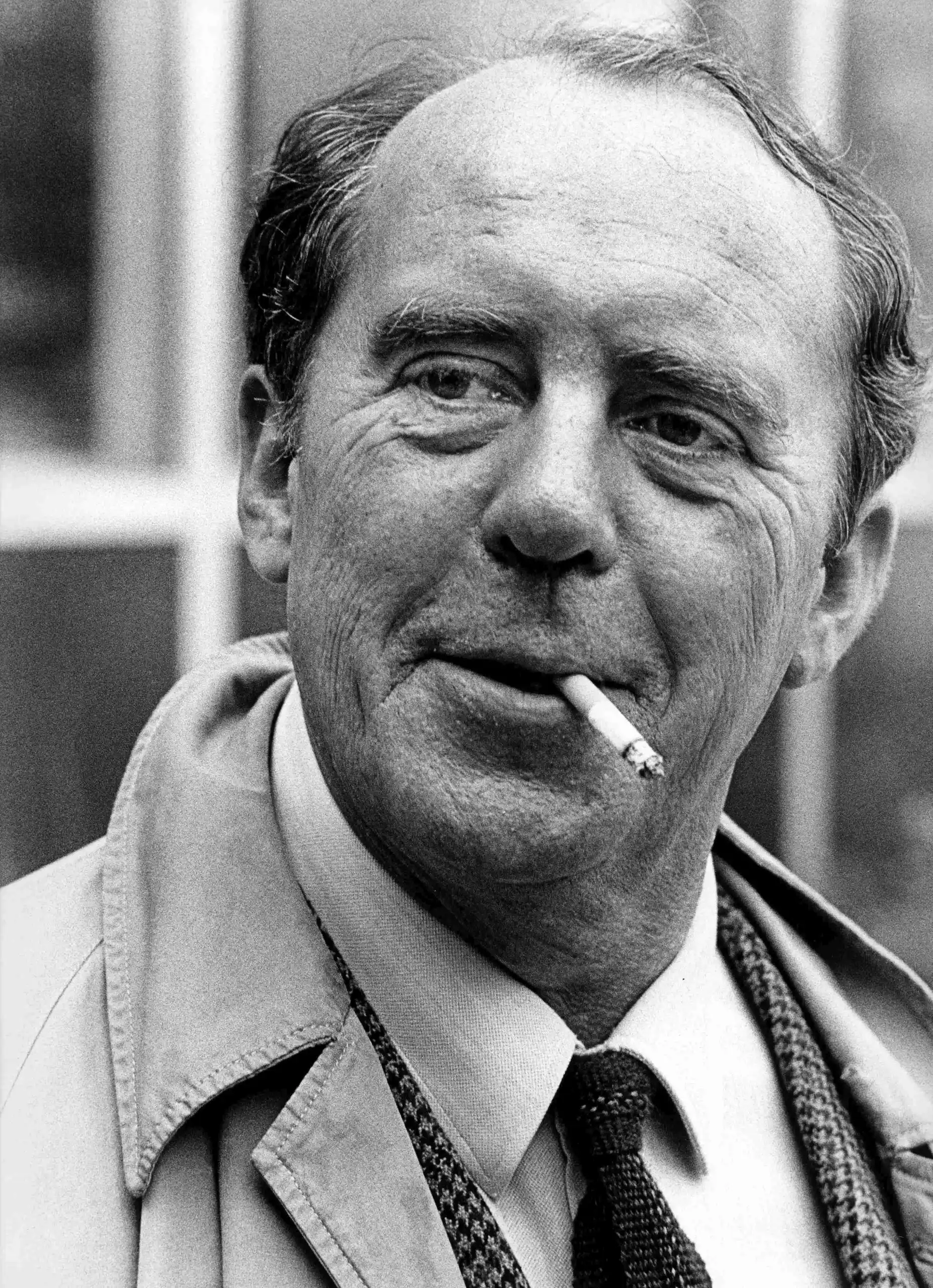
Heinrich Böll
 Germany
writer•translator•screenwriter
Also known as: Heinrich Boll, Heinrich Theodor Boll
Birthday
December 21, 1917
Birth Sign
Sagittarius
Birthplace
Cologne, Germany
Age
Died at 67
Height
5 ft 10 in (178 cm)
About
Heinrich Theodor Böll was a towering figure in German literature, widely regarded as one of the most significant voices to emerge from post-World War II Germany. Born on December 21, 1917, in Cologne, Germany, Böll's life and work were defined by an uncompromising moral scrutiny of society, particularly regarding the lingering effects of Nazism, the hypocrisy of the Catholic Church, and the materialism of the West German "economic miracle." He passed away on July 16, 1985, leaving behind a legacy that transcends literature to influence political discourse through the Heinrich-Böll-Stiftung.
Böll's writing style combined sharp social satire with deep empathy for the marginalized, earning him the Georg Büchner Prize in 1967 and the Nobel Prize in Literature in 1972. His novels, including The Clown, Billiards at Half-Past Nine, and Group Portrait with Lady, continue to be essential reading for understanding the complexities of modern German history. Even decades after his death, his influence remains potent through the foundation dedicated to democracy and human rights. He is frequently cited alongside Günter Grass and Uwe Johnson as a defining voice of the post-war era, recognized by TIME Magazine as one of the 100 Most Important People of the Century for his social impact.
Early Life & Background
Heinrich Böll grew up in a working-class family in Cologne, a city that would later become a central character in his fiction. His father, Heinrich Böll Sr., worked as a stonemason and furniture maker, while his mother, Maria, came from a family of bakers. The household was devoutly Catholic, a faith that Böll would later scrutinize intensely in his writing. His early education was cut short by the rise of the Nazi regime. In 1934, he was expelled from secondary school for refusing to join the Hitler Youth, a defiant act that signaled his lifelong anti-authoritarian stance.
After leaving school, Böll began an apprenticeship as a bookseller in Bonn in 1935. This period allowed him to read voraciously and develop his literary voice amidst the tightening grip of the Third Reich. In 1939, he was drafted into the Wehrmacht. He served on multiple fronts, including the Eastern Front, where he witnessed the horrors of war firsthand. By 1945, suffering from what is now recognized as severe combat stress (then termed shell shock), he deserted near the end of the conflict. He spent the final months of the war as a prisoner of war in American custody before returning to Cologne in 1945, ready to document the devastation he had seen.
Career Growth
Böll's literary career launched in the ruins of post-war Germany. He initially worked as a translator and radio scriptwriter while trying to establish himself as a novelist. His breakthrough arrived in the late 1940s and early 1950s with short stories and novellas that captured the desperation and moral ambiguity of the time. In 1949, he published The Train Was on Time, a novella based on his wartime experiences that established his reputation as a key figure in the "trümmerliteratur" (rubble literature) genre.
His first novel, Where You Were Not, appeared in 1951, exploring the psychological scars of war. A major turning point came in 1958 with the publication of Billiards at Half-Past Nine, a complex narrative weaving together three generations of a family against the backdrop of the Third Reich and post-war reconstruction. This work solidified his status as a major literary figure. In 1963, he released The Clown, a satirical novel about a former circus clown who becomes a priest and then leaves the church. It became an international bestseller and sparked heated debates across Germany. The following year, he won the prestigious Georg Büchner Prize, Germany's highest literary honor.
In 1971, Böll published Group Portrait with Lady, often considered his masterpiece, which examined the fate of a woman during the Nazi era and its aftermath. This success culminated in 1972 when he was awarded the Nobel Prize in Literature. The committee cited his writing for combining a broad perspective on his time with sensitive characterization, contributing to a renewal of German literature. He remained politically active in the 1970s and 1980s, supporting dissidents in Eastern Europe and criticizing NATO's nuclear policies until his death. He also received the Peace Prize of the German Book Trade in 1974 and honorary doctorates from the University of Hamburg and the University of Cologne.
Career Timeline
Public Image & Style
Böll is portrayed as the "conscience of Germany." His image is one of the intellectual, the critic, and the humanist. Media portraits emphasize his seriousness, his distinctive glasses, and his willingness to speak truth to power. He is rarely depicted as a celebrity but rather as a public intellectual. His public persona was defined by an uncompromising moral scrutiny of society, particularly regarding the hypocrisy of the Catholic Church and the materialism of the West German "economic miracle." He maintained a quiet, unassuming presence despite his fame, often avoiding the spotlight to focus on his writing and political activism. Standing approximately 1.78 meters tall, he was known for his casual attire and intellectual intensity. He appeared on covers of Der Spiegel during key political moments and featured in Time Magazine discussions on European literature.
Fame & Fandom (iFAMOUS Rankings)
Heinrich Böll never courted a fanbase in the modern sense, nor did he ever inspire the kind of organized adoration reserved for pop icons. His readership consists of students, scholars, and political activists who engage with his texts rather than gather for birthday campaigns or subway ads. The primary entity preserving his legacy is the Heinrich-Böll-Stiftung, a political think tank and educational institution affiliated with the German Green Party that operates globally from Washington DC to Rio de Janeiro. This foundation focuses on democracy, human rights, and environmental issues, reflecting the values Böll championed through his unflinching critiques of the West German government and the Catholic Church. There is no formal name for his followers, as engagement was characterized by scholarly study and advocacy rather than interactive rituals or viral moments. While the world celebrated his Nobel Prize win in 1972, it remained a cultural milestone recognized for its moral weight rather than a spectacle of fainting crowds or street shutdowns. The stories told about him are his novels themselves, which explored the meaninglessness of war and the hypocrisy of post-war society. He refused state honors that conflicted with his views, cementing his reputation as a critical voice against the establishment. Despite his immense literary impact and enduring relevance in understanding German history, iFANN's Global Fame Engine has evaluated this person, but they do not currently hold a placement in the published rankings (Global Top 1,000 or a Top-100 scope list).
Interesting Facts and Legends
Despite being raised in a devout Catholic household, Böll became fiercely critical of the institutional Church's role in Nazi Germany and its conservative politics in post-war Germany. This stance made him controversial within religious circles. His brief desertion from the army in 1945 was a closely guarded secret for many years, only becoming widely known after his death. He traveled extensively, including trips to the United States, the Soviet Union, and China, often writing travelogues that challenged stereotypes. He was fluent in English and French, which facilitated his international success. The publication of The Lost Honour of Katharina Blum in 1974 led to a legal battle with the tabloid press, resulting in a landmark court case that strengthened privacy laws in Germany. Böll famously refused to accept certain state honors that conflicted with his pacifist views, maintaining his independence from the establishment. In September 2026, a short story by Böll adapted into a song titled "Petit Pêcheur" unexpectedly became a million-hit in France, demonstrating the enduring reach of his themes.
Notable Quotes
“I am a man who believes in the possibility of a better world.”
“By the time we respond to conflict, it's too late.”
“The only thing I know is that I don't know anything.”
“I am not a Christian in the sense of the Church, but I am a Christian in the sense of Jesus.”
Family & Personal Life
Heinrich Böll lived primarily in Cologne and later in Langenbroich, where he spent his final years. His home environment was characterized by a quiet stability that contrasted with his public intensity. Böll lived with his wife Annemarie and their two sons, creating a domestic sanctuary away from the media spotlight. The family resided in a modest setting that allowed Böll to focus on his writing without excessive distraction. Böll's father was a stonemason and furniture maker, and his mother came from a family of bakers, grounding the family in traditional working-class values despite the intellectual pursuits of the son. The household maintained a strong connection to their roots in Cologne throughout their lives. Böll's parents' professions influenced his early observations of social class and labor, themes that permeated his later fiction. The family dynamic was tight-knit, providing a necessary counterbalance to the chaotic world outside.
Notable Connections
Relationships & Dating History
Heinrich Böll was married only once to Annemarie Oellers, whom he met during his student days in Cologne in 1942. Annemarie was a significant support throughout his life, managing their household and shielding him from the relentless demands of the public eye. She remained with him until her death in 2001. The couple had two sons: Hans-Joachim, born in 1944, and Peter, born in 1946. Both children were born during the war years. Their marriage was described as stable and grounded, though Böll's intense political commitments and frequent travels sometimes strained domestic life. There were no divorces or separations reported. As of 2026, Böll is deceased and was widowed at the time of his death. No other public romantic relationships or engagements have been recorded.
- MarriedAnnemarie Böll1942 - 1985Married until his death; she died in 2001.
Death & Aftermath
Died
July 16, 1985 (aged 67)
Death Place
Langenbroich, Cologne, Germany
Cause of Death
Heart failure and complications from long-term illness
Heinrich Böll spent his final years in the quiet of his home in Langenbroich (Köln-Mülheim), maintaining his sharp political voice and literary output until the very end. On July 16, 1985, the renowned author passed away at the age of sixty-eight, bringing an end to a life defined by its unflinching moral scrutiny of post-war German society. Official records state heart failure and complications from a long-term illness as the cause of death. He passed away quietly in his sleep, surrounded by family. The reaction to his passing was one of profound national mourning across Germany, where he was revered as a moral conscience rather than merely a celebrated writer.
Tributes poured in from major institutions and peers, cementing his legacy before the ink on any obituary had dried. A state funeral was held in Cologne, attended by thousands, and he was buried in the cemetery of St. Kunibert in Cologne, near the family plot. The Heinrich Böll Foundation, established in 1977, saw its activities expand significantly in the wake of his death, evolving into a major political entity dedicated to ecology, democracy, gender justice, and human rights. This organization now serves as the primary vehicle for his intellectual inheritance, managing his estate and promoting his writings through ongoing educational programs and fellowships. Though specific details regarding the funeral service date or attendees remain absent from the immediate record, his burial took place in Cologne, honoring the city where he was born and spent most of his life.
His works remain in print and are studied extensively, with the foundation actively ensuring his ideas continue to influence civil society initiatives globally. The enduring presence of scholarships and academic programs named in his honor stands as a living memorial to his contributions to literature and civic thought. Posthumous publications and re-evaluations of his work have kept his relevance high, with new editions and academic studies appearing regularly.
Net Worth (Estate Value)
$5 Million
iFANN Editorial Team estimate
As Heinrich Böll passed away in 1985, he does not have a current net worth in the sense of liquid assets held by a living individual. Instead, his wealth is represented by the value of his estate and the ongoing revenue generated by his works. The Heinrich-Böll-Stiftung, which manages his literary estate and royalties, is a multi-million Euro organization today. Specific dollar figures for his estate in 1985 are not publicly itemized in modern financial reports. However, the foundation operates with an annual budget in the tens of millions of Euros, funded by the German Bundestag and private donations, reflecting the enduring economic value of his intellectual property and brand.
Revenue sources include steady royalties from his books, which remain in print globally. The Lost Honour of Katharina Blum and The Clown are perennial sellers in German-speaking countries and have been translated into dozens of languages. Adaptations of his works, such as films and plays, continue to generate licensing fees. The foundation also generates income through grants, donations, and educational programs, though these are separate from his personal estate. Research by the iFANN Editorial Team puts Böll's estate value at around $5 million, derived from these ongoing streams and the foundation's operations. Additionally, the foundation offers fully funded scholarships for Master's and PhD students globally, further utilizing the resources generated by his legacy.
Awards Won (7)
Heinrich Böll received numerous prestigious awards throughout his career. He won the Georg Büchner Prize in 1967, Germany's highest literary honor, and the Nobel Prize in Literature in 1972. Other major wins include the Bremen Literature Prize in 1953, the Order of Merit of the Federal Republic of Germany in 1960, the Prix Médicis Étranger in 1968, and the Peace Prize of the German Book Trade in 1974. He also received honorary doctorates from the University of Hamburg and the University of Cologne.
1972 · Literature
Overall body of work
1967 · Literature
Overall body of work
Known For
The Clown
1963 · Author
Billiards at Half-Past Nine
1958 · Author
Group Portrait with Lady
1971 · Author
The Lost Honour of Katharina Blum
1974 · Author
Keywords
Sources
Quick Facts
- Profession
- writer, translator, screenwriter
- Born
- December 21, 1917
- Birthplace
- Cologne, Germany
- Died
- July 16, 1985
- Death Place
- Langenbroich, Cologne, Germany
- Gender
- Male
- Spouse
- Annemarie Böll
- Birth Sign
- Sagittarius
Personal Details
- Full Name
- Heinrich Theodor Böll
- Height
- 5 ft 10 in (178 cm)
- Spouse
- Annemarie Böll
- Children
- Hans-Joachim Böll · Peter Böll
- Education
- Secondary school in Cologne; Apprenticeship as a bookseller in Bonn
Filmography
12
Total
8
Film
4
TV
Frequently Asked Questions
Who was Heinrich Böll?
When did Heinrich Böll die?
What is Heinrich Böll famous for?
Is the Heinrich-Böll-Stiftung still active?
Did Heinrich Böll serve in World War II?
Similar People
Join the community
fans discussing