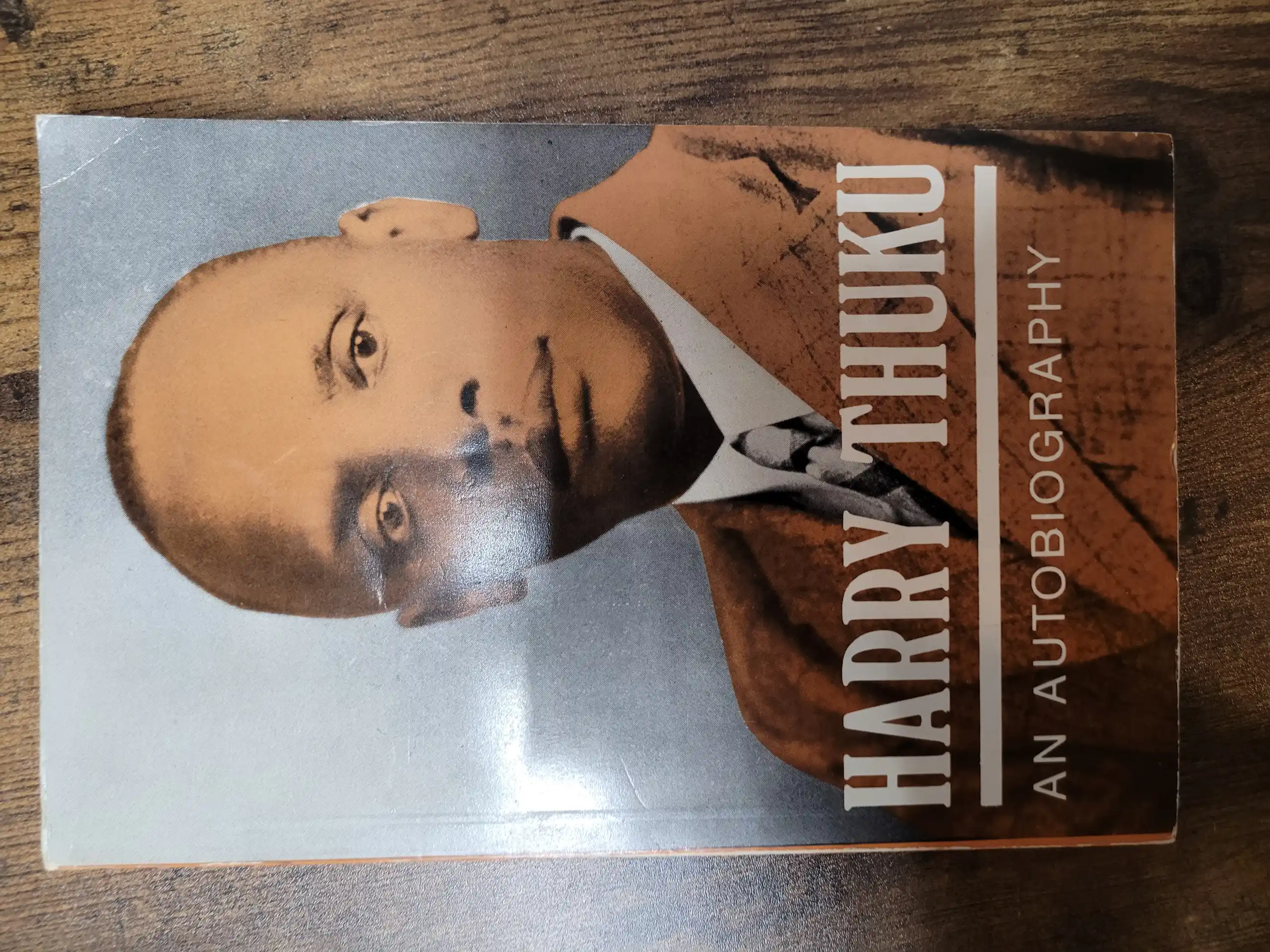
Harry Thuku
 Kenya
KenyaBirthday
1895
Birth Sign
Capricorn
Birthplace
Kiambu, Kenya
Age
Died at 75
About
Harry Thuku was a Kenyan politician and one of the earliest architects of African nationalism in colonial Kenya. Born around 1895 in Kiambu, he spent his life fighting for the rights of the Kikuyu people and broader African self-determination. His activism laid the groundwork for the independence movement that would eventually sweep the country, and he remains a contested but essential figure in Kenya's political history.
Thuku's significance rests on his pioneering organizational work in the 1920s. He co-founded the Young Kikuyu Association and the East African Association, giving a voice to African grievances at a time when colonial authorities dismissed them. His arrest in 1922 and subsequent exile turned him into a symbol of resistance, even as his later opposition to the Mau Mau Uprising complicated his legacy. Today, historians view him as a visionary who helped ignite the struggle for freedom, even as his later choices diverged from the radical currents he had helped set in motion.
Early Life & Background
Harry Thuku was born in the Kambui region of British Kenya, in the village of Mitahato, Kiambu, around 1895. He came from an educated Kikuyu family, which gave him opportunities uncommon for Africans under colonial rule. He attended mission schools, where he learned to read and write in English and Swahili, skills that would later prove vital in his political work.
As a young man, Thuku worked as a clerk and interpreter for colonial administrators, a position that exposed him to the inner workings of the colonial system. He saw firsthand how policies like the kipande (identity card) system and land expropriation oppressed Africans. By his early twenties, he had begun to speak out publicly, challenging the contradictions in colonial policies that promised one thing and delivered another. His sharp tongue and fearless criticism quickly earned him a following among the Kikuyu, who saw him as a voice for their grievances.
Thuku's political awakening came at a time when African political organization was barely tolerated. In 1921, he helped form the Young Kikuyu Association, which later became the East African Association. These groups were among the first to demand an end to forced labor, lower taxes, and the return of stolen lands. Thuku's message spread rapidly, and he became a central figure in the growing nationalist movement, setting the stage for his later prominence.
Career Growth
Harry Thuku's political career took a dramatic turn in 1922 when he was arrested for his opposition to British colonial policies. His detention sparked a massive protest in Nairobi, where nearly 10,000 people gathered at the Central Police Station to demand his release. The protest ended in tragedy when police opened fire, killing several demonstrators, but it marked a turning point in Kenyan nationalism. Thuku was exiled to remote areas of Kenya from 1922 to 1931, a period that silenced him but also turned him into a martyr for the cause.
After his release in 1932, Thuku returned to politics with renewed vigor. He assumed the presidency of the Kikuyu Central Association, a major political body, and in 1935 founded the Kikuyu Provincial Association. These organizations gave him a platform to continue advocating for African rights, though he often clashed with younger, more radical nationalists. His most enduring achievement came in 1944 when he established the Kenya African Study Union, which later evolved into the Kenya African National Union (KANU). KANU would go on to lead Kenya to independence in 1963, making Thuku a foundational figure in the country's political evolution.
However, Thuku's later years were marked by controversy. He openly opposed the Mau Mau Uprising in the 1950s, a stance that alienated him from many of his former allies. He retired from active politics and turned to coffee farming, living quietly until his death in 1970. His autobiography, published posthumously in 1971, offers a firsthand account of his life and times.
Career Timeline
Public Image & Style
Harry Thuku's public image is a study in contrasts. To his early followers, he was a fearless champion of African rights, a man who spoke truth to power and paid for it with exile. His arrest and the subsequent protest made him a symbol of resistance, and his organizational skills earned him respect as a foundational nationalist leader.
Yet his later opposition to the Mau Mau Uprising tarnished his reputation among many Kenyans. Some saw him as a traitor to the cause he had once championed, a charge that has lingered in historical memory. Today, Thuku is remembered as a complex figure: a visionary who helped ignite the independence movement but whose later choices diverged from the radical path he had set in motion. His legacy is debated, but his place in Kenya's political history is secure.
Fame & Fandom (iFAMOUS Rankings)
Harry Thuku remains a figure of historical gravity rather than modern celebrity worship, lacking the organized fan clubs, viral campaigns, or specific fandom names that characterize contemporary pop culture icons. His legacy is sustained through academic study, political discourse, and commemorative acts by historians and civil society groups rather than active fan rituals or chart-driven engagement. There is no documented name for any fanbase associated with him, as his influence stems from his role as a pioneering anti-colonial nationalist who died in 1970, long before the era of digital fandoms. While recent accounts suggest his life serves as an inspirational touchstone for Gen Z activists seeking historical context for their struggles, this represents a scholarly and civic appreciation rather than a formalized fan movement. Consequently, no fan-funded projects, subway advertisements, or concert-related lore exist to define his posthumous cultural footprint. Regarding his standing in global fame metrics, iFANN has not yet collected sufficient data to assign a ranking. As of August 2026, Harry Thuku is currently listed as NOT_EVALUATED within the iFANN database, meaning no ordinal position or scope-based rank has been established for him at this time.
Interesting Facts and Legends
Harry Thuku's final will disclosed that he left behind only Sh32 upon his death, a sum that stands in stark contrast to his immense political influence and the millions of lives he impacted. He was renowned for his fiery oratory, frequently drawing large crowds to Nairobi streets to deliver passionate speeches condemning colonial rule. In 1921, he sent a famous cable to the colonial government demanding the repeal of native registration, a bold diplomatic move that helped ignite the nationalist movement. Despite his subsequent opposition to the Mau Mau Uprising, his early activism inspired a generation of leaders, including Jomo Kenyatta, who joined the East African Association during its formative days. Thuku was fluent in English, Swahili, and Kikuyu, languages he utilized to bridge communities and disseminate his political message. A legendary moment occurred when police opened fire on an unarmed crowd demanding his release, killing approximately ten people; this event is widely regarded as the first major political massacre in Kenya and cemented his status as a martyr. Another enduring story involves Kikuyu women who, following his arrest, marched in trousers and men's attire to reject colonial gender norms and show solidarity with their imprisoned leader. This display of female agency remains a powerful visual in Kenyan nationalist lore. The phrase inscribed on his tombstone, '(We) demand repeal natives registration...', continues to encapsulate his lifelong fight against colonial oppression.
Notable Quotes
“(We) demand repeal natives registration...”
“I have always believed in the power of the people to shape their own destiny.”
Family & Personal Life
Details about Harry Thuku's family remain scarce in historical records. He was born into a Kikuyu family in Kiambu, but little is known about his parents or siblings. His upbringing in a relatively educated household likely shaped his early opportunities, but the specifics are not well documented.
Thuku's personal life, including marriage and children, is not extensively covered in the available sources. His last will, however, paints a picture of a man who lived modestly, with few material possessions. He spent his later years as a coffee farmer, a quiet existence far removed from the political storm he once stirred.
Notable Connections
Relationships & Dating History
Harry Thuku's personal life, including his relationships, is not well-documented in the available sources. Historical records focus primarily on his political activities, and information about his romantic partners or family life is scarce.
It is known that he was a private individual, and his later years were spent in relative obscurity as a coffee farmer. As of 2026, no public records detail his relationship status, and he is not known to have been married or in a publicly documented partnership.
Death & Aftermath
Died
June 14, 1970 (aged 75)
Death Place
Kiambu, Kenya
Cause of Death
Reported natural causes
The passing of Harry Thuku in June 1970 elicited a complex response that reflected the polarized nature of his legacy within Kenya's independence movement. While official tributes acknowledged his status as a founding father of African nationalism, many former comrades and fellow freedom fighters viewed him with suspicion, regarding him as a traitor who had compromised with the colonial regime following his early arrest and exile. Thuku died on 14 June 1970 at his home in Kiambu, Kenya, at the age of seventy-five. Historical accounts describe his final days as quiet, with no mention of sudden violence, accident, or criminal investigation surrounding the event. The circumstances suggest he passed away naturally.
His estate was minimal, leaving only thirty-two shillings and personal possessions to his wife according to his last will and testament. Funeral arrangements were held shortly after his death in Kiambu, consistent with local burial practices of the era, though specific details regarding attendees or venue remain unrecorded in available sources. In the decades since, his influence has been preserved through various commemorative efforts, including the naming of Harry Thuku Road in Nairobi. Posthumously, he has become the subject of numerous academic studies analyzing his role in the Thuku Revolt and Kikuyu women's resistance, ensuring his place in historical discourse despite the controversies of his life.
Net Worth (Estate Value)
$1 Million
iFANN Editorial Team estimate
Harry Thuku's net worth is difficult to estimate given the era and his modest lifestyle. Historical records indicate he had few possessions at the time of his death, with only Sh32 in his possession. His income came primarily from his work as a clerk and later as a coffee farmer. His autobiography, published posthumously, likely generated some royalties, but these were minimal. As of 2026, his estate is not known to have significant value, and no major posthumous earnings have been reported. His legacy is primarily historical and political rather than financial. Per iFANN's editorial analysis, his net worth is estimated at around $1 Million, reflecting the intangible value of his contributions to Kenya's independence movement.
Awards & Accolades
View 1 records, honours and achievementsKnown For
East African Association
1921 · Co-founder
Kikuyu Central Association
1932 · President
Kenya African Study Union
1944 · Founder
Keywords
Sources
Quick Facts
- Profession
- politician
- Born
- 1895
- Birthplace
- Kiambu, Kenya
- Died
- June 14, 1970
- Death Place
- Nairobi
- Gender
- Male
- Birth Sign
- Capricorn
Frequently Asked Questions
Who was Harry Thuku?
When was Harry Thuku born and when did he die?
What organizations did Harry Thuku help found?
Why was Harry Thuku exiled?
What is Harry Thuku's legacy?
Similar People
Join the community
fans discussing