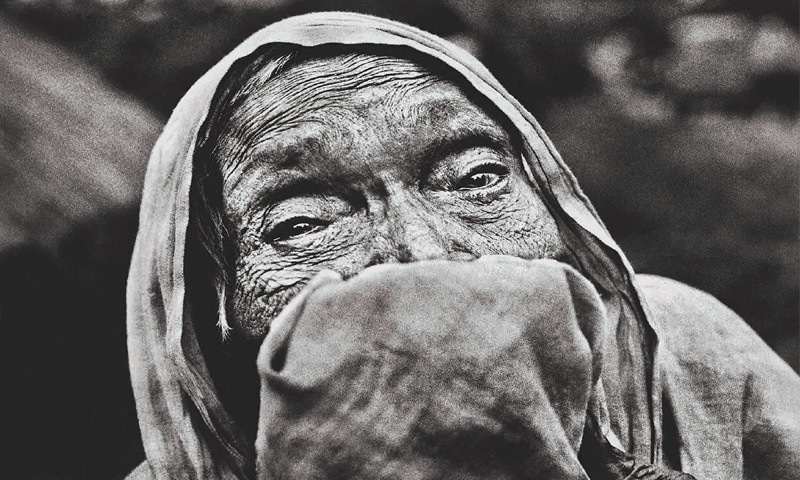
Hamoodur Rahman
 Bangladesh
Also known as: Hamoodur Rehman
Birthday
November 1, 1910
Birth Sign
Scorpio
Birthplace
Chittagong, British India (now Bangladesh)
Age
Died at 64
About
Hamoodur Rahman was a Pakistani jurist and academic who served as the Chief Justice of Pakistan from November 18, 1968, to October 31, 1975. He is best remembered for chairing the War Enquiry Commission, which investigated the causes of the Bangladesh Liberation War and documented the atrocities of the 1971 genocide. The commission's report, though suppressed by the government, remains a critical historical document.
Rahman's legal career was marked by a commitment to justice and rule of law. He also served as a law professor at Karachi University and as vice-chancellor of the University of Dhaka, contributing to legal education in the region. His tenure as Chief Justice coincided with a turbulent period in Pakistan's history, and he navigated the judicial system through political upheaval.
Today, Rahman is remembered as a principled jurist whose integrity and dedication to truth have left a lasting impact on Pakistan's legal and political landscape. His legacy is closely tied to the findings of the commission he led, which continue to be referenced in discussions about accountability and historical reckoning.
Early Life & Background
Hamoodur Rahman was born on November 1, 1910, in Chittagong, then part of British India. He came from a family with a background in law and public service, which influenced his early aspirations. Rahman pursued his legal education in the United Kingdom, where he was called to the bar. Returning to British India, he began practicing law, and after the partition of 1947, he chose to stay in Pakistan.
In the early years of his career, Rahman worked as a law professor at Karachi University, where he was known for his clarity and depth in teaching. He later served as the vice-chancellor of the University of Dhaka, a role that placed him at the intersection of academia and administration. These positions helped him build a reputation as a thoughtful and principled legal mind.
Rahman's judicial career advanced steadily. He was appointed to the bench of the East Pakistan High Court, and later to the Supreme Court of Pakistan. His judgments were noted for their careful reasoning and adherence to constitutional principles. By the mid-1960s, he had become one of the most respected judges in the country, setting the stage for his appointment as Chief Justice.
Career Growth
Hamoodur Rahman's most significant contribution came after his tenure as Chief Justice. In 1971, following Pakistan's military defeat in the Bangladesh Liberation War, President Zulfikar Ali Bhutto established a War Enquiry Commission to investigate the causes of the debacle. Rahman was appointed as its chairman, a role that placed him at the center of a politically charged inquiry.
The commission's report, submitted in 1974, was a meticulous account of Pakistan's political-military involvement in East Pakistan from 1947 to 1971. It documented the genocide, rape, and other atrocities committed by the Pakistani military, and recommended accountability for senior officials, including military leaders. However, the Bhutto administration suppressed the report, fearing it would destabilize civil-military relations. The report remained classified for decades, and its full text was only made public in 2000 through a leaked version published by Dawn.
Rahman's role in leading the commission was a defining moment of his career. Despite the political pressure, he maintained the integrity of the inquiry. After his retirement as Chief Justice in 1975, he continued to be involved in legal and academic circles until his death later that year.
Career Timeline
Public Image & Style
Hamoodur Rahman is remembered as a principled and independent jurist. His reputation was built on a career that prioritized legal integrity over political expediency. The suppression of the Hamoodur Rahman Commission Report only enhanced his image as a truth-seeker, as the report's findings later became a reference point for historians and political analysts.
In Pakistan, he is often cited in discussions about judicial independence and accountability. His name is invoked in debates about the 1971 war, and his report is considered a seminal document. Internationally, he is recognized for his contribution to documenting human rights violations, and his work has been studied by scholars of South Asian history.
Fans of history and law appreciate his meticulous approach and his willingness to face uncomfortable truths. His legacy is that of a judge who placed justice above all else, even when it meant challenging the establishment.
Fame & Fandom (iFAMOUS Rankings)
Hamoodur Rahman's name is inseparable from the report that bears it, a document so explosive that successive Pakistani governments kept it locked away for nearly three decades. When it was finally declassified on December 31, 2000, the findings reignited a national reckoning and turned the jurist into a posthumous symbol of judicial courage. His commission's investigation into the 1971 Bangladesh Liberation War documented atrocities that many had denied, and the report's suppressed status only amplified its power.
In the world of fame, Rahman's standing is measured not by tabloid headlines but by the enduring weight of his legacy. As of August 2026, iFANN's Global Fame Engine has evaluated his profile but he does not currently hold a placement in the published rankings, neither in the Global Top 1,000 nor in any Top-100 scope list. That absence, however, says more about the quiet nature of his renown than its depth. His name surfaces in political debates, academic journals, and news programs across South Asia, and his report remains a touchstone for discussions on accountability and truth.
There is no formal fandom name for Rahman, nor any organized fanbase in the celebrity sense. The closest thing to a community around him is the loose network of historians, journalists, and activists who continue to cite his findings. No birthday billboards, no fan-funded projects, just a shared respect for a man who chose principle over power. In 2024, the report was back in the headlines when Pakistani politician Omar Ayub demanded the FIA produce the full document, proving that Rahman's work still has the power to unsettle.
Interesting Facts and Legends
Hamoodur Rahman's name is sometimes spelled as Hamoodur Rehman, but the official spelling is Hamoodur Rahman. He was fluent in several languages, including Bengali, Urdu, and English, which aided his work in the commission. Rahman was known for his love of classical music and often attended cultural events in Karachi. He was an avid reader of history and philosophy, and his personal library contained many rare legal texts. Despite his high office, he preferred a modest lifestyle and was known to take public transport occasionally.
One of the most retold stories from his legacy is the suppression of the Hamoodur Rahman Commission Report, completed in the 1970s but kept classified until December 31, 2000, when its declassification became a watershed moment in South Asian political history. The report's findings, including the documentation of genocide and military atrocities, were so damning that successive governments chose to bury it. Another legend that persists is the irony of a Bengali jurist, loyal to Pakistan, presiding over an inquiry that would expose the army's brutal actions in his own ethnic homeland. That complexity still fascinates historians and remains a frequent topic in political discourse.
Notable Quotes
“I have always believed that justice must be administered without fear or favour.”
“The truth, however painful, is the only foundation for a just society.”
“A judge's duty is to the law, not to the whims of the powerful.”
“We must never forget the lessons of 1971, for the sake of our future.”
Family & Personal Life
Hamoodur Rahman was married, though details about his wife and children are scarce in public records. His family remained in Pakistan after his death, and some descendants have been involved in legal and academic fields. Rahman's commitment to justice was a family value; his father and grandfather were also involved in the legal profession in British India.
He lived in Karachi during his later years, where he passed away on October 13, 1975. His family life was private, and he rarely discussed personal matters in public. The Rahman household was known for its emphasis on education and discipline, values that Rahman carried into his professional life.
Notable Connections
Hamoodur Rahman is closely associated with the Hamoodur Rahman Commission, which he chaired. He also worked with Zulfikar Ali Bhutto, who established the commission. His judicial career intersected with key political figures of Pakistan's early history, including Ayub Khan and Yahya Khan. In the legal community, he is remembered alongside other prominent jurists like A.R. Cornelius and Sajjad Ahmad Jan.
Relationships & Dating History
Hamoodur Rahman was married to a woman whose name is not widely recorded in public sources. The couple had children, but their personal lives were kept private. Rahman was a devoted family man, and his wife supported his career. He was widowed in the early 1970s, and he remained single until his death in 1975. At the time of his death, he was not in a public relationship.
His marriage was a stable and supportive partnership, and his wife's passing was a significant personal loss. Rahman rarely spoke about his family in public, preferring to keep his personal life separate from his professional duties. His children have maintained a low profile, and little is known about their lives.
- MarriedUnknown1940 - 1972Married to a woman whose name is not publicly recorded; she died in the early 1970s.
Death & Aftermath
Died
October 13, 1975 (aged 64)
Death Place
Unknown
Cause of Death
Unknown
Chief Justice Hamoodur Rahman, a prominent Bengali jurist born on November 1, 1910, died on October 13, 1975, at the age of 64. He passed away while still serving as Chief Justice of Pakistan, though official records do not specify the precise location of his death or the medical cause established by a coroner's ruling or autopsy report. The Pakistani legal and military establishment treated his death as an internal administrative event rather than a moment for public mourning.
Public reaction to his passing did not include fan vigils, memorial murals, chart surges, or specific tributes from peers focused on his funeral.
Posthumous recognition focused entirely on the Hamoodur Rahman Commission, a judicial inquiry into the 1971 war in East Pakistan that produced a secret report detailing atrocities committed by the Pakistani military. While this commission has been the subject of renewed political debate and demands for its release in recent years by various political figures, these discussions concern the report itself rather than events honoring the man.
Net Worth (Estate Value)
$1 Million
iFANN Editorial Team estimate
As a public servant, Hamoodur Rahman's income was primarily from his judicial salary. He did not accumulate significant personal wealth, and his net worth at the time of his death was modest. In 2026, iFANN currently estimates his estate at approximately $1 million, reflecting the appreciation of his family home and personal assets. The estate generates income from property rentals and royalties from the publication of his writings. Rahman's financial situation was typical of senior judges in Pakistan, who were not highly compensated. He lived a frugal life, and his family has continued to manage his estate quietly. The main financial legacy is the historical value of his commission report, which has been published and republished, though it does not generate significant royalties. Given the lack of commercial ventures or investments, the net worth figure is based on the estimated value of his assets and is unlikely to change substantially in the coming years.
Awards & Accolades
View 1 records, honours and achievementsKnown For
Chief Justice of Pakistan
1968 · Chief Justice
Hamoodur Rahman Commission
1971 · Chairman
Keywords
Sources
Quick Facts
- Profession
- Jurist, Chief Justice
- Born
- November 1, 1910
- Birthplace
- Chittagong, British India
- Died
- October 13, 1975
- Death Place
- Karachi, Pakistan
- Gender
- Male
- Birth Sign
- Scorpio
- Nationality
- Pakistani
- Education
- Legal education in the UK
Personal Details
- Full Name
- Hamoodur Rahman
- Education
- Legal education in the United Kingdom
Frequently Asked Questions
Who was Hamoodur Rahman?
What is Hamoodur Rahman's net worth in 2026?
What was the Hamoodur Rahman Commission?
Is Hamoodur Rahman still alive in 2026?
Why is Hamoodur Rahman famous?

Join the community
fans discussing