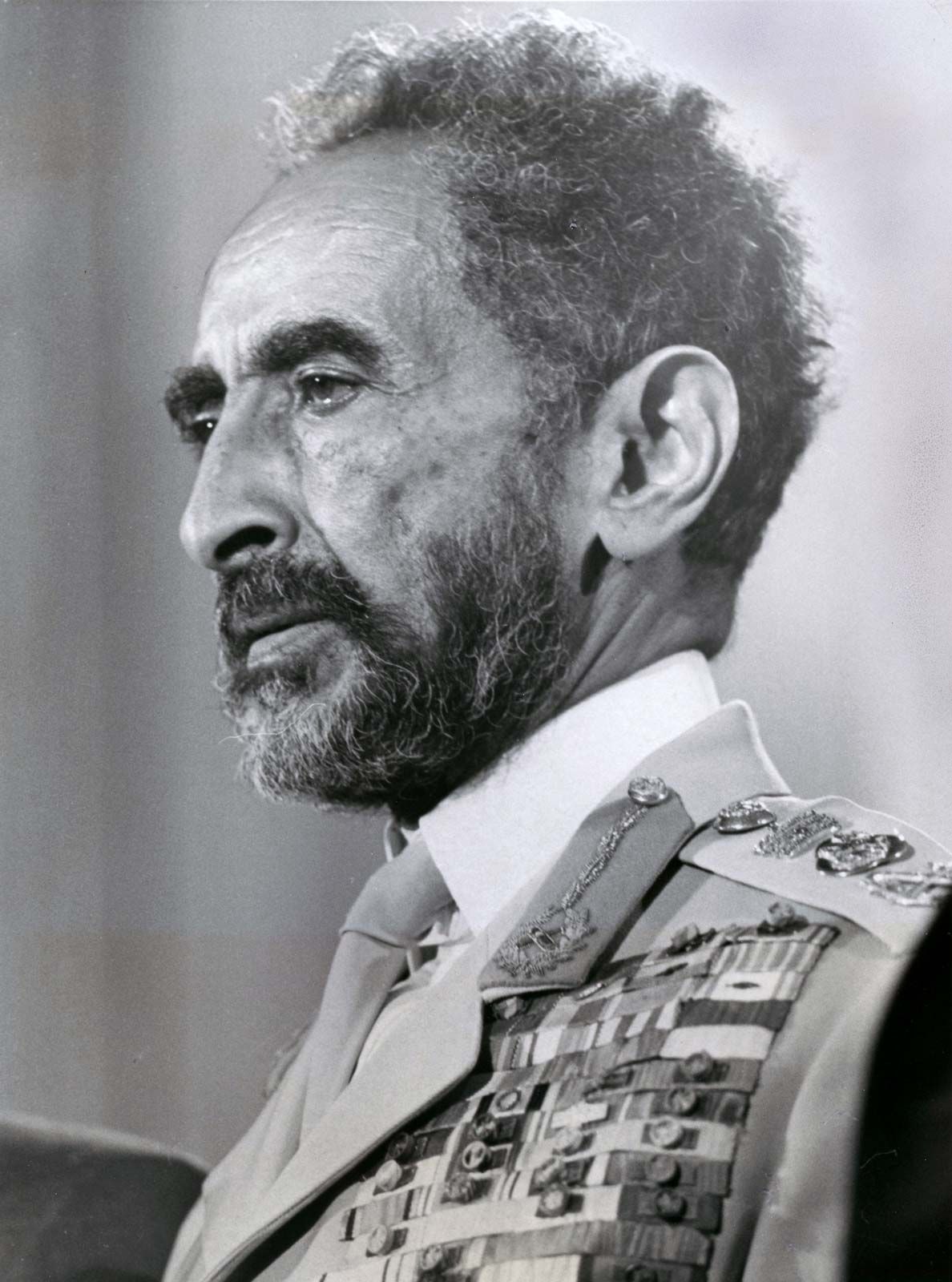
Haile Selassie I
 Ethiopia
Emperor of Ethiopia•politician•monarch
Also known as: Ras Tafari Makonnen, Lion of Judah, Emperor Haile Selassie I
Birthday
July 23, 1892
Birth Sign
Leo
Birthplace
Ejersa Goro, Harar Region, Ethiopia
Age
Died at 83
Height
5 ft 6 in (168 cm)
About
Haile Selassie I was the former Emperor of Ethiopia, a global symbol of African independence and the central figure of the Rastafari movement. Crowned in 1930, he ruled for 44 years before being overthrown in 1974. His reign transformed Ethiopia through modernization efforts, including the country's first written constitution, the abolition of slavery, and the establishment of diplomatic ties worldwide. Selassie remains one of the most iconic leaders of the 20th century, admired for his defiance against fascist Italy and his role in founding the Organisation of African Unity. Today, his legacy lives on through Rastafari, which reveres him as a messianic figure, and through his enduring influence on Pan-Africanism. His life story continues to inspire documentaries, books, and discussions about leadership and decolonization.
Early Life & Background
Haile Selassie was born Tafari Makonnen on July 23, 1892, in the village of Ejersa Goro, located in the Harar region of Ethiopia. His father, Ras Makonnen, was a governor of Harar and a trusted cousin of Emperor Menelik II. His mother, Yeshimebet Ali, was a noblewoman from the Amhara-Wollo aristocracy. Tafari was baptized in the Ethiopian Orthodox Tewahedo Church and received a traditional education, studying Ge'ez liturgy and Amharic literature, alongside military training. At age 13, Emperor Menelik II appointed him Dejazmach, a military rank equivalent to commander of the gate. His father died in 1906, and Tafari was placed under the guardianship of his uncle and later the emperor himself. He attended the Menelik II School in Addis Ababa, one of Ethiopia's first modern schools, where he learned French and was exposed to Western ideas. Deeply influenced by Japan's Meiji Restoration, he saw modernization as a path to African strength. In 1907, at just 15, he was appointed Governor of Gara Muleta. Three years later, he became Governor of Harar, a key province. During the power struggle after Menelik's death, Tafari sided with the Shoan aristocracy against Emperor Iyasu V, who was deposed in 1916. That same year, he was instrumental in placing Empress Zewditu on the throne and was named Regent Plenipotentiary and heir to the throne. For the next 14 years, he effectively ran the empire, modernizing the administration, establishing diplomatic relations with European powers, and securing Ethiopia's admission to the League of Nations in 1923. In 1924, he toured Europe, including Britain, France, Italy, and Belgium, the first Ethiopian ruler to do so, studying military, educational, and infrastructure systems. His path to the throne was cleared when he defeated rival Ras Gugsa Welle Bitul at the Battle of Anchem on March 31, 1930.
Career Growth
Haile Selassie was crowned Emperor on November 2, 1930, at St. George's Cathedral in Addis Ababa, a global media event. In 1931, he introduced Ethiopia's first written constitution, centralizing power while establishing a bicameral parliament. The Second Italo-Ethiopian War began in 1935; Selassie personally led troops at the Battle of Maychew in March 1936. After defeat, he went into exile in Bath, England, from May 1936 to January 1941. On June 30, 1936, he delivered a historic speech before the League of Nations in Geneva, warning, 'It is us today. It will be you tomorrow,' a rallying cry against fascism. Returning from Anglo-Egyptian Sudan in January 1941, he coordinated Ethiopian guerrilla forces (the Arbegnoch) with British troops and re-entered Addis Ababa on May 5, 1941, now celebrated as Liberation Day. In 1942, he formally abolished slavery. In 1950, he oversaw the federation of Eritrea with Ethiopia. In 1955, he promulgated a revised constitution expanding parliamentary representation. In 1963, he hosted the inaugural meeting of the Organisation of African Unity (OAU) in Addis Ababa on May 25, becoming its first chairman. He advocated for moderate Pan-Africanism, often clashing with Kwame Nkrumah. However, his later years were marked by growing criticism over autocratic governance, land inequality, and the 1973 Wollo famine, which his government initially denied. On September 12, 1974, he was overthrown by the Derg, a Marxist military junta, and placed under house arrest at the Jubilee Palace.
Career Timeline
Public Image & Style
Haile Selassie cultivated an image of regal dignity and modernizing leadership, often seen in military uniform or flowing robes, with his signature trimmed beard and penetrating gaze. His public persona was that of a wise, benevolent patriarch, a 'Lion of Judah' who stood up to colonial powers. Internationally, he was admired as a statesman and symbol of African freedom, especially after his League of Nations speech. However, within Ethiopia, his image grew more complicated over time, seen by some as an autocrat disconnected from the suffering of his people during the 1973 famine. In Rastafari, he is revered as Jah, the living God, a status that transcends his political legacy. His social media presence today is maintained by fan accounts, with large followings on Instagram and Facebook, where he is celebrated as a spiritual icon and historical figure. His speeches, particularly his 1963 OAU address, are widely shared and quoted.
Fame & Fandom
Haile Selassie I stands as a towering figure of 20th-century history, yet iFANN's Global Fame Engine has evaluated him and found that he does not currently hold a placement in the published rankings (Global Top 1,000 or a Top-100 scope list). He is not currently ranked among the world's most famous individuals in the database, a neutral status that reflects his transition from active global statesman to a subject of deep religious veneration rather than secular celebrity. His influence does not flow through modern fan clubs or commercial campaigns but resides entirely within the Rastafari movement, a global community that reveres him as a messianic figure without assigning their group a formal fandom name beyond "Rasta." This devotion manifests not in chart-topping singles or viral marketing pushes but in sacred rituals like Grounation Day, which commemorates his 1966 visit to Jamaica with processions and drumming that draw thousands. The movement treats his arrival in Kingston as a divine fulfillment of prophecy, creating a legacy where historical facts blend seamlessly with theological belief. While he never engaged with fans in the contemporary sense, his 1936 address to the League of Nations remains a defining moment of moral authority that cemented his status as a symbol of resistance against colonial oppression. The community honors him through annual observances on his birthday and during memorial advocacy efforts, seeking to preserve sites linked to his life as heritage landmarks. These actions function as the closest equivalent to organized fan projects, focusing on historical preservation rather than commercial promotion. His image persists as one of regal dignity and spiritual power, transcending the metrics used to measure modern fame.
Interesting Facts and Legends
Born Tafari Makonnen, his name became the root of the term 'Rastafari,' though he remained a devout Ethiopian Orthodox Christian who never claimed divinity himself. He kept a personal collection of lions at the Imperial Palace to embody his title 'Lion of Judah.' His autobiography, 'My Life and Ethiopia's Progress,' was penned in Amharic and released posthumously in 1976. A keen photographer, he documented his travels extensively throughout his reign. His beloved dog, Lulu, often attended official functions and even possessed a custom-made miniature throne. Legends surrounding him are anchored in verified events that took on mythic weight. The story of his 1966 visit to Jamaica describes crowds shutting down streets in an electric, messianic atmosphere where thousands gathered to see him, an event that solidified the Rastafari identity. Another pivotal narrative centers on his 1936 speech to the League of Nations, where he pleaded for justice against Italian aggression, a moment now viewed as a prophetic declaration of African dignity. Folklore also highlights his humanitarian acts, such as taking in Armenian orphans after the genocide and educating them in a band, reinforcing his image as a righteous king. His role in founding the Organisation of African Unity in 1963 further cements his reputation as a Pan-Africanist leader whose strategic importance continues to be discussed in geopolitical circles.
Notable Quotes
“It is us today. It will be you tomorrow.”
“Throughout history, it has been the inaction of those who could have acted, the indifference of those who should have known better, that made the triumph of evil possible.”
“We must become members of a new race, overcoming petty prejudice, owing our ultimate allegiance not to nations but to our fellow men within the human community.”
“A people free to choose will always choose peace.”
“Until the philosophy which holds one race superior and another inferior is finally and permanently discredited and abandoned, everywhere is war.”
Family & Personal Life
Haile Selassie was born to Ras Makonnen Woldemikael Gudessa, governor of Harar and a cousin of Emperor Menelik II, and Yeshimebet Ali Abba Jifar, a noblewoman from the Amhara-Wollo aristocracy. His father died in 1906, and his mother died when he was very young. He had several siblings, including Dejazmach Yilma Makonnen. In 1911, he married Menen Asfaw, the daughter of Dejazmach Asfaw of Ambassel and a niece of Empress Zewditu. The marriage was arranged to consolidate his political position. Menen was crowned Empress Consort in 1930 and was a devout Orthodox Christian who supported charitable works. They had six children: Princess Romanework (1911-1941, died in Italian captivity), Princess Tenagnework (1912-2003), Crown Prince Asfaw Wossen (1916-1997, later Emperor-in-exile Amha Selassie I), Princess Zenebework (1917-1934, died young), Princess Tsehai (1919-1942, died in childbirth), and Prince Makonnen (1923-1957, died in a car accident). After Menen's death in 1962, Selassie did not remarry. His estate is managed by the Haile Selassie Family Trust, with his grandson Prince Ermias Sahle Selassie actively preserving his legacy.
Notable Connections
Haile Selassie was closely associated with the Rastafari movement, which emerged in Jamaica in the 1930s and reveres him as the returned messiah. He was also a key figure in Pan-Africanism, working alongside leaders like Kwame Nkrumah and Jomo Kenyatta. His relationship with the United Kingdom was significant, particularly during his exile in Bath. He had diplomatic ties with many world leaders, including Franklin D. Roosevelt, Winston Churchill, and John F. Kennedy.
Relationships & Dating History
Haile Selassie was married to Menen Asfaw from 1911 until her death on February 15, 1962. The marriage was arranged to consolidate his political position, as Menen was the daughter of Dejazmach Asfaw of Ambassel and a niece of Empress Zewditu. She was crowned Empress Consort in 1930 and was a devout Orthodox Christian who supported charitable works. They had six children together. There are no credible records of any extramarital relationships or affairs. Selassie remained widowed after Menen's death and never remarried. As of his death in 1975, his relationship status was widowed.
- MarriedMenen Asfaw1911 - 1962Arranged marriage to consolidate political position; she was crowned Empress Consort in 1930.
Death & Aftermath
Died
August 27, 1975 (aged 83)
Death Place
Addis Ababa
Cause of Death
Reported respiratory failure from prostate infection and heart failure
The global Rastafari community responded to the news with immediate, profound grief, treating the event as a spiritual crisis rather than a mere political transition. Vigils erupted in Jamaica and beyond, solidifying the Emperor's status as a messianic figure known as Jah, even as the Ethiopian government under the Derg regime strictly suppressed any open mourning within the country itself. The new Marxist-Leninist administration erased his name from public discourse and banned any official tributes, leaving the world's admiration for Haile Selassie I to simmer beneath a veil of secrecy. On August 27, 1975, the 225th and final Emperor of Ethiopia passed away at the Red Cross Hospital in Addis Ababa while held under house arrest by the military junta that had overthrown him nearly a year earlier.
While the official narrative attributed his death to respiratory failure stemming from complications of a prostate infection and heart failure, this account remained unsubstantiated by an independent medical examiner or autopsy report released to the public. Widespread rumors and later testimonies suggested he may have been suffocated with a pillow or strangled by soldiers, yet these conflicting narratives persisted because the regime prevented any external investigation or verification of the body's condition. Following his death, the initial burial took place in secret within an unmarked grave on the palace grounds, attended only by a handful of loyalists to prevent the formation of a martyrdom site. It was not until 1992 that the new Ethiopian government ordered the exhumation of his remains, leading to a private reburial ceremony at the Holy Trinity Cathedral in Addis Ababa on November 5, 1992.
This service, attended by family members including Prince Asfaw Wossen and religious leaders, marked the first public acknowledgment of his resting place since his passing. Posthumously, Haile Selassie I became the subject of numerous books, documentaries, and films exploring his life and role in Rastafarian theology, including works like Haile Selassie: The Man, the Myth, the Legacy . His estate was handled privately by his descendants following the 1992 reburial, while institutions like the Haile Selassie I Memorial Foundation dedicated scholarships to African unity and human rights.
Net Worth (Estate Value)
Haile Selassie's personal net worth at the time of his death is not publicly documented, as his wealth was closely tied to the Ethiopian imperial treasury, which was seized by the Derg in 1974. His estate today is managed by the Haile Selassie Family Trust and the Ethiopian Orthodox Tewahedo Church. Revenue sources include book royalties from his autobiography 'My Life and Ethiopia's Progress,' licensing of his image and name for commercial and educational purposes, and merchandise related to Rastafari. The exact value of the estate is not disclosed, but it is believed to be modest compared to his former imperial holdings. His grandson, Prince Ermias Sahle Selassie, oversees the trust's efforts to preserve his legacy through educational and charitable initiatives. As of 2026.
Awards Won (5)
Haile Selassie received numerous international orders and decorations, including the Royal Victorian Chain from the United Kingdom in 1930, the Order of the Garter in 1954, and the Legion of Honour from France in 1932. He was named Time magazine's Man of the Year in 1935. He also received honorary degrees from Oxford, Cambridge, and Howard University, among others. Posthumously, he was awarded the United Nations Human Rights Award in 2000 for his role in advocating for African self-determination.
1935 · Media
Time Magazine
1930 · Order
Known For
Emperor of Ethiopia
1930 · Monarch
League of Nations Speech
1936 · Speaker
Founding of the OAU
1963 · Host and First Chairman
Keywords
Quick Facts
- Profession
- Emperor of Ethiopia, politician, monarch
- Born
- July 23, 1892
- Birthplace
- Ejersa Goro, Harar Region, Ethiopia
- Died
- August 27, 1975
- Death Place
- Addis Ababa, Ethiopia
- Gender
- Male
- Spouse
- Menen Asfaw
- Birth Sign
- Leo
- Height
- 5 ft 6 in (168 cm)
- Children
- 6
Personal Details
- Full Name
- Ras Tafari Makonnen
- Height
- 5 ft 6 in (168 cm)
- Spouse
- Menen Asfaw
- Children
- Princess Romanework, Princess Tenagnework, Crown Prince Asfaw Wossen, Princess Zenebework, Princess Tsehai, Prince Makonnen
- Education
- Menelik II School, Addis Ababa; traditional Ethiopian Orthodox education
Frequently Asked Questions
What is Haile Selassie best known for?
How did Haile Selassie die?
What was Haile Selassie's role in the League of Nations?
Why is Haile Selassie important to Rastafari?
What was Haile Selassie's net worth at the time of his death?
Join the community
fans discussing