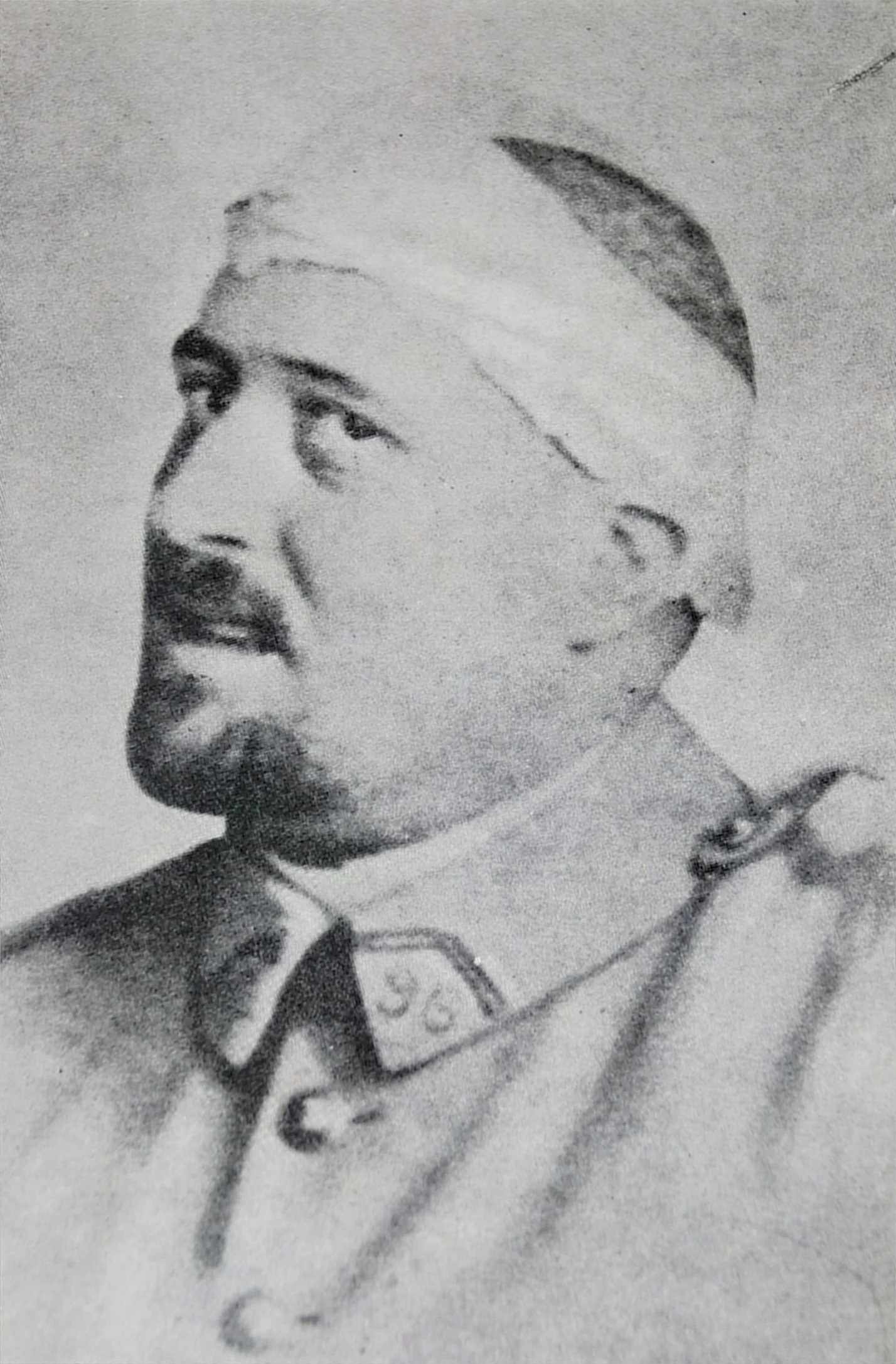
Guillaume Apollinaire
 France
Also known as: Wilhelm Albert Włodzimierz Apolinary Kostrowicki, Guillaume Apollinaire de Kostrowitzky, Wilhelm Apollinaris de Kostrowitzki
Birthday
August 26, 1880
Birth Sign
Virgo
Birthplace
Rome, Italy
Age
Died at 38
Height
5 ft 6 in (168 cm)
About
Guillaume Apollinaire was a Polish-French poet, playwright, novelist, and art critic who reshaped modern poetry and championed the avant-garde. He is best remembered for coining the terms "Cubism" and "Surrealism," and for his radical verse that abandoned punctuation and embraced the imagery of modern urban life. His collection Alcools (1913) and his visual poems in Calligrammes (1918) remain landmarks of literary experimentation.
Apollinaire's influence extended beyond poetry. As a critic, he defended Picasso, Braque, and other Cubist painters, and his writings helped define the movement. He also wrote plays, short stories, and essays, and co-founded the influential magazine Les Soirées de Paris. His play The Breasts of Tiresias (1917) is considered a precursor to Surrealist theatre.
His life was cut short by the Spanish flu in 1918, just days before the Armistice, but his legacy endures. He is celebrated as a pioneer who bridged Symbolism and modernism, and his works are studied worldwide, cementing his place as a giant of 20th-century literature.
Early Life & Background
Born in Rome to a Polish mother and an Italian father whose identity was never confirmed, Apollinaire spent his childhood moving between Monaco, Cannes, and Nice. His mother, Angelica Kostrowicka, raised him and his brother alone, and the family lived in modest circumstances. He attended the Lycée de Cannes and later the Lycée Stanislas in Nice, where he developed a passion for literature, reading widely in French, Latin, and Greek.
At nineteen, Apollinaire moved to Paris, where he worked as a bank clerk, tutor, and ghostwriter while writing his earliest poems and stories. He adopted the pen name "Guillaume Apollinaire" around 1902, derived from his middle names. His early years in the capital were marked by poverty, but he quickly found his way into the bohemian circles of Montmartre and Montparnasse, befriending artists and writers who would shape the avant-garde.
A turning point came in 1907 when he met Pablo Picasso. Their friendship turned Apollinaire into the movement's chief theorist and publicist. He began writing art criticism that explained and promoted Cubism, and in 1911 he coined the term itself. By the time Alcools appeared in 1913, he had already established himself as a central figure in Parisian modernism.
Career Growth
Apollinaire's breakthrough came with the publication of Alcools in 1913, a collection that discarded punctuation and mixed free verse with modern imagery. Poems like "Zone" and "Le Pont Mirabeau" became instant classics, and the book is now seen as a watershed in French poetry. That same year he published Les Peintres cubistes, a collection of essays defending Cubism, and co-founded Les Soirées de Paris.
His output continued across genres. In 1916 he published the novel Le Poète assassiné, and in 1917 his play The Breasts of Tiresias premiered, with program notes that introduced the word "Surrealism." His final major work, Calligrammes (1918), featured poems arranged as visual shapes, a form he called calligrams.
Apollinaire also served in World War I, enlisting in 1914. He was wounded by shrapnel in 1916 and underwent trepanation, but never fully recovered. He died on November 9, 1918, during the Spanish flu pandemic, and was posthumously awarded the Croix de Guerre and declared "Mort pour la France."
Career Timeline
Public Image & Style
Apollinaire's public persona was that of a bohemian intellectual, always at the heart of the Parisian avant-garde. He was known for his round face, prominent nose, and, after his war injury, a shaved head often covered with a distinctive bandage.
His signature style combined classical learning with modern subjects: automobiles, airplanes, and the urban landscape. He wrote without punctuation to create a flowing musicality, and his visual poems merged text and image. Critics and fans alike saw him as the movement's leader, a man who could explain and celebrate the new art of his time.
His admirers, sometimes called "Apollinariens" in academic circles, include poets, artists, and scholars who trace modernism's roots to his work. His poems remain among the most anthologized in French literature, and his influence on Surrealism is universally acknowledged.
Fame & Fandom
Guillaume Apollinaire currently holds no placement in the iFANN Global Top 1,000 rankings. The iFANN Global Fame Engine evaluated his legacy but determined he does not occupy a published position on any scope list as of August 2026. While the modern world lacks a formal fanbase bearing a specific name for this early 20th-century figure, his influence forged an active collective of contemporaries who functioned as his de facto movement. During his life, the circle of Cubists and Dadaists, artists like Pablo Picasso and Marcel Duchamp, did not merely observe him; they relied on him as their theorist and defender in the bohemian cafes of Montparnasse. Today, his following has shifted from street-corner debates to academic halls and poetry readings, where scholars and students keep his work alive. There are no organized charity drives or social media campaigns fueled by a dedicated group calling themselves "Apollinaire Fans." Instead, the closest equivalent to a ritual is the recitation of his watershed poem "Zone" or the appreciation of his visual calligrams, which serve as gateways into his experimental verse. His legacy endures not through viral moments but through the foundational myths of modern art, cementing his status as the poet of the future whose words shaped the trajectory of literature.
Interesting Facts and Legends
Guillaume Apollinaire was arrested in 1911 on suspicion of stealing the Mona Lisa, spending days in prison before authorities cleared him. He coined three pivotal art terms: Cubism in 1911, Orphism in 1912, and Surrealism in 1917. He invented the word "calligramme" to describe his visual poems that merged text with image. An early champion of African art, he wrote seriously about its impact on modern painters. His poem "Zone" stands as a watershed moment in modern poetry, shifting from the Eiffel Tower to childhood memories. He also coined "simultaneism" to describe presenting multiple perspectives at once. Legends surround his wounding in World War I, where a shrapnel fragment near Reims in 1916 led to complications that killed him just weeks before the armistice. A story often retold involves his close bond with Picasso, sharing a studio in the Bateau-Lavoir while defining the aesthetic of an era. Born a stateless immigrant in Rome, his journey from bank clerk to the voice of French modernism remains a central theme in his biography.
Notable Quotes
“Come to the edge, he said. They said: We are afraid. Come to the edge, he said. They came. He pushed them... and they flew.”
“I love men like the sea, and I love the sea like a woman.”
“The past is a mask that we wear.”
“My heart is like a flame that burns in the night.”
Family & Personal Life
Apollinaire's mother, Angelica Kostrowicka, was a Polish noblewoman of Swiss and Italian descent. His father is believed to have been an Italian army officer named Francesco Flugi d'Aspermont, though paternity was never confirmed. Apollinaire was raised primarily by his mother, along with his younger brother Albert.
In 1918, he married Jacqueline Kolb, a widow with red hair whom he nicknamed "la jolie rousse." The marriage lasted only months before his death. They had no children. After his death, Jacqueline managed his literary estate, working to preserve his legacy until her own death in 1967.
Notable Connections
Apollinaire was closely associated with Pablo Picasso, whom he met in 1907 and championed as the leading Cubist painter. He also supported Georges Braque, Henri Rousseau, Marcel Duchamp, and Francis Picabia. His friendships and critical writings helped define the Parisian avant-garde, and he influenced the young Surrealists André Breton, Louis Aragon, and Philippe Soupault.
Relationships & Dating History
Apollinaire's most famous relationship was with painter Marie Laurencin, whom he met through Picasso in 1907. Their six-year affair was passionate and turbulent, ending in 1913. The melancholy of "Le Pont Mirabeau" is often linked to this lost love.
In 1914, he had a brief but intense affair with Louise de Coligny-Châtillon, an aristocrat who inspired his war poetry. The relationship ended in 1915. During the war, he became engaged to Madeleine Pagès, a young woman he met on a train, but the engagement was broken off in 1916 after his head injury.
In 1918, he married Jacqueline Kolb, a widow he nicknamed "la jolie rousse." They were married only months before his death. At the time of his death, he was married to Jacqueline, who survived him and managed his estate until her death in 1967.
- DatedAnnie Playden1901 - 1902Met while he was a tutor in Germany; she rejected him and emigrated to America, inspiring 'La Chanson du Mal-Aimé'.
- DatedMarie Laurencin1907 - 1913A painter and key figure in Cubism; their turbulent relationship ended in 1913.
- DatedLouise de Coligny-Châtillon1914 - 1915An aristocrat who inspired his war poetry; the affair ended during his military service.
- EngagedMadeleine Pagès1915 - 1916Engaged after a brief train meeting and intense correspondence; broken off after his injury.
- MarriedJacqueline Kolb1918 - 1918Married in May 1918; she survived him and managed his estate.
Death & Aftermath
Died
November 9, 1918 (aged 38)
Death Place
Paris, France
Cause of Death
Influenza and ruptured appendix
Guillaume Apollinaire collapsed from fever and weakness in mid-October 1918, ending a frantic period where he continued literary work despite his deteriorating health. He was admitted to the Hôtel-Dieu hospital in Paris on November 4, 1918, just six days before the Armistice that would end World War I. The official cause of death was a severe attack of influenza complicated by a ruptured appendix requiring emergency surgery, though medical historians note his persistent neurological issues from a 1916 shrapnel wound likely contributed to his susceptibility. His funeral took place on November 12, 1918, at the Cimetière du Montparnasse, drawing a significant gathering of artists including Jean Cocteau, Max Jacob, and Pablo Picasso who viewed his passing as a tragic sacrifice of the cultural vanguard.
Tributes poured in immediately from peers like André Breton, whose later founding of Surrealism stood partly on Apollinaire's legacy, while his widow managed his estate to preserve his manuscripts. Posthumous collections, particularly Calligrammes: Poèmes de la paix et de la guerre (1913, 1916), saw immediate re-evaluation and cemented his status as a foundational figure for modernism.
Net Worth (Estate Value)
$2 Million
iFANN Editorial Team estimate
Guillaume Apollinaire's net worth is tied to his literary estate, which continues to generate revenue from royalties and licensing. His works remain in print in French and numerous translations, with major publishers like Gallimard and New Directions keeping them available. Posthumous publications, such as the 2015 Zone: Selected Poems, have introduced his poetry to new audiences. Per iFANN's editorial analysis, the estate's value is estimated at around $2 million as of 2026, reflecting steady income from academic use, anthologies, and ongoing interest in his work. His widow Jacqueline managed the estate until 1967, and it is now administered by literary heirs and agencies. The estate's financial trajectory has been stable, with periodic spikes around anniversaries and new translations. While not among the wealthiest literary estates, Apollinaire's canonical status ensures continued relevance and modest but reliable earnings.
Awards Won (1)
Apollinaire did not receive modern institutional awards, but he was honored for his wartime service with the Croix de Guerre and the posthumous designation 'Mort pour la France.' His works are included in the prestigious Bibliothèque de la Pléiade, and a street and square in Paris bear his name.
1916 · Military
World War I service
Known For
Alcools
1913 · Poetry collection
Calligrammes
1918 · Visual poetry collection
The Breasts of Tiresias
1917 · Play
Les Peintres cubistes
1913 · Art criticism
Keywords
Sources
Quick Facts
- Profession
- poet, writer, playwright
- Born
- August 26, 1880
- Birthplace
- Rome, Italy
- Died
- November 9, 1918
- Death Place
- Paris, France
- Gender
- Male
- Spouse
- Jacqueline Kolb
- Birth Sign
- Virgo
Personal Details
- Full Name
- Wilhelm Albert Włodzimierz Aleksander Apolinary Kostrowicki
- Height
- 5 ft 6 in (168 cm)
- Spouse
- Jacqueline Kolb
- Education
- Lycée de Cannes; Lycée Stanislas, Nice
Frequently Asked Questions
Who was Guillaume Apollinaire?
How did Guillaume Apollinaire die?
What is Guillaume Apollinaire's net worth in 2026?
What is Guillaume Apollinaire best known for?
Did Guillaume Apollinaire invent the word 'Surrealism'?
Similar People
Join the community
fans discussing