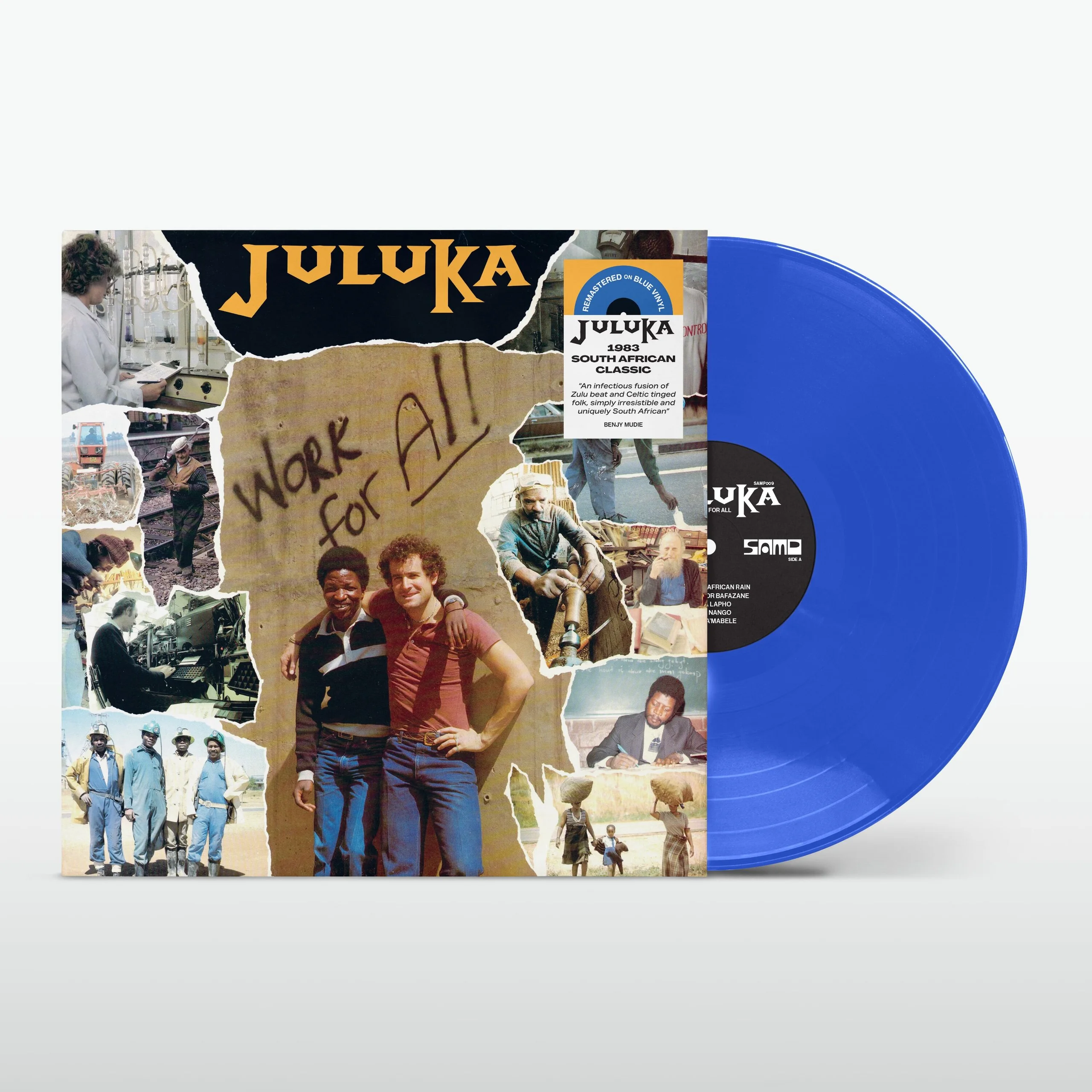
Juluka
 South Africa
The sound of unity against apartheid
2
Members
About
Juluka was a pioneering South African musical ensemble formed in 1969 in Johannesburg. The group is widely recognized as the first successful multi-racial band in apartheid-era South Africa. Founded by Johnny Clegg and Sipho Mchunu, the name "Juluka" translates to "sweat" in Zulu, referencing a bull owned by Mchunu and symbolizing the hard work and physical exertion inherent in their performance style.
The band's core identity revolved around the collaboration between Clegg, a white English-speaking man from Zimbabwe, and Mchunu, a black Zulu musician. They met while working at the University of Natal and bonded over a shared passion for music that defied the racial segregation laws of the time. Clegg learned Zulu dance steps, specifically isicathamiya, and guitar styles from Mchunu, creating a fusion that was revolutionary for its era. While early lineups included other musicians such as Robbie Jansen on flute and Johnny Boshoff on guitar and bass, the group is historically defined by the duo of Clegg and Mchunu.
Despite their massive cultural impact, Juluka did not win mainstream Western awards like Grammys or AMAs during their active years due to the political isolation of South Africa and the niche nature of their sound in the West. However, their legacy is cemented in South Africa and globally through numerous posthumous honors. Johnny Clegg was appointed an Officer of the Order of Canada in 2011 and received the South African Music Industry Award (SAMIA) Lifetime Achievement Award. In 2019, following his death, he was posthumously awarded the National Order of the Baobab by the President of South Africa. The band's song Scatterlings of Africa was inducted into the Grammy Hall of Fame in 2014. They were also inducted into the South African Music Hall of Fame.
Formation Story
The story of Juluka begins in the late 1960s when Johnny Clegg arrived in South Africa from Zimbabwe. Working at the University of Natal, he encountered Sipho Mchunu, a Zulu student and musician. Their meeting sparked a creative partnership that would challenge the very foundations of apartheid society. At a time when mixed-race interactions were heavily restricted and illegal under various segregation acts, these two men began to share music across racial lines. Clegg was fascinated by the Zulu traditions he heard, particularly the vocal harmonies of isicathamiya and the rhythmic guitar patterns of maskandi. He dedicated himself to learning these styles from Mchunu, who taught him the language and the dance steps.
Formalizing their partnership took years of negotiation and risk. They faced constant threats from the government, which viewed their interracial collaboration as a direct challenge to white supremacy. Despite police harassment and the danger of imprisonment, they continued to practice and perform. The name "Juluka" was chosen to reflect the sweat and labor involved in their art, drawing inspiration from a bull owned by Mchunu. This choice grounded their high-concept mission in the reality of the working class.
Their official debut came much later, with the release of the album Work for All in 1979. This album marked the transition from underground collaboration to public recognition. It featured the hit single "Scatterlings of Africa," which would become their signature anthem. The band's rise was not immediate; they had to navigate a complex landscape of censorship and political tension. By the early 1980s, they had gained international attention, touring Europe and the United States. Their success abroad put pressure on the South African government, as the world watched a white man singing Zulu songs alongside a black man, promoting messages of unity.
Tensions eventually led to the group's dissolution in 1985. The political climate had become increasingly volatile, and the strain of operating under apartheid laws took a toll on the members. Internal disagreements regarding the direction of the band and the risks involved also contributed to the split. Following the disbandment, Johnny Clegg continued his career with a new band called Savuka. Tragically, both founders have passed away; Sipho Mchunu died on November 10, 2015, and Johnny Clegg died on July 16, 2019, at the age of 66 due to lung cancer. Consequently, the group is currently inactive and considered disbanded.
Members
Former Members
Musical Style
Juluka's sound was a groundbreaking fusion of traditional Zulu folk music and Western rock and pop. They are credited with creating a genre often described as "Afro-rock" or "world music." The band seamlessly merged the vocal harmonies of isicathamiya, a cappella singing styles developed by migrant workers, with electric guitars, drum kits, and synthesizers. This blend created a unique texture that sounded neither purely African nor purely Western but something entirely new.
Lyrical themes often centered on social justice, the struggles of the working class, and the pain of apartheid. Clegg's ability to sing fluently in both English and Zulu allowed them to reach diverse audiences within South Africa and abroad. Their music was energetic and danceable, yet carried heavy political weight. Albums like Sipambana! and Uniform Experience showcased their evolution from raw acoustic roots to more polished production while maintaining their core message of unity.
Discography
| Title | Year |
|---|---|
| Work for All | 1979 |
| Sipambana! | 1980 |
| Universal Men | 1983 |
| Heart of the Night | 1985 |
| Scatterlings of Africa | 1983 |
Tours
Global Tour
1983 · 50 shows
Cultural Impact
Juluka's cultural impact extends far beyond music; they are credited with breaking racial barriers in South African entertainment. At a time when mixed-race bands were illegal under the Group Areas Act, Clegg and Mchunu performed together openly, using their platform to protest apartheid. Their music became a soundtrack for the anti-apartheid movement, influencing artists globally and earning them the nickname "the White Zulu." The band has been featured on the covers of major publications including Rolling Stone and TIME, and their story was the subject of the documentary Johnny Clegg: A Man Called Juluka.
In terms of records, "Scatterlings of Africa" reached the top 10 in several countries, including the UK Singles Chart (peaking at #10 in 1983) and the US Billboard Hot 100 (peaking at #10 in 1983), making it one of the most successful South African songs internationally. Their success challenged the narrative that non-Western music could not achieve global commercial success without compromising its authenticity.
Fandom Culture
There is no official fandom name or lightstick associated with Juluka, as the group predates the modern K-pop or idol-fandom structure. Instead, their supporters are often referred to as fans of Johnny Clegg or simply admirers of the music. The community is characterized by a deep appreciation for the historical significance of the band and the political messages embedded in their lyrics. Concerts and tribute events often draw large crowds of people from all walks of life, united by the memory of Clegg and Mchunu's legacy.
Awards Won (20)
While Juluka did not win mainstream Western awards during their active years due to the political isolation of South Africa, their legacy is honored through numerous posthumous accolades. Johnny Clegg received the Officer of the Order of Canada in 2011 and the SAMIA Lifetime Achievement Award. In 2019, he was posthumously awarded the National Order of the Baobab. The band's song Scatterlings of Africa was inducted into the Grammy Hall of Fame in 2014. They were also inducted into the South African Music Hall of Fame.
Recording
for: Scatterlings of Africa
Officer
for: Johnny Clegg
Posthumous Honor
for: Johnny Clegg
Lifetime Achievement
for: Johnny Clegg
Induction
for: Juluka
Milestones
Group formed by Johnny Clegg and Sipho Mchunu
Debut album Work for All released
"Scatterlings of Africa" reaches Top 10 in UK and US
Group disbands due to political tensions
"Scatterlings of Africa" inducted into Grammy Hall of Fame
Trivia
Keywords
Sources
Quick Facts
- Origin
- Johannesburg
- Label
- Warner Bros. Records
- Genres
- World Music, Afro-rock
- Status
- Disbanded
- Years Active
- 1969-1985
Group Info
- Formed
- 1969
- Debut
- 1979-01-01
- Debut Song
- Work for All
- Origin
- Johannesburg, South Africa
- Company
- Gallo Record Company
- Label
- Warner Bros. Records
- Status
- Disbanded (1985)
Social Media
Also Known As
Join the community
fans discussing