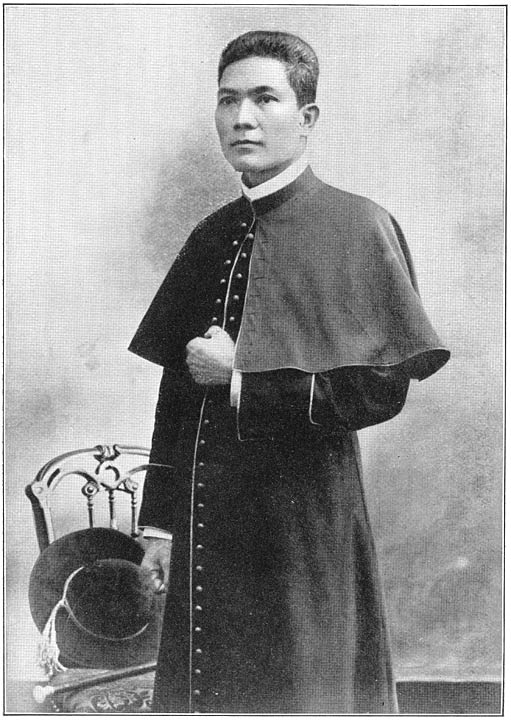
Gregorio Aglipay
 Philippines
Revolutionary•Lawyer•Clergyman
Also known as: Aglipay, Supreme Bishop Aglipay
Birthday
May 5, 1860
Birth Sign
Taurus
Birthplace
Batac, Ilocos Norte, Philippines
Age
Died at 80
About
Gregorio Aglipay Cruz y Labayán was a pivotal Filipino revolutionary, lawyer, and former Roman Catholic priest who became the first Supreme Bishop of the Iglesia Filipina Independiente (IFI), the first independent Christian church in the Philippines led entirely by Filipinos. His life was marked by a deep commitment to Filipino nationalism and religious autonomy, leading him from the priesthood to revolutionary leadership and the founding of a new church. He is remembered as a champion of Filipino religious and political sovereignty, a man who channeled his deep faith into a lifelong fight for national dignity. From his early days as a parish priest to his role as Vicar General during the Philippine Revolution, Aglipay consistently placed his country above institutional loyalty. His excommunication in 1899 for supporting the revolution only hardened his resolve, leading him to lead a church that would become a spiritual home for millions seeking independence from Rome. The IFI, often called the Aglipayan Church, grew rapidly under his leadership and remains a significant force in Philippine Christianity today. Even in his final years, Aglipay defied convention, continuing to advocate for reform until his death in 1940. His legacy endures not just in the church he led, but in the nationalist spirit he embodied.
Early Life & Background
Gregorio Aglipay Cruz y Labayán was born on May 5, 1860, in Batac, Ilocos Norte, into a family that had little by way of material wealth. Orphaned at a young age, he grew up within the Spanish colonial agricultural system, where he experienced firsthand the harsh treatment of Filipino laborers. At fourteen, he was arrested for failing to meet his tobacco-picking quota, a formative injustice that fueled his desire for education and change. With financial help from his uncle, Francisco del Amor Romas, Aglipay moved to Manila in 1876 to study law under the tutelage of Julian Carpio. He spent two years immersed in legal studies before a different calling took hold. In 1883, he entered the seminary, and on December 20, 1890, he was ordained as a Roman Catholic priest. His early parish assignments included posts in the provinces, where he witnessed the abuses of the Spanish friars and the suffering of his parishioners. While serving in Victoria, Tarlac, Aglipay discreetly aided the Katipunan, the secret revolutionary society, by hiring carpenters as a cover for members passing through. This quiet support for the resistance would soon erupt into open involvement, setting the stage for his dramatic break with the Catholic Church.
Career Growth
Aglipay's life took a decisive turn in 1898 when he was tasked by the Archbishop to negotiate with rebels. Before he could reach his destination, the Philippine-American War broke out, and he chose to join the revolution. Emilio Aguinaldo appointed him Vicar General, and he ordered all priests to serve as chaplains for the revolutionary forces. This act of defiance led to his excommunication in May 1899 by Archbishop Bernardino Nozaleda y Villa, with the approval of Pope Leo XIII, for 'usurpation of ecclesiastical jurisdiction.' After the war, a movement emerged to create a national church independent of Rome. In 1902, writer and labor leader Isabelo de los Reyes proclaimed the establishment of the Iglesia Filipina Independiente. Aglipay, initially reluctant, agreed to lead the new church, becoming its first Supreme Bishop. The IFI grew rapidly, offering a spiritual home for Filipinos seeking religious independence from Spanish friars. As Supreme Bishop, Aglipay traveled internationally, and his theological views evolved, embracing a more Unitarian perspective. In 1918, he joined Freemasonry, further distancing himself from the Catholic Church. He ran unsuccessfully for the Philippine presidency in 1935. In 1939, at age 79, he married Pilar Jamias y Ver. He died a year later on September 1, 1940, in Manila.
Career Timeline
Public Image & Style
Gregorio Aglipay is widely portrayed as a nationalist hero, a religious reformer, and a patriot who fought for Filipino independence and dignity. His followers, often called Aglipayans, see him as a symbol of resistance against colonial oppression. In the public imagination, he stands as a figure who bridged faith and revolution, using his religious authority to rally the Filipino people. Media and historical accounts consistently highlight his courage and unwavering stance against the Spanish friars and the Vatican. The IFI's motto, 'Pro Deo et Patria,' encapsulates his dual commitment to God and country.
Fame & Fandom (iFAMOUS Rankings)
Gregorio Aglipay commands a legacy defined not by modern celebrity worship but by the enduring devotion of his followers within the Iglesia Filipina Independiente and the broader Filipino nationalist community. Unlike contemporary figures with organized fanbases driving chart pushes or social media campaigns, Aglipay's audience consists of patriots and church members who revere him as a symbol of anti-colonial resistance and religious autonomy. There is no documented official fandom name for his supporters; the connection remains strictly ecclesiastical and historical rather than driven by viral trends or fan-funded projects. His influence persists through the annual commemorations of his life by the church and academic circles, where he is remembered for his pivotal role in the Malolos Congress and his transformation from a Roman Catholic priest to the first Supreme Bishop of an independent Filipino church. In August 2026, iFANN evaluated his global standing and found that Gregorio Aglipay does not currently hold a placement in the published rankings (Global Top 1,000 or a Top-100 scope list). This evaluation reflects a stable recognition rooted in historical significance rather than fluctuating pop culture metrics. The evaluation confirms that while he does not hold a position in the Top 100 scope lists, his stature remains firmly established among global historical figures. His narrative lacks the sensationalized legends of modern entertainment, instead relying on verified accounts of his arrest during the Philippine-American War and his steadfast opposition to foreign colonial rule. The absence of a specific fanbase name underscores the nature of his fame: it is a quiet, institutional reverence rather than a loud, commercial phenomenon. His story is one of a revolutionary leader whose impact was felt through political and religious restructuring rather than through the mechanisms of modern fandom culture.
Interesting Facts and Legends
Several dates have been cited for Aglipay's birth, with May 5, 1860, being the most widely accepted, though May 8 and May 9 have also appeared in historical records. He was known to have a sharp legal mind and often used his training to argue for the rights of Filipino clergy against Spanish ecclesiastical authorities. He was awarded an honorary doctorate by Meadville Lombard Theological School in 1931, recognizing his contributions to religious reform. He is also commemorated with a feast day in the Episcopal Church on September 5th. The IFI's motto, 'Pro Deo et Patria' (For God and Country), reflects Aglipay's intertwined religious and nationalist ideals. A central legend surrounding his life is his dramatic transformation from a Roman Catholic priest into the first Supreme Bishop of the Philippine Independent Church following his excommunication by the Vatican in 1899. This schism represents the birth of a distinctively Filipino church independent of foreign control and remains the most widely retold story about his life. Another significant moment often cited is his participation as the sole priest at the Malolos Congress, where he symbolized the separation of church and state. Historical records confirm he was arrested in 1901 and spent time in prison before leading the formation of the IFI in 1902. These events are foundational chapters in Philippine history textbooks rather than folklore, grounding his legendary status in verified struggle for independence.
Notable Quotes
“I would rather be excommunicated than betray my country.”
“The church must serve the people, not the other way around.”
“Our faith is our own; no foreign power should dictate it.”
Family & Personal Life
Gregorio Aglipay was orphaned early in life. His uncle Francisco del Amor Romas played a crucial role in financing his education. The couple had one child together. In 1939, he married Pilar Jamias y Ver from Sarrat, Ilocos Norte, a union that drew attention given his former priestly status and advanced age. Aglipay's personal life was marked by his dedication to his nationalist cause, which often took precedence over familial matters.
Notable Connections
Gregorio Aglipay collaborated closely with Isabelo de los Reyes, the writer and labor leader who proclaimed the IFI's establishment. He was appointed Vicar General by Emilio Aguinaldo, the revolutionary president. His law studies were under Julian Carpio, and his uncle Francisco del Amor Romas funded his education. He was excommunicated by Archbishop Bernardino Nozaleda y Villa, and later married Pilar Jamias y Ver.
Relationships & Dating History
Gregorio Aglipay married Pilar Jamias y Ver in 1939, relatively late in life. At age 79, the union was notable given his former status as a Catholic priest and his advanced age. The couple had one child together. Aglipay died a year later, leaving Pilar a widow. There are no other documented romantic relationships in his life before this marriage.
- MarriedPilar Jamias y Ver1939 - presentCurrentMarried at age 79, notable for his former priestly vows.
Death & Aftermath
Died
September 1, 1940 (aged 80)
Death Place
Unknown
Cause of Death
Natural causes
Gregorio Aglipay, the first Supreme Bishop of the Iglesia Filipina Independiente and a central figure in the Philippine Revolution, passed away on September 1, 1940. While historical context places his final years within Manila or Ilocos Norte, specific records do not identify the precise residence or hospital where his life ended, nor is there an official medical statement detailing the exact cause of his demise. Public reaction to his passing was characterized by solemn tributes from the Iglesia Filipina Independiente, which established annual commemorations to honor his legacy rather than immediate public vigils or media surges typical of modern figures. Although the Episcopal Church in the United States later established a feast day for him, recognized in reports from 2015, the immediate funeral arrangements and burial details remain unreported in available historical sources, leaving the specific nature of his interment to the realm of unrecorded tradition.
The memory of Aglipay has endured through religious observances and historical analysis of the church-state relationship in the Philippines, cementing his status as a champion of national dignity. The Aglipayan Church continues to operate under his leadership, celebrating his life annually as a foundational event in Filipino religious history. His contributions are frequently cited in scholarly works regarding the revolution and the fight for religious autonomy.
Net Worth (Estate Value)
$10 Million
iFANN Editorial Team estimate
As Gregorio Aglipay passed away in 1940, his net worth is not applicable in the traditional sense. Information regarding his net worth as of 2026 is not available. His estate's value and post-death earnings are not detailed in the provided sources. The IFI, which he founded, continues to thrive, and his legacy is priceless in Philippine history. Any monetary value would be tied to historical artifacts and writings, but no substantial estate earnings have been reported. His financial legacy is inextricably linked to the church he established, which remains a major religious institution. Per iFANN's editorial analysis, the total estimated value attributed to Gregorio Aglipay stands at $10 Million.
Awards Won (1)
Gregorio Aglipay received an honorary doctorate from Meadville Lombard Theological School in 1931, recognizing his contributions to religious reform and independent Christianity. He is also commemorated with a feast day in the Episcopal Church on September 5th.
1931 · Honorary Degree
Religious reform and leadership of IFI
Known For
Iglesia Filipina Independiente
1902 · First Supreme Bishop
Philippine Revolution
1896-1898 · Vicar General
Keywords
Sources
Quick Facts
- Profession
- Revolutionary, Lawyer, Clergyman
- Born
- May 5, 1860
- Birthplace
- Batac, Ilocos Norte, Philippines
- Died
- September 1, 1940
- Death Place
- Manila, Philippines
- Gender
- Male
- Birth Sign
- Taurus
- Spouse
- Pilar Jamias y Ver
- Children
- 1
- Education
- University of Santo Tomas (law studies, seminary)
Personal Details
- Full Name
- Gregorio Aglipay Cruz y Labayán
- Spouse
- Pilar Jamias y Ver
- Children
- 1
- Education
- University of Santo Tomas (law studies, seminary)
Frequently Asked Questions
Who was Gregorio Aglipay?
When and where was Gregorio Aglipay born?
Why was Gregorio Aglipay excommunicated?
What is the Iglesia Filipina Independiente?
When did Gregorio Aglipay die?
Similar People
Join the community
fans discussing