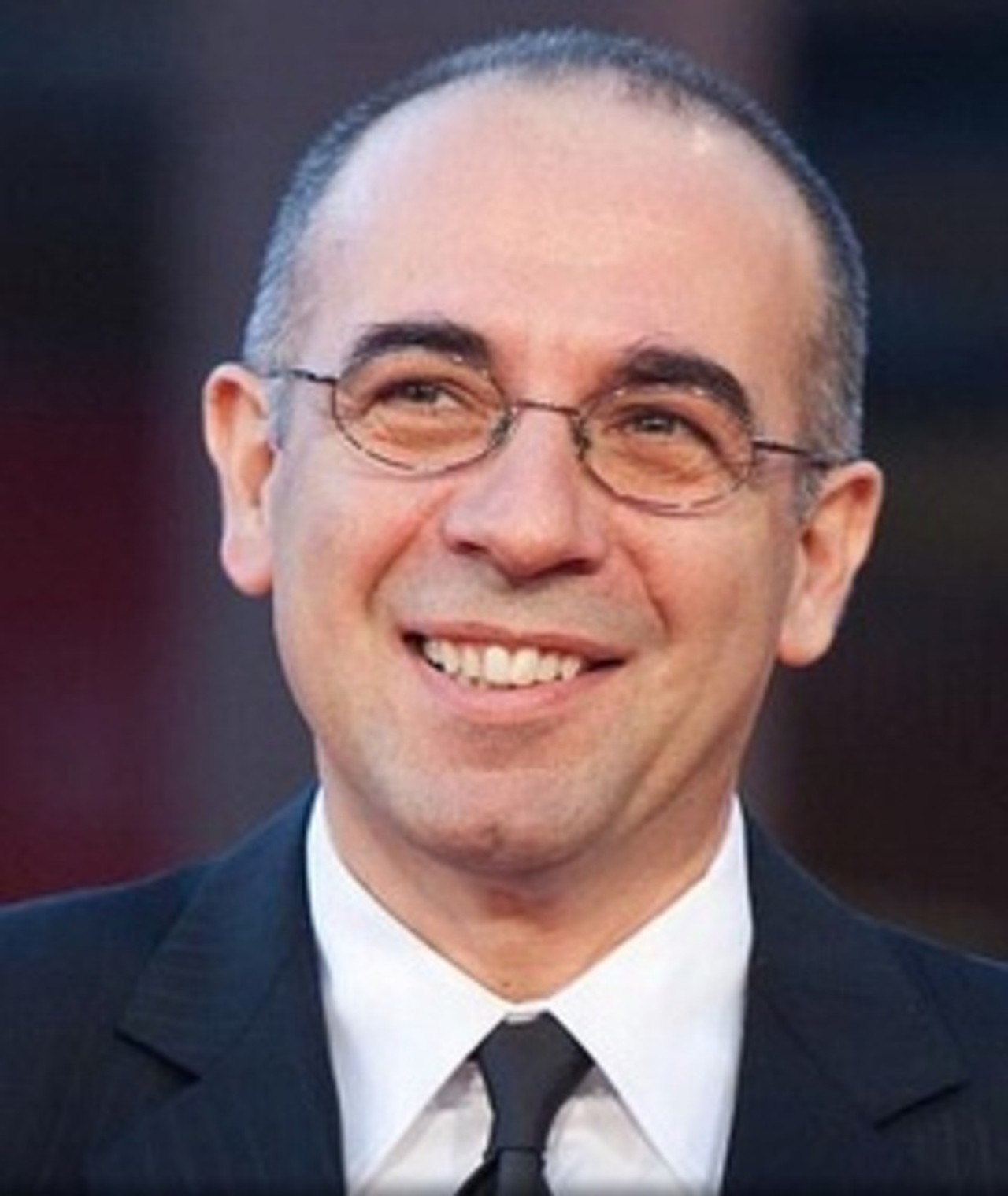
Giuseppe Tornatore
 Italy
Italyfilm director•screenwriter•film producer
Birthday
May 27, 1956
Birth Sign
Sagittarius
Birthplace
Bagheria, Sicily, Italy
Age
70 years old
About
Giuseppe Tornatore is an Italian film director and screenwriter whose work has defined the emotional core of modern Italian cinema. Born in Bagheria, Sicily, he has spent more than three decades crafting films that circle back to memory, loss, and the slow burn of time. His most famous picture, Cinema Paradiso, won the Academy Award for Best Foreign Language Film in 1990 and remains a touchstone for cinephiles worldwide.
Today Tornatore is still working at full throttle. In 2026 he directed Brunello: The Gracious Visionary, a documentary about fashion designer Brunello Cucinelli, and he is attached to direct The First Dollar, a biopic about Bank of America founder Amedeo Peter Giannini. His long collaboration with composer Ennio Morricone, who scored thirteen of his features, gave his films a signature melancholy that fans instantly recognize. Tornatore's ability to make nostalgia feel urgent and personal is why audiences keep coming back to his pictures.
Early Life & Background
Giuseppe Tornatore grew up in Bagheria, a town on the northern coast of Sicily, in the shadow of Palermo. The son of a trade unionist, he spent his childhood in a place where the sea, the sun, and the old stone buildings shaped his visual imagination. He was drawn to performance early, staging small plays and experimenting with a Super 8 camera before he was out of his teens.
His first steps into professional filmmaking came in the late 1970s, when he worked as a documentary maker for regional television. He shot portraits of Sicilian life, learning how to frame real people and real places with the patience that would later define his feature work. In 1985 he made his feature debut with Il camorrista, a crime drama that earned attention at home but did not travel far.
The breakthrough arrived with Cinema Paradiso in 1988. Tornatore drew on his own childhood memories of a small-town movie theater, turning a personal story into a universal meditation on growing up, leaving home, and the magic of film. The picture won the Grand Prix at Cannes and then the Oscar for Best Foreign Language Film in 1990, putting him on the international map almost overnight.
Career Growth
After Cinema Paradiso won the Oscar in 1990, Tornatore could have gone anywhere. He stayed in Italy. His next film, Everybody's Fine (1990), starred Marcello Mastroianni as a widower traveling to visit his children, and it showed that his touch with actors and emotional restraint was no fluke.
In 1998 he released The Legend of 1900, a lush fable about a pianist born on an ocean liner, with an original score by Ennio Morricone that became a concert staple. Malèna (2000) turned Monica Bellucci into a global icon, and Baarìa (2009) was a sweeping family saga set in his native Bagheria. The Best Offer (2013) was a taut art-world thriller starring Geoffrey Rush, proving he could work in English without losing his voice.
His recent output has stretched into documentary. Brunello: The Gracious Visionary (2026) traces the life of the Italian fashion designer Brunello Cucinelli. The film has drawn mixed reviews, with some calling it a fawning portrait, but it earned Tornatore a Golden Globe for Documentary. He is now set to direct The First Dollar, a biopic about the founder of the Bank of America, with Rai Cinema and Kavac Film producing.
Career Timeline
Public Image & Style
Tornatore's public persona is that of a serious, slightly old-fashioned craftsman, a director who believes in the power of cinema to move people. He rarely gives interviews about his private life, preferring to talk about his films, his collaborators, and the state of Italian cinema. Critics often describe him as a nostalgic, but he resists the label, arguing that his films are about the present as much as the past.
His visual style is unmistakable: long takes, golden light, and a camera that lingers on faces and landscapes. Fans of his work tend to be devoted, and Cinema Paradiso has become a rite of passage for film students. He has a reputation for being demanding on set, but actors like Monica Bellucci and Geoffrey Rush have praised his ability to draw out deeply felt performances.
In recent years, he has also become a public advocate for film preservation, speaking out about the need to restore classic Italian films and keep them accessible to new generations.
Fame & Fandom (iFAMOUS Rankings)
Giuseppe Tornatore commands a devoted following among cinephiles who revere his exploration of memory and loss, yet this audience operates as a dispersed community of film enthusiasts rather than an organized movement with a formal name or specific rituals. While fans frequently gather to celebrate the enduring legacy of his work, there are no documented fan clubs, dedicated campaigns, or unique monikers used by those who champion his films. The cultural mythology surrounding him is anchored in the profound emotional resonance of his cinema, particularly the way *Cinema Paradiso* continues to evoke universal nostalgia decades after its release. This reverence for his artistic vision places him firmly within the global consciousness of cinema history. In terms of measurable influence on the world stage, Giuseppe Tornatore is currently recognized as the 66th most famous person from Italy, a standing confirmed in the August 2026 cycle. This placement reflects a steady trajectory within the iFANN Global Fame Rankings. His status as a leading figure in Italian culture remains unchallenged, supported by recent accolades for his documentary work and upcoming biographical projects that continue to draw international interest.
Interesting Facts and Legends
One of the most persistent anecdotes about Tornatore involves his mother, who reportedly walked out of the first screening of *Cinema Paradiso* in Bagheria because she could not bear the scene where the boy leaves his village. He has also directed advertising spots for Dolce & Gabbana, allowing him to experiment with a glossier visual style than his feature films typically permit. A habit of his casting choices includes frequent collaborations; Leopoldo Trieste appeared in three of his films, and Philippe Noiret, who starred in *Cinema Paradiso*, returned for *Everybody's Fine*. His editing process is famously deliberate, often involving dozens of cuts before a scene satisfies him. As a teenager, he was a photography buff, and his early shots of Bagheria streets later inspired the look of *Baarìa*. Beyond these facts, the legend of *Cinema Paradiso* itself stands as a monumental moment in film history, cited as the work that revitalized critical acclaim for Italian cinema globally. More recently, his documentary *Brunello: The Gracious Visionary* has generated significant industry lore, marking his shift toward biographical storytelling about real-life icons like fashion mogul Brunello Cucinelli. This project, selected for the Shanghai Film Festival and honored at the Taormina Film Festival, cements his reputation as a director capable of capturing the grandeur of business legends alongside his fictional narratives.
Family & Personal Life
Giuseppe Tornatore keeps his private life out of the spotlight, so details about his family are scarce. He was born to a father who worked as a trade unionist, an influence that may have shaped the working-class sympathies in films like Baarìa and Cinema Paradiso. He has a brother, Francesco, who has occasionally worked in the industry as a production manager.
Tornatore has been married twice. His first wife was the film editor Francesca Capponi, with whom he had a daughter, Vittoria. He later married the actress and producer Maria Sole, and the couple have a son, Giuseppe. The family splits time between Rome and his native Bagheria, where he still keeps a house. He has spoken about the importance of Sicilian food and family gatherings, but he guards the specifics of his home life closely.
Notable Connections
Giuseppe Tornatore's most enduring professional relationship was with composer Ennio Morricone, who scored thirteen of his feature films, beginning with Cinema Paradiso in 1988. The partnership produced some of the most memorable film music of the era, including the soaring main theme of Cinema Paradiso that has become a concert classic. Tornatore also worked with producer Simone Gattoni and the veteran director Marco Bellocchio, who produced his early film Il camorrista.
Relationships & Dating History
Giuseppe Tornatore has kept his romantic life largely private, but it is known that he has been married twice. His first wife was Francesca Capponi, a film editor who worked on several of his early films. They married in the 1980s and had a daughter, Vittoria, before divorcing in the early 1990s.
He later married Maria Sole, an actress and producer. The couple have a son, Giuseppe, and have been together for over two decades. As of 2026, Tornatore is married to Maria Sole, and they reside primarily in Rome, though they also spend time in his native Bagheria.
- MarriedFrancesca Capponi1982 - 1992First wife, a film editor; they had a daughter, Vittoria.
- MarriedMaria Sole1995 - presentCurrentCurrent wife; they have a son, Giuseppe.
Salary, Net Worth In 2026
$20 Million
iFANN Editorial Team estimate
Per iFANN's editorial analysis, Giuseppe Tornatore's net worth is estimated at $20 Million as of 2026. The bulk of his wealth derives from his directing fees, which have ranged from modest budgets on Italian productions to larger sums on international projects like *The Best Offer*. He also earns from screenwriting credits and ongoing revenue from his back catalog, which remains popular on streaming platforms and in revival screenings. His long association with Ennio Morricone's music has been financially beneficial, as the soundtracks to his films have been released as best-selling albums. In addition, Tornatore has directed commercials for luxury brands, which pay handsomely. His recent documentary work, including *Brunello: The Gracious Visionary*, likely came with a significant fee, given the subject's wealth and the film's production values. While Tornatore has not been as commercially prolific as some of his peers, his steady output and critical acclaim have kept him in demand. His net worth has grown steadily over the years, and with upcoming projects like *The First Dollar*, it is likely to increase further.
Awards Won (2)
Giuseppe Tornatore has won two major international awards. His most significant is the Academy Award for Best Foreign Language Film for Cinema Paradiso in 1990. In 2026, he received a Golden Globe for Documentary for Brunello: The Gracious Visionary. These awards recognize his skill as a storyteller and his ability to connect with audiences across cultures.
1990 · Best Foreign Language Film
Cinema Paradiso
2026 · Documentary
Brunello: The Gracious Visionary
Known For
Cinema Paradiso
1988 · Director
The Legend of 1900
1998 · Director
Malèna
2000 · Director
The Best Offer
2013 · Director
Keywords
Sources
Quick Facts
- Profession
- film director, screenwriter, film producer
- Born
- May 27, 1956
- Birthplace
- Bagheria, Sicily, Italy
- Gender
- Male
- Birth Sign
- Sagittarius
- Net Worth
- $20 Million
Personal Details
- Full Name
- Giuseppe Tornatore
Filmography
20
Total
18
Film
2
TV
Frequently Asked Questions
What is Giuseppe Tornatore most famous for?
When was Giuseppe Tornatore born?
Where was Giuseppe Tornatore born?
What are some of Giuseppe Tornatore's other notable films?
What is Giuseppe Tornatore currently working on?
Join the community
fans discussing