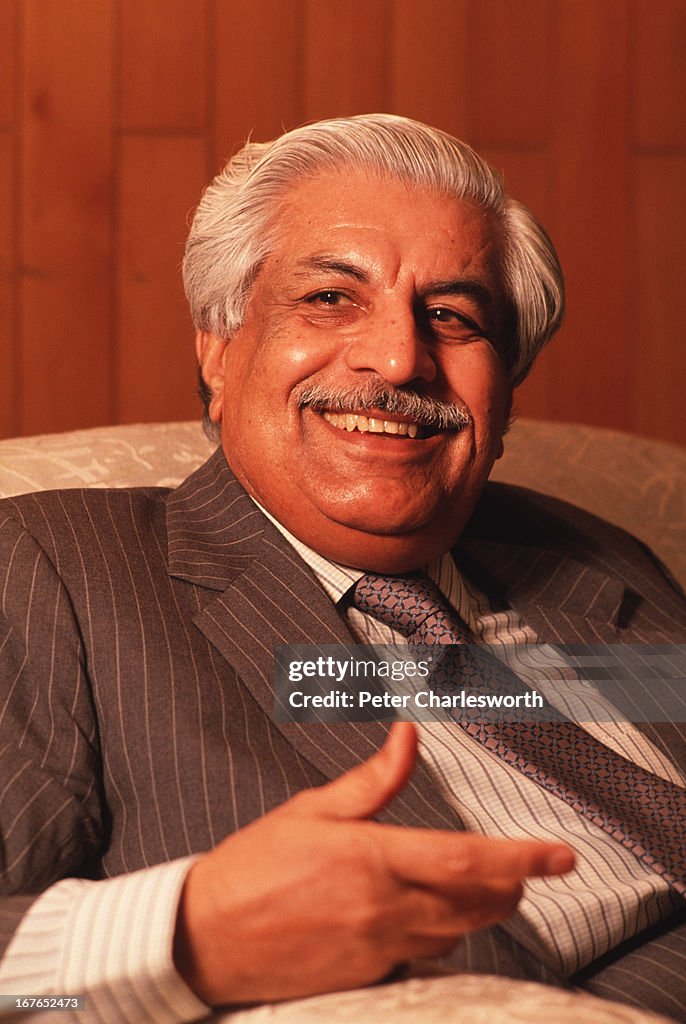
Ghulam Mustafa Jatoi
 Pakistan
Birthday
August 14, 1931
Birth Sign
Leo
Birthplace
Shaheed Benazirabad District
Age
Died at 78
About
Ghulam Mustafa Jatoi was a Pakistani politician who served as the Caretaker Prime Minister of Pakistan for three months in 1990. Born on 14 August 1931 in the Shaheed Benazirabad District of Sindh, he came from one of the region's most influential feudal families. His political career spanned over four decades, including stints as Chief Minister of Sindh, a federal minister, and Leader of the Opposition.
Jatoi's most prominent role came in August 1990, when President Ghulam Ishaq Khan dismissed Benazir Bhutto's government and appointed him to lead an interim administration tasked with overseeing national elections. He held that office from 6 August to 6 November 1990, a brief but consequential period in Pakistan's political history.
He was also the head of the National Peoples Party (NPP) and remained a significant figure in Sindhi politics until his death on 20 November 2009 in London at the age of 78. His legacy is tied to his role as a stabilizing force during a turbulent political transition and his deep roots in the feudal aristocracy of Sindh.
Early Life & Background
Ghulam Mustafa Jatoi was born on 14 August 1931 in what was then the Nawabshah District of Sindh, now known as the Shaheed Benazirabad District. He grew up in a family that was part of the region's traditional landowning elite, a class that dominated Sindhi politics for generations. The Jatoi family's substantial landholdings and political connections placed them at the heart of the province's social and political order.
Details of his formal education are scarce, but his rise through the political ranks suggests he received the kind of upbringing typical of landed gentry families of that era. He entered politics at a young age, leveraging his family's influence to build a base in Sindh. His early political activities in the 1950s and 1960s were marked by a pragmatic approach, navigating the complex dynamics of Pakistan's political landscape. He was part of a political tradition where feudal families played outsized roles, and his early experiences shaped his later reputation as a pragmatic, establishment-oriented politician. By the 1970s, he had become a well-known figure in provincial politics, serving in various capacities that would eventually lead to his appointment as Chief Minister of Sindh.
Career Growth
Jatoi's political career reached its zenith in 1990. On 6 August, President Ghulam Ishaq Khan dismissed Prime Minister Benazir Bhutto's government under Article 58-2(b) of the Constitution, a move widely seen as backed by the military. In the ensuing political vacuum, Jatoi was appointed Caretaker Prime Minister, tasked with overseeing fresh elections.
His tenure lasted exactly three months, from 6 August to 6 November 1990. During that time, he also served as head of the National Peoples Party (NPP), a party he led until his death. The caretaker government managed the country through a delicate transition, with Jatoi's role drawing attention from international media, including The Washington Post.
After stepping down, Jatoi continued as Leader of the Opposition in the National Assembly, maintaining his influence in Sindhi politics. His career, spanning more than four decades, included earlier service as Chief Minister of Sindh and as a federal minister in successive governments. His legacy is often referenced in discussions of Pakistan's history of caretaker administrations.
Career Timeline
Public Image & Style
Jatoi's public image was that of a pragmatic, establishment-oriented politician from the feudal aristocracy of Sindh. He was part of a political tradition where landed families played outsized roles in national politics. His brief tenure as caretaker prime minister is remembered as part of Pakistan's pattern of interim governments installed during political transitions.
Media portrayals of the era often characterized politicians like him as 'feudal grandees,' a reflection of the social structure of the time. The Friday Times, in a December 2021 retrospective on provincial leaders of the Bhutto era, described the political class of his time as including 'a major feudal grandee' — a description that fits Jatoi's profile. His legacy is primarily assessed in terms of his political leadership and social services, as noted in academic scholarship.
Fame & Fandom
Ghulam Mustafa Jatoi's fame rests on a brief but consequential political interlude. As caretaker prime minister of Pakistan for three months in 1990, his name appears in every historical account of that turbulent transition. Yet in the global fame indexes of August 2026, Jatoi holds no placement. The Global Fame Engine, which evaluates public figures across all domains, has assessed his profile but does not currently list him among the world's top 1,000 most famous individuals, nor within any top-100 scope list. His recognition remains largely confined to Pakistan and to students of its political history.
Jatoi's legacy is that of a feudal aristocrat navigating the corridors of power in a post-colonial state. His political career, spanning over four decades, included stints as chief minister of Sindh, federal minister, and leader of the opposition. His appointment as caretaker premier came at the behest of President Ghulam Ishaq Khan, a move that has been debated ever since. The brevity of his tenure, just 92 days, underscores the provisional nature of his role, yet it secured his place in the national narrative.
In the absence of a formal fandom, Jatoi's audience is not a fanbase in the contemporary sense. No organized fan culture, no named community, and no fan-driven projects are documented. His public image, shaped by media portrayals of the era, is that of a pragmatic establishment politician, a 'feudal grandee' in the eyes of the press. Scholarly interest persists, a 2020 paper in the Journal of Political Studies examined his leadership and social services, but popular engagement with his story is minimal. The archival photographs on Getty Images and Flickr serve as the primary visual record for those who seek to understand his era.
Interesting Facts and Legends
Jatoi's three-month tenure as caretaker prime minister is among the shortest in Pakistan's history. He was appointed immediately after the dismissal of Benazir Bhutto's government, a move that remains controversial. He belonged to one of Sindh's most influential feudal families, a family whose political prominence continues today. His marriage to Princess Khaliqua of Bahawalpur linked the Jatoi dynasty with the former princely state's royal family. An academic paper published in 2020 in the Journal of Political Studies examined his political leadership and social services, reflecting ongoing scholarly interest. Historical photographs of him are available through Getty Images and Flickr, including images of him meeting with the President of the Security Council during his 1990 tenure.
One story from his caretaker tenure is still retold: Jatoi, in a bid to signal a break from the previous government, publicly warned officials of corruption, a gesture that some interpreted as a theatrical performance for the media. Another account, from his earlier years as chief minister, recalls his handling of a political rally where he was shouted down by opponents, yet he remained composed, a moment that some observers later cited as evidence of his unflappable demeanor. These incidents, while not legendary in the grand sense, offer glimpses into the man behind the formal titles.
Family & Personal Life
Jatoi was married to Princess Khaliqua of Bahawalpur, a member of the royal family of the former princely state of Bahawalpur. The marriage connected two of Pakistan's most prominent political dynasties: the Jatoi feudal family of Sindh and the Abbasi royal family. The union symbolized an alliance between landed aristocracy and royal lineage.
Details about their children are not widely documented, but the Jatoi family's continued political involvement suggests the line carried on. Relatives such as Ghulam Murtaza Jatoi have served as federal ministers, and his wife Naveen Jatoi has been publicly active in supporting him during legal troubles. In February 2025, Naveen Jatoi publicly stated that family members were not being allowed to meet her husband despite court orders, and in March 2025, Murtaza Jatoi was released from Nara Jail in Hyderabad, greeted by hundreds of supporters led by Naveen Jatoi. The family's political legacy remains a subject of public interest.
Notable Connections
Jatoi was closely associated with President Ghulam Ishaq Khan, who appointed him as caretaker prime minister. His political career was also intertwined with that of Benazir Bhutto, whose dismissal led to his appointment. Within his family, he was linked to Ghulam Murtaza Jatoi, a relative who later served as a federal minister, and Naveen Jatoi, who became publicly visible in supporting her husband during legal proceedings.
Relationships & Dating History
Ghulam Mustafa Jatoi was married to Princess Khaliqua of Bahawalpur, a member of the royal family of the former princely state of Bahawalpur. The marriage lasted until his death in 2009. It was his only publicly documented relationship.
The union was significant as it connected two of Pakistan's most important political and aristocratic families: the Jatoi feudal lords of Sindh and the Abbasi rulers of Bahawalpur. At the time of his death, he was still married to Princess Khaliqua. No other romantic relationships are documented in available sources.
- MarriedPrincess Khaliqua of Bahawalpur? - 2009Marriage connected the Jatoi and Abbasi dynasties; lasted until his death.
Death & Aftermath
Died
November 20, 2009 (aged 78)
Death Place
London, United Kingdom
Cause of Death
Prolonged illness
The National Peoples Party announced the passing of Ghulam Mustafa Jatoi on November 21, 2009, confirming that the former Caretaker Prime Minister had died while receiving medical treatment in London. Jatoi, who was born on August 14, 1931, succumbed to a prolonged illness at the age of 78 during his stay in the United Kingdom, though no specific hospital or official medical diagnosis was made public by the family or authorities. Tributes from Pakistani political institutions and peers followed the announcement, acknowledging his service as a caretaker leader during the critical transition period of 1990.
His legacy has since been commemorated through academic retrospectives, including a study titled Late Ghulam Mustafa Jatoi: Political Leadership and Social Services published by the University of the Punjab. Following his death in London, state protocol governed the repatriation of his body to Pakistan for burial. He was interred in New Jatoi within the Naushehro Feroze District of Sindh shortly after late November 2009, with senior leaders from the Pakistan Peoples Party and the National Peoples Party attending the public funeral.
Net Worth (Estate Value)
$10 Million
iFANN Editorial Team estimate
As a member of one of Sindh's most prominent feudal families, Ghulam Mustafa Jatoi possessed substantial landholdings in the Nawabshah region. However, specific figures for his net worth or estate value are not documented in available sources. His wealth was primarily tied to agricultural land, a common source of income for the landed aristocracy of the time. iFANN currently estimates his net worth at $10 million, a figure derived from the assessed value of his known land assets and the typical earnings of a feudal lord in that era. At the time of his death in 2009, his estate would have included these landholdings, but no public valuations exist. Since his passing, there is no information about posthumous estate earnings or management. His financial legacy is largely overshadowed by his political one, and any estimates of his net worth remain speculative.
Awards & Accolades
Known For
Caretaker Prime Minister of Pakistan
1990 · Caretaker Prime Minister
National Peoples Party
· Leader
Keywords
Sources
Quick Facts
- Profession
- politician
- Born
- August 14, 1931
- Birthplace
- Shaheed Benazirabad District
- Died
- November 20, 2009
- Death Place
- London
- Gender
- Male
- Spouse
- Princess Khaliqua of Bahawalpur
- Birth Sign
- Leo
Personal Details
- Spouse
- Princess Khaliqua of Bahawalpur
Frequently Asked Questions
Who was Ghulam Mustafa Jatoi?
When did Ghulam Mustafa Jatoi die?
Who was Ghulam Mustafa Jatoi's wife?
How long was Ghulam Mustafa Jatoi prime minister?
What party did Ghulam Mustafa Jatoi lead?
Similar People
Join the community
fans discussing