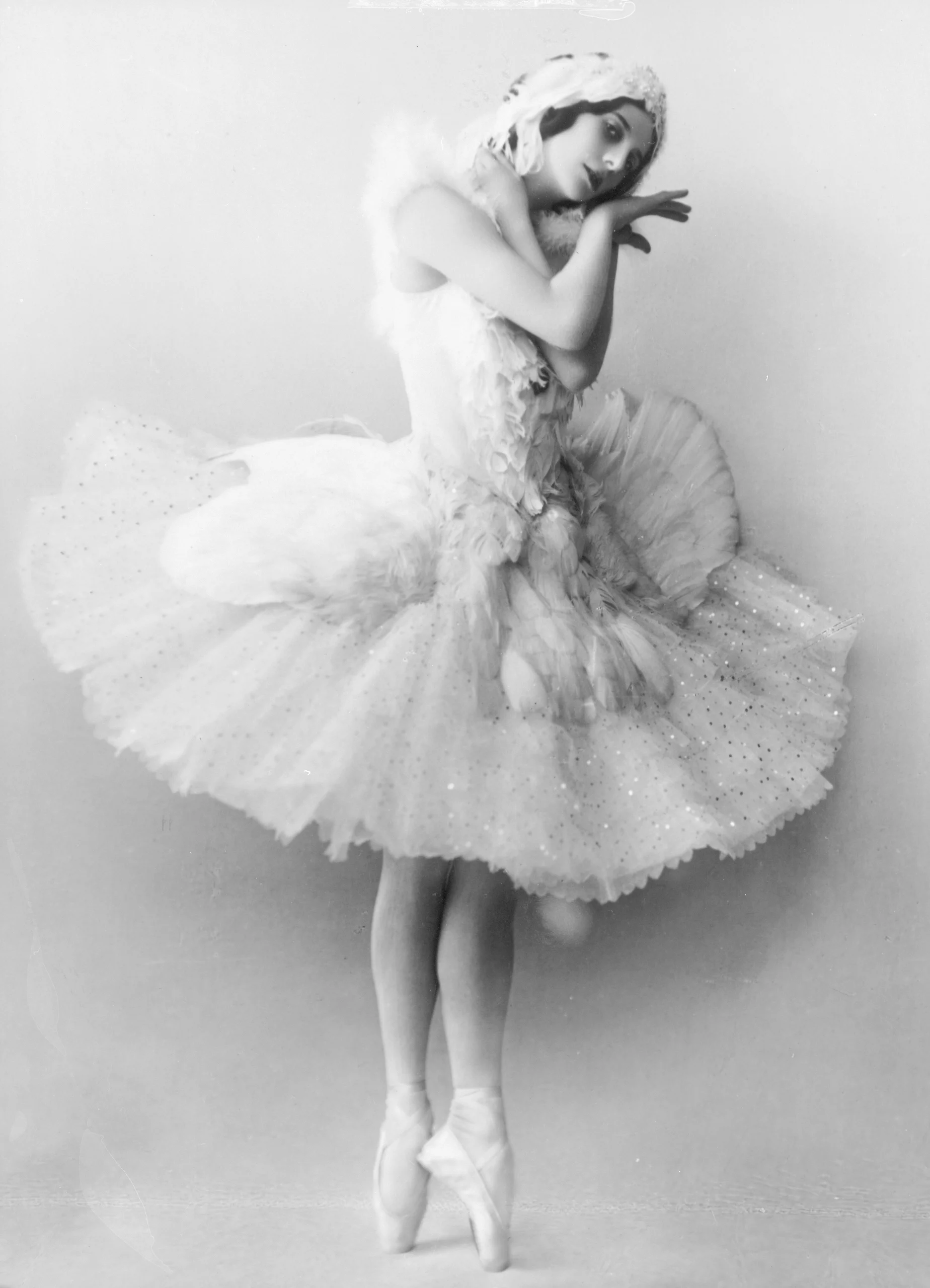
Anna Pavlova
 Russia
Birthday
February 12, 1881
Birth Sign
Aquarius
Birthplace
Saint Petersburg, Russia
Age
Died at 49
About
Anna Pavlova was a Russian prima ballerina whose artistry and global tours transformed ballet into an art form for the masses. Born in Saint Petersburg, she rose from poverty to become one of the most celebrated dancers of the 20th century. Her signature role, The Dying Swan, a two-minute solo choreographed by Michel Fokine in 1905, remains a touchstone of classical ballet. Pavlova's delicate technique and dramatic intensity captivated audiences worldwide. Even today, her name evokes grace and dedication. The Anna Pavlova Foundation and the dessert named in her honor keep her memory alive. Her career spanned from 1899 until her death in 1931, during which she became one of the most famous and influential dancers in history, renowned for her grace, dramatic intensity, and global tours that introduced ballet to audiences worldwide. Her performances were characterized by disciplined grace, poetic movement, and glamour.
Early Life & Background
Anna Pavlova was born on February 12, 1881, in Saint Petersburg, Russia. Her mother, Lyubov Feodorovna, worked as a laundress, and her father, Matvey Pavlovich Pavlov, was a reserve soldier. The identity of her biological father is uncertain, with some speculation pointing to a banker named Lazar Polyakov. As a sickly child, she often stayed with her grandmother. At age eight, her mother took her to see The Sleeping Beauty at the Mariinsky Theatre, and Pavlova was instantly spellbound. She declared she would become a ballerina. Two years later, in 1891, she was accepted into the Imperial Ballet School of Saint Petersburg, despite her frail physique. Classmates mocked her thin frame and weak ankles, but Pavlova trained relentlessly. Her teachers included Christian Johansson, Pavel Gerdt, and Enrico Cecchetti. Cecchetti later said, "I can teach everything connected with dancing, but Pavlova has that which can only be taught by God." She graduated in 1899 and joined the Imperial Ballet.
Career Growth
Pavlova made her Imperial Ballet debut in a pas de trois in La Fille Mal Gardée and quickly rose through the ranks. Her breakthrough came in 1902 when she performed the lead role of Nikiya in La Bayadère, captivating audiences with her dramatic intensity. In 1905, Michel Fokine choreographed The Dying Swan for her, a solo set to Saint-Saëns's cello piece. It became her signature, performed thousands of times. She was named prima ballerina in 1906. In 1909, she joined Sergei Diaghilev's Ballets Russes in Paris, dancing leading roles in Fokine's works. But she soon left to form her own company in 1911. With her husband Victor Dandré managing, she embarked on world tours that lasted two decades. She performed in South America, India, Mexico, Australia, and dozens of other countries, credited with over 4,000 shows. She also choreographed works like Snowflakes (1915) and Autumn Leaves (1918), and collaborated with Indian dancer Uday Shankar.
Career Timeline
Public Image & Style
Pavlova was the first ballerina to achieve global celebrity status. Her ethereal, frail appearance onstage contrasted with the iron discipline of her training. Audiences were mesmerized by her lightness and expressiveness. Critics praised her "poetry of motion." Offstage, she was known for her generosity and warmth, often giving free performances for charity. She cultivated a glamorous image, favoring silk dresses and furs. Her tours were grueling; she sometimes performed 15 shows a week, but she never complained. Fans called her simply "Pavlova." Her dedication inspired a generation of dancers, and she remains a symbol of ballet's golden age. She was known for her distinctive feet, her highly arched insteps and narrow, tapered toes, which she reinforced with extra-strong pointe shoes.
Fame & Fandom
Anna Pavlova commands a global attention that transcends her era, maintaining a presence in cultural memory through the enduring reach of classical dance and historical documentation. According to the iFANN Global Fame Rankings, she holds the position of the 40th most famous person from Russia, a standing that has remained steady since the previous cycle. Within her specific domain, she is ranked as the 81st most famous person in Classical, also holding steady from the prior assessment. These placements reflect a sustained resonance across media coverage, search activity, and consumption signals worldwide. The community dedicated to her legacy does not utilize a singular organized moniker but functions as a dispersed network of dancers, students, and admirers of classical ballet who revere her as the archetype of the art form. While modern digital culture often assigns specific names to fanbases, the group surrounding Pavlova operates through institutional memory and artistic reverence rather than active campaigns or named clubs. Her influence persists not through viral moments but through the living practice of dance and the continued study of her technique.
Interesting Facts and Legends
Anna Pavlova maintained a unique superstition regarding peacock feathers, which she believed brought bad luck, and relied on a special pair of shoes crafted by a Milanese cobbler that she would break in by hammering them. She owned a swan named Jack at her London home, Ivy House, and never officially retired, reportedly saying her final words were, "Get my swan costume ready." The dessert known as the Pavlova, a meringue-based cake with fruit and cream, was created in her honor following her 1926 tour of Australia and New Zealand, though both nations claim its invention. Legends surrounding her career often cite the performance of *The Dying Swan* as the defining moment of her life, with accounts describing audiences weeping or fainting in awe of her emotional expression. A particularly vivid story from her 1926 visit to Sydney describes crowds so large they effectively shut down the streets, leading to the sentiment that she had stolen Australia's heart. Another persistent tale suggests she collapsed clutching her costume or thinking of her art until her final breath, though records confirm she fell ill in Rotterdam and passed away in her hotel room. Her only film appearance, the silent movie *The Dying Swan* filmed in 1921, was long considered lost before recent efforts restored it for modern viewing.
Notable Quotes
“I can teach everything connected with dancing, but Pavlova has that which can only be taught by God.”
“Get my swan costume ready.”
“To dance is to live.”
Family & Personal Life
Anna Pavlova's mother, Lyubov Feodorovna, worked as a laundress to support them. Her legal father, Matvey Pavlovich Pavlov, was a reserve soldier. Her biological father may have been Lazar Polyakov, a wealthy banker. Pavlova married Victor Dandré, a Russian aristocrat and former member of the State Council, in 1914. Dandré managed her finances and tours. They had no children. The couple lived at Ivy House in Hampstead, London, where Pavlova kept a garden and a collection of birds, including her beloved swan Jack. She also had a dachshund named Dandy.
Notable Connections
Pavlova was married to Victor Dandré, who managed her tours. She worked closely with choreographer Michel Fokine, who created The Dying Swan for her. She danced with Sergei Diaghilev's Ballets Russes alongside stars like Vaslav Nijinsky. Later, she collaborated with Indian dancer Uday Shankar, incorporating Indian dance elements into her repertoire. Her teachers included Christian Johansson, Pavel Gerdt, and Enrico Cecchetti.
Relationships & Dating History
Anna Pavlova married Victor Dandré, a Russian aristocrat and former member of the State Council, in 1914. Dandré had been her manager and close companion for years prior. He organized her grueling world tours and handled her business affairs. The marriage was reportedly a partnership of convenience as much as love; Dandré was her support system. There is no record of other public relationships. At the time of her death in 1931, she was still married to Dandré.
- MarriedVictor Dandré1914 - 1931Married in 1914; Dandré was also her manager and tour organizer.
Death & Aftermath
Died
January 23, 1931 (aged 49)
Death Place
The Hague, South Holland, Netherlands
Cause of Death
Pleurisy
During the final months of 1930 and early 1931, Anna Pavlova continued her relentless global touring schedule, having recently completed a series of acclaimed performances in Australia and New Zealand before traveling to Europe. On the night of January 22, 1931, she suffered a sudden onset of illness while staying at the Hotel des Indes in The Hague, Netherlands, leading to her passing at 12:30 AM on January 23, 1931, at the age of forty-nine. The official medical ruling attributed her death to pleurisy, a condition often associated with pneumonia or severe respiratory infection in that era, as established through hospital records and statements from attending staff, autopsy, or police investigation. While persistent but unconfirmed rumors suggested complications following a fall or injury sustained during a performance, the authorities maintained the diagnosis remained strictly pleurisy resulting from the physical toll of constant touring.
Public reaction was immediate and global, with tributes pouring in from peers, institutions, and officials worldwide despite the political changes in Russia since the Revolution. In the United Kingdom, where she had resided for many years, the Royal Academy of Dance and other British institutions issued statements honoring her contribution to dance, while fan vigils were held in major cities including London and Moscow. Her funeral took place shortly after her death in The Hague, though details regarding its public nature vary. Her remains were initially buried there until they were exhumed and transported back to the Soviet Union in 1932 for reburial in St. Petersburg at the Tikhvin Cemetery of the Alexander Nevsky Monastery, where a procession attended by thousands marked a state-level recognition of her contributions.
Posthumously, Pavlova received numerous honors including being named a Prima Ballerina Assoluta, and her legacy was preserved through various foundations and scholarships created in her name. Several films about her life have been produced, and her only surviving film footage has been released on DVD and Blu-ray. Blue plaques were erected in locations she inhabited, such as Hampstead Heath in London, to commemorate her residence and influence.
Net Worth (Estate Value)
$5 Million
iFANN Editorial Team estimate
Anna Pavlova's estate at the time of her death in 1931 was modest by modern standards. She earned substantial sums from her extensive tours, but the costs of travel and maintaining her company were high. Her husband Victor Dandré managed her finances. After her death, Dandré sold Ivy House and other assets. The Anna Pavlova Foundation, established to preserve her legacy, generates some revenue from licensing. The dessert named after her also contributes to her enduring brand. However, unlike modern celebrities, Pavlova did not accumulate massive wealth; her true legacy is artistic. Per iFANN's editorial analysis, the total value attributed to her estate and enduring brand is $5 Million. Information regarding her precise net worth or estate value after her death is not available.
Awards & Accolades
View 3 records, honours and achievementsKnown For
The Dying Swan
1905 · Ballerina (creator of the role)
Giselle
· Ballerina
La Bayadère
1902 · Nikiya
The Sleeping Beauty
· Aurora
Keywords
Sources
Quick Facts
- Profession
- ballet dancer, choreographer
- Born
- February 12, 1881
- Birthplace
- Saint Petersburg, Russia
- Died
- January 23, 1931
- Death Place
- The Hague, Netherlands
- Gender
- Female
- Spouse
- Victor Dandré
- Birth Sign
- Aquarius
Personal Details
- Full Name
- Anna Matveyevna Pavlova
- Spouse
- Victor Dandré
- Education
- Imperial Ballet School of Saint Petersburg
Frequently Asked Questions
Who was Anna Pavlova?
What is Anna Pavlova's net worth in 2026?
How did Anna Pavlova die?
What is Anna Pavlova best known for?
Was Anna Pavlova married?
Similar People
Join the community
fans discussing