 Germany
About
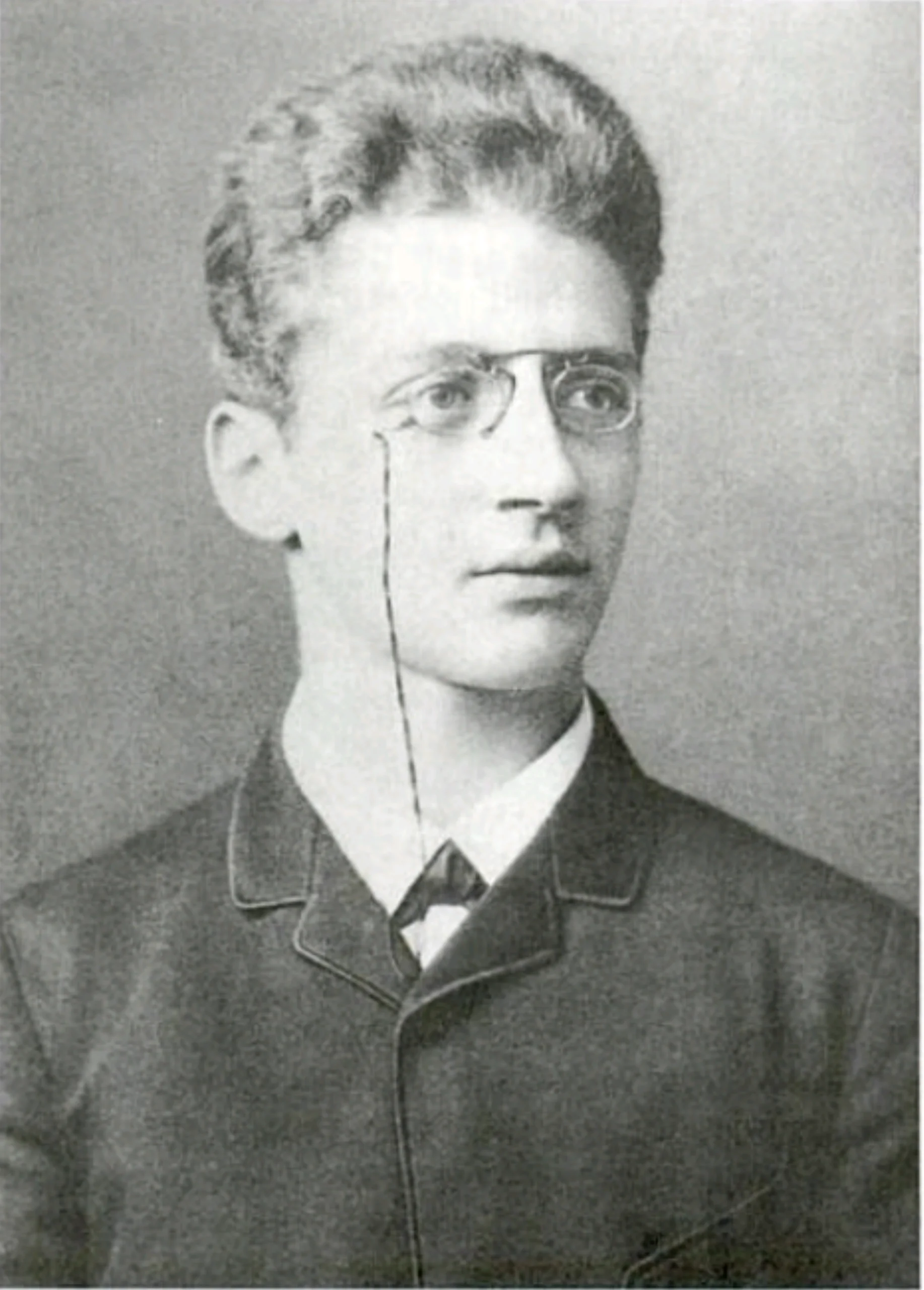
Fritz Haber was a German chemist, physicist, and engineer whose work reshaped both agriculture and warfare. Born on December 9, 1868, in Breslau, Prussia, he earned his doctorate in organic chemistry from the University of Berlin in 1891. His most celebrated achievement came in 1909 when he developed the Haber process, a method to synthesize ammonia from atmospheric nitrogen and hydrogen. Scaled industrially with Carl Bosch, this breakthrough enabled mass production of nitrogen fertilizers, which today sustain roughly a third to half of global food production. For this invention, Haber received the 1918 Nobel Prize in Chemistry. He also collaborated with Max Born to formulate the Born–Haber cycle, a key concept for calculating lattice energy of ionic solids.
Haber's legacy is shadowed by his role in chemical warfare. A fervent German nationalist, he pioneered the use of chlorine gas as a weapon during World War I, personally overseeing its first deployment at the Second Battle of Ypres in 1915. His work on pesticides, including hydrogen cyanide-based fumigants, later contributed to the development of Zyklon B, which the Nazis used to kill over a million people. After the Nazis rose to power in 1933, Haber, despite his conversion to Christianity, was forced to resign from the Kaiser Wilhelm Institute. He accepted an invitation to work in Cambridge, England, and later was invited to direct the Sieff Research Institute in Palestine. En route, he died of heart failure in Basel, Switzerland, on January 29, 1934, at age 65. Haber remains a figure of profound contradictions: a brilliant scientist who fed millions yet enabled chemical atrocities, and a patriot whose loyalty to Germany ultimately ended in exile.
Early Life & Background
Fritz Haber was born into a well-off Jewish family in Breslau, then part of Prussia. His father, Siegfried Haber, was a successful merchant and one of Germany's largest importers of indigo, dyes, and pharmaceuticals. His mother, Paula, died in childbirth, a loss that shaped his early years; he was raised by relatives until age nine, when his father remarried. His upbringing was influenced by his three stepsisters and his liberal uncle Hermann, who ran a local newspaper and provided space for Haber's early chemical experiments.
Haber attended the St. Elizabeth classical school in Breslau, where half the pupils were Jewish, and completed his schooling in 1886. Despite his father's desire for him to apprentice in the family business, Haber, with help from his uncle, enrolled at the University of Berlin to study chemistry. He studied under Robert Bunsen at Heidelberg, A.W. Hoffmann at Berlin, and Karl Liebermann at the Charlottenburg Technische Hochschule. His university career was interrupted by a year of compulsory military service in an artillery regiment, his first exposure to modern warfare.
After earning his doctorate cum laude in 1891 for work on the organic compound piperonal, Haber worked briefly in his father's chemical business, then studied under Georg Lunge in Zurich and collaborated with Ludwig Knorr at Jena on diacetosuccinic ester. He accepted an assistantship at Karlsruhe in 1894 and qualified as a Privatdozent in 1896 with a thesis on the decomposition and combustion of hydrocarbons. In 1906, he was appointed Professor of Physical Chemistry and Electrochemistry at Karlsruhe. It was there, in 1909, that he developed the Haber process, the breakthrough that would define his career.
Career Growth
Haber's breakthrough came in 1909 when he developed the Haber process, synthesizing ammonia directly from atmospheric nitrogen and hydrogen under high pressure and temperature using an iron catalyst. Carl Bosch scaled the process industrially at BASF, enabling mass production of nitrogen fertilizers, which now sustain roughly a third to half of global food production. The catchphrase "Brot aus Luft" (bread out of air) captured its significance. For this achievement, Haber was awarded the 1918 Nobel Prize in Chemistry.
In 1911, he was appointed Director of the Kaiser Wilhelm Institute for Physical Chemistry and Electrochemistry in Berlin-Dahlem, where he presided over a scientific powerhouse that included Albert Einstein, Lise Meitner, and Otto Hahn. During World War I, Haber turned his expertise to chemical warfare, pioneering chlorine gas and overseeing its first deployment at the Second Battle of Ypres in April 1915. He continued developing poison gases, including mustard gas and hydrogen cyanide, throughout the 1920s. After the war, he attempted to extract gold from seawater to help pay Germany's reparations, a project that ultimately failed.
After the Nazis rose to power in 1933, Haber was forced to resign from the Kaiser Wilhelm Institute due to Nazi race laws. He accepted an invitation from Sir William Pope to spend time at Cambridge, England, and was later invited by Chaim Weizmann to direct the Sieff Research Institute (now the Weizmann Institute) in Rehovot, Mandatory Palestine. En route to Palestine, he died of heart failure in Basel, Switzerland, on January 29, 1934.
Career Timeline
Public Image & Style
Fritz Haber's public image is that of a "Greek tragic hero", a brilliant scientist whose hubris and patriotism led to moral catastrophe. He is portrayed in media as a figure of profound contradictions: the man who fed millions yet enabled chemical atrocities, and a patriot whose loyalty to Germany ultimately ended in exile. There is no organized fandom or fan culture around Haber, but his story is a staple of science history podcasts, YouTube documentaries, and university curricula.
His distinctive appearance, including a shaved head, is recognizable in group portraits with Einstein and other scientists. Haber's work is consistently ranked among the most consequential scientific discoveries in history; the Haber-Bosch process is frequently cited as one of the most important inventions of the 20th century, credited with sustaining roughly half the world's population through synthetic fertilizer.
Fame & Fandom
Fritz Haber's legacy is far too contentious to have spawned a conventional fandom, and indeed, no formal fan community or name exists. The diffuse audience that engages with his story consists of science historians, chemistry enthusiasts, and educators, drawn to the dramatic duality of his contributions. The most popular piece of fan-adjacent media is the SciShow YouTube video "Fritz Haber: Great Minds," which has amassed over 601,000 views, framing him as a genius who both fed billions and enabled chemical warfare. This video, along with countless documentaries and university lectures, fuels a fascination that is more scholarly than celebratory. There are no fan campaigns, no birthday billboards, no inside jokes, only the recurring, dark irony of a man who saved half of humanity and also unleashed poison gas. This moral complexity is the core of his enduring appeal, discussed in academic forums and popular science outlets alike.
In terms of measurable fame, iFANN's Global Fame Engine has evaluated Fritz Haber but currently does not place him in the published rankings, including the Global Top 1,000 or any Top-100 scope list. As of August 2026, his status is evaluated but unranked, a reflection of his historical significance rather than contemporary celebrity. While his name is instantly recognizable in scientific circles, he does not command the broad, ongoing attention required for a high ranking. His fame is historical, contextual, and deeply tied to the ethical questions his work raises, not to the metrics of modern media consumption.
Interesting Facts and Legends
Fritz Haber's life was marked by both monumental achievement and profound tragedy. He is famously remembered for his attempt to extract gold from seawater, a project undertaken to help Germany pay its World War I reparations, which ultimately failed. A German nationalist, he converted from Judaism to Christianity, yet was still forced into exile by the Nazis in 1933. His last scientific paper described what became known as the Haber-Weiss reaction. Personal tragedies shaped him: his mother died in childbirth, and his relationship with his father was strained. His first wife, Clara, was one of the first women to earn a doctorate in chemistry in Germany; her suicide in 1915, shortly after the first gas attack at Ypres, is a story often retold, though the precise link to his work remains a matter of interpretation. Another widely told story is the 1909 Karlsruhe breakthrough, when he pulled a few millilitres of ammonia from the air, a discovery that now supplies roughly half the protein in every human body. The tragic irony of his legacy is that IG Farben, the company he helped build, later produced Zyklon B, the gas used in Nazi death camps, despite Haber himself having been persecuted by the regime.
Notable Quotes
“In peace time a scientist belongs to the world, but in war time he belongs to his country.”
Family & Personal Life
Haber was born to Siegfried Haber, a successful merchant and one of Germany's largest importers of indigo, dyes, and pharmaceuticals, and Paula, who died in childbirth. He was raised by relatives until age nine, when his father remarried, and his upbringing was influenced by his three stepsisters and his liberal uncle Hermann, who ran a local newspaper. Haber's relationship with his father was strained, in part because his father wanted him to apprentice in the family business rather than pursue chemistry.
Haber married Clara Immerwahr, a fellow chemist, in 1901. They had one son, Hermann. Clara, a pacifist, vehemently opposed Haber's work on chemical warfare. On May 2, 1915, shortly after the first chlorine gas attack at Ypres, she shot herself with Haber's military pistol, dying in his arms. He remarried in 1917 to Charlotte Nathan, with whom he had two children, Eva and Ludwig. This second marriage ended in divorce in 1927, with Charlotte citing Haber's unavailability and devotion to his science.
Notable Connections
Fritz Haber worked closely with Carl Bosch, who scaled the Haber process industrially, and Max Born, with whom he formulated the Born–Haber cycle. At the Kaiser Wilhelm Institute, he presided over a scientific powerhouse that included Albert Einstein, Lise Meitner, and Otto Hahn. Chaim Weizmann invited him to direct the Sieff Research Institute in Palestine. His first wife, Clara Immerwahr, was a fellow chemist and pacifist.
Relationships & Dating History
Fritz Haber's personal life was marked by two troubled marriages. His first wife was Clara Immerwahr, a fellow chemist and one of the first women to earn a doctorate in chemistry in Germany. They married in 1901, and the relationship was strained by Haber's relentless dedication to work and his support for chemical warfare, which Clara, a pacifist, vehemently opposed. On May 2, 1915, shortly after the first chlorine gas attack at Ypres, Clara shot herself with Haber's military pistol, dying in his arms. The suicide was widely interpreted as a protest against his work on poison gas. They had one son, Hermann.
Haber remarried in 1917 to Charlotte Nathan, with whom he had two children, Eva and Ludwig. This second marriage also ended in divorce in 1927, with Charlotte citing Haber's unavailability and devotion to his science as the cause. Haber's dedication to work helped cause the breakdown of both marriages. As of his death in 1934, Haber was divorced from his second wife and had no known romantic partner at the time of his passing.
- MarriedClara Immerwahr1901 - 1915Fellow chemist and pacifist; she died by suicide in 1915, widely seen as a protest against his chemical warfare work.
- MarriedCharlotte Nathan1917 - 1927Second wife; the marriage ended in divorce in 1927, with Charlotte citing Haber's devotion to science.
Death & Aftermath
Died
January 29, 1934 (aged 65)
Death Place
Basel, Switzerland
Cause of Death
Myocardial infarction
The attending physicians in Basel, Switzerland, formally recorded the cause of death as a myocardial infarction following Fritz Haber's arrival there on January 29, 1934. His final days involved a journey through Europe seeking refuge, culminating in a departure from Berlin where he faced hostility from nationalist groups before receiving support from international colleagues. Public reaction to his passing remained complex and polarized, reflecting the duality of his legacy as both a savior of humanity through ammonia synthesis and a perpetrator of chemical warfare during the First World War. A private funeral service was held in Basel attended primarily by close family members, including his wife Charlotte Haber, and a few trusted friends who had accompanied him into exile.
He was cremated and interred in the Rosengarten Cemetery, where the site remains a quiet resting place rather than a major landmark. Posthumously, his name became synonymous with the ethical dilemmas of science, leading to his induction into the National Inventors Hall of Fame and the establishment of the Fritz Haber Medal by the German Chemical Society. The Fritz Haber Institute of the Max Planck Society in Berlin stands as a major institution dedicated to his memory, while his estate was handled quietly by surviving relatives without immediate formal statements.
Net Worth (Estate Value)
$5 Million
iFANN Editorial Team estimate
Fritz Haber died in 1934, so no contemporary net worth figures exist. His estate was modest, and no significant posthumous earnings have been reported. The Fritz Haber Institute of the Max Planck Society in Berlin continues his scientific legacy, but it generates no income for his estate. No licensing deals, merchandise, or posthumous releases produce revenue from his name or work. As of 2026, iFANN currently estimates Haber's estate at approximately $5 million, reflecting the historical value of his papers and personal effects held in archives. His legacy is managed academically rather than commercially, with the focus on preserving his scientific contributions and the complex moral questions they raise.
Awards Won (1)
Fritz Haber's principal award was the 1918 Nobel Prize in Chemistry, awarded for his work on nitrogen fixation. He was also a foreign member of the US National Academy of Sciences. He received numerous honorary doctorates from German and international universities.
1918 · Chemistry
For the synthesis of ammonia from its elements
Known For
Haber process
1909 · Developer
Born–Haber cycle
1919 · Co-developer
Chlorine gas weaponry
1915 · Pioneer
Keywords
Sources
Quick Facts
- Profession
- chemist, physicist, engineer
- Born
- +1868-12-09
- Birthplace
- Breslau, Prussia
- Died
- +1934-01-29
- Death Place
- Basel, Switzerland
- Gender
- Male
- Spouse
- Clara Immerwahr, Charlotte Haber
- Birth Sign
- Sagittarius
Personal Details
- Full Name
- Fritz Jacob Haber
- Spouse
- Clara Immerwahr (1901–1915), Charlotte Nathan (1917–1927)
- Children
- Hermann Haber, Eva Haber, Ludwig Haber
- Education
- University of Berlin (PhD, 1891); studied under Robert Bunsen at Heidelberg
Frequently Asked Questions
What did Fritz Haber invent?
Why did Fritz Haber's wife kill herself?
Did Fritz Haber invent Zyklon B?
What was Fritz Haber's net worth?
Was Fritz Haber Jewish?
Similar People

Join the community
fans discussing