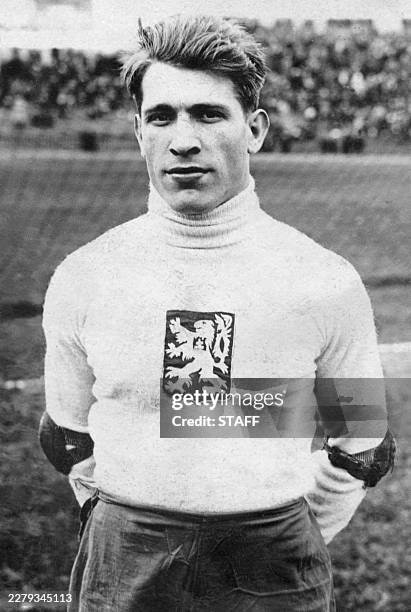
František Plánička
 Czechia
Birthday
June 2, 1904
Birth Sign
Gemini
Birthplace
Prague, Austria-Hungary (now Czech Republic)
Age
Died at 92
Height
1.72 m (5 ft 8 in)
About
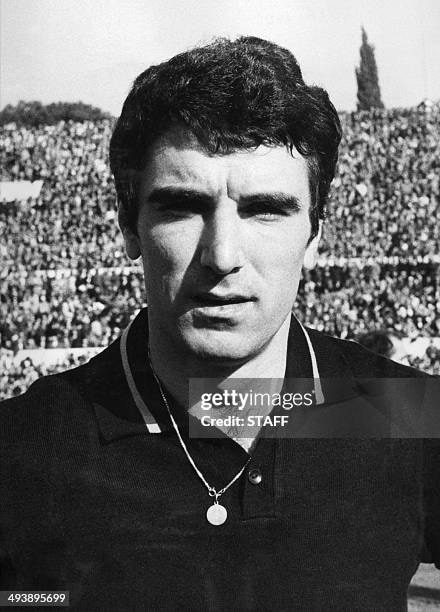
František Plánička was a Czech former football goalkeeper, widely considered one of the greatest players in Czechoslovak football history and among the finest goalkeepers of the pre-World War II era. He spent his entire 16-year senior career at Slavia Prague, where he won eight Czechoslovak First League titles and the Mitropa Cup, the most prestigious club competition in Central Europe at the time. His 73 caps for the Czechoslovakia national team included captaining the side to the 1934 World Cup final, where he famously played with a broken collarbone. Plánička never received a yellow or red card in his entire career, a testament to his extraordinary sportsmanship. His legacy endures through statues, museum exhibits, and a documentary produced by Czech Television in 2025. He is revered as a national hero and a symbol of fair play.
Early Life & Background
Plánička grew up in the working-class Žižkov district of Prague, where his father worked as a manual labourer. The family lived modestly, and as a child he played football in the streets with a rag ball, developing the reflexes and agility that would define his career. He attended local schools but left formal education early to apprentice as a locksmith, his first trade before football became his profession. His organised football began as a teenager with local clubs, first the youth team of SK Žižkov, where his goalkeeping talent emerged, then SK Bubeneč in 1921, where he initially played as an outfield player before settling in goal. His breakthrough came in 1923 when he joined Slavia Prague at age 19, making his senior debut that same season and quickly establishing himself as the club's first-choice goalkeeper.
Career Growth
Plánička's first Czechoslovak First League title came in 1926, beginning a period of domestic dominance that saw Slavia Prague win eight league titles over the next decade. He made his national team debut on 17 January 1926 in a friendly against Italy, a 3–1 loss, but would go on to earn 73 caps, a Czechoslovak record that stood for decades. At the 1934 FIFA World Cup in Italy, he captained Czechoslovakia to the final. Early in the match against Italy, he suffered a broken collarbone but refused to leave the field, as substitutions were not permitted. He continued playing and made several saves before Czechoslovakia lost 2–1 after extra time. His courage became legendary. In 1938, Plánička won the Mitropa Cup with Slavia Prague, defeating Ferencváros in the final. That same year, at the World Cup in France, he captained Czechoslovakia to the quarter-finals. In the match against Brazil, known as the Battle of Bordeaux for its physicality, he broke his arm but again played on. The outbreak of World War II and the Nazi occupation of Czechoslovakia effectively ended top-level international football, and Plánička retired in 1939 at age 35, having spent his entire senior career at Slavia Prague. After retirement, he worked as a football administrator and later as a humble caretaker at Slavia's stadium.
Career Timeline
Public Image & Style
Plánička's public image is that of the archetypal gentleman goalkeeper: a symbol of sportsmanship, courage, and loyalty. He wore a simple dark jersey without gloves, standard for the era, and was known for his acrobatic saves, quick reflexes, and calm authority. Czech media consistently refer to him as legendary goalkeeper and honourable sportsman. Slavia Prague fans regularly sing chants honouring him, and his statue outside Eden Arena is a pilgrimage site. On the anniversary of the 1934 World Cup final, fans lay flowers. The club's official social media accounts use a respectful, historical tone when posting about him, often with black-and-white photos and the hashtag #legend.
Fame & Fandom (iFAMOUS Rankings)
František Plánička remains a towering figure in Czechoslovak football history, revered not for modern digital engagement but as a foundational national icon whose legacy is anchored in documented professional achievements rather than active fan communities. While contemporary structures such as organized fan clubs, social media campaigns, or ritualistic gatherings do not exist for him, a consequence of his status as a historical figure who passed away in 1996 and played during the interwar period, he commands a quiet, enduring respect among those familiar with the sport's origins. His reputation rests on being elected the best Czech goalkeeper ever by the International Federation of Football History & Statistics in 1999, a distinction that cements his place in sports mythology alongside his 73 international caps and two World Cup appearances. The narrative surrounding him focuses on stoic courage and unblemished sportsmanship, with fans occasionally citing his refusal to wear gloves as a symbol of direct connection to the game, though no formal fandom name has ever been documented. There are no records of birthday billboards, streaming pushes, or charity drives specifically organized in his honor, reflecting his position as a revered elder statesman of the pitch rather than a celebrity with an active, organized following. iFANN has evaluated this profile within its Global Fame Engine, which assesses individuals based on global media coverage, search signals, and consumption patterns worldwide. František Plánička is currently the EVALUATED_UNRANKED person in the world, holding no placement in the published Global Top 1,000 or any Top-100 scope list.
Interesting Facts and Legends
František Plánička maintained an unblemished disciplinary record throughout his sixteen-year senior career, never receiving a yellow or red card, a feat of extraordinary sportsmanship for any goalkeeper. He demonstrated remarkable resilience by playing the 1934 World Cup final with a broken collarbone and the 1938 World Cup quarter-final with a broken arm, refusing to leave the field either time. Before and during his professional football career, he worked as a locksmith, and after retiring from the sport, he returned to manual labor as a caretaker and groundskeeper at Slavia Prague's stadium. He holds the distinction of being the first player to captain Czechoslovakia at a World Cup, leading the side to the 1934 final where his leadership was widely praised. His 73 international caps stood as a national record for decades. A persistent story among Czech football historians recounts how fans still revere his calm authority, often citing his refusal to wear gloves as a symbol of his direct connection to the game. This narrative of stoic courage is frequently retold alongside accounts of his longevity, having lived to be 92 years old and witnessing the transformation of football from its amateur roots to the modern era. In 1999, the International Federation of Football History & Statistics elected him the best Czech goalkeeper ever and ranked him sixth globally among goalkeepers, a formal accolade that solidified his legendary status decades after his retirement.
Notable Quotes
“I could not leave the field. My country needed me. The pain was nothing compared to the honour of representing Czechoslovakia.”
“A goalkeeper must be brave, but he must also be fair. The goal is to stop the ball, not to hurt the opponent. I never wanted to win by cheating.”
“I was lucky to play for Slavia. It was my home. I never wanted to leave. Why would I? They gave me everything.”
“The game has changed so much. The money, the tactics, the gloves. But the heart of football is still the same, the joy of a good save, the roar of the crowd.”
Family & Personal Life
Plánička married Marie Pláničková in the late 1920s. She was his lifelong partner and supported his football career. They had two children: a son, František Plánička Jr., and a daughter whose name is not widely reported. Marie predeceased him. After her death, Plánička remained widowed and lived quietly in Prague. He was known as a devoted family man who avoided the public spotlight in his private life.
Notable Connections
Plánička played alongside Josef Bican, the legendary goalscorer, at Slavia Prague in the 1930s. He also shared the pitch with Oldřich Nejedlý, the top scorer at the 1934 World Cup, and Antonín Puč, a winger for both Slavia and Czechoslovakia. Other notable teammates include Rudolf Krčil and Karel Pešek.
Relationships & Dating History
Plánička married Marie Pláničková in the late 1920s. She was his lifelong partner and supported his football career throughout. The couple had two children together. Marie predeceased him, and after her death, Plánička remained widowed. There are no credible reports of any romantic relationships after his wife's death. At the time of his own death in 1996, he was widowed.
- MarriedMarie Pláničková1928 - presentMarried in the late 1920s; had two children together; she predeceased him.
Death & Aftermath
Died
July 20, 1996 (aged 92)
Death Place
Prague
Cause of Death
Unknown
Four years after his passing, the International Federation of Football History and Statistics elected František Plánička the best Czech goalkeeper of all time in 1999, ranking him sixth globally and cementing his status as a historical benchmark for the position. This posthumous recognition arrived quietly, reflecting a career that had long been defined by its absence from the modern commercial spotlight rather than any sudden resurgence of fame. The man who once captained Czechoslovakia to the 1934 World Cup final while playing with a broken collarbone passed away on July 20, 1996, at the age of 92. He died in Prague, the city where he was born and where he spent his entire life, though the specific location of his death remains unrecorded in public archives.
Given his advanced age, the event was treated as a natural conclusion to a long life, devoid of controversy or dramatic circumstance. His widow Marie had predeceased him many years prior, leaving him widowed during his final decades. While he worked as a locksmith and stadium caretaker after retiring from football, his estate matters were not subject to public record or media scrutiny. The legacy that followed his death was one of steady reverence rather than immediate fanfare, preserved through statistical databases and historical retrospectives that continue to cite his performance in the Battle of Bordeaux and his flawless disciplinary record.
Net Worth (Estate Value)
$1 Million
iFANN Editorial Team estimate
As a footballer in the pre-war era, Plánička earned modest wages typical of the time. His primary income came from his club salary at Slavia Prague and small national team match fees. He had no major endorsement deals, as the commercial era of football had not yet begun. After retirement, he worked as a locksmith and later as a stadium caretaker, earning a humble living. Since his death in 1996, his estate generates modest income from posthumous licensing of his image and name for Czech football memorabilia, royalties from biographical books and documentaries, and use of his name in Slavia Prague museum exhibits. Per iFANN's editorial analysis, the estimated value of his estate is approximately $1 Million as of 2026, based on historical football memorabilia valuations.
Awards Won (11)
Plánička won eight Czechoslovak First League titles with Slavia Prague between 1926 and 1935, and the Mitropa Cup in 1938. He was a runners-up at the 1934 FIFA World Cup with Czechoslovakia. His era predates modern individual awards like the Ballon d'Or, but he has been honoured retroactively with inductions into the Slavia Prague Hall of Fame and the Czech Football Association Hall of Fame.
1938 · Winner
Slavia Prague
1934 · Runners-up
Czechoslovakia national team
Known For
Slavia Prague
1923 · Goalkeeper
Czechoslovakia National Team
1926 · Captain and Goalkeeper
1934 FIFA World Cup
1934 · Captain (runners-up)
1938 FIFA World Cup
1938 · Captain (quarter-finals)
Keywords
Quick Facts
- Profession
- association football player
- Born
- +1904-06-02
- Birthplace
- Prague
- Died
- +1996-07-20
- Death Place
- Prague
- Gender
- Male
- Birth Sign
- Gemini
Personal Details
- Full Name
- František Plánička
- Height
- 1.72 m (5 ft 8 in)
- Spouse
- Marie Pláničková
- Children
- František Plánička Jr. (son), one daughter (name not widely reported)
- Education
- Left school early; apprentice locksmith
Frequently Asked Questions
How old was František Plánička when he died?
Did František Plánička ever get a red card?
How many caps did František Plánička have?
What club did František Plánička play for?
Did František Plánička win the World Cup?
Join the community
fans discussing