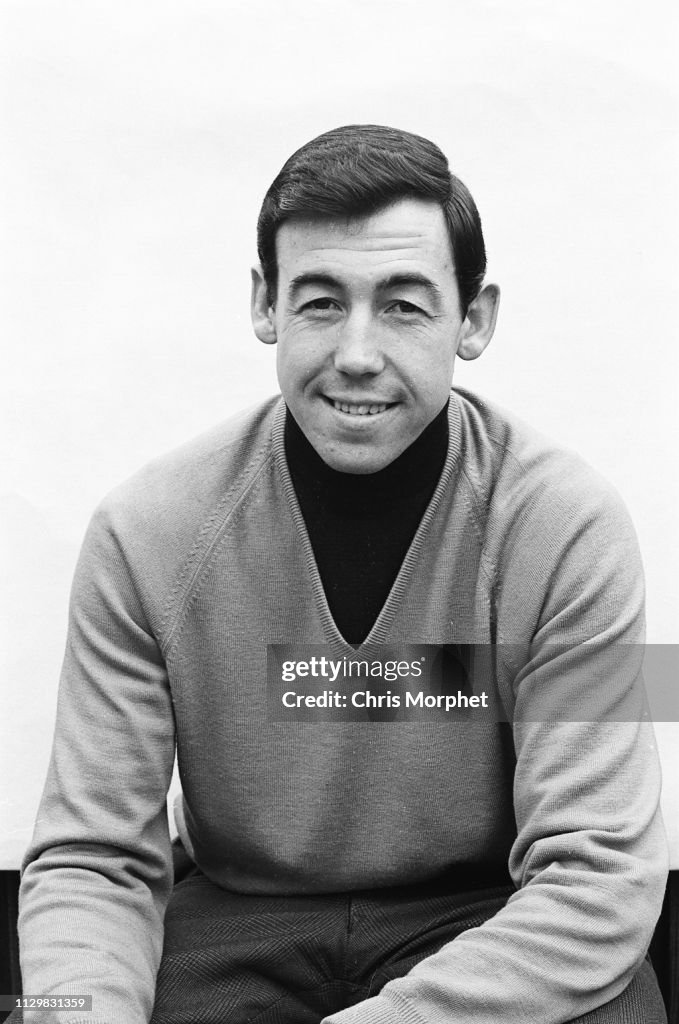
Gordon Banks
 United Kingdom
association football player•autobiographer•association football coach
Also known as: Banks of England, Banksy
Birthday
December 30, 1937
Birth Sign
Sagittarius
Birthplace
Sheffield, England
Age
Died at 81
Height
6 ft 0 in (1.83 m)
About
Gordon Banks was an English professional footballer widely regarded as one of the greatest goalkeepers of all time. He made 679 appearances across a 20-year career and earned 73 caps for England, starting every match of the nation's 1966 World Cup triumph — a feat no other England goalkeeper has matched. Banks is celebrated for his extraordinary reflexes, calm authority, and the iconic "Save of the Century" against Pelé in the 1970 World Cup.
Beyond his World Cup glory, Banks won the League Cup with both Leicester City and Stoke City, and was named FWA Footballer of the Year in 1972. His career was cut short by a car crash that cost him sight in one eye, yet he returned to play professionally in the NASL, earning Goalkeeper of the Year honours. Fans remember him as a humble, dignified hero — the quiet bedrock of England's greatest footballing achievement.
Early Life & Background
Gordon Banks was born in Sheffield, England, into a working-class family. His childhood was marked by tragedy when his brother died after being attacked for the takings of their father's illegal betting shop. At 15, Banks left school and worked as a bagger for a coal merchant, a job that built his upper body strength. He later worked as a hod carrier, carrying bricks on construction sites.
His football career began almost by accident. Playing for an amateur side called Millspaugh, he stepped in as goalkeeper when the regular keeper didn't show up. His talent was immediately noticed. He briefly played for Rawmarsh Welfare in the Yorkshire League before joining Chesterfield's youth setup in March 1953. Banks played for their youth team in the 1956 FA Youth Cup final and made his first-team debut in November 1958.
Career Growth
Banks transferred to Leicester City for £7,000 in July 1959, making 293 appearances over eight years. He played in four cup finals for the club — losing the 1961 and 1963 FA Cup finals, winning the League Cup in 1964, and finishing as finalists in 1965. He made his England debut on April 6, 1963, and by 1966 was the starting goalkeeper for the World Cup, playing every minute of the tournament as England lifted the trophy.
After being dropped by Leicester in 1967, he was sold to Stoke City for £50,000. There he won the League Cup in 1972 — Stoke's only major honour — and was named FWA Footballer of the Year. At the 1970 World Cup, he produced the "Save of the Century," a stunning reflex stop to deny Pelé's close-range header. A car crash in October 1972 cost him the sight in his right eye and effectively ended his top-level career. He later played two seasons for the Fort Lauderdale Strikers, winning NASL Goalkeeper of the Year in 1977, and briefly managed Telford United in 1980.
Career Timeline
Public Image & Style
Banks was known for his quiet, humble demeanour and exceptional reflexes. He is remembered as one of football's true gentlemen. His signature moment is the "Save of the Century" against Pelé, which defines his legacy. Media portray him as a national hero and one of England's greatest ever players. Fans of English football, particularly Stoke City and Leicester City supporters, hold him in extremely high regard. His statue outside the Britannia Stadium, unveiled by Pelé in 2008, remains a pilgrimage site for football fans.
Fame & Fandom (iFAMOUS Rankings)
Gordon Banks stands as a towering figure in the global footballing consciousness, revered not for organized campaigns or modern social media mobilization, but for an enduring, cross-generational reverence that treats him as the archetype of the English goalkeeper. His fanbase is essentially the entire sport itself, united by the shared memory of the "Save of the Century" against Pelé and the quiet dignity he maintained throughout his life. Unlike contemporary athletes who cultivate specific named tribes, Banks commands a universal respect where supporters of England and Stoke City FC regard him as a national hero whose skill spoke for itself without need for labels. Following his passing in 2019, the community engaged in widespread memorials from FIFA to local clubs, cementing his status as a cultural icon rather than a figure requiring active fan engagement. In recent years, the narrative has deepened with emerging investigative stories regarding alleged poisoning plots linked to his decline, adding a layer of dark conspiracy to his legend that continues to spark discussion among historians and fans alike. Despite this massive global footprint, Gordon Banks is currently evaluated by iFANN's Global Fame Engine as holding no placement in the published rankings (Global Top 1,000 or a Top-100 scope list). This evaluation reflects his status as a historical figure whose fame is rooted in legacy and institutional tribute rather than current chart performance or viral metrics.
Interesting Facts and Legends
Banks earned the monikers "The Banks of England" and "Banksy" during his illustrious career. He set an England record by playing 23 consecutive matches and keeping clean sheets in seven straight games. Despite losing sight in his right eye due to a car crash, he returned to professional football and was named NASL Goalkeeper of the Year in 1977. In 2008, a charity match featured a Banks XI versus a Pelé XI, with a speech from Archbishop Desmond Tutu. Author Don Mullan wrote a boyhood memoir called Gordon Banks – A Hero Who Could Fly about how Banks inspired him during the Troubles in Ireland. The core of his legend rests on the verified event known as the "Save of the Century." In Mexico, Banks tipped a header from Pelé over the bar while only partially turned. Pelé reportedly told a teammate after the play, "That man is the best goalkeeper I have ever seen," and later admitted he thought the ball had gone in. This moment defines his legacy as the pinnacle of human athletic reflex. Recently, unproven allegations regarding a CIA poisoning plot prior to the 1970 World Cup have entered the folklore, with his grandson confirming plans to explore these claims at Q&A events.
Notable Quotes
“Gordon Banks was a goalkeeper with magic. — Pelé”
“I was just a lad from Sheffield who loved football. — Gordon Banks”
“The save against Pelé was instinct. I just stuck out a hand. — Gordon Banks”
Family & Personal Life
Gordon Banks married Ursula, and they remained together until his death. The couple had three children: Robert, Wendy, and Julia. Banks also had a grandchild named Ed Jervis. He was a patron of the Alzheimer's Society, having had a brother who suffered from the disease. Banks lived in Madeley, Staffordshire, in his later years.
Notable Connections
Banks had a close friendship with Pelé, who unveiled his statue in 2008 and called him a "goalkeeper with magic." He succeeded Sir Stanley Matthews as President of Stoke City. The IFFHS ranked him second among 20th-century goalkeepers behind Lev Yashin. Author Don Mullan wrote a memoir about Banks' influence on his life.
Relationships & Dating History
Gordon Banks was married to one woman for his entire adult life. He married Ursula (surname not publicly disclosed), and they remained together until his death. The couple had three children: Robert, Wendy, and Julia. Ursula was a constant presence throughout his career and later years. As of 2026, Banks is deceased; he was married to Ursula at the time of his death on February 12, 2019.
- MarriedUrsula Banks1960 - 2019Married for life; had three children together. Ursula remained married to Banks until his death.
Death & Aftermath
Died
February 12, 2019 (aged 81)
Death Place
Unknown
Cause of Death
Reported as complications from kidney failure and cancer
Gordon Banks' passing was confirmed by his family and the Football Association on February 13, 2019, following the death of the English goalkeeper on February 12, 2019. The club and his relatives reported that he had been suffering from a long-term illness, specifically kidney failure and complications stemming from a cancer diagnosis in the early 2000s, which required him to receive palliative care in his final days. While specific medical details were not fully disclosed beyond these reports, the official ruling relied on standard certification procedures for natural causes. Tributes poured in immediately from across the sporting world, with then-England manager Gareth Southgate describing Banks as one of the greatest goalkeepers the game has ever seen.
Streaming and sales of career footage surged, particularly the iconic save against Pelé, while fan vigils and moments of silence were observed at matches globally. A memorial plaque dedicated to the World Cup hero was later unveiled in his home city of Sheffield. Banks' funeral was a private affair held shortly after his death in February 2019, where he was laid to rest in Sheffield, his birthplace. In the years since, his legacy has been preserved through documentaries and books, including the 2026 podcast Foul Play which explores historical allegations regarding his health in 1970. His estate affairs remain largely private.
Net Worth (Estate Value)
$5 Million
iFANN Editorial Team estimate
Per iFANN's editorial analysis, Gordon Banks' estate is estimated to be worth around $5 Million as of 2026. Unlike modern footballers, Banks earned modest wages during his playing career in the 1960s and 1970s. His estate generates revenue from posthumous merchandise and memorabilia sales, licensing of his image and the iconic "Save of the Century" footage, and royalties from his two autobiographies: Banks of England (1980) and Banksy: My Autobiography (2002). The Gordon Banks statue and associated branding also contribute. The estate is managed by his family, with his wife Ursula and children as beneficiaries. In recent years, tributes and anniversary events have kept his legacy commercially active.
Awards Won (13)
Banks won the FIFA World Cup with England in 1966, the only England goalkeeper to do so. He was named FWA Footballer of the Year in 1972 and won the League Cup with both Leicester City and Stoke City. He was awarded the OBE in 1970 and was named FIFA Goalkeeper of the Year six times. In the NASL, he was Goalkeeper of the Year in 1977.
1966 · Winner
England national team
1970 · Officer of the Order of the British Empire
Football
Known For
1966 FIFA World Cup
1966 · Starting Goalkeeper for England
Save of the Century (1970 World Cup vs Brazil)
1970 · Goalkeeper
League Cup Win with Stoke City
1972 · Goalkeeper
Keywords
Sources
Quick Facts
- Profession
- association football player, autobiographer, association football coach
- Born
- December 30, 1937
- Birthplace
- Sheffield, England
- Died
- February 12, 2019
- Death Place
- Stoke-on-Trent, England
- Gender
- Male
- Birth Sign
- Sagittarius
- Height
- 6 ft 0 in (1.83 m)
- Spouse
- Ursula Banks
- Children
- Robert Banks, Wendy Banks, Julia Banks
Personal Details
- Full Name
- Gordon Banks
- Height
- 6 ft 0 in (1.83 m)
- Spouse
- Ursula Banks
- Children
- Robert Banks, Wendy Banks, Julia Banks
Frequently Asked Questions
How did Gordon Banks die?
What was Gordon Banks' net worth at the time of his death?
Was Gordon Banks married?
What is Gordon Banks best known for?
How tall was Gordon Banks?
Social Media
Join the community
fans discussing