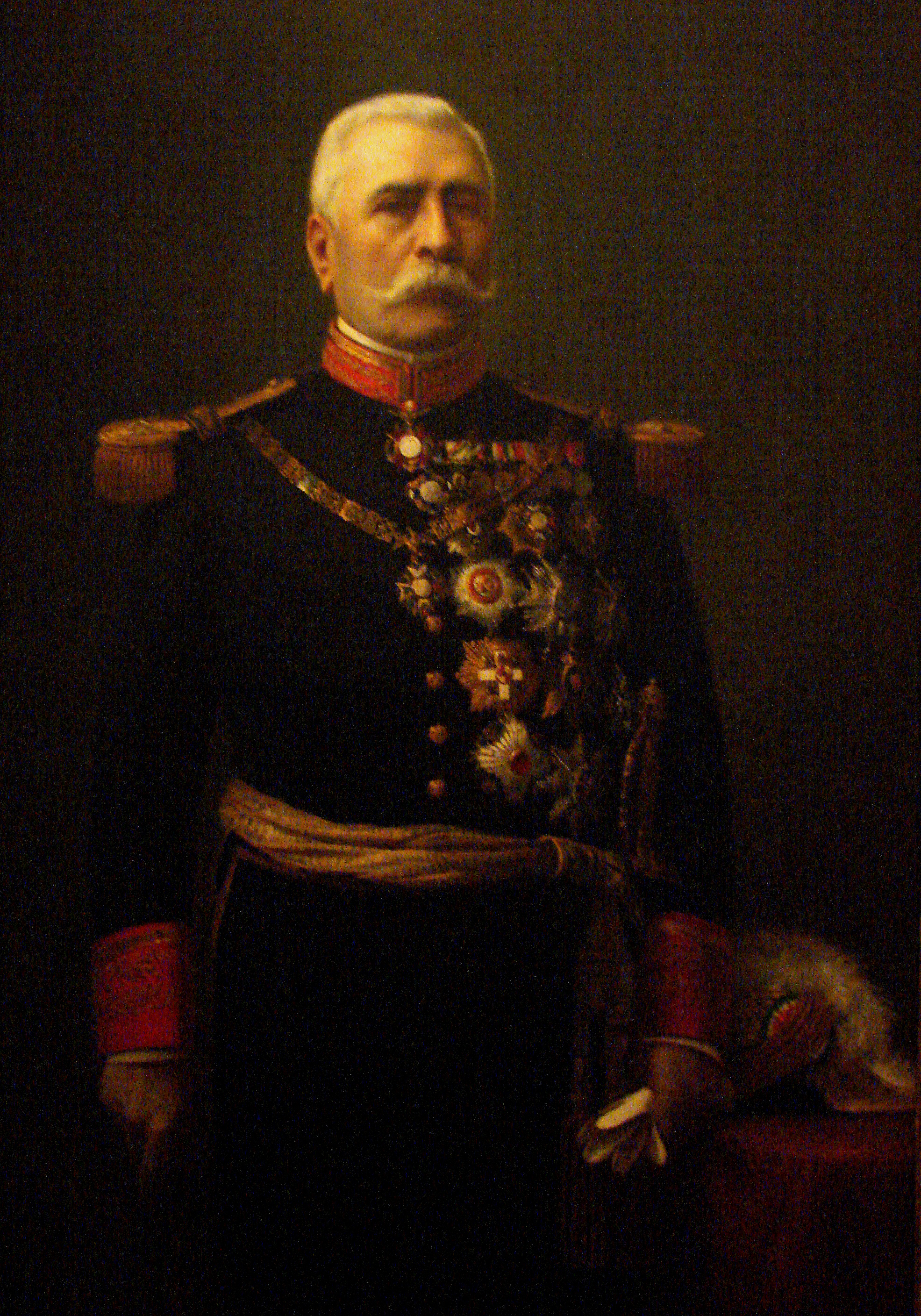
Porfirio Díaz
 Mexico
Birthday
+1830-09-15
Birth Sign
Virgo
Birthplace
Oaxaca
Age
Died at 84
About
Born in Oaxaca in 1830, Porfirio Díaz began his journey not as a soldier or politician, but studying for the priesthood. He eventually shifted his focus to law, finding a mentor in Benito Juárez. Díaz found himself drawn into the turbulent politics of mid-19th century Mexico, first joining the Liberal Party to challenge Santa Anna and later fighting against conservative forces during the Reform War. His military career truly took shape during the French intervention, where he distinguished himself in battles like Puebla in 1862. Though captured by the French, he managed to escape and continued to resist their advance, eventually reclaiming Mexico City for the Republic in 1867.
Fame & Fandom
Porfirio Díaz stands apart in the historical landscape as a figure whose legacy is defined not by a living fanbase, but by the intense, enduring polarization of historians and students of Mexican identity. There is no organized fandom with a specific name, no digital communities rallying around his birthday, and no modern celebrity culture to soften the edges of his authoritarian rule. Instead, he remains a subject of fierce academic debate, where admiration for economic modernization clashes with condemnation of political repression. This unique status transforms him from a mere historical figure into a complex symbol of national identity that continues to shape political discourse over a century after his death.
The scale of his global recognition is captured in the latest iFANN Global Fame Rankings. These authoritative metrics place Porfirio Díaz as the 10th most famous person in Mexico, a position holding steady from the previous cycle. His influence extends beyond national borders, marking him as the 40th most famous person from Mexico on the global stage. Furthermore, within the broader context of the hemisphere, he ranks as the 19th most famous person in Latin America, also maintaining his standing from the prior assessment.
Interesting Facts and Legends
Born in Oaxaca in 1830, Díaz initially studied for the priesthood before shifting to law under the mentorship of Benito Juárez. His military career began during the turbulent Reform War and peaked during the French intervention, where he distinguished himself at the Battle of Puebla in 1862 despite being captured. The cornerstone of his legendary rise is the Plan of Tuxtepec in 1876, where he capitalized on the slogan "No Re-election" to launch a military coup against President Sebastián Lerdo de Tejada, initiating three decades of rule known as the *Porfiriato*. During this era, often mythologized as the time of the "Gentleman Dictator," Mexico saw massive industrial growth and foreign investment, though this prosperity came at the cost of extreme inequality and land dispossession for indigenous communities.
The most retold story of his life involves his dramatic fall and exile in May 1911. After refusing to step down despite growing unrest, Díaz signed the Treaty of Ciudad Juárez, agreeing to resign and leave for France. The image of the aging dictator departing in a train carriage has become a staple of Mexican history textbooks and films. Although he died in Paris in 1915 in relative obscurity, folklore sometimes recounts his final days filled with lamentations for his lost country. His body was eventually returned to Mexico, yet debates continue today regarding whether he should be viewed primarily as a nation-builder or a tyrant.
Death & Aftermath
Died
+1915-07-02 (aged 84)
Death Place
Paris, Île-de-France, France
Cause of Death
Pneumonia
Porfirio Díaz, the former President of Mexico and military general, died on July 2, 1915, at his residence located at 20 Rue de la Tour in Paris, France. He was 84 years old when he passed away from pneumonia, a condition that had been developing during his final days in exile after departing Mexico in May 1911. Historical records indicate that Díaz spent his remaining months largely confined to bed due to declining health and respiratory issues. The circumstances were consistent with natural causes associated with advanced age and illness, and no disputed accounts regarding foul play or sudden violence have emerged in historical literature.
Public reaction to his death was complex and divided, reflecting his polarizing legacy in Mexican history. While some admirers acknowledged his role in modernizing Mexico, the dominant sentiment among the broader population and political leaders was one of relief and continued criticism. His estate was managed by his family without public dispute, and his papers from 1856 to 1903 are preserved in collections such as those at the University of Michigan.
The funeral for Porfirio Díaz was a private affair held in Paris attended only by close family and friends. He was initially buried in the Père Lachaise Cemetery in Paris. Decades after his passing, a quiet reconciliation saw his remains repatriated to Mexico and interred in the Rotunda of Illustrious Men in Mexico City on October 3, 1927, placing him alongside other national heroes despite the lingering animosity toward his dictatorship.
Awards & Accolades
Keywords
Quick Facts
- Profession
- politician, military personnel
- Born
- +1830-09-15
- Birthplace
- Oaxaca
- Died
- +1915-07-02
- Death Place
- Paris
- Gender
- Male
- Spouse
- Delfina Ortega Díaz, Carmen Romero Rubio
- Birth Sign
- Virgo
Personal Details
- Spouse
- Delfina Ortega Díaz, Carmen Romero Rubio
Join the community
fans discussing