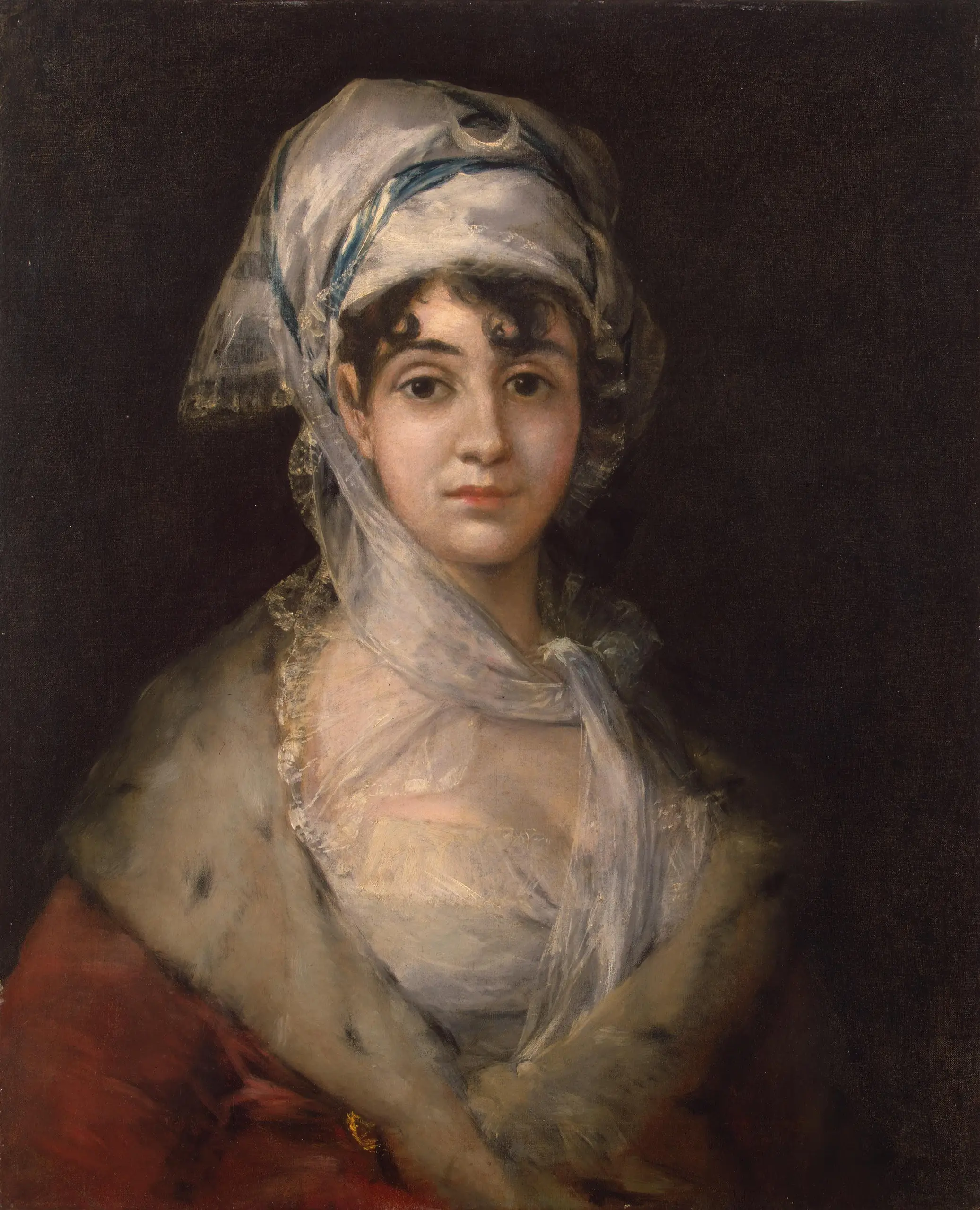
Francisco Goya
 Spain
Spainpainter•printmaker•lithographer
Also known as: Francisco de Goya, Francisco José de Goya y Lucientes, Don Francisco Goya
Birthday
March 30, 1746
Birth Sign
Sagittarius
Birthplace
Fuendetodos, Aragon, Spain
Age
Died at 82
Height
5 ft 7 in (170 cm)
About
Francisco José de Goya y Lucientes, universally known as Francisco Goya, was a Spanish Romantic painter and printmaker born on March 30, 1746, in Fuendetodos, Aragon. He is widely regarded as the most important Spanish artist of the late 18th and early 19th centuries, serving as a crucial bridge between the Old Masters and modern art. His career spanned nearly seven decades, evolving from the Rococo elegance of court portraits to the raw, often terrifying realism of his later works that documented war, political corruption, and human folly. As a figure of the pre-modern era, he achieved significant honors during his lifetime, including appointment as Painter to the King by Charles III in 1786 and First Court Painter by Charles IV in 1789. He was also elected a full member of the Royal Academy of Fine Arts of San Fernando in 1786. Today, he is consistently ranked among the top artists of all time in surveys conducted by major art publications, with the Museo del Prado in Madrid housing the largest collection of his works. His influence is acknowledged by virtually every major art movement from Impressionism to Surrealism, cementing his status as a Master of Modernism.
Early Life & Background
Goya entered the world in the small village of Fuendetodos, where his father, Francisco Goya y Franquesa, worked as a gilder (goldsmith) and his mother, Gracia Lucientes, came from a family of artisans. The family relocated to Zaragoza when Francisco was young, providing him access to primary education and a more vibrant artistic environment. As a child, he displayed a clear aptitude for drawing, though he was not a model student and was known for playing pranks that occasionally landed him in trouble. At the age of 12, he began an apprenticeship with José Luzán y Martínez, a local painter who introduced him to academic traditions and the works of Italian masters like Titian and Rubens. His path to professional recognition was not immediate; early attempts to enter the prestigious Royal Academy of Fine Arts of San Fernando met with failure, as he placed second in a competition in Parma in 1766 but failed to secure first prize. Undeterred, he spent several years traveling through northern Spain, working as a decorative painter and creating frescoes for churches and palaces in Saragossa, Madrid, and Vitoria. A pivotal moment arrived in 1771 when he finally won a second-place prize in a national competition organized by the Academy of Parma, which granted him the recognition needed to advance his career. By 1774, he secured a major commission to design tapestry cartoons for the Royal Tapestry Factory in Madrid, a role that launched his professional life and brought him into direct contact with the Spanish aristocracy. Historical estimates suggest he was of average height for the period, approximately 5 feet 7 inches (170 cm), and described in his youth as handsome and dashing with a mustache and sideburns.
Career Growth
Goya's career evolved through distinct phases, shifting from light-hearted decoration to profound social commentary. Between 1775 and 1780, he produced over 60 tapestry cartoons depicting scenes of everyday Spanish life, festivals, and rural customs. These works were colorful and reflected the Rococo style popular at the time. In 1786, he was appointed court painter to King Charles III, a position he held until the accession of Charles IV. During this period, he produced formal portraits of the royal family and nobility, earning high favor for his ability to capture character while maintaining dignity. A severe illness in 1793 changed everything. The near-fatal attack, likely caused by lead poisoning or a viral infection, left him completely deaf, precipitating a psychological and stylistic shift. His work became darker and more introspective. Following his recovery, he published Los Caprichos, a series of 80 etchings satirizing Spanish society, superstition, and the clergy. This marked his emergence as a sharp social critic. During the Peninsular War against Napoleon, he created some of his most famous works, including The Second of May 1808 and The Third of May 1808. These paintings depicted the brutality of war without glorification, establishing him as a pioneer of modern war art. In the final phase of his life, after the restoration of the absolutist monarchy, Goya feared persecution. He painted a series of dark, disturbing murals directly onto the walls of his country house, the Quinta del Sordo. Works like Saturn Devouring His Son and Witches' Sabbath were never intended for public display. Facing political pressure and poor health, he fled Spain for Bordeaux in 1824. There, he continued to produce lithographs and paintings focusing on bullfighting scenes until his death.
Career Timeline
Public Image & Style
Goya is portrayed as the "tormented genius," a man whose art evolved from light to darkness due to personal tragedy and political turmoil. His public image is defined by his transition from a court painter producing elegant portraits to a visionary documenting the horrors of war and madness. Media perception often focuses on his deafness as the catalyst for his darker themes, framing him as an isolated figure who retreated into his own mind. His aesthetic shifted from the Rococo elegance of his youth to the raw, unflinching realism of his later years, making him a symbol of the struggle between reason and chaos. Official accounts for museums holding his works, such as the Prado, share his art daily, garnering millions of likes and shares. Hashtags like #Goya and #BlackPaintings trend during anniversary months, reflecting a modern digital fandom. While he does not have a celebrity-style fanbase, the term "Goyistas" is sometimes used informally by scholars to describe those who specialize in his work. He is frequently named one of the most influential people of the last millennium by TIME magazine and is consistently ranked #1 or #2 in global polls of the most influential artists of the modern era.
Fame & Fandom (iFAMOUS Rankings)
Francisco Goya commands a legacy defined not by active fanfare but by the enduring reverence of art historians and students who study his work as a cornerstone of modern expression. No formal fandom name exists for the artist in the traditional sense, as his death in 1828 precludes the organized social rituals or digital communities that characterize contemporary celebrity culture; instead, his audience consists of those engaged with his historical impact rather than a movement dedicated to his personal life. Despite the absence of active fan campaigns, his stature remains immense within global metrics of cultural significance. According to the iFANN Global Fame Rankings, he holds the position of the 48th most famous person in Spain, a placement holding steady from the previous cycle. His influence extends beyond national borders into specific professional spheres, where he is ranked as the 27th most famous person in Art & Design, also maintaining consistency with prior data. These figures reflect a broad attention span across media coverage and consumption signals worldwide, confirming his status as a pivotal figure in artistic history. The rankings serve as a quantitative measure of this sustained recognition, placing him firmly among the most discussed creative figures of his era without requiring the modern trappings of fan engagement. He was featured at No. 23 in the September 2026 iFAMOUS Rankings. In 2026, he frequently appears on the covers of art history publications such as The Art Newspaper, Apollo Magazine, and Stern in relation to new discoveries and exhibitions. For instance, a September 2026 article in The Art Newspaper featured a newly discovered painting attributed to him, further fueling his relevance in the modern cultural landscape.
Interesting Facts and Legends
Despite being deaf, Goya enjoyed music by listening to it through a wooden stick pressed against his teeth and the piano. He was also a heavy smoker and drinker, habits that likely contributed to his declining health in later years. Historical records indicate he was a vegetarian for a period of his life, influenced by Enlightenment ideas. He was an avid collector of bullfighting memorabilia and painted many scenes of the arena. One enduring legend involves the Black Paintings; these horrors were painted directly onto the walls of his home and only transferred to canvas after his death, adding to the mythos of a tormented genius. Another story suggests he painted The Third of May 1808 to influence how future generations would view execution, a theme later echoed by filmmakers like Stanley Kubrick and Steven Spielberg. The visceral horror of Saturn Devouring His Son has become a cultural shorthand for madness and primal fear, often referenced in pop culture and film. Recent reports from 2026 note the discovery of frescoes in Madrid believed to be connected to his legacy, specifically a fresco in a Madrid church discovered by antiquarian Artur Ramon that appears to contain a hidden signature of Goya beneath the work of his brother-in-law. Additionally, the Goya Museum in Zaragoza reopened in October 2026 with a new exhibition titled "Solo Goya: The Art of Seeing," highlighting his unique perspective. Exhibitions of his prints also opened in Sofia, Bulgaria, and Kyiv, Ukraine, in mid-2026, demonstrating his enduring relevance.
Notable Quotes
“The dream of reason produces monsters.”
“Ignorance is fatal.”
“Art is the lie that enables us to realize the truth.”
Family & Personal Life
Goya was born into a family of gilders in the small village of Fuendetodos. His father, Francisco Goya y Franquesa, was a gilder, and his mother, Gracia Lucientes, came from a family of artisans. The family moved to Zaragoza when Goya was young, where he received his primary education. As a child, Goya showed an aptitude for drawing, though he was reportedly not a model student and was known for playing pranks. At age 12, he was apprenticed to José Luzán y Martínez, a local painter who introduced him to the academic traditions of painting and the works of Italian masters like Titian and Rubens. His early attempts to enter the prestigious Royal Academy of Fine Arts of San Fernando were met with failure; he placed second in a competition in Parma in 1766 but failed to win first prize. Undeterred, he spent years traveling and working as a decorative painter in northern Spain, creating frescoes for churches and palaces in Saragossa, Madrid, and Vitoria. A pivotal moment occurred in 1771 when he won a second-place prize in a national competition organized by the Academy of Parma, which finally gained him recognition. In 1774, he secured a major commission to design tapestry cartoons for the Royal Tapestry Factory in Madrid, a role that launched his professional career and brought him into contact with the Spanish aristocracy.
Notable Connections
Josefa Bayeu, Francisco Bayeu, Leocadia Zorrilla, King Charles III, King Charles IV, Duchess of Alba, José Luzán.
Relationships & Dating History
Beginning around 1797, after the death of his wife, Goya formed a deep romantic and intellectual bond with Leocadia Zorrilla, the wife of his friend and former pupil, José Agustín Arguelles. Although they lived together for many years, they never married due to the complexities of her existing marriage and societal norms. They had no recorded children together. Their relationship ended only when Goya went into exile in France in 1824, leaving Leocadia behind in Madrid. She is believed to have died shortly after his departure. Goya is rumored to have had brief flings with various models and court ladies, including the Duchess of Alba, whom he painted in a famous, controversial portrait showing her pointing to the ground with the inscription "Solo Goya" (Only Goya). However, these are generally considered artistic muses rather than confirmed romantic partnerships. As of the historical record, Francisco Goya has been deceased since April 16, 1828. He was widowed by the death of his wife Josefa in 1785 and was separated from his partner Leocadia Zorrilla in 1824. There are no living partners or children. The couple had no children together, and historical records indicate that Goya had several long-term relationships with women throughout his life, though none resulted in marriage or legitimate offspring.
- MarriedJosefa Bayeu y Subías1773 - 1785She died in 1785; the couple had no children.
- DatingLeocadia Zorrilla1797 - 1824Long-term partner who lived with him until his exile; no children.
Death & Aftermath
Died
April 16, 1828 (aged 82)
Death Place
Bordeaux, France
Cause of Death
Natural causes and chronic illness
Francisco Goya spent his final years in self-imposed exile in Bordeaux, France, having departed Spain in October 1824 following a loss of favor with the restored monarchy under Ferdinand VII. He passed away on April 16, 1828, at the age of 82 while residing in poverty and suffering from the long-term effects of an illness that began in Seville in 1792. This condition left him stone deaf with tinnitus, dizziness, and partial blindness. Historical accounts suggest he died of natural causes related to old age and complications from his chronic illnesses, possibly including heart failure or renal issues exacerbated by his frailty. There is no evidence of foul play, legal investigation, or dispute regarding the circumstances of his passing. Public reaction to his death remained muted due to his status as an exile and the turbulent political climate in Spain. Tributes from peers were sparse and largely confined to private correspondence among artists and intellectuals who admired his work. He was buried shortly after his death in a modest grave within the Saint-Pierre Cemetery, though the precise location of his remains has since become uncertain amid speculation regarding urban development. While recent reports from 2026 note the discovery of frescoes in Madrid believed to be connected to his legacy, his actual body remains missing, fueling ongoing scholarly debate about its fate. Posthumously, Goya has been the subject of numerous films, books, and major retrospectives at the Prado Museum, the Metropolitan Museum of Art, and the Louvre. His works remain protected under Spanish cultural heritage laws, and foundations named after him continue to support emerging artists across Spain and internationally. A notable honor includes his induction into the Pantheon of Illustrious Spaniards (Panteón de Hombres Ilustres) in the Real Academia de Bellas Artes de San Fernando, as well as the naming of streets, schools, and cultural centers in his memory across Spain and Latin America.
Net Worth (Estate Value)
$0
iFANN Editorial Team estimate
Since Francisco Goya passed away in 1828, he does not have a personal net worth in 2026. However, his estate and the value of his artistic legacy are immense. The rights to Goya's works are managed by the Spanish state and various foundations, including the Fundación Goya. The copyright on his works has long expired, meaning anyone can reproduce his images, but the ownership of original physical works is held by museums and private collectors. Individual works by Goya fetch astronomical sums. For example, his tapestry cartoons and oil paintings regularly sell for tens of millions of dollars. In recent decades, La Tirana sold for approximately $13 million, and The Milkmaid of Bordeaux has been valued similarly. The total economic impact of Goya's brand and exhibitions globally is estimated in the hundreds of millions of dollars annually, though this is distributed across institutions rather than accumulated by heirs. The "estate" generates revenue through museum ticket sales, specifically the Goya exhibition at the Prado, licensing fees for high-quality reproductions used in books and merchandise, and the sale of authenticated prints. A painting believed to be a previously unknown Goya is set to be displayed at the Museo del Prado in 2028, potentially adding to the market value of his works. The Museo del Prado in Madrid houses the largest collection of his works, while the Goya Museum in Zaragoza and the Musée du Louvre in Paris also hold significant collections dedicated to his art.
Awards Won (4)
Goya did not receive modern awards like Oscars or Grammys, but he achieved significant honors during his lifetime. He was appointed Painter to the King in 1786 and First Court Painter in 1789. He was elected as an associate member of the Royal Academy of Fine Arts of San Fernando in 1780 and full member in 1786. Posthumously, he was inducted into the Pantheon of Illustrious Spaniards. He is consistently cited in "Greatest of All Time" lists for painters, ranking among the top 10 artists of all time in surveys conducted by art historians.
1789 · Honorary Title
First Court Painter to King Charles IV
1786 · Honorary Title
Court Painter to King Charles III
1786 · Academic Honor
Full Member of the Royal Academy of Fine Arts of San Fernando
1780 · Academic Honor
Associate Member of the Royal Academy of Fine Arts of San Fernando
Known For
The Third of May 1808
1814 · Painter
Saturn Devouring His Son
1820 · Painter
The Disasters of War
1812 · Printmaker
Los Caprichos
1799 · Etcher
Keywords
Sources
Quick Facts
- Profession
- painter, printmaker, lithographer
- Born
- March 30, 1746
- Birthplace
- Fuendetodos, Spain
- Died
- April 16, 1828
- Death Place
- Bordeaux, France
- Gender
- Male
- Spouse
- Josefa Bayeu
- Birth Sign
- Sagittarius
Personal Details
- Full Name
- Francisco José de Goya y Lucientes
- Height
- 5 ft 7 in (170 cm)
- Spouse
- Josefa Bayeu y Subías
- Children
- Education
- Apprenticed to José Luzán y Martínez; studied at the Royal Academy of Fine Arts of San Fernando
Frequently Asked Questions
What is Francisco Goya best known for?
Why was Francisco Goya exiled?
Why was Goya so dark?
What is Francisco Goya's most famous painting?
Did Francisco Goya have any children?
Similar People
Join the community
fans discussing