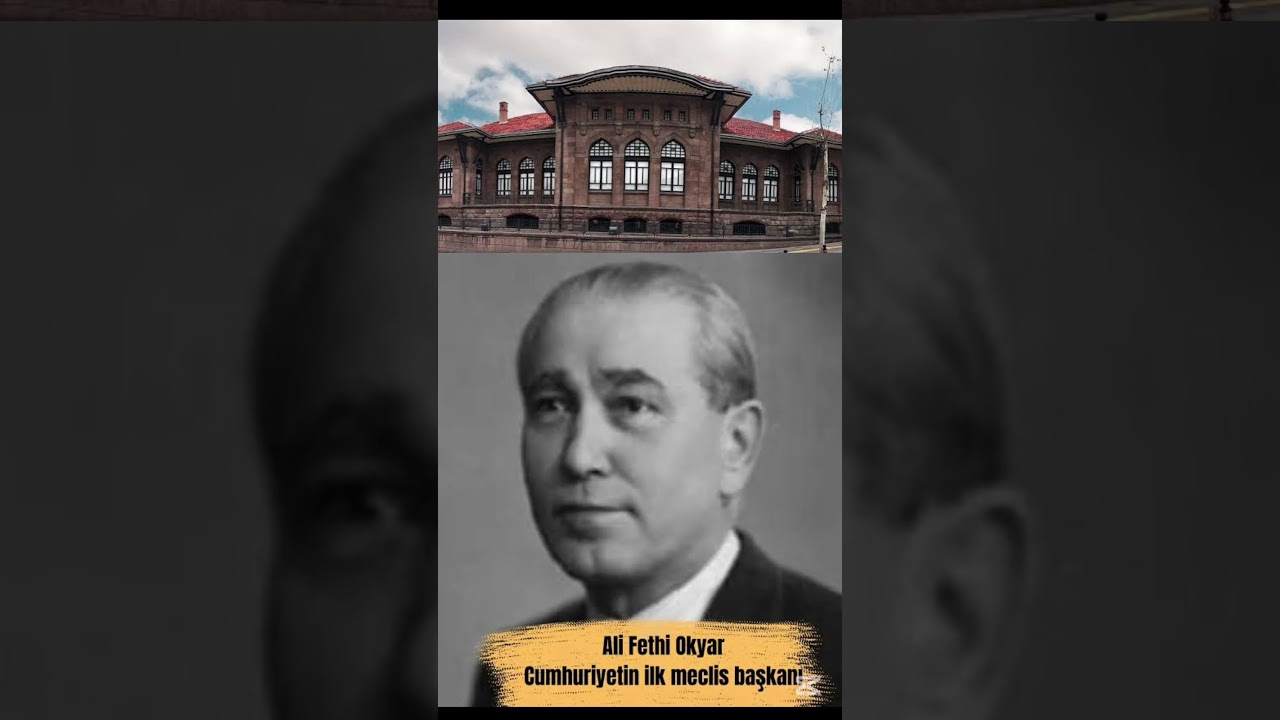
Fethi Okyar
 Turkey
Also known as: Ali Fethi Bey, Ali Fethi, Fethi Okyar
Birthday
April 29, 1880
Birth Sign
Sagittarius
Birthplace
Prilep, Ottoman Empire (now North Macedonia)
Age
Died at 63
About
Ali Fethi Okyar stands as a pivotal statesman in Turkish history, bridging the twilight of the Ottoman Empire and the foundational years of the Republic. Born on April 29, 1880, in Prilep, he is historically distinct from his more famous contemporary, Mustafa Kemal Atatürk, though their lives were deeply intertwined through shared service and political strategy. Okyar's legacy is defined by his role as the second Prime Minister of Turkey (1924–1925) and his unique attempt to introduce multi-party democracy through the founding of the Liberal Republican Party in 1930 at Atatürk's personal request. He died on May 7, 1943, in Istanbul at the age of 63. His public image is that of a moderate intellectual who served as a bridge between the Ottoman past and the Republican future, remembered for his serious demeanor and patriotic dedication to civil liberties even when it cost him his premiership during the Sheikh Said Rebellion.
Early Life & Background
Ali Fethi Okyar was born Ali Fethi Bey on April 29, 1880, in Prilep, a city in the Manastır Vilayet of the Ottoman Empire, now part of North Macedonia. His birth name was simply Ali Fethi; "Okyar" became a surname adopted later in life or used to distinguish him, consistent with the naming conventions of the era before the Surname Law of 1934 formalized family names. He was born into a prominent local family, which facilitated his early education within the Ottoman system. Okyar received his early education in Prilep before moving to Constantinople (Istanbul) to attend the Imperial Military School (Harbiye). He graduated in 1898 and immediately entered the Ottoman Army, marking the beginning of a long military career that would serve as the foundation for his later political influence. During his military training and early service, he developed a reputation for intellectualism and administrative capability, traits that distinguished him from many of his contemporaries who focused solely on combat. Before entering high politics, Okyar served as a military attaché and diplomat. In 1908, he played a crucial, albeit often understated, role in the Young Turk Revolution. Historical records indicate that he authored the declaration of the revolution, a document that signaled the restoration of the Ottoman Constitution and the end of Abdul Hamid II's autocracy. This act cemented his status as a key figure among the Committee of Union and Progress (CUP). Following the revolution, he continued his diplomatic service, notably serving as the Turkish Military Attaché in Paris starting in January 1909. His time in Europe exposed him to Western political systems and democratic ideals, which would heavily influence his later efforts to establish a liberal opposition party in Turkey. He participated in the Italo-Turkish War and the Balkan Wars, serving in various command roles in Albania and the front lines, further honing the strategic skills that would define his future career.
Career Growth
Okyar's career is characterized by a series of strategic appointments and bold political experiments. After the establishment of the Grand National Assembly in Ankara, Okyar aligned with Mustafa Kemal Atatürk. He served as a delegate and played a significant role in the War of Independence. In October 1923, he was appointed as the first Speaker of the Grand National Assembly of Turkey, succeeding İsmet İnönü. In May 1924, he became the second Prime Minister of Turkey following the resignation of İsmet İnönü. His tenure lasted until November 1925. In 1925, as Prime Minister, he faced the Sheikh Said Rebellion. Notably, he opposed the harsh Takrir-i Sükun (Law for the Maintenance of Order), arguing against its draconian measures. This stance led to his government's fall and his replacement by İnönü, marking a turning point toward one-party rule. In 1927, he was elected as the second Speaker of the Grand National Assembly. In August 1930, at the specific request of Mustafa Kemal Atatürk, Okyar founded the Liberal Republican Party (Serbest Cumhuriyet Fırkası). The goal was to test the viability of a loyal opposition. The party gained rapid support but attracted elements hostile to Atatürk's reforms. By November 1930, following pressure from conservative factions and internal divisions, Okyar dissolved the Liberal Republican Party at Atatürk's suggestion, ending the brief experiment with multi-party politics. Throughout the 1930s, he served as a member of the Senate and held various advisory roles, remaining a trusted confidant of Atatürk until the latter's death in 1938. He remained active in public life until his death in May 1943. His refusal to fully endorse the harsh martial law during the Sheikh Said Rebellion is a defining moment of his career, showing his commitment to civil liberties even when it cost him his premiership.
Career Timeline
Public Image & Style
Okyar is portrayed in historical photos wearing formal military uniforms or civilian suits typical of the early 20th century. He is viewed as a loyalist to Atatürk who also possessed independent political convictions. He is remembered as a moderate and a bridge between the Ottoman past and the Republican future. His public image is serious, respectful, and patriotic, reflecting the dignified nature of his service. Descriptions from the era generally portray him as a dignified, middle-aged man with a serious demeanor, typical of Ottoman/Turkish statesmen of his time. As a political figure rather than an entertainer, Okyar did not receive awards like Oscars or Grammys. His honors were national and institutional, including recipient of high-ranking Ottoman and Turkish orders implied by his rank as Prime Minister and Speaker. He is included in the Atatürk Encyclopedia and various Turkish historical archives as a central figure of the era, frequently listed in Turkish educational curricula as the second Prime Minister and the founder of the only opposition party in the early Republic.
Fame & Fandom (iFAMOUS Rankings)
Fethi Okyar's public legacy is that of a statesman, not a celebrity; his audience is composed of historians, political scientists, and readers of early Republican Turkish history rather than a formal fan community. No organized fandom, with a name, membership, or rituals, has ever been documented around him. His most engaged followers are scholars who study his memoirs and the multi-party experiment he led, and even their interest is academic, not fanatical. There are no known magazine covers (TIME, Rolling Stone, etc.) featuring Fethi Okyar. Media coverage of him was limited to newspapers of the era and historical photographs. The most famous image of him is the 1930 photograph with Atatürk and his daughter Nermin in Yalova. In the iFANN Global Fame Engine's September 2026 evaluation, Fethi Okyar has been assessed but does not currently hold a placement in the published rankings, including the Global Top 1,000 or any Top-100 scope list. He remains an unranked figure in the engine's public index, a status consistent with his profile as a historical political figure rather than a contemporary public personality. Recent commemorations in 2025 continue to honor him alongside Atatürk as part of the founding generation of the Republic.
Interesting Facts and Legends
Okyar is credited with writing the actual text of the 1908 Young Turk Revolution declaration, a fact often overshadowed by the broader political movements. His founding of the Liberal Republican Party was a direct result of Atatürk's desire to see if a "loyal opposition" could function without threatening the republic's secular reforms. The party's rapid rise and subsequent dissolution remain a subject of intense academic debate. The 1930 photo of Okyar, Atatürk, and Nermin is iconic, representing the personal bond between the two leaders and the human side of the Republic's founding. "Okyar" was not his birth surname but was adopted later, reflecting the transition from Ottoman naming conventions to modern Turkish surnames. His refusal to fully endorse the harsh martial law during the Sheikh Said Rebellion is a defining moment of his career, showing his commitment to civil liberties even when it cost him his premiership. The most retold story is Okyar's acceptance of Atatürk's challenge to create a rival party. This event is legendary in Turkish political lore as a moment of immense trust and political courage. The act of authoring the 1908 declaration is a foundational legend, positioning him as a key player in the birth of modern constitutionalism in the region. Specific details regarding the funeral procession, attendees, and burial location are not included in the provided historical records, but given his status as a founding father of the Republic, it is highly probable he received a state funeral with full honors. He is believed to be buried in Istanbul, the city where he spent much of his life and career.
Notable Quotes
“Memlekette muhalefet de bulunsun bakalım”
“He argued against the law's severity, stating implicitly that such measures undermined the democratic spirit he sought to foster.”
Family & Personal Life
Fethi Okyar was married to Galibe Okyar. Their marriage was a longstanding partnership that supported his demanding public career. Galibe Okyar managed the household and social obligations, allowing Okyar to focus on his diplomatic and political duties. While details of their courtship are not extensively documented in public records, their union produced children, including a daughter named Nermin Hanım. The most documented child is his daughter, Nermin Hanım, who later married into the Kırdar family. A famous photograph from August 13, 1930, depicts Okyar, Atatürk, and Nermin Hanım together in Yalova, symbolizing the close personal trust between the statesman and the President. No other children have been widely publicized in historical archives, though it is possible he had others who remained out of the public eye. The couple remained together until his death in 1943, leaving behind a legacy of public service and family stability. In 2020, a theft incident involving documents signed by Atatürk, which were kept in a pavilion owned by his grandson on Büyükada Island, highlighted the enduring interest in his family's historical artifacts. These family assets are held by descendants, not the estate itself in a commercial sense.
Notable Connections
Mustafa Kemal Atatürk: Close ally, mentor, and the President who requested Okyar to found the Liberal Republican Party. İsmet İnönü: Rival and successor as Prime Minister; they had a complex relationship marked by political differences over the opposition party. Rauf Orbay: Co-founder of the Liberal Republican Party with Okyar. Nermin Hanım (Kırdar): Daughter. Galibe Okyar: Wife.
Relationships & Dating History
Fethi Okyar was married to Galibe Okyar. Their marriage was a longstanding partnership that supported his demanding public career. Galibe Okyar managed the household and social obligations, allowing Okyar to focus on his diplomatic and political duties. While details of their courtship are not extensively documented in public records, their union produced children, including a daughter named Nermin Hanım. As a historical political figure from the late Ottoman and early Republican eras, Fethi Okyar did not have a "dating history" in the modern celebrity sense. There are no records of flings, engagements prior to marriage, or public romances outside of his legal marriage to Galibe Okyar. His personal life was kept relatively private compared to his public service. The relationship was a traditional political marriage of the era. They raised children together, including Nermin Hanım. There were no divorces or separations reported. The couple remained together until his death in 1943, leaving behind a legacy of public service and family stability. His personal life was kept relatively private compared to his public service, with the exact year of marriage not specified in available sources, likely pre-1920s given his age and career trajectory.
- MarriedGalibe OkyarUnknown - 1943Longstanding partnership that supported his public career. They raised children together, including Nermin Hanım.
Death & Aftermath
Died
May 7, 1943 (aged 63)
Death Place
Istanbul, Turkey
Cause of Death
Natural causes (specifics undisclosed)
Ali Fethi Okyar passed away on May 7, 1943, in Istanbul at the age of sixty-three. Historical records confirm the date and location of his death but do not specify the exact medical cause or whether he died at home or in a hospital. The circumstances of his final days remain undocumented in standard biographical sources. Sources indicate he passed away naturally, but the precise circumstances (e.g., illness, heart failure) and whether he died at home or in a hospital are not detailed in standard encyclopedic entries. There are no specific accounts of his final days or last public appearances prior to his death. By 1943, he was in his mid-60s, and while he had stepped back from active frontline politics, he remained a respected elder statesman. Specific details regarding the funeral procession, attendees, and burial location are not included in the provided historical records. However, given his status as a founding father of the Republic, it is highly probable he received a state funeral with full honors. He is believed to be buried in Istanbul, the city where he spent much of his life and career.
Following his death, Okyar's legacy was preserved as a key architect of the early Republic's democratic experiments. His name remains associated with the 1930 Liberal Republican Party, a story often cited in discussions about the challenges of pluralism in Turkey. In 2020, a theft incident involving documents signed by Atatürk, which were kept in a pavilion owned by his grandson on Büyükada Island, highlighted the enduring interest in his family's historical artifacts. Recent commemorations in 2025 continue to honor him alongside Atatürk as part of the founding generation of the Republic. Articles marking the 102nd anniversary of the Republic of Turkey referenced Okyar's contributions to the nation's founding in October 2025.
Net Worth (Estate Value)
$0
iFANN Editorial Team estimate
As a deceased historical figure, Fethi Okyar does not have a current net worth or estate value accessible via modern financial reporting. There are no public records of his estate's value, nor any ongoing revenue streams from royalties or licensing deals managed by an estate. His wealth would have been derived from his salaries as a military officer, diplomat, and politician during the early 20th century. Any family assets, such as the pavilion on Büyükada mentioned in 2020, are held by descendants, not the estate itself in a commercial sense. The iFANN Editorial Team estimates his estate value at $0 given the lack of modern commercial assets or royalty streams associated with his historical legacy. Height and build details are not recorded in available historical sources, though descriptions from the era generally portray him as a dignified, middle-aged man with a serious demeanor. As a political figure rather than an entertainer, Okyar did not receive awards like Oscars or Grammys. His honors were national and institutional, including recipient of high-ranking Ottoman and Turkish orders implied by his rank as Prime Minister and Speaker.
Awards & Accolades
View 2 records, honours and achievementsKnown For
Liberal Republican Party Founder
1930 · Founder
Prime Minister of Turkey
1924 · Politician
Speaker of the Grand National Assembly
1923 · Speaker
Keywords
Sources
Quick Facts
- Profession
- diplomat, politician
- Born
- April 29, 1880
- Birthplace
- Prilep
- Died
- May 7, 1943
- Death Place
- Istanbul
- Gender
- Male
- Spouse
- Galibe Okyar
- Birth Sign
- Sagittarius
Personal Details
- Full Name
- Ali Fethi Bey
- Spouse
- Galibe Okyar
- Children
- Nermin Hanım
- Education
- Imperial Military School (Harbiye)
Frequently Asked Questions
Who was Fethi Okyar?
When did Fethi Okyar die?
What was Fethi Okyar's role in the 1930 Liberal Republican Party?
Did Fethi Okyar have any children?
Why is Fethi Okyar important in Turkish history?
Similar People
Join the community
fans discussing