 Colombia
About
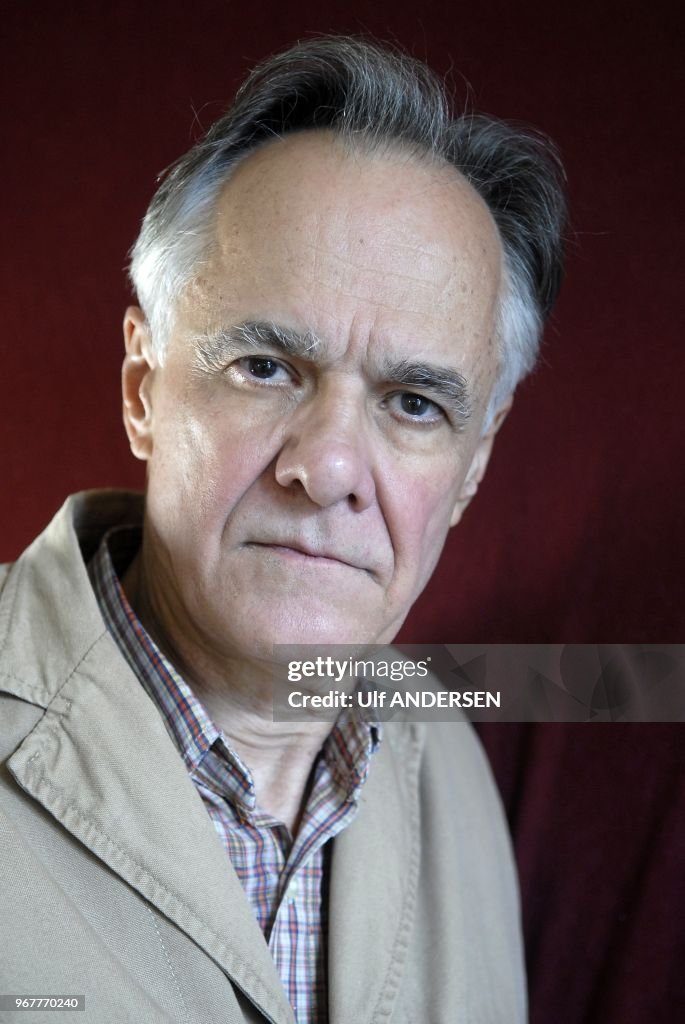
Fernando Vallejo is a Colombian-born novelist, filmmaker, essayist, and former biologist who has become one of Latin America's most provocative literary voices. He was born on October 24, 1942, in Medellín, Colombia, and became a naturalized Mexican citizen in 2007. His work is known for its stark, unflinching exploration of memory, death, and homosexuality, often set against the violent backdrop of his native Colombia.
Vallejo's writing career took off with his debut novel El fuego secreto in 1987, followed by acclaimed works like La virgen de los sicarios (1994), which was adapted into a film. He has also directed several films, including Chicó, el de las cámaras (1979) and En tres días (1996). As of 2026, Vallejo remains an active public intellectual, known for his critical commentary on society and religion. His fans admire his fearless honesty and his refusal to soften his opinions, even when they spark controversy.
Early Life & Background
Fernando Vallejo grew up in Medellín during a time of deep religious conservatism and rigid social structures. His family was part of the city's middle class, and his childhood was shaped by the Catholic Church's influence, which he would later reject. He studied biology at the University of Antioquia, where he developed a scientific mindset that would later inform his analytical approach to writing.
After finishing his studies, Vallejo moved to Mexico in the 1970s, where he initially worked as a biologist and taught at the university level. But his passion for storytelling soon pulled him toward cinema. He made his first film, Cronica roja, in 1979, a documentary-style piece that foreshadowed his interest in violence and social decay. It wasn't until the late 1980s that he turned seriously to fiction, publishing his first novel, El fuego secreto, in 1987. That book, with its raw portrayal of desire and death, immediately set him apart from his contemporaries.
Career Growth
Vallejo's breakthrough came with La virgen de los sicarios in 1994, a novel that captured the chaos of Medellín's drug wars through the eyes of a hitman's lover. The book was translated into multiple languages and later adapted into a film in 2000, bringing Vallejo international recognition. He followed it with a series of novels, including El desbarrancadero (2001), which won the Rómulo Gallegos Prize, and La puta de Babilonia (2007), a fierce critique of the Catholic Church.
In addition to his novels, Vallejo has continued to make films, such as En tres días (1996), and has published essays and memoirs that further develop his themes. In 2016, his novel Fragments of Love was adapted into a film starring Jose Angel Bichir and Angelica Aragon. Throughout his career, Vallejo has remained a controversial figure, often clashing with Colombian society and the Church, but his influence on Latin American literature is undeniable.
Career Timeline
Public Image & Style
Vallejo is often described as the 'enfant terrible' of Colombian literature, a label he embraces through his acerbic commentary on politics, religion, and society. His public persona is that of a fierce intellectual who spares no one, not even himself. On social media, he maintains a presence through a Facebook fan page and his personal website, where he shares his photography and critical essays.
Fans are drawn to his unapologetic honesty and his willingness to tackle taboo subjects like homosexuality and death. His writing style is stark and cynical, yet it resonates deeply with readers who appreciate his refusal to sugarcoat reality. Vallejo's image is that of a lone wolf, a thinker who stands outside the mainstream, and that is exactly how he likes it.
Fame & Fandom
Fernando Vallejo's readership is a diffuse community of literary admirers, academics, and students of Latin American letters rather than an organized fanbase. There is no documented fandom name, no formal fan clubs, and no coordinated campaigns or fan-driven projects. His audience engages with his work through criticism and academic study, not through the rituals of popular culture. Vallejo's public persona is deliberately confrontational, and he does not court or cultivate a fan following; his relationship with readers is defined by intellectual combat rather than warmth.
As of August 2026, iFANN's Global Fame Engine has evaluated Fernando Vallejo, but he does not currently hold a placement in the published rankings. He is not among the Global Top 1,000 or any Top-100 scope list. This absence of a ranking reflects the nature of his fame: significant within literary circles but not registering in the broader global fame metrics that track mainstream cultural visibility.
Interesting Facts and Legends
Vallejo is an atheist and has publicly criticized religion, especially the Catholic Church, which he holds responsible for many of Colombia's ills. He is also a trained biologist and has mentioned that his scientific background influences his writing. In 2007, he renounced his Colombian citizenship and became a Mexican citizen, a move he described as a rejection of his homeland's violence and hypocrisy. He once said he would not return to Colombia even for his own funeral. Despite his reputation as a literary enfant terrible, Vallejo is known to be a private person, rarely giving interviews. He has a personal website, fernandovallejo.com, where he shares his photography and other creative projects. He has also made headlines for his blunt remarks about humanity's direction, calling it a march toward death. A widely retold story is his acquisition of Mexican citizenship, which many saw as a final symbolic break with Colombia. Another iconic moment is the publication of La virgen de los sicarios in 1994, a novel that became a cultural flashpoint for its unflinching depiction of Medellín's drug-war violence. A minor lore point is the IMDb error claiming he was born in Montevideo, Uruguay, though all literary sources agree on Medellín.
Notable Quotes
“In the absence of law that's being forever revised, Colombia is a snake-pit, you understand. Here they carry out tit-for-tat revenge killings...”
“Mankind is lost, we have no redemption, we are going towards death, back to nothing.”
Family & Personal Life
Details about Vallejo's family remain largely private. He has mentioned his parents and siblings in his autobiographical works, but he rarely discusses them in public. His father was a farmer, and his mother was a devout Catholic, a contrast that shaped his early views on religion. Vallejo has no children and has never been married, preferring a solitary life devoted to his art.
Notable Connections
Vallejo has worked with several notable actors and filmmakers in his career. Jose Angel Bichir starred in the 2016 film adaptation of Fragments of Love, and Alfredo de Quesada also appeared in the movie. Angelica Aragon, a respected Mexican actress, was part of the cast as well. These collaborations brought Vallejo's literary vision to the screen with a talented ensemble.
Relationships & Dating History
Fernando Vallejo has kept his romantic life out of the public eye. He has never been married and has no children. While his novels often explore themes of homosexuality, he has never publicly confirmed his own sexual orientation. He has lived a solitary life, dedicating himself to his art and intellectual pursuits. As of 2026, he remains single, with no known partner.
Salary, Net Worth In 2026
$3 Million
iFANN Editorial Team estimate
iFANN currently estimates Fernando Vallejo's net worth at $3 million. His income primarily comes from his book royalties, film projects, and public speaking engagements. His novels, especially La virgen de los sicarios, continue to sell worldwide, and the film adaptation added to his earnings. Vallejo has also earned from his work as a filmmaker and his essays published in various outlets. While he keeps his financial affairs private, his long career and international recognition suggest a comfortable lifestyle. He lives modestly in Mexico, focusing on his writing and photography rather than accumulating wealth. His estate, if any, is managed by him personally, and he has not been known to make major investments or business ventures.
Awards Won (1)
Fernando Vallejo has received several prestigious awards for his literary work. In 2001, he won the Rómulo Gallegos Prize for his novel El desbarrancadero, one of the most important honors in Latin American literature. He has also been recognized with other distinctions, though he has often been critical of the literary establishment.
2001 · Novel
El desbarrancadero
Known For
La virgen de los sicarios
1994 · Author
El desbarrancadero
2001 · Author
Fragments of Love
2016 · Author (adapted for film)
Keywords
Sources
Quick Facts
- Profession
- Writer, filmmaker, biologist
- Born
- October 24, 1942
- Birthplace
- Medellín, Colombia
- Gender
- Male
- Birth Sign
- Scorpio
- Nationality
- Mexican (naturalized in 2007)
Personal Details
- Full Name
- Fernando Vallejo Rendón
Frequently Asked Questions
Who is Fernando Vallejo?
What is Fernando Vallejo's net worth in 2026?
Is Fernando Vallejo still alive?
What are Fernando Vallejo's most famous works?
Where was Fernando Vallejo born?
Social Media

Join the community
fans discussing