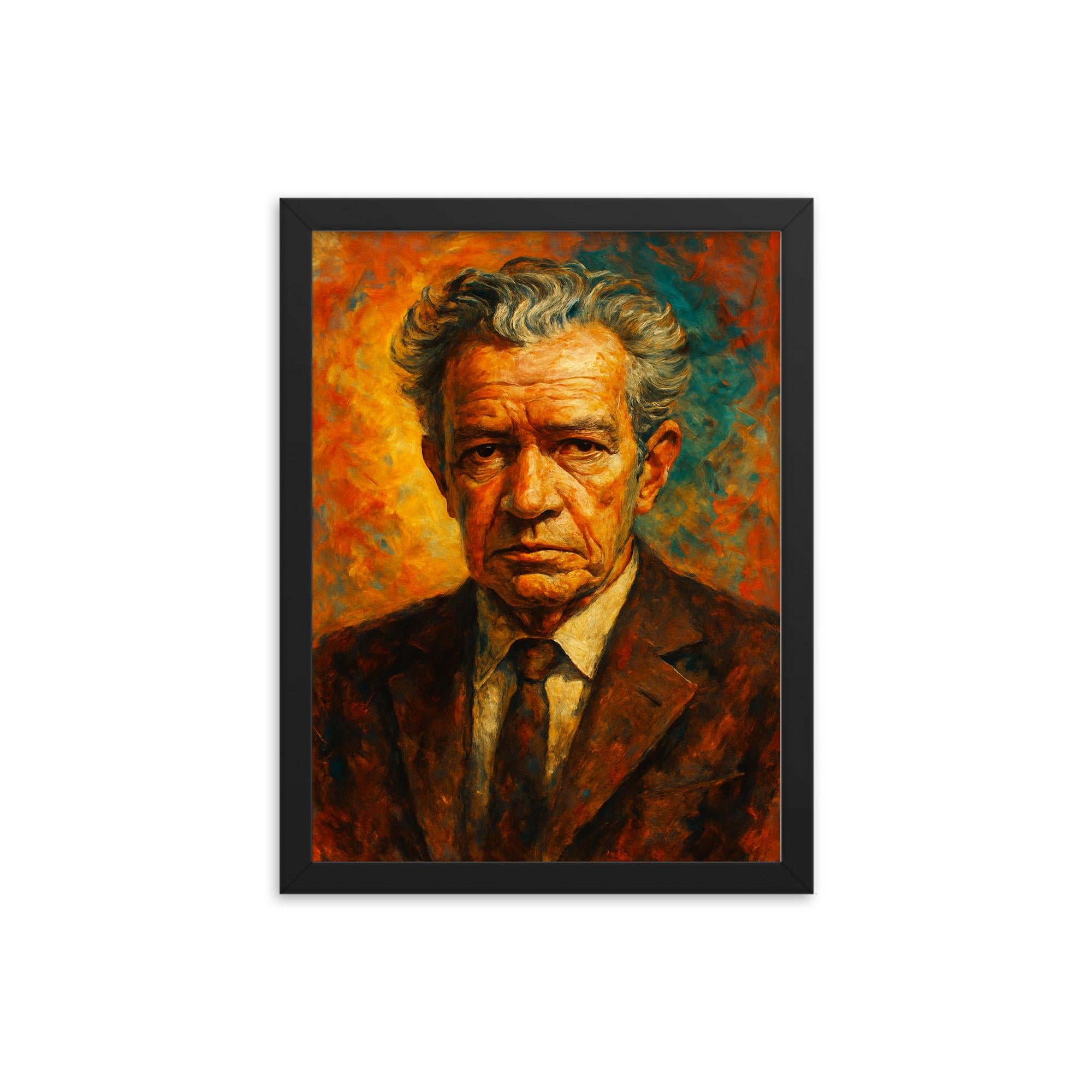
Juan Rulfo
 Mexico
writer•screenwriter•photographer
Also known as: Juan Nepomuceno Carlos Pérez Rulfo Vizcaíno
Birthday
May 16, 1917
Birth Sign
Taurus
Birthplace
Apulco, Jalisco, Mexico
Age
Died at 68
About
Juan Rulfo was a Mexican writer, screenwriter, and photographer, widely regarded as one of the most significant Latin American authors of the 20th century. Though his published output was small, his influence on world literature has been immense, shaping the course of magical realism and inspiring generations of writers across the globe. His two masterpieces, the short story collection El Llano en llamas and the novel Pedro Páramo, are considered cornerstones of modern Spanish-language literature.
Rulfo's work is characterized by its stark portrayal of rural Mexican life, its haunting exploration of death and memory, and its innovative narrative techniques. His writing resonates with readers for its raw honesty and poetic depth, making him a beloved figure in literature. Though he passed away in 1986, his legacy endures, and his works continue to be studied, translated, and celebrated worldwide.
Early Life & Background
Juan Rulfo was born on May 16, 1917, in Apulco, Jalisco, Mexico, though he was registered in the nearby town of Sayula. His family were landowners who lost much of their wealth during the Mexican Revolution. When Rulfo was six, his father was killed in a cattle dispute, and his mother passed away four years later. Orphaned, he was sent to an orphanage in Guadalajara, which he later described as feeling like a penitentiary, and was also raised by relatives.
The violence he witnessed during the Cristero rebellion (1926-1929) in western Mexico left a deep mark on him, shaping the themes of death and suffering that permeate his writing. He initially studied law in Guadalajara, but soon moved to Mexico City to pursue a literary career. To gain entry to a military academy directed by his uncle, he reportedly gave his birth year as 1918 instead of 1917. Before his breakthrough as a writer, Rulfo held various jobs, including as an immigration agent and a tire salesman, experiences that exposed him to the harsh realities of rural and urban Mexico.
Career Growth
Juan Rulfo's literary career, though brief, was revolutionary. In 1953, he published El Llano en llamas (The Burning Plain), a collection of short stories depicting the brutal lives of peasants in post-revolutionary Mexico. The book's raw realism and innovative use of colloquial language set a new standard in Latin American literature. Two years later, in 1955, he published his only novel, Pedro Páramo, a haunting narrative set in the ghost town of Comala. The novel's fragmented structure, shifting points of view, and exploration of death earned it a place as a precursor to the Latin American Boom.
Rulfo also contributed significantly to Mexican cinema. He wrote screenplays for films such as Los Olvidados (1950) and El Gallo de Oro (1964), and directed La Perla (1947). His work in film mirrored the themes of his fiction, focusing on poverty and social injustice. In 1983, he received the Prince of Asturias Award for Literature, a recognition of his lasting impact on Spanish-language literature.
Career Timeline
Public Image & Style
Juan Rulfo's public image is that of a reclusive genius, a man who shunned the literary spotlight despite his immense influence. He was known for his quiet, introspective demeanor and his dedication to his craft. Fans and critics alike regard him as a master of prose, whose sparse but powerful output has left an indelible mark on literature. His work is often associated with the themes of death, memory, and the harshness of rural life, and he is celebrated for his ability to evoke a profound sense of place. Rulfo's legacy is one of quiet intensity, and his books continue to be read and studied by new generations.
Fame & Fandom (iFAMOUS Rankings)
Juan Rulfo never courted a crowd. He lived in the shadows of rural Mexico, producing just two books and a handful of stories before vanishing from the literary spotlight for decades. His legacy is not built on fan clubs or streaming campaigns but on the quiet reverence of scholars and writers who treat his work as scripture. There is no formal name for his followers; they are simply readers, critics, and authors who have absorbed the haunting atmosphere of *Pedro Páramo* and *El Llano en llamas*. The only organized movement around him involves publishers and filmmakers, most notably the recent announcement of a Netflix adaptation that brought his name back into global conversation without a single petition or viral hashtag. Legends persist about his silence, with some claiming he stopped writing because his genius was too pure to dilute, while others say he simply ran out of stories to tell. These narratives shape how the world views him today: a reluctant master whose absence became as powerful as his words. Despite this lack of modern fandom machinery, his influence remains staggering across the continent. According to the iFANN Global Fame Rankings, Juan Rulfo holds steady positions in multiple geographic tiers. He is the 47th most famous person in Mexico, the 94th most famous person from Mexico, and the 61st most famous person in Latin America.
Interesting Facts and Legends
Rulfo was an accomplished photographer whose black-and-white images of rural Mexican life mirrored the stark themes in his writing. His photography has been exhibited in museums and published in books alongside his texts. He served as director of the radio station at the National Indigenous Institute, using the airwaves to promote indigenous cultures. Known for his perfectionism, he published only two books in his lifetime despite his immense fame. A close friend of fellow writer Juan Arreola since the 1940s, Rulfo admired William Faulkner's narrative techniques deeply. One enduring story among literary circles is that Rulfo simply "ran out of stories," leading to a three-decade silence after his initial burst of productivity. Critics often frame this silence as a spiritual act, suggesting his greatest work might be the void he left behind. Another legend describes the physical sensation of dread readers feel when engaging with *Pedro Páramo*, creating what some call an uncanny spell. This psychological impact, rather than public appearances, defines his extraordinary reactions.
Notable Quotes
“My father died when I was six years old, and my mother when I was eight. When my parents died, I was still scribbling little zeros, nothing but little balls, in my school notebook.”
“There are many ways to enter a country, but for me, the truest way has always been literature. Because even when a story is made up, the way its characters speak, the land they walk, the fears they carry, that's where a nation reveals itself.”
Family & Personal Life
Juan Rulfo was married to Clara Aparicio, who was a constant presence in his life. The couple had several children, though details about them are scarce in public records. Rulfo's family background was marked by tragedy: his father was killed when he was six, and his mother died when he was ten, leaving him and his siblings orphaned. He was raised in an orphanage and by relatives, an experience that shaped his view of the world. His family's loss of land during the Revolution also influenced his portrayal of rural Mexico.
Notable Connections
Juan Rulfo is associated with several key figures in literature and film. His wife, Clara Aparicio, was a supportive presence throughout his life. He was a friend and contemporary of Mexican writer Juan Arreola. His work profoundly influenced Nobel laureate Gabriel García Márquez, who credited Pedro Páramo with inspiring his own masterpiece, One Hundred Years of Solitude. Rulfo also admired the American novelist William Faulkner, whose narrative techniques can be seen in Rulfo's own writing.
Relationships & Dating History
Juan Rulfo was married to Clara Aparicio, and the couple remained together until his death in 1986. They had several children, though details about their relationship are not widely documented. Rulfo was known to be a private person, and his marriage was a stable and enduring part of his life. As of 2026, Clara Aparicio has passed away, but the Rulfo family continues to manage his literary estate.
- MarriedClara Aparicio? - 1986Married until his death.
Death & Aftermath
Died
January 7, 1986 (aged 68)
Death Place
Unknown
Cause of Death
Unknown
The silence that fell over Mexico City on January 7, 1986 was not the roar of a scandal but the quiet of a library closing its doors. Juan Rulfo passed away in his sleep at the age of sixty-eight, leaving behind a legacy that had already outgrown the man himself. While the specific medical details of his final days remain unrecorded in public archives, the event marked the end of a life defined by a sparse output and a profound impact on Latin American literature. Tributes poured in from literary circles, acknowledging the loss of a voice that had reshaped the narrative landscape of the region.
His death solidified the mythos surrounding Pedro Páramo and El Llano en llamas, turning him into an almost mythical figure within the canon of magical realism. The funeral proceedings were private, reflecting his lifelong desire to remain apart from the spotlight. In the years following his death, his works continued to circulate globally, inspiring new generations of writers who found their own voices in his stark, haunting prose. The estate, modest during his lifetime, grew in value as translations multiplied, though the family kept a low profile regarding financial matters.
Net Worth (Estate Value)
$1 Million
iFANN Editorial Team estimate
Per iFANN's editorial analysis, the estate of Juan Rulfo is estimated to be worth $1 Million as of 2026. While his net worth at the time of his death in 1986 was modest due to a small literary output and simple lifestyle, the enduring popularity of his works has generated significant posthumous earnings. Revenue streams include royalties from books sold worldwide in numerous translations, as well as licensing and adaptations of his work. The estate is managed by his family, who have overseen the publication of his complete works and the preservation of his photographic archive.
Awards Won (1)
Juan Rulfo received the Prince of Asturias Award for Literature in 1983, recognizing his decisive influence on Spanish-language narrative. This prestigious honor highlighted his innovative storytelling and the lasting impact of his work. He was also a member of the Mexican Academy of Language, though no other major awards are documented.
1983 · Literature
Entire body of work
Known For
Pedro Páramo
1955 · Author
El Llano en llamas
1953 · Author
Los Olvidados
1950 · Screenwriter
El Gallo de Oro
1964 · Screenwriter
Keywords
Sources
Quick Facts
- Profession
- writer, screenwriter, photographer
- Born
- May 16, 1917
- Birthplace
- Apulco, Jalisco, Mexico
- Died
- January 7, 1986
- Death Place
- Mexico City
- Gender
- Male
- Spouse
- Clara Aparicio
- Birth Sign
- Taurus
Personal Details
- Full Name
- Juan Nepomuceno Carlos Pérez Rulfo Vizcaíno
- Spouse
- Clara Aparicio
Filmography
4
Total
4
Film
0
TV
Frequently Asked Questions
What are Juan Rulfo's most famous works?
What is Juan Rulfo's net worth in 2026?
Is Juan Rulfo still alive?
Who was influenced by Juan Rulfo?
What themes are prominent in Juan Rulfo's writing?
Similar People
Join the community
fans discussing