Fernando Botero
 Colombia
Also known as: Fernando Botero Angulo, Botero
Birthday
April 19, 1932
Birth Sign
Aries
Birthplace
Medellín, Colombia
Age
Died at 91
Height
5 ft 10 in (178 cm)
About
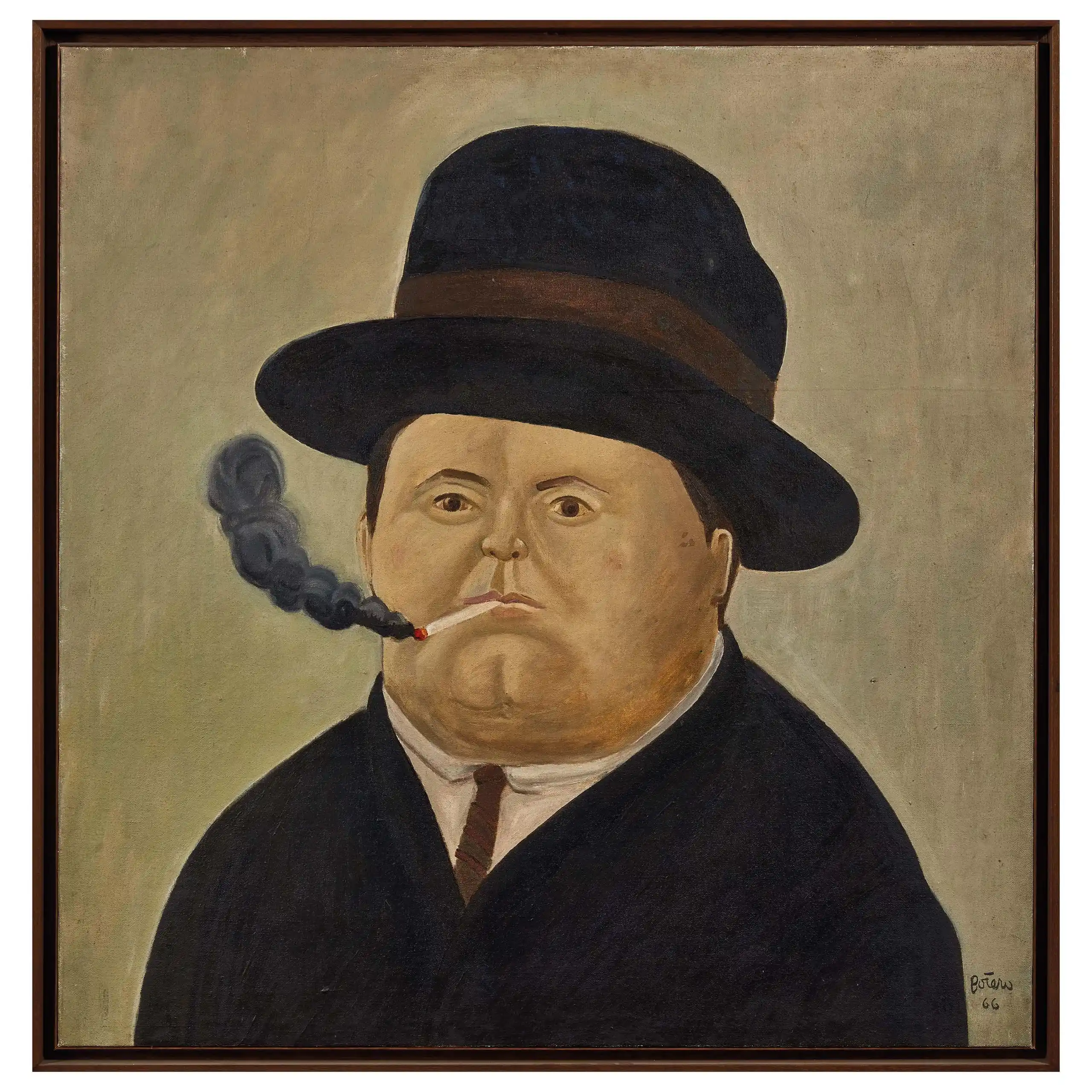
Fernando Botero Angulo (19 April 1932 – 15 September 2023) was a Colombian painter and sculptor whose plump, voluminous figures made him one of the most recognizable artists of the 20th century. Born in Medellín, he developed a style he proudly called "the most Colombian of Colombian art," and critics dubbed it Boterismo. His work often carried a sly political edge or a playful sense of humor, depending on the canvas. By the time he died at 91, his pieces had graced Park Avenue in New York and the Champs-Élysées in Paris, and he was widely considered the most celebrated Latin American artist of his era.
Early Life & Background
Born into modest circumstances in Medellín, Fernando Botero Angulo was the only child of Fernando Botero Mejía, a bookkeeper for the local coffee merchants' association, and Georgina Angulo, a homemaker. Financial hardship struck early when his father's business failed, forcing the young artist to navigate a childhood defined by scarcity rather than privilege. He attended the Colegio de la Salle, where teachers noticed an exceptional talent for drawing that set him apart from his peers. Despite this early promise, formal education proved elusive due to the family's lack of funds.
Unable to afford tuition at the Academia San Alejandro in Bogotá, Botero spent his teenage years as a self-taught student in the Museo Nacional de Colombia. There, he copied works by Old Masters like Velázquez and Goya while reading extensively about art history. To support himself, he worked as a commercial illustrator and cartoonist in Bogotá, honing his skills in caricature and satire. In 1948, he sold his first painting for two packs of cigarettes, a humble beginning that would starkly contrast with the millions his later works would command. His breakthrough came in 1952 when he won a scholarship to study in Europe, traveling to Madrid, Italy, and France, though it was his return to Colombia and subsequent move to New York City in 1960 that truly solidified his career trajectory.
Career Growth
Botero's career is defined by a consistent evolution of his "Boterismo" style, characterized by the exaggerated inflation of human and animal forms. His breakthrough moment arrived in 1958 when he won first prize at the Salón de Artistas Colombianos in Bogotá, bringing him national attention and funding for his travels to Europe. In 1960, he moved to New York City, where he spent the next decade refining his signature approach, moving away from linear perspective toward a more sculptural, inflated aesthetic. During this period, he produced iconic works such as The Presidential Family (1967), a satirical depiction of the Kennedy family, and Mona Lisa, Age Twelve (1959).
In 1973, Botero shifted his focus to sculpture, creating large-scale bronze works that mirrored the proportions of his paintings. His first major public sculpture, El Caballito (The Little Horse), was installed in Medellín in 1978. Over the following decades, he created numerous monumental works, including La Casa de la Bola (The House of the Ball) in New York and El Hombre (The Man) in Mexico City. His work gained international acclaim in the 1990s, with exhibitions held in major museums across Europe and the Americas. In 2012, the International Sculpture Center honored him with its Lifetime Achievement in Contemporary Sculpture Award. He also established the Botero Museum in Bogotá in 2000, donating over 123 of his own works and a significant collection of pre-Columbian and colonial art.
Career Timeline
Public Image & Style
Botero was known for his humility and dedication to his craft. His public image was that of a serious artist who used his work to comment on social and political issues while maintaining a sense of humor. He stood approximately 5 feet 10 inches tall and was often recognized by his distinctive mustache and suits that complemented his artistic persona. His signature style, "Boterismo," is instantly recognizable and has become a cultural icon in Latin America and beyond. Critics often noted his ability to blend playful humor with sharp political commentary, addressing themes ranging from bullfighting and colonial history to the excesses of power and violence.
Fame & Fandom (iFAMOUS Rankings)
Fernando Botero never cultivated a marching army of devotees. His audience remained a scattered constellation of museum-goers, serious collectors, and art historians who revered his inflated forms rather than the man himself. No collective moniker ever emerged to label his followers; they did not call themselves "Boterians," nor did they organize street parties or fan-funded billboards for his birthday. The interaction between the artist and the public was mediated through the quiet reverence of galleries, the high-stakes atmosphere of auctions, and the charitable foundations he established to preserve his legacy. Even as major exhibitions sprang up in London, New York, Seoul, and Singapore in 2026, these events were curated by institutions like Sotheby's and Gardens by the Bay, driven by academic interest rather than grassroots mobilization. His son, Fernando Botero Jr., now manages the family's cultural contributions, ensuring the work remains accessible without the chaos of celebrity fandom rituals. The legend surrounding him is not one of fainting crowds or viral outbursts but of static monuments that sparked debate and wonder across global public squares. He died at 91, leaving behind a style known as "Boterismo" that remains instantly recognizable worldwide. This enduring visual impact has cemented his status as a titan whose influence transcends fleeting trends. According to the iFANN Global Fame Rankings, which tracks global attention across media coverage, search, and consumption signals worldwide, Fernando Botero holds the position of the 82nd most famous person in Art & Design, a placement holding steady from the previous cycle.
Interesting Facts and Legends
The mythology surrounding Fernando Botero often begins with a specific moment of inspiration rather than a grand career launch. A widely retold story claims his signature inflation of figures began after viewing a photograph of a bullfight in Mexico where the bull appeared disproportionately large compared to the matador. This image led him to explore volume as a form of dignity and presence, birthing the unique aesthetic that would define his life. Another colorful anecdote frequently cited in auction contexts involves his very first sale in Bogotá. Legend has it he traded his inaugural painting for two packs of cigarettes, a humble beginning that contrasts sharply with the millions his later works would command when put up for sale again in 2026. While there are no records of fans fainting or streets shutting down due to his appearances, his installations have become legendary landmarks in their own right. Massive bronze sculptures like El Caballito in Medellín and La Casa de la Bola in New York stand as permanent fixtures of cityscapes, sparking ongoing debates about their placement and meaning.
Notable Quotes
“I am not interested in the beauty of the figure, but in the dignity of the figure.”
“My art is the most Colombian of Colombian art.”
“Art must create pleasure.”
Family & Personal Life
Fernando Botero was the only child of Fernando Botero Mejía and Georgina Angulo. His father worked as a bookkeeper for the local coffee merchants' association, while his mother was a homemaker. The family lived in modest circumstances, and financial struggles during his youth deeply influenced his worldview. He was married twice. His first marriage was to Gloria Zea, whom he met in Bogotá. They were married in the 1950s and had a son, Fernando Botero Jr., before divorcing. His second marriage was to Sophía Vári, a Hungarian-born model and actress, in 1974. The couple remained together until Botero's death in 2023. Sophía Vári was a frequent muse for Botero and accompanied him on many of his travels. She managed his estate and legacy after his passing, working alongside their son to oversee the foundation and exhibitions.
Notable Connections
Relationships & Dating History
Fernando Botero was married twice. His first marriage was to Gloria Zea, whom he met in Bogotá. They were married in the 1950s and had a son, Fernando Botero Jr., before divorcing. His second marriage was to Sophía Vári, a Hungarian-born model and actress, in 1974. The couple remained together until Botero's death in 2023. Sophía Vári was a frequent muse for Botero and accompanied him on many of his travels. She managed his estate and legacy after his passing, working alongside their son to oversee the foundation and exhibitions. There are no widely reported romantic relationships outside of these two marriages, and Botero was known to be a private man regarding his personal life. At the time of his death in 2023, he was widowed, having been married to Sophía Vári for nearly 50 years.
- MarriedGloria Zea1950s - 1960sFirst wife; mother of Fernando Botero Jr.
- MarriedSophía Vári1974 - 2023Second wife; muse and estate manager until his death.
Death & Aftermath
Died
September 15, 2023 (aged 91)
Death Place
Monaco
Cause of Death
Natural causes
Fernando Botero died on September 15, 2023, in Monaco at the age of 91. The family and his estate announced the passing without releasing a specific medical diagnosis, though reports indicated natural causes given his advanced age. Tributes flowed immediately from major institutions like Christie's, Sotheby's, and the Museum of Modern Art, which highlighted his status as a titan of modern art who redefined Latin American visual culture. His funeral service was private, with no public details released regarding attendees or the final resting place.
Posthumous activity surged within months of his death, driven by the Fernando Botero Foundation and his family. A landmark exhibition titled "Botero in New York" opened in July 2026 at Sotheby's, showcasing rarely seen works from his defining decade in the city. This was followed by "Fernando Botero: The Triumph of Form" arriving in Seoul later that year, alongside presentations in Singapore and London scheduled for October 2026. His son, Fernando Botero Jr., and his wife, Sophía Vári, actively managed these events to discuss his enduring impact. The market for his work remained robust, with his first painting, originally sold for two packs of cigarettes in the 1940s, up for auction in Bogotá in May 2026, fetching a significant sum that underscored the enduring value of his legacy.
Net Worth (Estate Value)
$198 Million
iFANN Editorial Team estimate
As of 2026, research by the iFANN Editorial Team puts Fernando Botero's estate value at around $198 million. The wealth sources include art sales, royalties, real estate holdings, and foundation income. His paintings and sculptures continue to sell for millions at auction houses like Christie's and Sotheby's. For example, his first painting, sold for two packs of cigarettes in the 1940s, was up for auction in Bogotá in 2026, fetching a significant sum. Ongoing licensing deals for reproductions and merchandise contribute to the estate's revenue. Holdings in Colombia, Europe, and the United States add to the portfolio. Revenue from the Botero Foundation and related cultural projects also plays a role. The estate is managed by his wife, Sophía Vári, and their son, Fernando Botero Jr., who oversee the foundation and exhibitions. The market for his work remains robust, reflecting the enduring demand for his unique style.
Awards Won (7)
Fernando Botero received numerous prestigious awards throughout his career, including the Lifetime Achievement in Contemporary Sculpture Award from the International Sculpture Center in 2012. He was awarded the Legion of Honour by the French government and the Order of the Aztec Eagle by the Mexican government. He received honorary doctorates from the Universidad de los Andes and the University of Miami. Additionally, he was named an Honorary Citizen of Medellín, Bogotá, New York City, and Paris. He was also a Knight Commander of the Order of Isabella the Catholic in Spain and received the Grand Cross of the Order of Boyacá in Colombia.
2012 · Sculpture
International Sculpture Center
Unknown · National Order
French Government
Known For
Boterismo
1958 · Artistic Style
The Presidential Family
1967 · Painting
El Caballito
1978 · Sculpture
Botero Museum
2000 · Institution Founder
Keywords
Sources
Quick Facts
- Profession
- painter, sculptor, draftsperson
- Born
- April 19, 1932
- Birthplace
- Medellín, Colombia
- Died
- September 15, 2023
- Death Place
- Monaco
- Gender
- Male
- Spouse
- Gloria Zea, Sophía Vári
- Birth Sign
- Aries
Personal Details
- Full Name
- Fernando Botero Angulo
- Height
- 5 ft 10 in (178 cm)
- Spouse
- Gloria Zea, Sophía Vári
- Children
- Fernando Botero Jr.
- Education
- Colegio de la Salle; Academia San Alejandro (dropped out)
Frequently Asked Questions
What is Fernando Botero best known for?
When did Fernando Botero die?
Where was Fernando Botero born?
Who was Fernando Botero married to?
What is the value of Fernando Botero's estate?
Social Media

Join the community
fans discussing