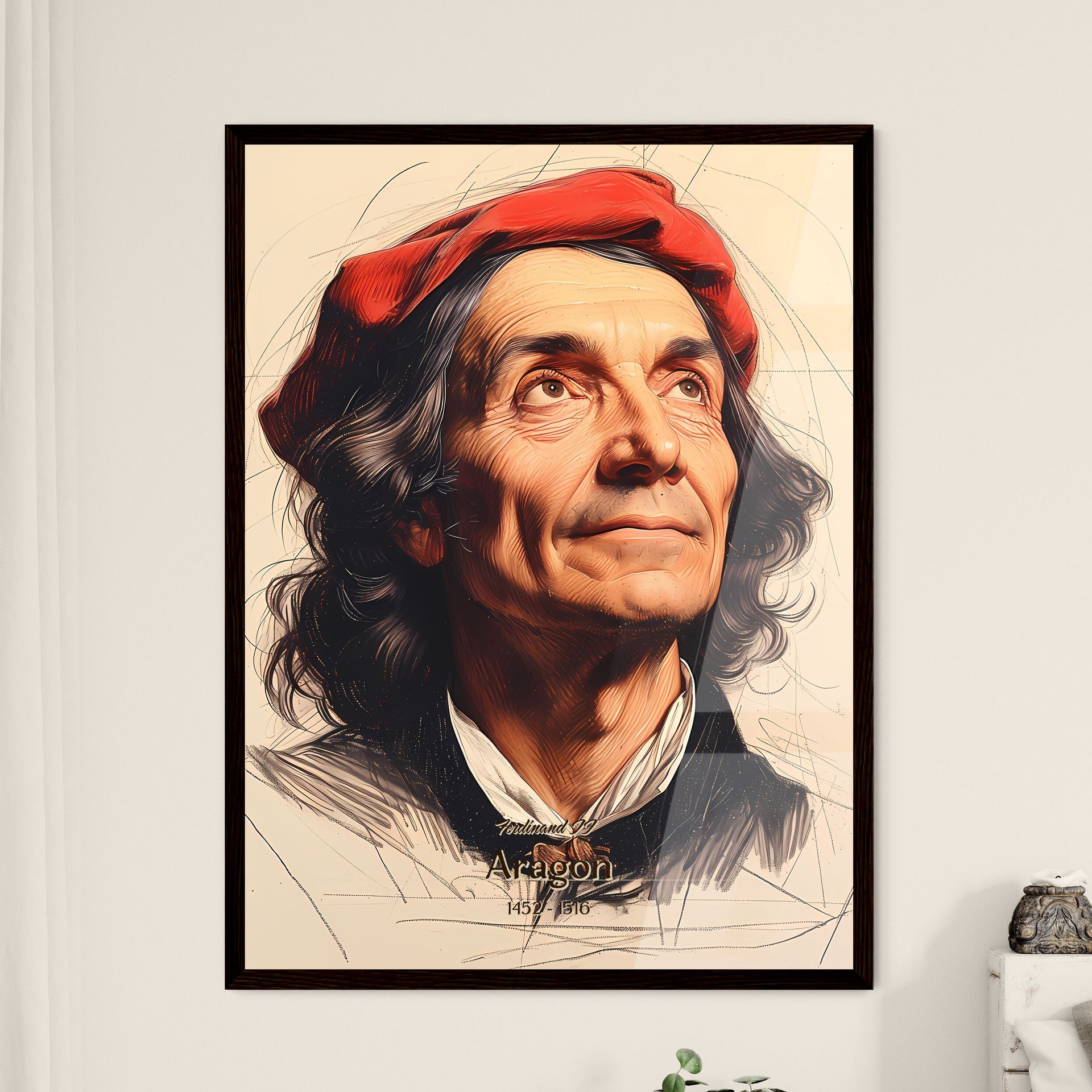
Ferdinand II of Aragon
 Spain
SpainAlso known as: Ferdinand the Catholic, Ferrando II, Ferdinand II
Birthday
March 10, 1452
Birth Sign
Pisces
Birthplace
Palacio de los Sada, Sos del Rey Católico, Kingdom of Aragon
Age
Died at 63
Height
5 ft 7 in (170 cm)
About
Ferdinand II of Aragon was a pivotal monarch whose reign fundamentally reshaped the political and religious landscape of Europe. Born on March 10, 1452, he ascended to the throne of Aragon in 1479 following the death of his older brother. His career is most significantly defined by his marriage and co-rulership with Queen Isabella I of Castile. Together they became known as the Catholic Monarchs, a partnership that laid the groundwork for a dynastically unified Spain, even as the kingdoms retained separate legal structures for centuries. Ferdinand is widely regarded as the first de facto king of Spain.
His rule marked an era of unprecedented consolidation and expansion. In 1492, Ferdinand and Isabella achieved two monumental milestones: the completion of the Reconquista with the conquest of Granada and the sponsorship of Christopher Columbus's first voyage. These events marked the beginning of Spain's rise as a global superpower. After Isabella's death in 1504, Ferdinand ruled Castile as regent for his daughter Joanna until his own death in 1516, continuing to expand Spanish influence in Italy and centralizing royal power.
Early Life & Background
Ferdinand entered the world on March 10, 1452, at the Palacio de los Sada in Sos del Rey Católico, located within the Kingdom of Aragon. He was the second son of King John II of Aragon and Juana Enríquez. His childhood was marked by dynastic instability and complex feudal politics. The path to the throne was cleared when his older brother, Charles of Viana, died in 1461 under suspicious circumstances, leaving Ferdinand as the heir apparent. Before his full coronation, he navigated the intricate political landscape of the Crown of Aragon, receiving a rigorous education in statecraft, military strategy, and law from prominent tutors.
Trained as a knight, Ferdinand developed an early interest in diplomacy and warfare, skills that would define his future reign. He spent his formative years mastering the art of ruling amidst rival noble factions. His first major step toward power came in 1469 when he married Isabella I of Castile in Valladolid. This union, initially controversial due to political maneuvering by Isabella's advisors against her brother Henry IV, became the cornerstone of modern Spain. Upon ascending the Aragonese throne in 1479 following his father's death, Ferdinand entered a period of unprecedented consolidation that would transform the Iberian Peninsula.
Career Growth
Upon inheriting the Crown of Aragon in 1479, Ferdinand immediately began working with Isabella to merge their realms. This union, often called the cornerstone of the Spanish monarchy, saw them sponsor Christopher Columbus's first voyage in 1492. That same year, they achieved a monumental goal by conquering Granada, the last Muslim stronghold in Western Europe, effectively concluding the centuries-long Reconquista. His influence extended beyond the peninsula; he also played a key role in the early European colonization of the Americas.
After Isabella's death in 1504, Ferdinand ruled Castile as regent for his daughter Joanna until 1507, effectively acting as King of Castile despite not being its sovereign. He continued to expand Spanish influence in Italy, securing the Kingdoms of Naples and Sicily through military campaigns and diplomatic alliances. His reign also saw the establishment of the Spanish Inquisition in 1478, a tool used to enforce religious uniformity and consolidate royal authority. In 1512, he annexed Navarre, further unifying the Spanish territories under his control before his death in 1516.
Career Timeline
Public Image & Style
Ferdinand II of Aragon projected an image of absolute royal authority and strategic brilliance. Historical portraits depict him with a strong jawline and a beard, typical of Spanish nobility of the era, wearing elaborate royal regalia and heavy gold embroidery. He was known for his robust build, though his later years were marred by the debilitating effects of gout. His signature style involved the use of heraldic symbols to project power, and he maintained a persona of stern but capable leadership that commanded respect across Europe.
Fame & Fandom
Centuries after his death, Ferdinand II of Aragon remains a towering figure in historical memory, currently holding the distinction of being the 94th most famous person in Spain, a position that has climbed from the 98th spot in the previous cycle. This standing within the iFANN Global Fame Rankings reflects a legacy that transcends the typical boundaries of historical biography, anchoring him firmly in the national consciousness as the architect of modern Spain. His enduring presence is not merely academic but deeply woven into the cultural fabric of the Iberian Peninsula, where the narrative of his union with Isabella I continues to shape identity.
Despite this profound historical resonance, Ferdinand does not command a modern fandom in the contemporary sense. There is no organized group of devotees calling themselves by a specific moniker, nor are there fan clubs, social media trends, or digital campaigns dedicated to his life. The audience for his story consists primarily of historians, students, and genealogists who study his reign rather than fans engaging in ritualistic celebration. While conferences and academic projects occasionally highlight his strategic brilliance, such as the recent decoding of his 500-year-old military cipher, the engagement remains scholarly. He exists in the realm of legend and statecraft, remembered for unifying kingdoms and launching the Age of Exploration, but without the vibrant, living community that defines pop culture icons today.
Interesting Facts and Legends
A particularly fascinating chapter in his legacy involves a secret military code used to communicate war strategies with his top commanders. For nearly five centuries, these letters remained indecipherable until intelligence services successfully cracked them in February 2018, revealing new details about his tactical methods during the War of the League of Cambrai. Another legendary aspect of his reign is the story of his daughter Joanna, "Joanna the Mad," whose struggles with mental health and subsequent confinement became a central part of the royal narrative following her parents' deaths.
Despite his reputation as a stern ruler, Ferdinand was known to be a patron of the arts and literature, supporting the humanist movement in Spain. He was also known for his love of hunting and jousting, activities that were central to the courtly life of the time. While some historical anecdotes speak of lice infestations in royal mummies, those specific medical findings apply to Ferdinand II of Naples, not the King of Aragon.
Notable Quotes
“I am the master of my house.”
“Spain is united.”
Family & Personal Life
Ferdinand was the son of John II of Aragon and Juana Enríquez. He had a brother, Charles of Viana, who died young. His marriage to Isabella I of Castile produced five children: Isabella, John, Joan (Joanna), Maria, and Catherine. Their relationship ended only by Isabella's death, and it produced the lineage that would eventually unite the Spanish kingdoms more permanently. Following Isabella's death, Ferdinand married Germaine of Foix in 1506. This marriage was a political alliance designed to secure peace between Aragon and France and to produce a male heir who might claim both thrones. The marriage lasted until Ferdinand's death in 1516, but it remained childless.
Notable Connections
Relationships & Dating History
Ferdinand's romantic history is strictly documented by historical record, as he lived centuries before the concept of public dating existed. He was married twice. His first marriage, to Isabella I of Castile, began in 1469 and lasted until her death in 1504. They met through political arrangement orchestrated by Isabella's faction, though historical accounts suggest they developed a genuine partnership based on mutual respect and shared political ambition. Together, they had five children: Isabella, John, Joan (Joanna), Maria, and Catherine. Their relationship ended only by Isabella's death, and it produced the lineage that would eventually unite the Spanish kingdoms more permanently.
Following Isabella's death, Ferdinand married Germaine of Foix in 1506. This marriage was a political alliance designed to secure peace between Aragon and France and to produce a male heir who might claim both thrones. Germaine was the niece of King Louis XII of France. The marriage lasted until Ferdinand's death in 1516, but it remained childless. There were no other publicly confirmed romantic partners or extramarital affairs that altered his succession or legacy. As a deceased historical figure, his status remains "widowed" since 1504 regarding his primary partner, and "married" until his death regarding Germaine.
- MarriedIsabella I of Castile1469 - 1504Political marriage that united Castile and Aragon; five children together.
- MarriedGermaine of Foix1506 - 1516Political alliance with France; no children.
Death & Aftermath
Died
January 23, 1516 (aged 63)
Death Place
Madrigalejo, Extremadura, Spain
Cause of Death
Natural causes due to old age and severe gout
Ferdinand II of Aragon spent his final months at the Royal Palace in Madrigalejo, a town in the Extremadura region. By early January 1516, the king who had shaped the Iberian Peninsula for nearly four decades was no longer the active ruler but a frail figure managed by gout and general decline. He passed away on January 23, 1516, at the age of sixty-three, surrounded by his household rather than in a hospital setting or under modern forensic scrutiny. Contemporary chronicles attribute his passing to natural causes linked to old age and the specific ailments that plagued his later years.
The transition of power followed immediately through royal decree, as his grandson Charles I was declared king upon Ferdinand's death, effectively merging the dynastic lines into the Habsburg empire without division. Tributes came not from public vigils but from religious services and the continuation of state rituals conducted by the Catholic Church and the institutions of the Crown. His funeral took place shortly after his death in January 1516, leading to his interment in the Capilla Real of Granada alongside his wife Isabella I and daughter Joanna. This burial site became a significant royal mausoleum attended by high nobility and clergy, reinforcing the legitimacy of the new Habsburg succession.
Centuries later, historians continue to study his legacy, including the deciphering of military letters sent to commanders in 2018 which revealed his strategic use of secret codes during wartime. Foundations such as the Rafael del Pino Foundation and the Royal Academy of History now organize academic cycles dedicated to his role as the architect of modern Spain. The crown passed directly to his grandson, ensuring a seamless transfer of authority that avoided settlement disputes among heirs while establishing the groundwork for the unified Spanish monarchy.
Net Worth (Estate Value)
$0
iFANN Editorial Team estimate
Ferdinand II of Aragon did not receive awards in the modern sense (such as Oscars, Grammys, or Golden Globes) as these institutions did not exist during the 15th and 16th centuries. However, he received numerous honors and distinctions befitting a monarch of his stature. He was granted the title "The Catholic Monarch" (Los Reyes Católicos) by Pope Alexander VI in 1496, a distinction recognizing his role in the reconquest of Spain and the defense of the Catholic faith. He was awarded the Order of the Golden Fleece, one of the most prestigious chivalric orders in Europe, upon his accession to the Aragonese throne. While he holds no position on modern "Greatest of All Time" lists like Rolling Stone or Billboard, he is consistently ranked among the top historical figures in Spain and globally. In terms of cultural impact, he is frequently cited in academic rankings as the architect of modern Spain. His name appears on countless magazine covers and historical publications, including TIME's coverage of European history, though specific cover dates vary by edition. He does not have a net worth in the modern currency sense, nor does he have a celebrity estate managed by heirs in the pop culture context; his wealth was derived from the crown lands, taxes, and the spoils of the New World, which were absorbed into the state treasury upon his death.
Awards & Accolades
View 7 records, honours and achievementsKnown For
Unification of Spain
1479 · King of Aragon and Co-Ruler of Castile
Completion of the Reconquista
1492 · Monarch
Sponsorship of Columbus's Voyage
1492 · Patron
Keywords
Sources
Quick Facts
- Profession
- ruler
- Born
- March 10, 1452
- Birthplace
- Palacio de los Sada
- Died
- January 23, 1516
- Death Place
- Madrigalejo, Extremadura, Spain
- Gender
- Male
- Spouse
- Isabella I of Castile, Germaine of Foix
- Birth Sign
- Pisces
Personal Details
- Full Name
- Ferdinand of Trastámara
- Height
- 5 ft 7 in (170 cm)
- Spouse
- Isabella I of Castile, Germaine of Foix
- Children
- Isabella, John, Joanna, Maria, Catherine
- Education
- Rigorous training in statecraft, military strategy, and law; knightly education
Frequently Asked Questions
Who was Ferdinand II of Aragon?
When did Ferdinand II of Aragon die?
What was Ferdinand II of Aragon's cause of death?
Did Ferdinand II of Aragon have children?
What is the significance of Ferdinand II of Aragon?
Join the community
fans discussing