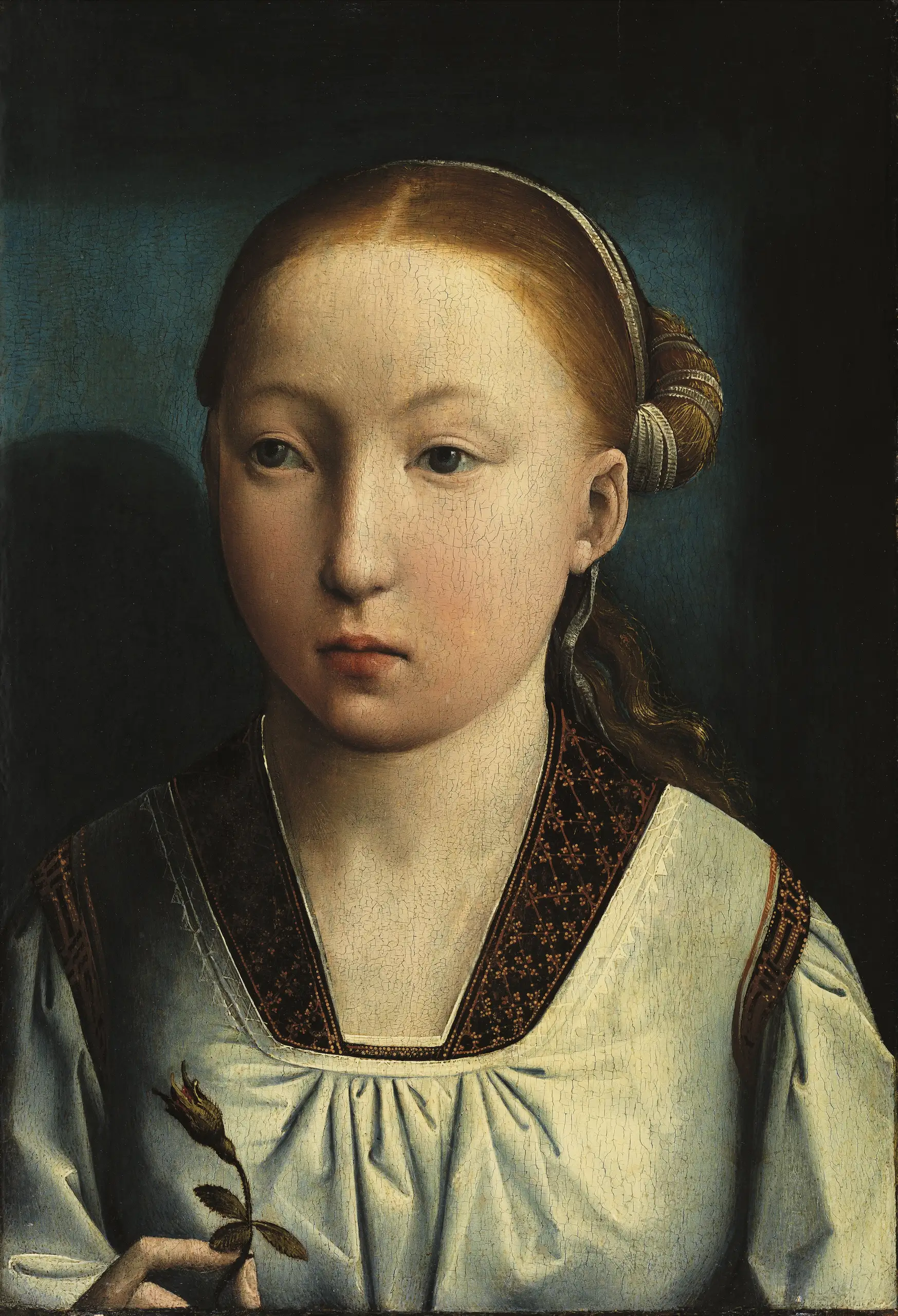
Catherine of Aragon
 Spain
Spaindiplomat•aristocrat•queen consort
Also known as: Katherine of Aragon, Catalina de Aragón, Catalina of Castile, Catherine of Arragon
Birthday
December 16, 1485
Birth Sign
Sagittarius
Birthplace
Alcalá de Henares, Spain
Age
Died at 50
About
Catherine of Aragon was a Spanish princess who became Queen of England as the first wife of Henry VIII. Born Catalina de Aragón on December 16, 1485, she was the youngest child of Isabella I of Castile and Ferdinand II of Aragon. She married Henry VIII on June 11, 1509, and held the title of queen consort until their marriage was annulled on May 23, 1533. Before that, she had been briefly Princess of Wales as the wife of Henry's elder brother, Arthur, who died just five months after their wedding in 1501.
Catherine's life was marked by remarkable achievements. In 1507, she became the first known female ambassador in European history, representing the Aragonese crown in England. In 1513, while Henry was campaigning in France, she served as regent of England and played a pivotal role in the English victory at the Battle of Flodden, delivering an impassioned speech about courage and patriotism. She was also a patron of Renaissance humanism, a friend of scholars Erasmus and Thomas More, and commissioned Juan Luis Vives's The Education of a Christian Woman. Her refusal to accept the annulment of her marriage and her dignity in the face of adversity won her enduring popular sympathy. She died on January 7, 1536, at Kimbolton Castle, probably of cancer.
Early Life & Background
Catherine's childhood in the Spanish court was anything but ordinary. She witnessed the surrender of the Moors in Granada and the preparations for Columbus's first voyage to the New World. Her education was thorough for a princess of her time, covering Latin, French, and philosophy, along with practical skills like embroidery. At about three years old, she was betrothed to Arthur, Prince of Wales, the eldest son of Henry VII of England. She chose a pomegranate as her personal badge, a fruit hard on the outside and soft within, symbolizing her tough exterior and inner fertility.
In 1501, Catherine traveled to England to marry Arthur. The wedding took place at St. Paul's Cathedral, but the marriage lasted only five months. Arthur died in April 1502, leaving Catherine a widow at just sixteen. What followed was a period of uncertainty and diplomatic wrangling over her future and the fate of her dowry. During this limbo, in 1507, she was appointed ambassador of the Aragonese crown to England, a role that made her the first known female ambassador in European history. She navigated the complex politics of the English court with skill, maintaining her position and eventually securing a marriage to Arthur's younger brother, Henry, who would become Henry VIII.
Career Growth
Catherine's marriage to Henry VIII on June 11, 1509, marked the beginning of her time as queen consort. For years, the couple enjoyed a genuinely happy partnership, and Catherine matched her husband's intellectual curiosity. In 1513, while Henry was campaigning in France, she served as regent of England. During her regency, the English defeated a Scottish invasion at the Battle of Flodden, a victory in which Catherine played an active part, delivering an emotional speech to the troops about courage and patriotism. She also started an extensive program for the relief of the poor and successfully appealed for the lives of rebels involved in the Evil May Day riots.
By 1526, Henry had become infatuated with Anne Boleyn and grew dissatisfied that Catherine had not produced a surviving male heir. Their only living child, Mary, was left as heir presumptive, a situation unprecedented in England. Henry sought an annulment, and when Pope Clement VII refused, he broke with the Catholic Church and declared himself Supreme Head of the Church in England. In 1533, the marriage was annulled by Henry's new Anglican Church. Catherine refused to accept the annulment, considering herself Henry's rightful wife and queen until her death. She was banished from court and spent her final years at Kimbolton Castle, where she died on January 7, 1536.
Career Timeline
Public Image & Style
Catherine of Aragon is remembered as a tenacious, dignified, and deeply religious woman. Historian Lucy Worsley has described her as "by far the best-qualified" of Henry's wives to be queen, noting that Henry trusted her to rule as regent. During her lifetime, the English people held her in high esteem, and her refusal to accept the annulment of her marriage attracted much popular sympathy. Her death set off tremendous mourning across the country. In modern times, she is often portrayed in historical dramas and novels as a figure of tragic nobility, and her story continues to captivate audiences through books, films, and television series.
Fame & Fandom
Catherine of Aragon commands a global historical presence that endures through centuries of scholarly study and popular cultural adaptation. Her standing in modern memory is quantified by the iFANN Global Fame Rankings, which place her as the 61st most famous person from Spain, a position she has held steady across recent assessment cycles. This ranking reflects sustained attention driven by media coverage, search activity, and consumption signals worldwide regarding Tudor history and related theatrical productions. While no formal fandom name exists for the historical figure herself, her legacy attracts a dedicated community of historians, enthusiasts of Tudor history, and theatergoers who engage with her story through adaptations like the musical Six. Recent reports confirm that fans travel specifically to see actors portray her on Broadway, though this engagement centers on the theatrical production rather than the historical person directly. The audience remains dispersed among general history appreciation groups without organized campaigns or internal rituals unique to her alone.
Interesting Facts and Legends
Catherine's marriage to Henry VIII lasted twenty-four years, exceeding the combined duration of his other five unions. She was merely three years old when first betrothed to Arthur, Prince of Wales, and later became the first known female ambassador in European history in 1507. Even Thomas Cromwell acknowledged her stature, noting that if not for her sex, she could have defied all heroes of History. Her personal badge was a pomegranate, symbolizing toughness and fertility, and she commissioned Juan Luis Vives's The Education of a Christian Woman in 1523. A persistent legend surrounding her involves the annulment of her marriage in 1533; her steadfast refusal to admit its validity is cited as the direct catalyst for the English break from the Roman Catholic Church. In February 2026, a heart-shaped locket linked to their union was discovered, sparking renewed interest in the romantic dimensions of their relationship after centuries of political focus. Additionally, the release of Vatican archives in March 2026 provided fresh documentation of the diplomatic maneuvering behind the schism, reinforcing the narrative of her dignity in defeat.
Notable Quotes
“If not for her sex, she could have defied all the heroes of History.”
Family & Personal Life
Catherine was the youngest surviving child of Ferdinand II of Aragon and Isabella I of Castile. Her siblings included Isabella, Queen of Portugal; John, Prince of Asturias; Joanna, Queen of Castile; and Maria, Queen of Portugal. She was named after her maternal English great-grandmother, Catherine of Lancaster. Her marriage to Henry VIII produced only one surviving child, Mary, who became Queen Mary I in 1553. A son named Henry, born in 1511, died within weeks, and Catherine suffered several miscarriages and stillbirths. She was devoted to her daughter Mary, and their bond remained strong even after Catherine was separated from court.
Notable Connections
Catherine's life was intertwined with many key figures of the Tudor era. Her parents, Ferdinand II of Aragon and Isabella I of Castile, were among the most powerful monarchs of their time. Her first husband was Arthur, Prince of Wales, and her second was Henry VIII. Her daughter Mary became Queen Mary I. Anne Boleyn's pursuit by Henry led to Catherine's downfall. She was a friend and patron of scholars Erasmus and Thomas More, and she commissioned Juan Luis Vives. Thomas Cromwell, though an adversary, praised her. Pope Clement VII's refusal to annul her marriage triggered the English Reformation.
Relationships & Dating History
Catherine of Aragon's marital history was shaped by dynastic politics. She married Arthur, Prince of Wales, in 1501, but he died just five months later, leaving her a widow at sixteen. After years of diplomatic negotiation, she married Arthur's younger brother, Henry VIII, on June 11, 1509. Their marriage lasted twenty-four years, producing one surviving child, Mary. Henry's desire for a male heir and his infatuation with Anne Boleyn led him to seek an annulment, which was granted in 1533. Catherine refused to accept the annulment and considered herself Henry's rightful wife until her death on January 7, 1536. At the time of her death, she was legally separated from Henry but maintained her status in her own eyes and in the eyes of many of her supporters.
- MarriedArthur, Prince of Wales1501 - 1502Married in 1501; Arthur died five months later.
- MarriedHenry VIII of England1509 - 1533Married June 11, 1509; annulled May 23, 1533. Catherine refused to accept the annulment.
Death & Aftermath
Died
January 7, 1536 (aged 50)
Death Place
Kimbolton, Cambridgeshire, England
Cause of Death
Reported as uterine cancer and wasting disease
Centuries later, Catherine of Aragon endures as a symbol of resilience in cultural productions such as the musical Six and academic studies on female conviction. Her final days unfolded at Kimbolton Castle in Cambridgeshire, where she remained mentally sharp despite being bedridden, refusing food to avoid prolonging suffering before receiving communion on January 6. She passed away on the morning of January 7, 1536, at the age of fifty, with contemporary accounts attributing her decline to a combination of uterine cancer and wasting diseases like tuberculosis or influenza rather than a sudden event. Public reaction was muted by royal suppression, yet the King reportedly celebrated the event by ordering bells rung in London and holding a special thanksgiving service to mark the relief his dynastic ambitions had gained.
A modest funeral took place five days later on January 12, 1536, at Peterborough Abbey, attended by her daughter Mary and loyal servants under the officiation of Bishop John Longland. The burial was unobtrusive, reflecting her diminished legal standing, though her tomb was subsequently moved to St. Mary's Chapel within the cathedral where it remains today. While her personal estate was forfeited to the Crown following the annulment, her legacy has been preserved through historical documentation and the enduring interest of scholars and artists who view her life as a reflection of religious conviction.
Net Worth (Estate Value)
$10 Million
iFANN Editorial Team estimate
As a queen consort of the 16th century, Catherine of Aragon did not accumulate personal wealth in the modern sense. Her financial status was tied to her royal dowry and the income from her estates. After her marriage to Henry VIII was annulled, she was given a settlement that included various manors and properties, but she lived in relative austerity at Kimbolton Castle. Her estate at the time of her death was modest, consisting mainly of personal belongings and the income from her dower lands. Per iFANN's editorial analysis, the value of her estate would be equivalent to $10 Million, though precise figures are difficult to ascertain. The legacy of her life, however, is priceless in historical terms.
Awards & Accolades
View 2 records, honours and achievementsKnown For
Queen of England as first wife of Henry VIII
1509-1533 · Queen Consort
First female ambassador in European history
1507 · Ambassador of the Aragonese crown to England
Regent of England during Battle of Flodden
1513 · Regent
Keywords
Sources
Quick Facts
- Profession
- diplomat, aristocrat, queen consort
- Born
- December 16, 1485
- Birthplace
- Alcalá de Henares, Spain
- Died
- January 7, 1536
- Death Place
- Kimbolton Castle, England
- Gender
- Female
- Spouse
- Arthur, Prince of Wales; Henry VIII of England
- Children
- Mary I of England
- Birth Sign
- Sagittarius
Personal Details
- Full Name
- Catalina de Aragón
- Spouse
- Arthur, Prince of Wales, Henry VIII of England
- Children
- Mary I of England
Frequently Asked Questions
Why did Catherine of Aragon only have one surviving child?
Was Catherine of Aragon's marriage to Arthur consummated?
How did Catherine of Aragon die?
Did Catherine of Aragon ever become queen of England?
What happened to Catherine of Aragon's daughter Mary?
Similar People
Join the community
fans discussing