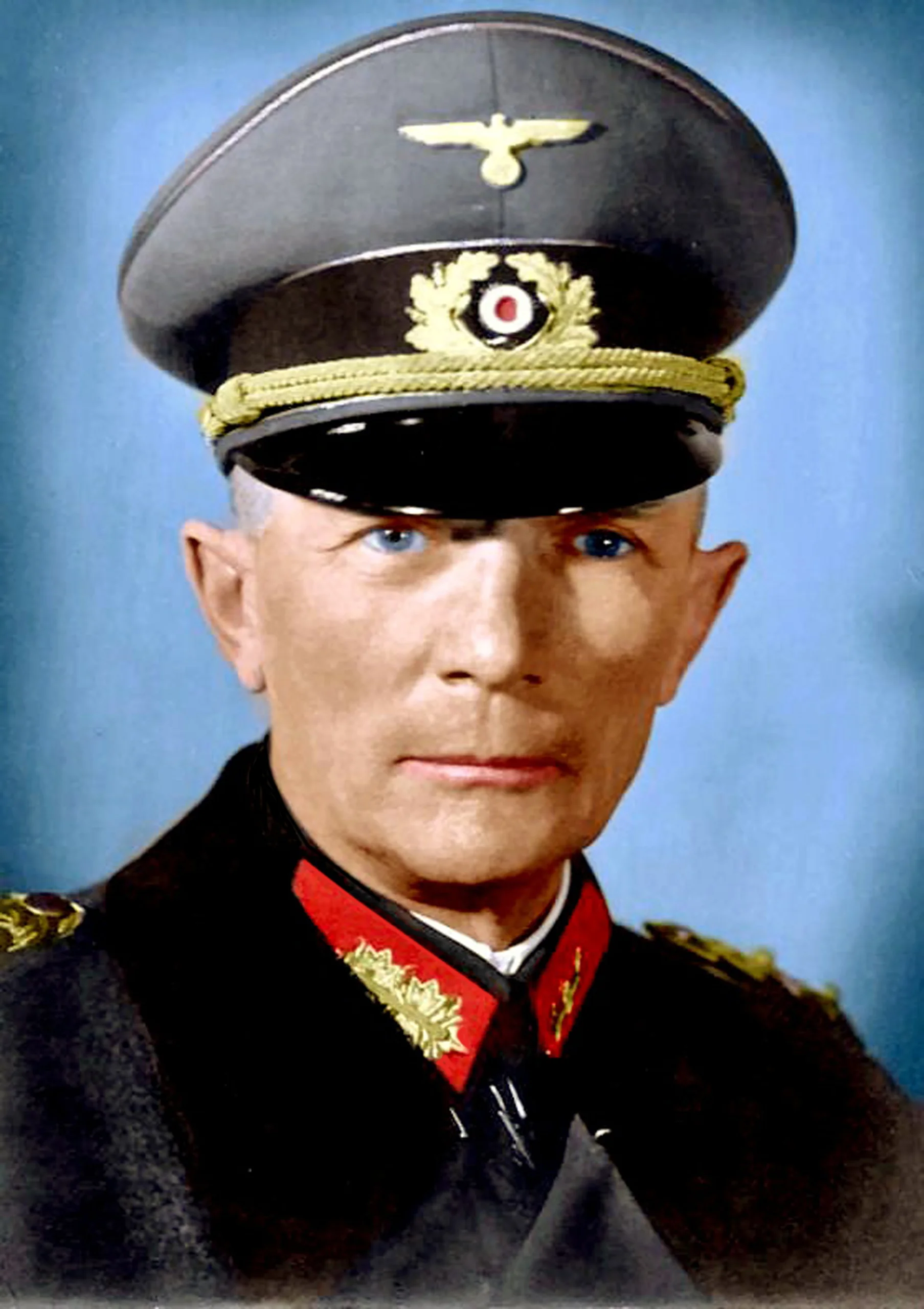
Fedor von Bock
 Germany
military officer•field marshal
Also known as: Moritz Albrecht Franz Friedrich Fedor von Bock, Fedor von Bock
Birthday
December 3, 1880
Birth Sign
Sagittarius
Birthplace
Kostrzyn nad Odrą, Poland
Age
Died at 64
About
Moritz Albrecht Franz Friedrich Fedor von Bock was a German Generalfeldmarschall who commanded major army groups during World War II. Born on December 3, 1880, in Küstrin, Prussia (now Kostrzyn nad Odrą, Poland), he came from a distinguished family of military officers. His father, Moritz von Bock, was an army officer, and the von Bock lineage was deeply entrenched in Prussian military tradition. Raised in an environment that valued duty and discipline, von Bock followed the path of his ancestors from a young age, attending military academies and entering the Prussian Army at the start of the 20th century.
Von Bock served with distinction during World War I as a staff officer, gaining a reputation for organizational efficiency. Following the war, he remained in the reduced Reichswehr under the Weimar Republic, where he continued to rise through the hierarchy. His pivotal moment occurred in 1935 when he received his first major field command, leading to his involvement in the Anschluss and the Sudetenland crisis. In 1939, he commanded Army Group North during the invasion of Poland, and in 1940, he led Army Group B during the invasion of France, earning a promotion to Field Marshal. His most famous command began in June 1941, when he led Army Group Center during Operation Barbarossa. His forces advanced deep into Russian territory, reaching within approximately 12 miles of Moscow in October 1941. However, the failure to take Moscow due to logistical issues and fierce Soviet resistance led to his dismissal in December 1941. He was briefly reinstated in 1942 but dismissed again after clashing with Hitler over strategy. He retired to his estate, avoiding participation in plots against Hitler, and lived out the remainder of the war until his death.
Early Life & Background
Born into the Prussian aristocracy, Fedor von Bock grew up in Küstrin, a garrison town known for its strict military culture. His father, Moritz von Bock, was a high-ranking officer, setting a clear expectation for the young boy to follow in his footsteps. The von Bock family had served the Prussian state for generations, and this heritage shaped Fedor's worldview from childhood. He attended military academies where he was trained in the rigid traditions of the German officer corps, emphasizing loyalty, duty, and tactical precision.
His early career was defined by steady advancement through the ranks of the Imperial German Army. During World War I, he served primarily as a staff officer rather than a frontline commander. This role allowed him to develop a keen understanding of logistics, coordination, and large-scale operations without the chaos of trench warfare. He gained a reputation for being efficient and strategically sound, traits that would define his later commands. After the war, despite the reduction of the German military under the Treaty of Versailles, von Bock managed to stay in the service. He rose through the ranks of the Reichswehr during the Weimar Republic, navigating the political complexities of the era while maintaining his focus on military professionalism.
Career Growth
Von Bock's career reached its zenith during World War II. In 1939, he commanded Army Group North during the invasion of Poland, demonstrating his ability to coordinate large-scale mechanized forces. The campaign was a success, and he quickly moved to lead Army Group B during the invasion of France in 1940. His forces contributed significantly to the rapid defeat of French and Allied forces, which earned him a promotion to Field Marshal in July 1940. This marked the peak of his professional recognition and authority within the Wehrmacht.
His most controversial and defining command began in June 1941, when he led Army Group Center during Operation Barbarossa, the massive German invasion of the Soviet Union. Under his direction, his forces advanced deep into Russian territory, reaching within approximately 12 miles of Moscow in October 1941 during Operation Typhoon. This near-capture of the Soviet capital is a defining episode in military history. However, the failure to take Moscow due to logistical issues, weather, and fierce Soviet resistance led to his dismissal in December 1941. Although some accounts suggest he refused to order a retreat, historical records indicate his removal was due to strategic disagreements with Hitler over the conduct of the war. He was briefly reinstated in 1942 to command Army Group South but was dismissed again in July 1942 after clashing with Hitler over strategy. He retired to his estate, avoiding participation in the plots against Hitler, and lived out the remainder of the war in relative obscurity.
Career Timeline
Public Image & Style
Public image of Fedor von Bock is complex and polarized. He is often portrayed as a professional soldier who served his country loyally, yet he was complicit in the crimes of the Nazi regime. Media portrayals range from neutral historical analysis to critical examinations of his role in the Holocaust and the Eastern Front's atrocities. He is not associated with a specific aesthetic or social media voice, as his era predates modern celebrity culture. His legacy exists strictly within academic and military history circles, devoid of organized communities, fan campaigns, or rituals.
Fame & Fandom
The global attention surrounding Field Marshal Fedor von Bock remains strictly confined to academic circles and historical analysis rather than the broad cultural consciousness that defines modern celebrity. As of August 2026, iFANN's Global Fame Engine has evaluated this person, but they do not currently hold a placement in the published rankings. The field marshal is not ranked within the Global Top 1,000 or any Top-100 scope list. Consequently, no numeric score or ordinal position applies to his name in current public metrics. There is no formal or unofficial fandom dedicated to him. His legacy exists as a subject of military history rather than pop culture, devoid of organized communities, fan campaigns, or rituals. While his military operations are studied extensively, they have not generated a named fanbase or the cultural infrastructure seen with contemporary figures.
Interesting Facts and Legends
Historical lore often refers to Fedor von Bock as The Dying, though this nickname appears more in folklore than official records. Another notable fact is his role in the "what if" scenarios regarding the capture of Moscow, which remains a staple of counterfactual history literature. The story of his forces advancing within 12 miles of Moscow is widely retold, often serving as the anchor for discussions on how close the Axis powers came to winning the Eastern Front. The incident of his dismissal in December 1941 is another defining moment, frequently mythologized as an act of pragmatic heroism against Hitler, though historians attribute it to strategic failures and disagreements. The circumstances of his death, killed by Allied air raid while trying to hold the line, are also part of his lore, marking him as the only Field Marshal to die in direct combat.
Family & Personal Life
Fedor von Bock was married to Elisabeth von Reibnitz. They had children together, including a daughter, though details about their private life are less documented than his military career. Unlike many modern celebrities, von Bock did not have a dating history in the public sense; his relationships were confined to traditional marriage and family life typical of the Prussian aristocracy of his era. As of his death in 1945, he was widowed by the end of the war, having been killed while traveling with his wife and daughter. There is no "current" status in 2026 as he has been deceased for over 80 years.
Notable Connections
Relationships & Dating History
Fedor von Bock was married to Elisabeth von Reibnitz. They had children together, including a daughter, though details about their private life are less documented than his military career. Unlike many modern celebrities, von Bock did not have a dating history in the public sense; his relationships were confined to traditional marriage and family life typical of the Prussian aristocracy of his era. As of his death in 1945, he was widowed by the end of the war, having been killed while traveling with his wife and daughter. There is no "current" status in 2026 as he has been deceased for over 80 years.
- MarriedElisabeth von ReibnitzUnknown - 1945Had one daughter together.
Death & Aftermath
Died
May 4, 1945 (aged 64)
Death Place
Lüneburg, Lower Saxony, Germany
Cause of Death
Fatal wounds from Allied air raid
Fedor von Bock died on May 4, 1945, in Lüneburg, Lower Saxony, during the final collapse of the Third Reich. He was traveling by car with his wife Elisabeth and daughter when a Royal New Zealand Air Force plane dropped a bomb on their vehicle near the city. The attack killed him instantly or mortally wounded him before he could reach a field hospital. This event made him the only Field Marshal of the Third Reich to die from direct enemy action during the war.
Contemporary accounts confirm his death through military reports issued by the Wehrmacht and later verified by occupying Allied forces. He was buried at the Field of Honor (Ehrenfeld) in St. Catharina Cemetery in Lüneburg. Post-war Germany largely moved away from glorifying individual Nazi generals, leaving his legacy to be analyzed in historical documentaries and academic studies rather than celebrated. No major legal proceedings or investigations followed his death beyond standard military record-keeping, and there were no posthumous releases or commercial ventures associated with his name in the entertainment industry.
Net Worth (Estate Value)
$0
iFANN Editorial Team estimate
As a historical figure who died in 1945, net worth figures do not apply in the modern sense. However, his estate, like many of the German nobility, likely suffered significant losses during and after the war due to the collapse of the Nazi regime and the subsequent occupation of Germany. The value of his estate is not publicly quantified in modern financial terms, as it was dissolved or absorbed during the post-war restructuring of German society. The iFANN Editorial Team estimates the estate value at $0 due to the complete dissolution of noble assets in the region following the war.
Awards Won (2)
Von Bock received the Pour le Mérite, Germany's highest military honor, during World War I. He also received the Knight's Cross of the Iron Oak with Swords and Diamonds later in his career, though specific dates for these posthumous or wartime recognitions vary in secondary sources. He holds no inductions into pop culture halls of fame, nor does he have honorary degrees or Walk of Fame stars, as his legacy is strictly military and historical.
1918 · Military Decoration
World War I Service
1941 · Military Decoration
Eastern Front Command
Known For
Operation Barbarossa
1941 · Commander of Army Group Center
Invasion of Poland
1939 · Commander of Army Group North
Invasion of France
1940 · Commander of Army Group B
Keywords
Sources
Quick Facts
- Profession
- military officer, military personnel, general field marshal
- Born
- December 3, 1880
- Birthplace
- Kostrzyn nad Odrą
- Died
- May 4, 1945
- Death Place
- Lüneburg, Lower Saxony, Germany
- Gender
- Male
- Birth Sign
- Sagittarius
Personal Details
- Full Name
- Moritz Albrecht Franz Friedrich Fedor von Bock
- Spouse
- Elisabeth von Reibnitz
- Children
- One daughter
- Education
- Prussian Military Academies
Frequently Asked Questions
Who was Fedor von Bock?
How did Fedor von Bock die?
Did Fedor von Bock participate in plots against Hitler?
What was Fedor von Bock's role in Operation Barbarossa?
Was Fedor von Bock a Nazi sympathizer?
Join the community
fans discussing