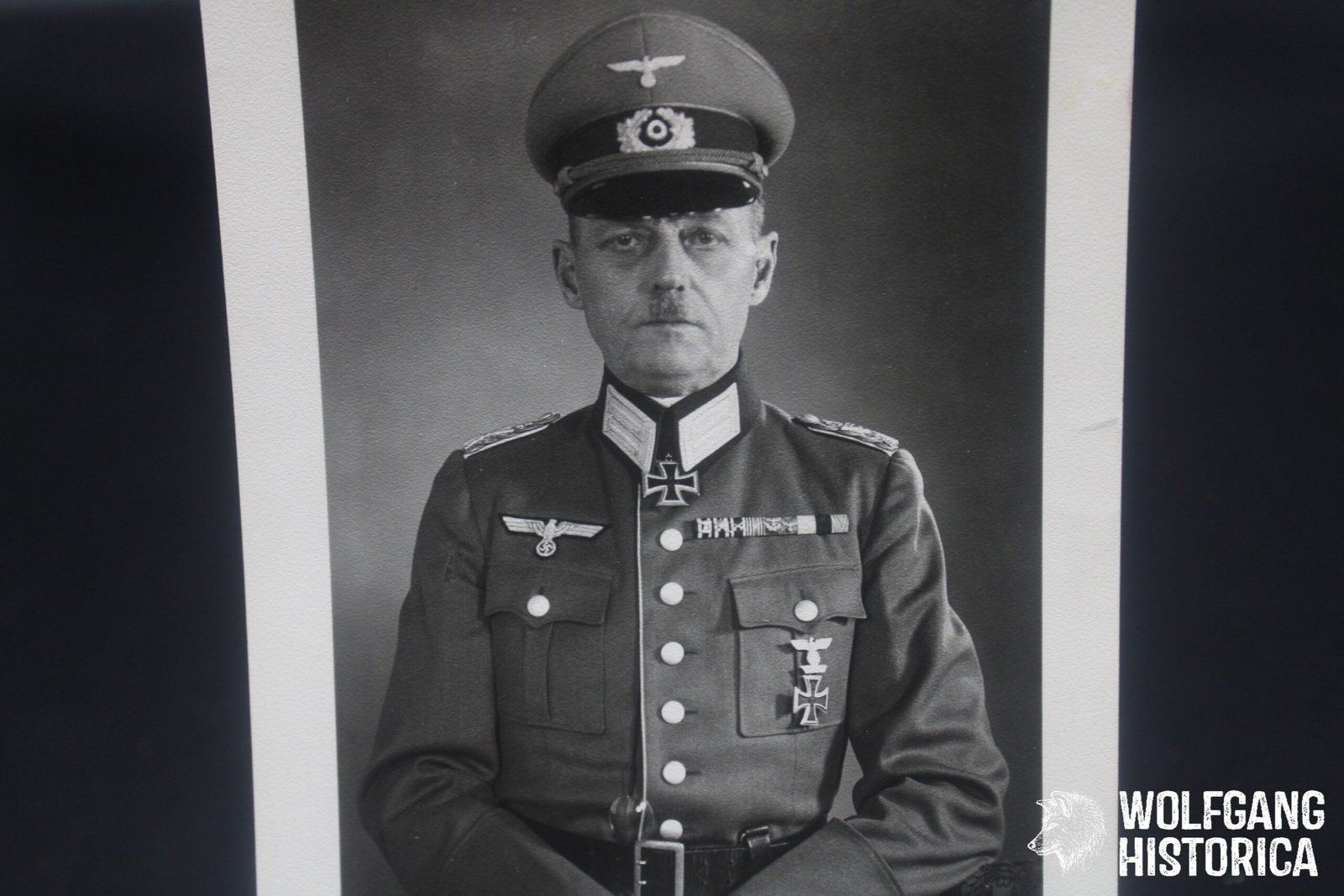
Gerd von Rundstedt
 Germany
military officer•field marshal
Also known as: Karl Rudolf Gerd von Rundstedt, The Last Prussian, The Gentleman General
Birthday
December 12, 1875
Birth Sign
Sagittarius
Birthplace
Aschersleben, Province of Saxony, Prussia
Age
Died at 77
About
Karl Rudolf Gerd von Rundstedt was a German field marshal and one of the most senior commanders in the Wehrmacht during World War II. Born into an old Prussian military family, he entered the army in 1892 and served for over five decades. His career is defined by repeated recalls from retirement to lead major offensives, including the invasions of Poland and France. He earned the rank of Field Marshal in 1940 and later commanded forces in the Soviet Union and Western Europe. Despite his high status, he refused to join the Nazi Party and maintained a professional detachment from the regime's ideology.
Known as "the Last Prussian," von Rundstedt embodied traditional military values while clashing frequently with Adolf Hitler. He orchestrated significant victories like the encirclement at Kiev and the breakthrough at Dunkirk, yet also faced dismissal multiple times for disagreeing with Hitler's strategic decisions. After the war, he avoided prosecution due to his age and lack of direct involvement in atrocities. He died in 1953, leaving behind a complex legacy as a capable commander caught in the machinery of a criminal regime.
Early Life & Background
Gerd von Rundstedt was born on December 12, 1875, in Aschersleben, located in the Province of Saxony within the German Empire. He came from a distinguished Prussian military lineage; his father, Karl Friedrich Ludwig von Rundstedt, served as a major general in the Prussian army. Following this family tradition, Gerd joined the military at the young age of sixteen in 1892. He began his service as a cadet in the 2nd Grenadier Regiment "Königin" (Queen), immersing himself in the rigid discipline and aristocratic culture of the Prussian officer corps.
His early education focused on preparing him for staff roles rather than frontline command. From 1901 to 1904, he attended the prestigious Prussian Military Academy in Berlin. This training solidified his reputation as a strategist and planner. During World War I, he did not serve as a front-line commander but instead rose through the ranks on the General Staff. He reached the level of Colonel General by the end of the conflict, holding significant administrative and strategic posts throughout the interwar period. These years established his reputation as a steady, professional soldier who valued military tradition over political maneuvering.
By 1938, von Rundstedt held the position of Inspector General of the Army. However, deep disagreements with Adolf Hitler regarding rearmament plans and the appointment of younger, ideologically driven officers led to his forced retirement. At the time, he believed his career was effectively over. He returned to civilian life, expecting to spend his remaining days quietly, unaware that the outbreak of war would soon drag him back into the center of global conflict.
Career Growth
World War II marked the zenith of von Rundstedt's career. In September 1939, he was recalled to command Army Group South during the invasion of Poland. His strategy successfully orchestrated the encirclement and destruction of Polish forces, leading to a swift German victory. The following year, he commanded Army Group A during the Battle of France. His decision to push armored divisions through the Ardennes bypassed the Maginot Line, catching the Allies off guard. During this campaign, he issued the controversial "Halt Order" near Dunkirk on May 24, 1940, which allowed the British Expeditionary Force to evacuate. For these successes, he was promoted to Field Marshal (*Generalfeldmarschall*) in July 1940.
In June 1941, von Rundstedt led Army Group South during Operation Barbarossa, the invasion of the Soviet Union. He oversaw the Battle of Kiev, which resulted in the largest encirclement of troops in military history, capturing over 600,000 Soviet soldiers. However, his career took a hit in December 1941 when he advocated for a withdrawal from Rostov against Hitler's explicit orders. Hitler relieved him of command immediately. Von Rundstedt was recalled again in November 1942 as Commander-in-Chief West, responsible for defending Western Europe against the anticipated Allied invasion.
He remained in this post until the failure of the Normandy defenses in July 1944. Following the D-Day landings, he famously told Hitler that the war was lost within days, describing the Allied operation as "scientifically conducted." He was dismissed again in July 1944. Briefly recalled in September 1944 to command during the Battle of the Bulge, he was finally sacked by Hitler in March 1945 as the Third Reich collapsed. Throughout these events, he demonstrated a unique cycle of dismissal and recall, illustrating his willingness to lose his position rather than compromise his judgment.
Career Timeline
Public Image & Style
Von Rundstedt is portrayed in historical media as a professional soldier who was often at odds with the political leadership of the Third Reich. His image is one of aristocratic bearing and military integrity, contrasting with the fanaticism of the Nazi regime. He is often described as a "gentleman" in contrast to his contemporaries, reflecting his Prussian upbringing and military ethos. His refusal to join the Nazi Party and his candid assessments of the war's progress cemented his reputation as a soldier who prioritized duty over ideology.
Fame & Fandom (iFAMOUS Rankings)
Gerd von Rundstedt currently holds no placement in the published iFANN Global Top 1,000 or any Top-100 scope list, a status confirmed by the August 2026 evaluation. While he does not appear on the current global fame rankings, his legacy remains deeply embedded within the specific circles of military history enthusiasts and wargaming communities. Unlike modern celebrities who command organized fanbases with formal names, von Rundstedt never generated a contemporary fandom with official campaigns, birthday billboards, or streaming drives. The interest surrounding him is scholarly and hobbyist rather than fannish, yet it persists through the enduring reputation of his service. Within these niche groups, he is often remembered as "the Gentleman General," a moniker reflecting his aristocratic bearing and Prussian military ethos that set him apart from his contemporaries. History buffs frequently discuss his complex relationship with Adolf Hitler, particularly the dismissive epithet "Bohemian corporal" used to describe the Führer, which has become a staple of lore among those who admire his professional detachment. Although he died in obscurity in 1953, almost alone and forgotten according to his obituary, the stories of his dismissal and reinstatement cycles continue to be retold as emblematic of military integrity versus political dysfunction. His role at Erwin Rommel's funeral and his candid assessments during D-Day remain pivotal moments in historical discussions, proving that while he lacks a formal fan club, his impact on the collective memory of World War II is far from negligible.
Interesting Facts and Legends
Von Rundstedt earned the nickname "the Last Prussian" because he embodied the old military traditions and often clashed with the ideological demands of the Nazi regime. Despite his high rank, he refused to join the Nazi Party, a fact that fueled the legend of his apolitical nature. Declassified documents from 2013 revealed that he was on an Allied secret list of Nazi assassination targets ahead of D-Day, highlighting his strategic importance even to the enemy. He reportedly told Hitler's headquarters that the war was lost within days of the Allied landings, describing the invasion as "scientifically conducted." Another iconic moment involves his role in organizing the funeral of Erwin Rommel, demonstrating his standing within the military hierarchy despite their differing views.
Notable Quotes
“The war is lost within days.”
“This is scientifically conducted.”
“I am a soldier, not a politician.”
Family & Personal Life
Gerd von Rundstedt was married twice. His first marriage was to Maria von Loefen in 1904. They had two sons: Karl Rudolf, born in 1905, and Hans, born in 1907. Maria died in 1938. After her death, von Rundstedt married Elisabeth von Witzleben in 1940. Elisabeth was the daughter of General Erwin von Witzleben, who was executed for his role in the July 20 plot against Hitler. This marriage connected von Rundstedt directly to the resistance movement, though he maintained his stance of non-participation in the plots. There is no record of children from his second marriage. He was a man of strict military discipline and traditional Prussian values, characterized by his devotion to his family and his career.
Notable Connections
Relationships & Dating History
Gerd von Rundstedt was married twice. His first marriage was to Maria von Loefen in 1904. They had two sons: Karl Rudolf, born in 1905, and Hans, born in 1907. Maria died in 1938. After her death, von Rundstedt married Elisabeth von Witzleben in 1940. Elisabeth was the daughter of General Erwin von Witzleben, who was executed for his role in the July 20 plot against Hitler. This marriage connected von Rundstedt directly to the resistance movement, though he maintained his stance of non-participation in the plots. There is no record of children from his second marriage. He was widowed following the death of his second wife, though sources indicate she survived him. The exact date of Elisabeth's death is not widely documented in standard biographies, but she outlived him.
- MarriedMaria von Loefen1904 - 1938Had two sons together before her death.
- MarriedElisabeth von Witzleben1940 - presentDaughter of a plotter against Hitler; survived him.
Death & Aftermath
Died
February 24, 1953 (aged 77)
Death Place
Hanover, West Germany
Cause of Death
Heart failure and natural causes related to advanced age
Gerd von Rundstedt spent his final years in the quiet obscurity of Hanover, far removed from the military circles that once defined his career. By early 1953, the former Field Marshal had become a figure largely ignored by the public and former peers following the collapse of the Third Reich. He passed away on February 24, 1953, at the age of seventy-seven, with contemporary reports noting he died almost alone and forgotten. Public reaction to his death was minimal to non-existent, with vigils or memorials marking the occasion. Details regarding the funeral or memorial service remain unrecorded, suggesting a private affair attended by very few individuals if any.
While he was a high-ranking Nazi official who commanded forces during major campaigns such as the invasion of France and the Battle of the Bulge, he was never prosecuted for war crimes in the Nuremberg Trials or subsequent tribunals. He was briefly interned by the British after the war but was released in 1948 due to health reasons and lack of evidence linking him directly to atrocities requiring criminal prosecution.
In the decades following his death, his legacy has been preserved primarily through historical literature such as The Last Prussian: A Biography of Field Marshal Gerd von Rundstedt and continued academic study of his military strategies. He has been featured in documentaries and articles analyzing his role in the Wehrmacht. The specific handling of his assets or financial affairs has never been made public in the available records.
Net Worth (Estate Value)
$0
iFANN Editorial Team estimate
Gerd von Rundstedt was a career military officer whose wealth was derived from his salary and pension rather than business ventures or investments. As a high-ranking field marshal, he received a substantial income, but specific details regarding his assets or financial affairs have never been made public in the available records. Upon his death in 1953, there is no record of a managed estate generating posthumous revenue. His financial legacy is minimal compared to modern celebrities, with his value lying in his historical significance rather than monetary worth. Research by the iFANN Editorial Team puts his estate value at approximately $0, reflecting the lack of documented assets or commercial exploitation of his name.
Awards Won (5)
Von Rundstedt received numerous honors for his military service. He was promoted to Field Marshal in 1940. He was awarded the Knight's Cross of the Iron Cross with Oak Leaves for his leadership in the invasion of Poland and the Battle of France. He also received the Pour le Mérite, a prestigious Prussian order, and the Iron Cross (First and Second Class) during World War I. Additionally, he was honored with the Military Merit Order, a Bavarian decoration.
1940 · Military Merit
Invasion of Poland and Battle of France
1918 · Military Merit
World War I Service
Known For
Invasion of Poland
1939 · Commander, Army Group South
Battle of France
1940 · Commander, Army Group A
Operation Barbarossa
1941 · Commander, Army Group South
Battle of the Bulge
1944 · Commander-in-Chief West
Keywords
Sources
Quick Facts
- Profession
- military officer, military personnel, soldier
- Born
- December 12, 1875
- Birthplace
- Aschersleben
- Died
- February 24, 1953
- Death Place
- Hanover
- Gender
- Male
- Birth Sign
- Sagittarius
Personal Details
- Full Name
- Karl Rudolf Gerd von Rundstedt
- Spouse
- Elisabeth von Witzleben (1940–1953)
- Children
- Karl Rudolf von Rundstedt, Hans von Rundstedt
- Education
- Prussian Military Academy, Berlin
Frequently Asked Questions
Who was Gerd von Rundstedt?
Why was Gerd von Rundstedt dismissed by Hitler?
Did Gerd von Rundstedt join the Nazi Party?
What happened to Gerd von Rundstedt after World War II?
Was Gerd von Rundstedt on a secret assassination list?
Similar People
Join the community
fans discussing