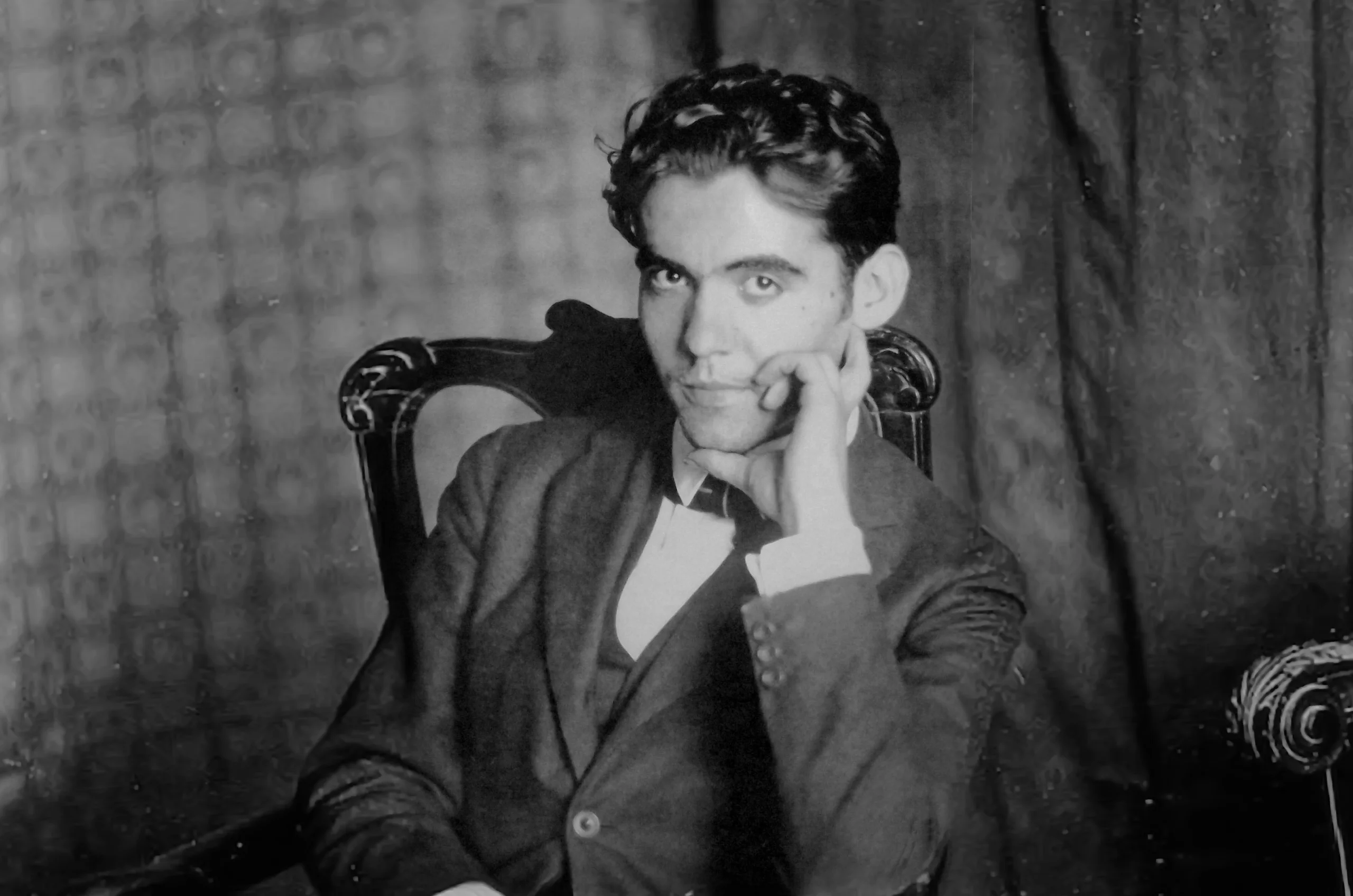
Federico García Lorca
 Spain
Spainpoet•playwright•theatre director
Also known as: García Lorca, G. F. Lorca, Lorca, Federico del Sagrado Corazón de Jesús García Lorca
Birthday
June 5, 1898
Birth Sign
Gemini
Birthplace
Fuente Vaqueros, Granada, Spain
Age
Died at 38
Height
5 ft 9 in (175 cm)
About
Federico García Lorca was a Spanish poet, playwright, and theatre director who stands as the most significant literary figure of the 20th century in Spain. Born into a wealthy family in Fuente Vaqueros, he became a central member of the Generation of '27, blending Andalusian folklore with European avant-garde movements like surrealism. His work remains globally influential for its lyrical intensity and deep engagement with themes of death, passion, and repression.
His dramatic legacy is anchored by three major plays: Blood Wedding, Yerma, and The House of Bernarda Alba. These works continue to be performed worldwide, cementing his status as a master dramatist. Lorca's life ended abruptly at age 38 during the Spanish Civil War when he was executed by Nationalist forces on August 18, 1936. His death transformed him into a lasting symbol of resistance against fascism and the persecution of LGBTQ individuals.
Early Life & Background
Federico García Lorca entered the world on June 5, 1898, in the rural village of Fuente Vaqueros near Granada. His father, Federico García Rodríguez, was a prosperous landowner, while his mother, Vicenta Lorca Romero, worked as a schoolteacher. This household provided a unique environment where the practicalities of agrarian life met intellectual curiosity. Vicenta nurtured Federico's early artistic inclinations, introducing him to music and literature from a young age.
By the time he was five, Lorca was already playing the piano, and by eight, he had composed his first piece, El vals de la flor. The landscape of Andalusia deeply influenced his imagination, providing the vivid imagery that would later define his poetry. In 1914, he moved to Granada to enroll at the University of Granada, initially studying law. However, his heart lay elsewhere. He quickly abandoned legal studies to pursue literature and philosophy, attending lectures by the philosopher José Ortega y Gasset.
In 1919, Lorca moved to Madrid to attend the Residencia de Estudiantes, a progressive student residence that became a hub for artists and intellectuals. There, he formed lifelong friendships with Salvador Dalí and Luis Buñuel, figures who would shape the cultural landscape of the era. During this period, he published his first book, Impresiones y paisajes, in 1918, though it received little attention. His focus shifted entirely to writing, laying the groundwork for the poetic and theatrical innovations that would soon follow.
Career Growth
Lorca's career unfolded in distinct phases of poetic experimentation and theatrical innovation. In 1921, he published Libro de poemas, which established his reputation for lyrical intensity. Two years later, he co-founded the Café de los Chinos group and organized the Cante Jondo contest in Granada to preserve traditional flamenco singing. This effort culminated in 1925 with the release of Poema del cante jondo, a masterpiece blending flamenco rhythms with modernist poetry.
1927 marked a turning point with the publication of Romancero gitano (Gypsy Ballads). This collection achieved international acclaim for its fusion of myth and reality, making Lorca a household name in literary circles. Following a transformative year in New York City between 1929 and 1930, he returned to Spain with a darker, more complex perspective inspired by the city's alienation and racial tensions. This experience produced the posthumous collection Poeta en Nueva York.
In 1931, Lorca was appointed director of La Barraca, a traveling university theater troupe dedicated to bringing classical and contemporary plays to rural audiences. His first major play, Bodas de sangre (Blood Wedding), premiered in 1932 and became a massive success. He followed this with Yerma in 1934 and completed La casa de Bernarda Alba (The House of Bernarda Alba) in 1936, just weeks before his death. These works explored themes of female repression and societal constraints with raw emotional power.
Career Timeline
Public Image & Style
Lorca cultivated a distinctive bohemian aesthetic, often wearing dark suits, bow ties, and sporting a mustache that reflected the artistic sensibilities of the 1920s and 30s. His presence was described as ethereal and delicate, matching the sensitive nature of his poetry. Media portrayals of him during his lifetime emphasized his role as a cultural icon who bridged the gap between traditional Andalusian culture and modern European art.
After his death, his image evolved into a symbol of martyrdom and resistance. He became an enduring representation of the fight against oppression and the struggle for LGBTQ rights. His tragic end transformed him from a celebrated artist into a potent political symbol, ensuring his name remained synonymous with the costs of totalitarianism and intolerance.
Fame & Fandom
There is no formal fandom name for followers of Federico García Lorca; instead, admirers are collectively known as Lorcistas or simply as enthusiasts of his work. This community consists largely of scholars, students, and literary lovers who view him as a martyr rather than a celebrity. Their devotion manifests through annual commemorations on the anniversary of his death, street readings of his poetry, and theatrical reenactments of his plays across Spain and Latin America.
According to the iFANN Global Fame Rankings, he is the 16th most famous person in Spain, holding steady from the previous cycle. He ranks as the 85th most famous person from Spain, maintaining his position among the country's historical figures. Within the broader region, he holds the spot of the 43rd most famous person in Europe, having slipped slightly from 42nd last cycle. In his specific field, he is ranked as the 49th most famous person in Art & Design, showing consistent recognition across recent measurements.
Interesting Facts and Legends
Federico García Lorca was not only a writer but also a skilled pianist who composed several pieces of music throughout his life. He was a committed vegetarian and pacifist, values that often conflicted with the political climate of his time. His full birth name included the religious phrase del Sagrado Corazón de Jesús (of the Sacred Heart of Jesus), reflecting the piety of his upbringing. Lorca was arrested specifically because of his political views as a Republican sympathizer and his open sexuality, both of which were illegal under the Franco regime.
A persistent legend surrounds the mystery of his missing body for over 60 years after his execution. Despite decades of searches and conspiracy theories about secret graves, his exact burial site remained unknown until a mass grave was exhumed in Alfacar in 1998. Recent discoveries in April 2026 revealed lost verses written by Lorca, adding new material to his corpus and sparking renewed scholarly interest. His final days were marked by intense political turmoil, and his last recorded request to his father was for 2,000 pesetas to help a friend.
Notable Quotes
“I want to be a tree so I can see the world from above.”
“The earth is my mother, and I am her son.”
“Father, please give the bearer 2,000 pesetas.”
“I have a great fear of the silence.”
Family & Personal Life
Lorca was born into a wealthy family in Fuente Vaqueros. His father, Federico García Rodríguez, was a prosperous landowner who owned extensive olive groves. His mother, Vicenta Lorca Romero, was a schoolteacher who played a pivotal role in nurturing his early artistic talents. She taught him music and encouraged his love for literature, creating a supportive home environment despite the conservative nature of their rural community.
He had one younger sister, Conchita, who lived with the family. While Lorca never married, he maintained close relationships with his parents throughout his life. His mother remained a devoted supporter of his work even after his death. The family estate in Fuente Vaqueros served as a retreat where Lorca often returned to find inspiration and solace from the pressures of public life in Madrid and Paris.
Notable Connections
Salvador Dalí, Luis Buñuel, Manuel de Falla, Fernando Villalón, María Teresa León
Relationships & Dating History
Federico García Lorca lived in a time when homosexuality was criminalized and socially stigmatized in Spain. While he never publicly identified as such or entered a legal marriage, historical evidence confirms a pattern of romantic relationships with men. His most significant and enduring partnership was with Fernando Villalón, whom he met in Granada around 1930. Villalón, a teacher and close confidant, remained with Lorca until his death in 1936. Lorca often referred to him as his "true love," and they lived together in various apartments in Granada and Madrid.
Earlier in his life, Lorca had a romantic relationship with Manuel Gómez Carrillo, a fellow student, around 1918. Emilio Aladrén, a musician and close friend, is also believed to have been involved with Lorca briefly in the 1920s. His relationship with Salvador Dalí was emotionally intense, with Lorca writing love poems to the painter, though no confirmed sexual relationship occurred. They eventually drifted apart due to ideological differences and Dalí's evolving personal life. Throughout his life, rumors of his sexuality circulated among peers, but his relationships remained largely private due to the legal risks of the Franco regime.
- DatedManuel Gómez Carrillo1918 - 1920Early romantic interest and fellow student; relationship ended when Lorca moved to Madrid.
- DatedEmilio Aladrén1920 - 1925Close friend and musician; biographers suggest brief romantic involvement.
- DatedSalvador Dalí1920 - 1929Emotionally intense friendship with unrequited romantic feelings; drifted apart ideologically.
- DatedFernando Villalón1930 - 1936Most significant long-term partner; lived together until Lorca's death.
Death & Aftermath
Died
August 18, 1936 (aged 38)
Death Place
Víznar, Granada, Spain
Cause of Death
Execution by firing squad
Federico García García Lorca, the renowned poet and playwright born on June 5, 1898, died by execution with a firing squad in the early hours of August 18, 1936. He was killed near the Barranco de Víznar between Víznar and Alfacar in Granada alongside Dióscoro Galindo, a schoolteacher from Valladolid who worked in Pulianas. The Nationalist death squad carried out this killing at the onset of the Spanish Civil War shortly after Lorca's arrest on August 16 by Civil Guard officers loyal to the Nationalists. His body was never recovered, leaving the exact burial site unknown despite numerous excavations in the ravine that have failed to conclusively link any remains to him.
The Francoist regime suppressed all information about the assassination and actively concealed the crime for decades, circulating false reports claiming he had fled the country or died in crossfire. In the post-Franco era, the focus shifted to the recovery of historical memory rather than criminal prosecution, as most perpetrators had died or were too old to face trial. The Association for the Recovery of Historical Memory has repeatedly demanded the Spanish government open archives related to the assassination, arguing that the state continues to keep documents about the crime under wraps.
In Republican-held zones, the news of his murder sparked immediate outrage and mourning, while Nationalist Spain enforced a silence that banned his name and burned his works. Today, Lorca stands as a global symbol of artistic freedom and LGBTQ rights. Modern commemorations include memorial murals and landmarks across Spain, particularly in Granada, where the Federico García Lorca Airport bears his name. Recent productions such as the flamenco journey Llámame Lorca highlight his enduring legacy. His estate is managed by the Federico García Lorca Foundation, which supports efforts to locate his remains and has facilitated the publication of previously unseen works like the manuscript Canta el Reloj and lost love letters that continue to spark scholarly attention.
Net Worth (Estate Value)
$0
iFANN Editorial Team estimate
As a deceased historical figure, Federico García Lorca does not possess a personal net worth in the modern sense. Instead, his financial legacy is represented by the value of his estate and intellectual property. The estate is managed by the Fundación Federico García Lorca and his heirs, who oversee the preservation and promotion of his work globally.
Revenue streams include royalties from the publication of his poetry and plays, licensing fees for theatrical productions, and film adaptations such as Bodas de sangre and La casa de Bernarda Alba. Merchandise sales and digital archives also contribute to the estate's income. In 2026, the estate continues to generate revenue from new translations, digital releases, and the discovery of previously unpublished works, including lost verses found in April 2026. While precise figures are not publicly disclosed due to the non-profit nature of the foundation, the cumulative value of his intellectual property is considered priceless in cultural terms.
Awards & Accolades
View 10 records, honours and achievementsKnown For
Romancero gitano
1927 · Poetry Collection
Bodas de sangre
1932 · Playwright
La casa de Bernarda Alba
1936 · Playwright
Yerma
1934 · Playwright
Keywords
Sources
Quick Facts
- Profession
- poet, playwright, theatre director
- Born
- June 5, 1898
- Birthplace
- Fuente Vaqueros, Granada, Spain
- Died
- August 18, 1936
- Death Place
- Víznar, Granada, Spain
- Gender
- Male
- Birth Sign
- Gemini
Personal Details
- Full Name
- Federico del Sagrado Corazón de Jesús García Lorca
- Height
- 5 ft 9 in (175 cm)
- Children
- Education
- University of Granada; Residencia de Estudiantes, Madrid
Frequently Asked Questions
How did Federico García Lorca die?
Where is Federico García Lorca buried?
Was Federico García Lorca married?
What is Federico García Lorca's most famous work?
Why is Federico García Lorca important?
Similar People

Join the community
fans discussing