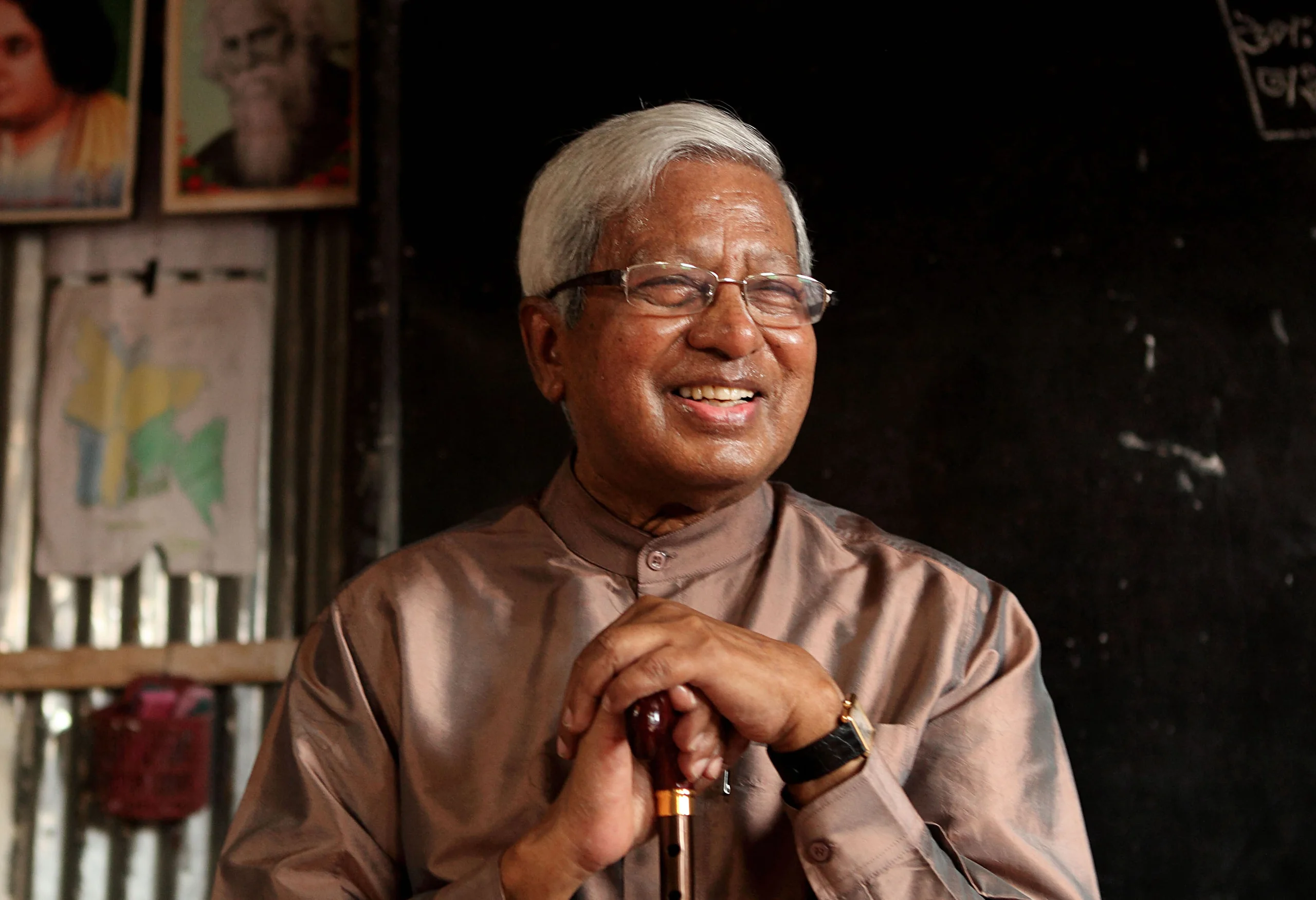
Fazle Hasan Abed
 Bangladesh
social worker•chartered accountant•charity worker
Also known as: Sir Fazle Hasan Abed
Birthday
April 27, 1936
Birth Sign
Sagittarius
Birthplace
Baniachang Upazila, Habiganj District, British India (now Bangladesh)
Age
Died at 83
About
Sir Fazle Hasan Abed was a Bangladeshi social worker and chartered accountant who founded BRAC, one of the world's largest non-governmental organizations. Born on April 27, 1936, in Baniachang Upazila, he passed away on December 20, 2019, at the age of 83, leaving behind a legacy that transformed development work globally.
Abed's vision turned a small relief effort into a powerhouse that operates in 11 countries, employs over 100,000 people, and reaches more than 100 million individuals. His pragmatic approach, which he summed up as "thinking big, starting small, and scaling fast," made BRAC a model for effective poverty alleviation. He was knighted by Queen Elizabeth II in 2010, becoming Sir Fazle Hasan Abed.
Today, his work continues through BRAC and its affiliated institutions, including BRAC Bank and BRAC University. His legacy is celebrated not just in Bangladesh but across the globe, where his methods influence modern development practice.
Early Life & Background
Fazle Hasan Abed was born into a respected landowning family in the Sylhet region of British India. His father was a zamindar, a landlord, and the family enjoyed considerable social standing. Growing up in this environment, Abed was exposed to both privilege and the responsibilities that came with it.
He pursued higher education at Dhaka University before heading to London to study accountancy. He qualified as a Cost Management Accountant in 1962 and later attended Glasgow University. In his thirties, Abed worked as a senior corporate executive at Shell Oil Company in Pakistan, eventually becoming head of finance. His life took a dramatic turn in November 1970 when the Bhola cyclone devastated coastal Bangladesh, killing an estimated 500,000 people. The immense suffering he witnessed moved him to begin organizing relief efforts.
When the Bangladesh Liberation War erupted in 1971, Abed left his corporate career entirely. He moved to London, where he helped establish an action group supporting the independence movement and raised funds for the cause. This period marked his transition from a successful businessman to a dedicated social activist.
Career Growth
In 1972, following Bangladesh's independence, Abed returned to his war-ravaged homeland and founded the Bangladesh Rehabilitation Assistance Committee, later renamed BRAC. He sold his flat in London to fund the organization's initial operations, starting with relief work in the remote northeastern district of Sylhet.
BRAC grew rapidly, pioneering the "microfinance plus" model that combined small loans with education, healthcare, and social development programs. One of its early landmark achievements was a program teaching rural mothers to treat childhood diarrhea through oral rehydration therapy, dramatically lowering child mortality rates in Bangladesh.
Key milestones include the launch of BRAC's non-formal primary education program in 1985, the founding of BRAC Bank and BRAC University in 2001, and international expansion beginning in 2002. By the time of his death, BRAC operated in 11 countries, touching the lives of more than 100 million people. Abed served as chairperson until stepping back to become chair emeritus in 2019.
Career Timeline
Public Image & Style
Fazle Hasan Abed was widely regarded as a humble and effective leader. International media often described him as "the most influential man most people have never heard of," a phrase popularized by NPR in 2016. He was known for his mild-mannered, soft-spoken nature, often photographed in traditional Bangladeshi attire or formal Western suits.
His public image was that of a pragmatic visionary who combined social mission with organizational efficiency. He was respected for listening to poor communities and designing solutions around their needs, treating beneficiaries as partners rather than recipients. This approach earned him admiration from development practitioners worldwide.
Fame & Fandom (iFAMOUS Rankings)
Sir Fazle Hasan Abed's renown is not that of a celebrity but of a quiet force in global development. His admirers, largely within the humanitarian and development sectors, refer to him with deep affection as 'Abed Bhai' (brother), a moniker that underscores the familial respect he commanded. BRAC University's 2026 event, 'Celebration of Abed Bhai's Life and Legacy,' exemplifies this warm regard. There is, however, no formal fandom name or organized fan culture; his following is an informal, global community of practitioners and beneficiaries.
In the realm of measurable fame, the iFANN Global Fame Engine has evaluated Sir Fazle Hasan Abed but he does not currently hold a placement in the published rankings, including the Global Top 1,000 or any Top-100 scope list. This absence reflects the nature of his influence, which is profound yet understated, rather than a measure of his impact.
His legendary status rests on documented milestones: his decisive pivot from a London accounting career to humanitarian work following the 1970 Bhola cyclone, his role in the 1971 Bangladesh Liberation War, and his subsequent founding of BRAC, which grew into the world's largest NGO. These narratives, along with honors like his 2010 knighthood and the posthumous Independence Award in 2025, form the core of his enduring legacy.
Interesting Facts and Legends
Sir Fazle Hasan Abed was known for his soft-spoken demeanor and was often described as a 'visionary pragmatist.' He was an avid reader and enjoyed classical music. He had a habit of carrying a small notebook to jot down ideas and observations from his field visits. Despite his global influence, he rarely gave interviews, preferring to let his work speak for itself. He was known to personally visit remote villages to understand the challenges faced by the poor. Abed was also a strong advocate for women's empowerment, and under his leadership, BRAC prioritized female education and microfinance for women. He was posthumously awarded Bangladesh's Independence Award in 2025, the nation's highest civilian honor.
A widely retold story is his transformation from a 'mild-mannered accountant' to 'the most influential man most people have never heard of,' a phrase popularized by NPR in 2016. His origin story, rooted in the 1970 cyclone, is a cornerstone of his lore, illustrating his shift from corporate success to social mission. Similarly, his wartime involvement in 1971 and the founding of BRAC are retold as foundational narratives, cementing his place as a pioneer in poverty alleviation.
Notable Quotes
“The poor are not the problem; they are the solution.”
“We must think big, start small, and scale fast.”
“Development work requires treating beneficiaries as partners, not recipients.”
“Listen to the poor; they know what they need.”
Family & Personal Life
Abed was married to Ayesha Abed, who was a co-founder of BRAC and played a significant role in the organization's early development, particularly in healthcare programs. The couple had three children together.
His daughter has been involved in BRAC's work, ensuring the family's continued connection to the organization. The family lived modestly, reflecting Abed's personal values of simplicity and dedication to social causes.
Notable Connections
Relationships & Dating History
Fazle Hasan Abed was married to Ayesha Abed, who was a co-founder of BRAC. The couple worked closely together, with Ayesha playing a significant role in the organization's early healthcare programs. They had three children together.
Abed remained married to Ayesha until his death in 2019. Their partnership was both personal and professional, as they shared a commitment to social development. Ayesha's contributions to BRAC were instrumental in its early success.
- MarriedAyesha Abed? - 2019Co-founder of BRAC; they had three children together.
Death & Aftermath
Died
December 20, 2019 (aged 83)
Death Place
Dhaka, Bangladesh
Cause of Death
Natural causes due to old age and illness
Sir Fazle Hasan Abed died on December 20, 2019, in Dhaka, Bangladesh, at the age of 83. The organization he founded confirmed the passing as a result of natural causes related to old age and illness. Major international outlets such as The New York Times and The Guardian published obituaries shortly thereafter, framing his death as the conclusion of a life dedicated to transforming relief efforts into a global development powerhouse. Tributes flowed from academic and policy institutions rather than public vigils, with Harvard University hosting events in November 2022 featuring Scott MacMillan's insights derived from recorded interviews, while Yale University announced a partnership through its Y-RISE initiative to advance the science of ending poverty.
Brookings Institution also reflected on his agenda in September 2022. Specific details regarding the date and location of the funeral service remain unrecorded in available sources, though BRAC University continues to hold annual commemorations, including a program in April 2026 marking what would have been his 90th birth anniversary. Posthumous recognition included the continued operation of the Abed Foundation and BRAC, alongside the establishment of the Sir Fazle Hasan Abed Open Rated Chess Tournament which drew over 300 participants.
Net Worth (Estate Value)
$5 Million
iFANN Editorial Team estimate
iFANN currently estimates Sir Fazle Hasan Abed's net worth at $5 million. As a nonprofit founder and social worker, Abed did not accumulate personal wealth comparable to business figures. He sold his London flat to fund BRAC's founding and lived modestly throughout his life. His financial legacy is concentrated in the BRAC organization itself, which has an annual budget exceeding $1 billion and operates across 11 countries. Since his death, BRAC continues to operate and grow under professional leadership, with his daughter maintaining family involvement. The estate's primary value lies in the ongoing operations of BRAC and related institutions including BRAC Bank and BRAC University.
Awards Won (5)
Sir Fazle Hasan Abed received numerous prestigious awards for his work in poverty alleviation and development. These include the World Food Prize in 2015, the Hilton Humanitarian Prize in 2008, and the Gates Award for Global Health. He was also knighted by Queen Elizabeth II in 2010 and posthumously received Bangladesh's Independence Award in 2025.
2025 · Civilian honor
Lifetime achievement
2015 · International
Ending hunger and poverty
Known For
BRAC
1972 · Founder
Microfinance Plus Model
· Pioneer
Keywords
Sources
Quick Facts
- Profession
- social worker, chartered accountant, charity worker
- Born
- April 27, 1936
- Birthplace
- Baniachang Upazila
- Died
- December 20, 2019
- Death Place
- Dhaka
- Gender
- Male
- Birth Sign
- Sagittarius
Personal Details
- Full Name
- Fazle Hasan Abed
- Spouse
- Ayesha Abed
- Children
- Three
- Education
- Dhaka University; studied accountancy in London, qualifying as Cost Management Accountant in 1962; also studied at Glasgow University
Frequently Asked Questions
Who was Fazle Hasan Abed?
How did Fazle Hasan Abed die?
What is BRAC and how big is it?
Was Fazle Hasan Abed married?
What awards did Fazle Hasan Abed receive?
Similar People
Join the community
fans discussing