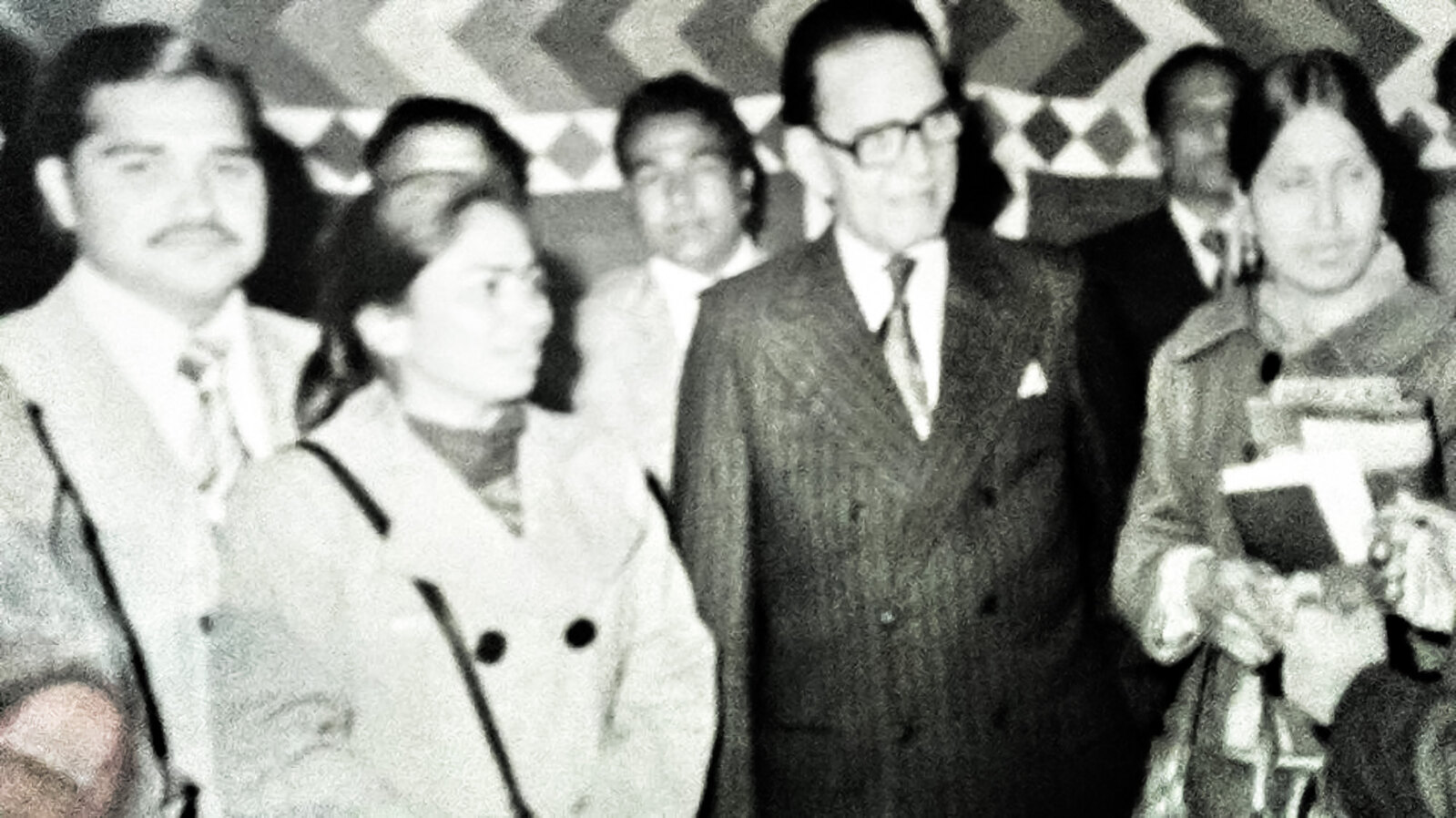
Fazal Ilahi Chaudhry
 Pakistan
Also known as: Fazal Elahi Chaudhry, Fazlur Rehman, Chaudhry Fazal Ilahi
Birthday
January 1, 1904
Birth Sign
Capricorn
Birthplace
Marala, Punjab, British India
Age
Died at 78
About
Fazal Ilahi Chaudhry was a distinguished Pakistani barrister, politician, and statesman who served as the fifth President of Pakistan from August 14, 1973, until his resignation on September 16, 1978. He holds the unique historical distinction of being the first president elected under Pakistan's democratic 1973 Constitution and the first legislatively-elected head of state in the country's history. Born in Marala, Punjab, on January 1, 1904, he pursued higher education at Aligarh Muslim University and the University of the Punjab before establishing a prominent legal practice in Lahore. His career trajectory evolved from local governance to the highest office in the land, marking him as a pivotal figure in Pakistan's constitutional evolution. During his presidency, the role was largely ceremonial, with real executive power shifting to Prime Minister Zulfikar Ali Bhutto and later General Muhammad Zia-ul-Haq following the 1977 military coup. Chaudhry is remembered for navigating complex political transitions with minimal friction, serving as a constitutional figurehead who upheld the letter of the law while facilitating the shift from parliamentary democracy to martial law rule. His tenure ended peacefully when he resigned, allowing General Zia to assume the presidency, a rare instance of a democratically elected leader stepping down without immediate conflict. Chaudhry died in Lahore on June 2, 1982, leaving behind a legacy defined by institutional milestones rather than charismatic populism.
Early Life & Background
Fazal Ilahi Chaudhry entered the world on January 1, 1904, in the village of Marala (also recorded as Malala), located near Kharian in the Gujrat District of Punjab, British India. He was born into an influential family within the Gujjar community, which provided a foundation for his future public service. His early education took place in local schools before he moved on to pursue higher studies at two of the most prestigious institutions in the subcontinent: Aligarh Muslim University and the University of the Punjab. These academic foundations prepared him for a life in law, and he successfully completed his LLB in Civil Law in 1924. Upon finishing his degree, he returned to the legal field, establishing a practice in Lahore where he formally joined the bar in 1929. Before he ever stepped onto the national stage, Chaudhry was deeply involved in local governance. Around 1930 or 1931, he joined the Gujarat District Board, marking his initial steps into political administration and setting the trajectory for a career that would eventually lead to the highest office in the land. This period of local service allowed him to hone his administrative skills and understand the grassroots dynamics of the region he would later represent on the national stage.
Career Growth
Chaudhry's political ascent began in earnest when he joined the All-India Muslim League in 1942, actively participating in the movement that would create Pakistan. Following independence in 1947, he quickly rose through the ranks, holding significant positions such as Parliamentary Secretary and serving in the central cabinet as Minister of Education and Health. His diplomatic reach expanded in 1952 when he represented Pakistan at the United Nations. Domestically, he was elected Speaker of the West Pakistan Assembly in 1956. In the 1960s, he served as Deputy Speaker of the National Assembly from 1965 until the legislature was suspended following the imposition of martial law in 1969. The 1970s brought his greatest achievements. Joining the Pakistan Peoples Party, he won a seat in the 1970 general election and was elected Speaker of the National Assembly in 1972. On August 14, 1973, he was elected President of Pakistan, defeating opposition candidate Khan Amirzadah Khan. He succeeded Zulfikar Ali Bhutto, who became Prime Minister. Under the 1973 Constitution, the presidential role was largely ceremonial, with Chaudhry acting as a constitutional figurehead while Bhutto held executive power. Following the military coup led by General Zia-ul-Haq in July 1977, Chaudhry remained President but possessed no real power. He continued to serve as a symbolic head of state until September 16, 1978, when he resigned, allowing General Zia to assume the presidency. His career spanned nearly five decades, evolving from local administration to the highest office in the land.
Career Timeline
Public Image & Style
Media portrays Chaudhry as a dignified, constitutional figurehead. His image is one of stability and procedural adherence rather than charisma or populism. He is remembered as a "statesman" who navigated complex political transitions with minimal friction. His tenure is characterized by a lack of controversy and a focus on the letter of the law, fitting the ceremonial nature of his role under the 1973 Constitution. He did not cultivate a public persona based on personal flair but rather on the solemnity of his office. Unlike entertainers who rely on public adoration, Chaudhry's reputation was built on his ability to uphold institutional integrity during turbulent times. His public interactions were strictly formal, devoid of the charismatic spectacle that creates cultural mythology. This reserved demeanor ensured that his authority derived solely from the office he held rather than any personal cult of personality.
Fame & Fandom
The iFANN Global Fame Engine evaluated Fazal Ilahi Chaudhry's standing in September 2026 and found no placement within the published rankings. He currently holds no spot in the Global Top 1,000 or any Top-100 scope list. This absence reflects a career built on legislative ceremony and state administration instead of the viral moments or chart-topping performances that drive modern fame metrics. His legacy rests on being the first legislatively-elected president under the 1973 constitution, a milestone that cemented his place in political science rather than pop culture mythology. Unlike entertainers who cultivate devoted followings with specific monikers, Chaudhry never generated a formal fanbase. No group of supporters adopted a collective name to champion his memory, nor did organized campaigns emerge to boost his visibility after his death. The public relationship he maintained was strictly one of statesman to citizen, devoid of the charismatic interaction that typically births fandom rituals or inside jokes. While his family lineage continues to hold political sway in the Gujrat region, this represents dynastic support rather than a dedicated fan movement for Chaudhry himself. Historical records show no instances of crowds fainting at his speeches or streets shutting down for his arrival. Even his resignation in 1978 and subsequent death in 1982 were treated as standard state events covered by major news outlets like UPI and the New York Times, lacking the legendary fervor reserved for cultural icons. His brief tenure remains a subject of academic study regarding the shift of power from presidency to prime ministership, but it has not translated into a living legend with active adherents. Wikipedia pages in various languages have accumulated views indicating steady academic interest, yet no commercial or celebrity-driven fame has attached to his name.
Interesting Facts and Legends
Fazal Elahi Chaudhry holds the distinction of being the first president elected under Pakistan's democratic 1973 Constitution. His name is often spelled "Fazal Elahi" in English sources, while Urdu sources use "فضل الہی چودھری." His presidency is frequently cited in political science textbooks as a prime example of a ceremonial presidency where the Prime Minister holds actual power. Unlike many political figures who rely on charisma, Chaudhry's legacy is defined by institutional milestones rather than legendary anecdotes. His resignation in 1978 is viewed as a rare instance of a democratically elected president stepping down peacefully to a military ruler, avoiding immediate bloodshed or civil conflict. There are no stories of crowds fainting at his speeches or streets shutting down for his arrival; his public interactions were strictly formal. His descendants continue to hold political sway in the Gujrat region, with Shehzad Ata Elahi serving as Attorney General and Sahibzada Farooq as a former National Assembly Speaker. He was born in Marala, also known as Malala, near Kharian. The English Wikipedia page has seen approximately 535 views in a recent 30-day period, reflecting ongoing historical curiosity rather than mass popularity.
Family & Personal Life
Fazal Ilahi Chaudhry came from an influential Gujjar family in the Gujrat District. While details about his wife's name and their specific meeting circumstances are not widely published in standard biographical sources, he was married and had children. His lineage continues to hold significant political sway in the Gujrat region. Notable descendants include Shehzad Ata Elahi, who served as the Attorney General of Pakistan, and Sahibzada Farooq, a former Speaker of the National Assembly. These family members remain active in Pakistani politics, ensuring the Chaudhry name remains relevant in the region where Fazal Ilahi was born. The family's continued influence demonstrates the enduring legacy of the Chaudhry clan in the political landscape of Punjab, maintaining connections to the area of his birth and upbringing.
Notable Connections
Relationships & Dating History
As a public figure in mid-20th century Pakistan, Fazal Ilahi Chaudhry maintained a private personal life. There are no publicly documented records of romantic relationships, dating history, or engagements prior to or during his marriage. Historical accounts focus exclusively on his professional and political contributions. He was married, though details regarding his wife's name and their specific meeting circumstances are not widely published in standard biographical sources available in the search results. He had children; his lineage continues to hold political sway in the Gujrat region, with descendants such as Shehzad Ata Elahi (who served as Attorney General) and Sahibzada Farooq (former NA Speaker) remaining active in Pakistani politics. As of the time of his death in 1982, he was widowed or survived by his spouse, but no current relationship status exists as he passed away over four decades ago. The concept of "dating history" does not apply to him in the modern celebrity sense, as his life was defined by state service rather than public romance. No other partners or significant romantic entanglements have been recorded in historical archives.
Death & Aftermath
Died
June 2, 1982 (aged 78)
Death Place
Lahore, Pakistan
Cause of Death
heart ailment
Fazal Elahi Chaudhry, the fifth President of Pakistan and a prominent barrister, politician, and minister, died on June 2, 1982, in Lahore, Pakistan . While one contemporary UPI report dated June 1, 1982, mentions his death on that Tuesday, the majority of authoritative sources, including *The New York Times* obituary published on June 2, 1982, confirm the date as June 2, 1982 . He was 78 years old at the time of his death, having been born on January 1, 1904. The official cause of death was reported as a heart ailment (cardiac issues), confirmed by his family statement . This determination was established through a family statement; The New York Times obituary published on June 2, 1982, explicitly stated that he 'died today of a heart ailment, his family said'.
No disputed accounts regarding the cause of death exist in the provided search results; the narrative remains consistent across sources as a natural death due to cardiac issues following his retirement from public office. His final days were spent in private after resigning from the presidency in September 1978 following the military takeover by General Muhammad Zia-ul-Haq. He did not hold public office for the four years preceding his death, meaning there was no recorded last public appearance during his final illness. The death was treated as a non-criminal event, and no official government inquiry was conducted beyond standard administrative protocols for the death of a former head of state. Public reaction to his death was marked by official recognition of his service as a statesman.
Contemporary reporting, such as the obituary in The New York Times, highlighted his tenure as the fifth President of Pakistan and his role as Speaker of the National Assembly before becoming President. Tributes from peers and institutions focused on his long political career, which included serving as President from August 14, 1973, until his resignation in 1978. Specific details regarding the exact date, location, and attendees of the funeral or burial ceremony were not included in the provided search results. However, given his stature as a former President and his residence in Lahore (where he died), it is standard protocol for such figures to receive state funeral rites. The search results do not specify whether the burial was public or private, nor do they list notable performances or specific attendees beyond general state officials implied by his rank.
No information is available on cremation versus burial, though Islamic tradition dictates burial for Pakistani Muslims of his standing. Fazal Elahi Chaudhry has been commemorated in historical records and educational materials as a key figure in Pakistan's constitutional history, specifically noted for his tenure during the 1973 Constitution era and his peaceful transition of power to General Zia-ul-Haq. Regarding his estate, no details were made public regarding its handling or distribution. His legacy remains intact through the continued political activity of his descendants and the historical documentation of his role in Pakistan's early democratic experiments.
Net Worth (Estate Value)
$0
iFANN Editorial Team estimate
As a politician who served in the mid-20th century, Fazal Ilahi Chaudhry's net worth is not tracked by modern celebrity finance outlets. His wealth would have been derived from his salary as a lawyer and subsequent government service, but specific figures are not available in public records. The absence of financial data reflects the era and nature of his profession compared to modern celebrities. Research by the iFANN Editorial Team indicates no quantifiable estate value available for public estimation in current markets. There are no credible estimates of his net worth in dollars for 2026, nor are there records of business ventures, endorsement deals, or real estate holdings managed by a modern estate entity. His financial legacy is preserved in historical records rather than commercial valuations, as his career was dedicated to public service rather than private accumulation.
Awards & Accolades
View 6 records, honours and achievementsKnown For
President of Pakistan
1973-1978 · 5th President
Speaker of the National Assembly
1972 · Speaker
Minister of Education and Health
Post-Independence · Cabinet Minister
Keywords
Sources
Quick Facts
- Profession
- politician, minister, lawyer
- Born
- January 1, 1904
- Birthplace
- Marala, Punjab
- Died
- June 2, 1982
- Death Place
- Lahore
- Gender
- Male
- Birth Sign
- Capricorn
Personal Details
- Full Name
- Fazal Elahi Chaudhry
- Children
- Several descendants remain active in politics, including Shehzad Ata Elahi and Sahibzada Farooq.
- Education
- Aligarh Muslim University; University of the Punjab (LLB, 1924)
Frequently Asked Questions
Who was Fazal Ilahi Chaudhry?
When did Fazal Ilahi Chaudhry die?
What was the cause of Fazal Ilahi Chaudhry's death?
Why did Fazal Ilahi Chaudhry resign as President?
Is Fazal Ilahi Chaudhry still alive?
Similar People
Join the community
fans discussing