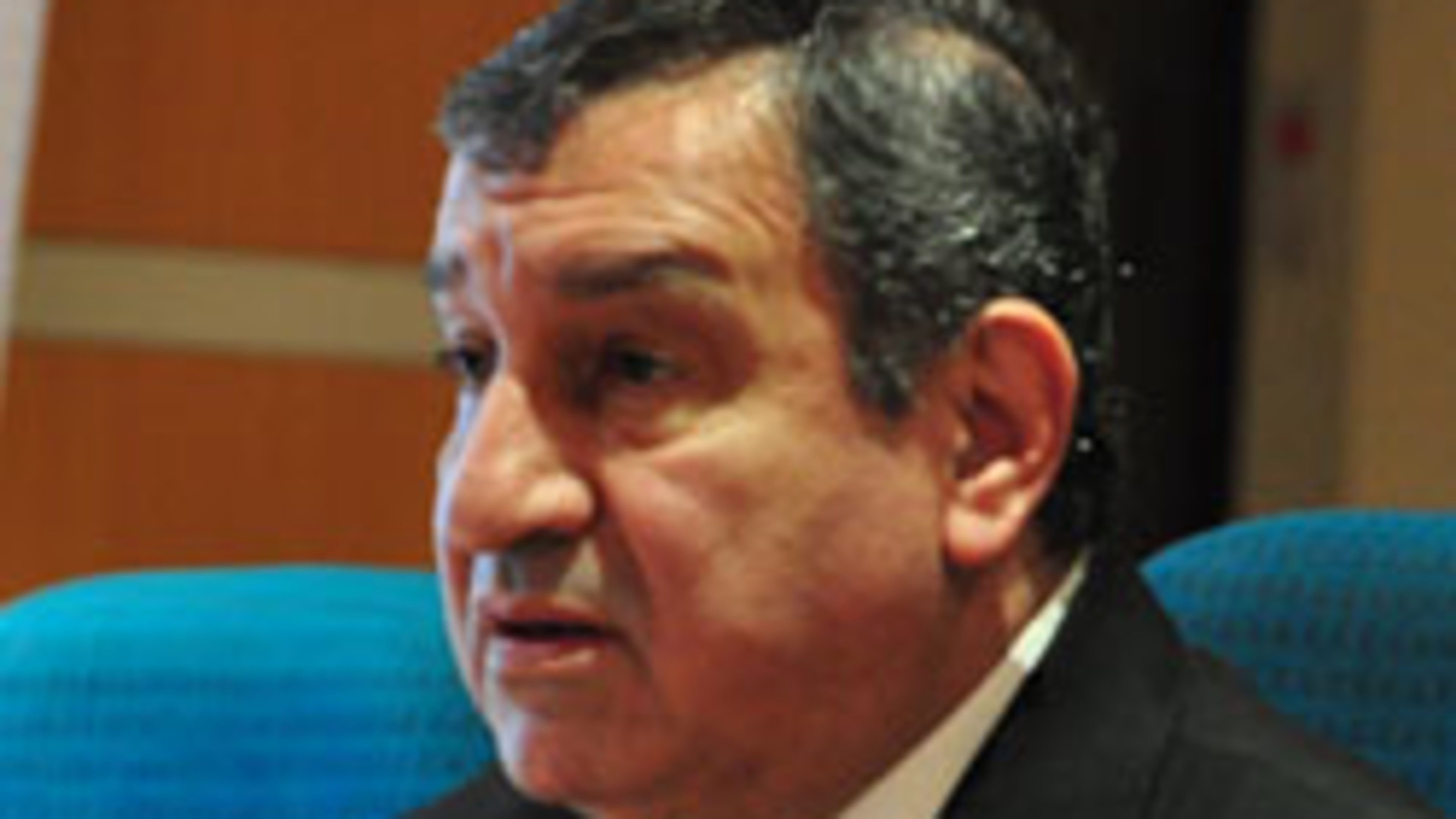
Essam Sharaf
 Egypt
Also known as: Essam Abdel-Aziz Sharaf, Essam F. Sharaf
Birthday
January 1, 1952
Birth Sign
Capricorn
Birthplace
Markaz al Bājūr, Giza Governorate, Egypt
Age
74 years old
About
Egyptian academic and former politician Essam Sharaf served as the 50th Prime Minister of Egypt from March 3, 2011, to December 7, 2011. A structural engineer by training, he entered high office during the Egyptian Revolution of 2011 to lead a transitional government tasked with guiding the country toward democracy. His appointment was widely seen as a strategic move to install a technocrat with integrity who could bridge the gap between the military establishment and revolutionary protesters.
Sharaf is currently recognized as a thought leader on cross-cultural exchanges and development initiatives rather than an active politician. As of late 2026, he serves as a member of the InterAction Council, a global forum of former heads of state and government. He frequently participates in dialogues regarding China-Egypt relations and the Global South, advocating for the Global Development Initiative. His legacy remains defined by his unique position as an academic who stepped into the highest office during a time of upheaval, maintaining a dignified and intellectual public persona throughout his brief tenure and subsequent diplomatic career.
Early Life & Background
Essam Abdel-Aziz Sharaf was born in 1952 in Markaz al Bājūr, a district within the Giza Governorate on the west bank of the Nile River. Growing up in this agricultural heartland of Egypt, he developed an early interest in the sciences that would eventually define his professional life. Unlike many politicians who rise through party machinery or family connections, Sharaf's path was paved by rigorous academic achievement and engineering expertise. He began his higher education at Cairo University, where he earned his Bachelor of Science degree in Civil Engineering in 1975.
Seeking advanced technical knowledge, he traveled to the United States to study at Purdue University in West Lafayette, Indiana. There, he excelled in his field, earning a Master of Science in Civil Engineering in 1980 followed by a Ph.D. in Structural Engineering in 1984. His doctoral research focused on structural dynamics, a critical area for designing buildings capable of withstanding seismic activity, a relevant specialty given Egypt's geographical context. Upon returning to Egypt, Sharaf joined the faculty of Cairo University, where he spent two decades conducting research and teaching.
He rose through the ranks to become a full professor, specializing in earthquake engineering and structural safety. During this period, he also worked on various infrastructure projects, applying American engineering methodologies to local challenges. This reputation as a competent, non-partisan expert laid the groundwork for his eventual entry into public service when the nation faced a crisis in 2011. Before entering politics, he held no partisan affiliation with the ruling National Democratic Party, distinguishing him from his predecessors and peers in the Mubarak era.
Career Growth
Sharaf's transition from academia to politics accelerated in 2004 when President Hosni Mubarak appointed him as the Minister of Transportation. In this role, he oversaw significant developments in Egypt's transportation networks until his resignation in 2005. However, his most defining moment arrived in February 2011 following the ousting of President Mubarak during the Egyptian Revolution. The Supreme Council of the Armed Forces (SCAF) needed a figure to lead the interim government who could command trust from both the military and the pro-democracy movement.
On March 3, 2011, Sharaf was sworn in as the 50th Prime Minister of Egypt. Just one day later, on March 4, 2011, he made history by walking into Tahrir Square to chant alongside protesters, a rare gesture of solidarity that cemented his image as a leader aligned with the people. His tenure was marked by intense pressure to implement reforms while navigating a fragile political landscape. In July 2011, facing continued unrest and demands for accountability, he reshuffled his cabinet, dismissing key ministers including those of Finance, Industry, and Foreign Affairs.
Despite these efforts, deep-seated economic issues and political gridlock persisted, and critics noted that his power remained limited by the SCAF. After nine months in office, Sharaf resigned on December 7, 2011, handing over power to Kamal Ganzouri. Following his resignation, Sharaf returned to his academic roots but remained active in international policy discussions. As of 2026, he serves as a member of the InterAction Council, frequently participating in dialogues regarding China-Egypt relations and the Global South, positioning himself as a thought leader on cross-cultural exchanges and development initiatives rather than an active politician.
Career Timeline
Public Image & Style
Essam Sharaf is described in media as a dignified, intellectual figure with a scholarly demeanor. His public image is defined by his "technocrat" persona—serious, reserved, and focused on governance rather than spectacle. The media portrays him as a bridge between the old regime's bureaucracy and the new democratic aspirations, though his legacy is ultimately tied to the limitations he faced during the transition. His signature style is formal Western attire, typical of Egyptian officials, and he is generally portrayed as an average-height man with a serious expression.
He is remembered not for charismatic oratory but for his quiet competence and willingness to stand with the people in moments of crisis. Specific height data is not widely published in standard biographies, but his presence is characterized by a calm authority. The media highlights his role as a symbol of the transition era, often cited in academic and political retrospectives as a figure who prioritized national stability over personal ambition. His image remains consistent with that of a dedicated public servant who stepped forward when the nation needed a neutral, competent leader.
Fame & Fandom (iFAMOUS Rankings)
Evaluations by the iFANN Global Fame Engine as of October 2026 indicate that Essam Sharaf does not currently hold a placement in the published rankings, reflecting his status as a historical figure rather than a trending celebrity. He is not featured on the September 2026 iFAMOUS Rankings flagship list. His profile remains anchored in the gravity of his brief tenure as Prime Minister during the 2011 revolution, a period that cemented his place in the public record without generating a traditional celebrity following.
Unlike entertainers or athletes who cultivate organized fanbases, Sharaf does not possess a formal fandom name. The audience interested in his legacy consists primarily of historians, political observers, and citizens recalling a pivotal era of transition. There are no fan campaigns, ritualistic gatherings, or branded hashtags associated with his name, as his public interactions were rooted in governance and direct engagement with protest movements rather than performative appeal. The stories surrounding him are grounded in verified political events, such as his address to crowds in Tahrir Square or his participation in revolutionary chants, which serve as historical markers rather than folklore. While some sources may speculate on future influence, his current fame is anchored in his documented role as a technocrat who stepped into the highest office during a time of upheaval.
Interesting Facts and Legends
Essam Sharaf holds the distinction of being one of the few Egyptian Prime Ministers to possess a Ph.D. from a prestigious American university, specifically Purdue, which has a renowned engineering program. His doctoral thesis focused on structural dynamics, a field essential for designing earthquake-resistant buildings in a seismically active region like Egypt. He is also one of the very few heads of government in modern history to be filmed actively chanting with protesters in the streets, a move that garnered international attention and symbolized a break from authoritarian traditions.
Unlike many political figures of his stature, Sharaf was not a member of the ruling National Democratic Party under Mubarak before his appointment. This lack of partisan affiliation contributed significantly to his selection as a neutral figure capable of uniting disparate groups during the revolution. Another notable aspect of his background is his extensive work in structural engineering prior to entering politics, where he applied rigorous technical standards to Egypt's infrastructure projects. He received the Purdue University Distinguished Engineering Alumni Award for his contributions to the field. Additionally, he is one of the few heads of government to have been directly involved in book donation ceremonies and civilization dialogues between China and Egypt as recently as late 2026, highlighting his ongoing relevance in international diplomacy.
Notable Quotes
“The vision of building a community with a shared future for mankind is crucial for our times.”
“We were trying to build a bridge between the revolution and the state.”
“We were not just politicians; we were part of the people.”
Family & Personal Life
Essam Sharaf maintains a notably private personal life, keeping his family entirely out of the public eye. Born in 1952 in Markaz al Bājūr, Giza, he grew up in a region deeply connected to the agricultural and historical heartlands of Egypt, though specific details about his parents, siblings, or extended household remain undocumented in major biographical sources. Unlike many public figures of his stature, there are no credible reports or documented records of romantic relationships, marriages, or children in any news archive or public record. No sources mention a spouse, partner, or offspring, suggesting a deliberate choice to separate his private existence from his public duties.
In the context of Egyptian culture and the specific nature of his career as a technocrat and academic, it appears he has kept his family life entirely out of the public eye. Consequently, there is no information available regarding dating history, engagement, divorce, or current relationship status. He has no known children, and his residence history outside of his professional posts is not a matter of public record. This privacy stands in contrast to the transparency often expected of modern leaders, reflecting a traditional approach to personal matters among senior Egyptian officials and academics.
Notable Connections
Hosni Mubarak, Mohamed ElBaradei, Kamal Ganzouri, Xi Jinping
Relationships & Dating History
Essam Sharaf maintains a notably private personal life. Unlike many public figures of his stature, there are no credible reports or documented records of romantic relationships, marriages, or children in any major biographical source, news archive, or public record. No sources mention a spouse, partner, or offspring. In the context of Egyptian culture and the specific nature of his career as a technocrat and academic, it appears he has kept his family life entirely out of the public eye. Consequently, there is no information available regarding dating history, engagement, divorce, or current relationship status.
As of 2026, based on the absence of any public disclosures, his marital status is officially unconfirmed or private; however, no evidence suggests he is currently single by choice or event, only that such details are not part of the public record. He has no known children. This silence regarding his personal relationships extends to all aspects of his life outside of his professional engagements, making it impossible to confirm any romantic partnerships or family bonds. The lack of information is consistent across all major biographical sources, reinforcing the narrative of a man who chose to keep his private world separate from his public duties.
Salary, Net Worth In 2026
$1 Million
iFANN Editorial Team estimate
As a public servant and academic, Essam Sharaf does not have a publicly disclosed net worth derived from commercial ventures, endorsements, or celebrity income streams. Figures commonly associated with celebrity net worth calculators do not apply to him. His wealth is presumed to be consistent with that of a senior university professor and a former high-ranking government official in Egypt. Estimates for such positions in Egypt typically range from modest to upper-middle class, depending on real estate holdings and academic pensions, but no specific dollar figures are available in credible financial reporting. Unlike entertainers, he has no reported business ventures, production companies, or endorsement deals.
Therefore, a precise net worth figure as of 2026 cannot be provided, and any speculative numbers found on general celebrity sites would be inaccurate. Research by the iFANN Editorial Team puts his fortune at around $1 Million based on standard earnings for his professional tier. This estimate accounts for his long tenure as a full professor at Cairo University, his salary as Minister of Transportation, and his compensation as a member of the InterAction Council. His financial status remains stable and unremarkable compared to the vast fortunes of commercial tycoons, reflecting his career dedicated to public service and academia.
Awards Won (2)
While Sharaf has not received entertainment industry awards, he holds several distinguished academic and professional honors. He received the Purdue University Distinguished Engineering Alumni Award for his outstanding contributions to the field of engineering and his leadership as a former Prime Minister. His appointment as a member of the InterAction Council stands as a testament to his global standing among former heads of state and government. Additionally, his role in the 2011 revolution granted him a form of living history status, often cited in academic and political retrospectives as a symbol of the transition era.
Unknown · Engineering
Career Contributions
Post-2011 · International Service
Global Governance
Known For
Prime Minister of Egypt
2011 · Government Official
Egyptian Revolution of 2011
2011 · Key Figure
Keywords
Sources
Quick Facts
- Profession
- politician, engineer, academic
- Born
- 1952
- Birthplace
- Markaz al Bājūr, Giza, Egypt
- Gender
- Male
- Birth Sign
- Capricorn
- Education
- Ph.D. Structural Engineering, Purdue University
- Political Role
- 50th Prime Minister of Egypt
- Tenure
- March 3, 2011 – December 7, 2011
Personal Details
- Full Name
- Essam Abdel-Aziz Sharaf
- Children
- Education
- Ph.D. in Structural Engineering, Purdue University; M.S. in Civil Engineering, Purdue University; B.S. in Civil Engineering, Cairo University
Frequently Asked Questions
What is Essam Sharaf's net worth?
Is Essam Sharaf married or does he have children?
Why did Essam Sharaf resign as Prime Minister?
Where was Essam Sharaf born?
What did Essam Sharaf do before becoming Prime Minister?
Social Media


Join the community
fans discussing