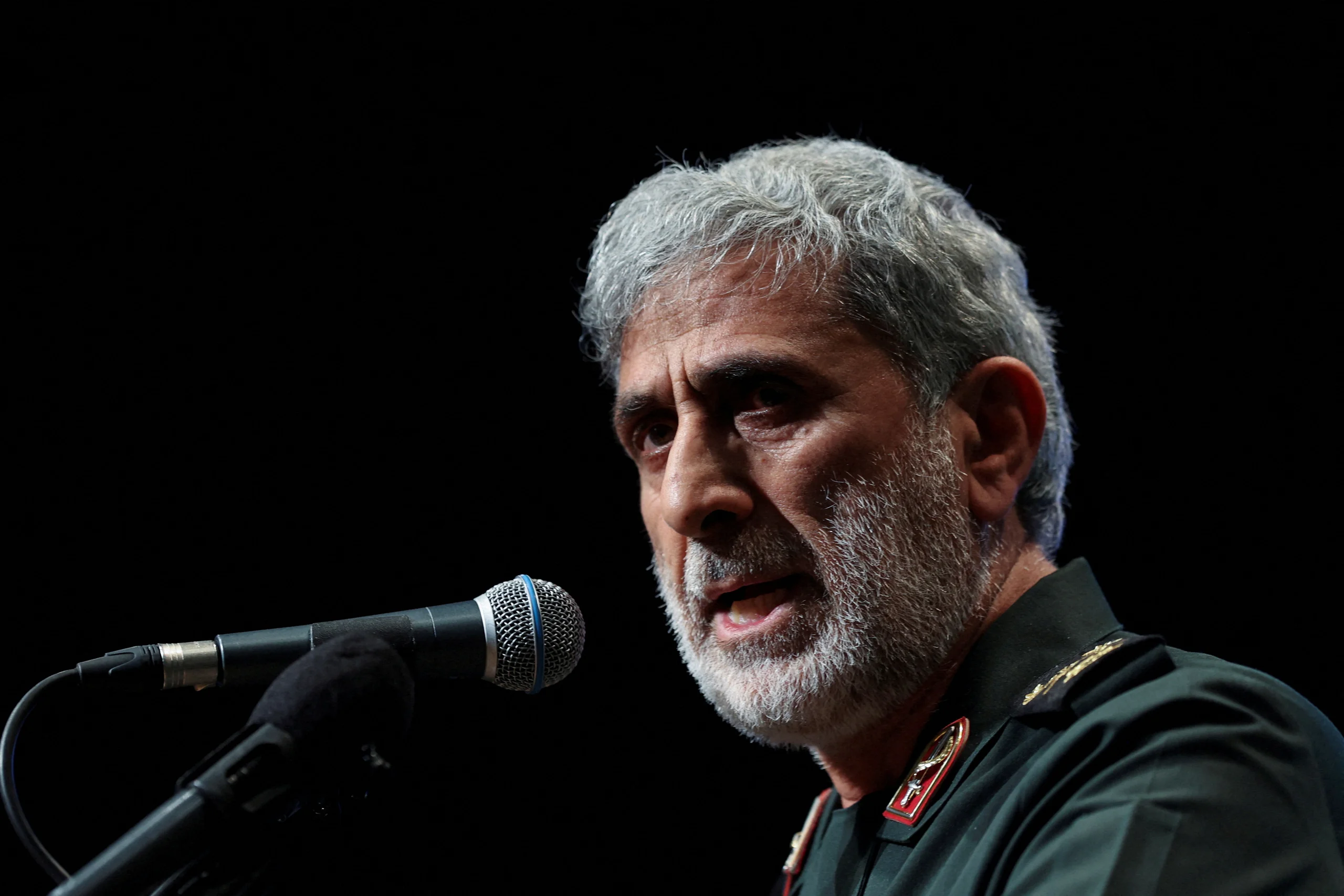
Esmail Qaani
 Iran
IranAlso known as: Esmail Ghani, Ismael Qaani, Esmail Qa'ani
Birthday
August 8, 1957
Birth Sign
Leo
Birthplace
Mashhad, Iran
Age
69 years old
About
Esmail Qaani is an Iranian brigadier general in the Islamic Revolutionary Guard Corps (IRGC) and the commander of the Quds Force, the elite unit responsible for Iran's extraterritorial military operations. He has held this position since January 2020, when he succeeded Qasem Soleimani after the latter's assassination in a U.S. drone strike in Baghdad. Appointed by Supreme Leader Ayatollah Ali Khamenei, Qaani now oversees Iran's network of allied militias and proxy forces across the Middle East, a role that places him at the center of the region's most volatile conflicts.
Unlike his high-profile predecessor, Qaani maintains an exceptionally low public profile. He rarely gives speeches or appears in public, preferring written statements issued through official channels. His leadership has been tested by the war that broke out in February 2026 between Iran and its allies and the U.S. and Israel, during which he disappeared from view for weeks, sparking rumors of his death or detention. He resurfaced in March 2026 with a defiant message praising the "axis of resistance," and has since made occasional appearances, including a trip to Baghdad and a brief showing at the funeral of Supreme Leader Khamenei in July 2026. For many observers, Qaani remains an enigmatic figure, a loyal executor of the Supreme Leader's directives rather than an independent strategist.
Early Life & Background
Esmail Qaani was born on August 8, 1957, in Mashhad, a major religious city in northeastern Iran. Details of his childhood and upbringing are scarce, as is typical for senior IRGC commanders. He came of age during a turbulent period in Iranian history, and like many of his generation, he joined the revolutionary security apparatus in the years following the 1979 Islamic Revolution.
His early military career was forged in the crucible of the Iran-Iraq War (1980–1988), where he served as an IRGC officer and gained combat experience that would define his professional life. After the war, Qaani rose through the ranks of the IRGC, eventually becoming the deputy commander of the Quds Force under Qasem Soleimani. He held that deputy position for over two decades, a period during which he helped oversee Iran's covert operations and support for allied groups across the Middle East, including in Iraq, Syria, Lebanon, and Yemen. This long apprenticeship positioned him as the natural successor to Soleimani, and he was widely regarded as a loyalist to the Supreme Leader.
Career Growth
Qaani's career took a decisive turn on January 3, 2020, when a U.S. drone strike killed Qasem Soleimani in Baghdad. Within days, Supreme Leader Ali Khamenei appointed Qaani as the new commander of the Quds Force, a move that was seen as a continuation of Iran's regional strategy rather than a shift in direction.
During his first years in command, Qaani worked to maintain and expand Iran's network of allied forces, from Hezbollah in Lebanon to the Houthis in Yemen. He faced the challenge of stepping into the shoes of a charismatic and widely admired predecessor, and he did so with a far more reserved style. His leadership was tested in February 2026, when a major war broke out between Iran and its allies and the U.S. and Israel. For the first three weeks of the conflict, Qaani vanished from public view, fueling intense speculation that he had been killed, captured, or even executed by his own side.
He broke his silence on day 21 of the war with a written statement praising the "axis of resistance" and asserting that it had emerged stronger from the fighting. In April 2026, he traveled to Baghdad to meet with Iraqi political leaders and representatives of armed factions, and he issued a warning of "severe punishment" following the death of Hezbollah leader Naim Qassem. In June 2026, he threatened Israel with "another 2000," a reference to Israel's withdrawal from southern Lebanon in 2000, and called for an end to the 11-year blockade on Yemen. He also made a rare boast about American casualties. In July 2026, he made a brief public appearance during the funeral procession for Supreme Leader Khamenei, a moment that drew intense scrutiny given the leadership transition underway in Iran.
Career Timeline
Public Image & Style
Esmail Qaani is not a celebrity, and he has no fandom in the conventional sense. His public image is that of a shadowy, secretive military commander, a stark contrast to the charismatic and media-savvy Qasem Soleimani. Media coverage often portrays him as an enigma, a figure who has been "declared dead multiple times, yet continues to reappear."
His rare public statements are formal, ideological, and carefully worded, typically delivered as written messages rather than speeches. He is seen as a loyal executor of the Supreme Leader's directives rather than an independent strategist. There is no documented fan culture, signature style, or aesthetic associated with him. In the West, he is often depicted as a dangerous and elusive adversary, while in Iran and among allied groups, he is respected as a steadfast commander. His ability to survive numerous assassination attempts and false reports of his death has become a defining part of his mystique.
Fame & Fandom
Esmail Qaani is the 95th most famous person in Iran and the 36th most famous person from Iran, according to the iFANN Global Fame Rankings, which tracks global attention across media coverage, search, and consumption signals worldwide. He holds steady positions in both metrics as of August 2026. Unlike pop stars who cultivate adoring crowds, Qaani commands a following defined by geopolitical gravity rather than cultural worship. There is no formal fanbase with rituals, merchandise, or organized campaigns for this shadowy commander. His audience consists primarily of observers tracking the Axis of Resistance and analysts monitoring regional security shifts. The narrative surrounding him is one of mythic endurance rather than celebrity charm. While he lacks the charismatic appeal of his predecessor, Qasem Soleimani, Qaani has become an enigma that fuels endless speculation. Headlines frequently question if he is Mossad's elusive target who keeps escaping, a story that has evolved into modern military lore. This reputation stems from repeated false reports of his death or execution since taking command in 2020. Claims that he was killed by Israeli or U.S. strikes, or even by his own guards, have surfaced on social media and in Arab outlets only to be proven false when he resurfaced. By mid-2026, this pattern had solidified; headlines questioned if he was Mossad's elusive target who kept escaping. His reappearance in June 2026 after a period of silence further fueled these theories, as did his critical diplomatic missions in Iraq later that year. The iFANN data reflects a figure whose fame is inextricably linked to his survival and strategic silence.
Interesting Facts and Legends
Esmail Qaani has been falsely reported dead or executed multiple times since taking command in 2020. Claims that he was killed by Israeli or U.S. strikes, or even by his own guards, have repeatedly surfaced on social media and in some Arab outlets, only to be proven false when he resurfaced. This pattern has earned him the nickname "The Man With Nine Lives" among commentators. He is known for his extremely low profile. Unlike Soleimani, who was often photographed in the field, Qaani rarely appears in public and almost never gives speeches. His communications are typically formal written statements, a style that keeps him out of the spotlight. His name is transliterated in several ways, including Esmail Ghani, Ismael Qaani, and Esmail Qa'ani, which can make tracking news about him confusing. Qaani is subject to U.S. and international sanctions, and the U.S. has placed bounties on senior IRGC leaders, though no specific figure for Qaani has been publicly confirmed. The story of his survival has evolved into a central piece of modern military lore. Following the 2020 drone strike that killed his predecessor, reports circulated that Qaani was next on the list. Instead, he survived every subsequent threat, leading analysts to question whether his longevity stems from exceptional security protocols, sheer luck, or deep internal political protection. By mid-2026, this narrative had solidified; headlines questioned if he was Mossad's elusive target who kept escaping. His reappearance in June 2026 after a period of silence further fueled these theories, as did his critical diplomatic mission to Baghdad in August 2026 where he held secret talks to avert a clash before a September deadline.
Notable Quotes
“The axis of resistance emerged stronger during the war.”
“If Israel remains in southern Lebanon, it will face another 2000.”
“There will be a severe punishment for the death of Naim Qassem.”
Family & Personal Life
Public information about Esmail Qaani's family is virtually nonexistent. As a senior Iranian military and intelligence figure, his personal life is considered a state secret. No credible source has ever reported his marital status, the names of his parents, or whether he has siblings. He is believed to be married with children, consistent with the cultural norms for senior IRGC officers, but no names or details have ever been confirmed. His household and family life remain entirely private, and there are no public records of pets, family stories, or personal values he has shared.
Notable Connections
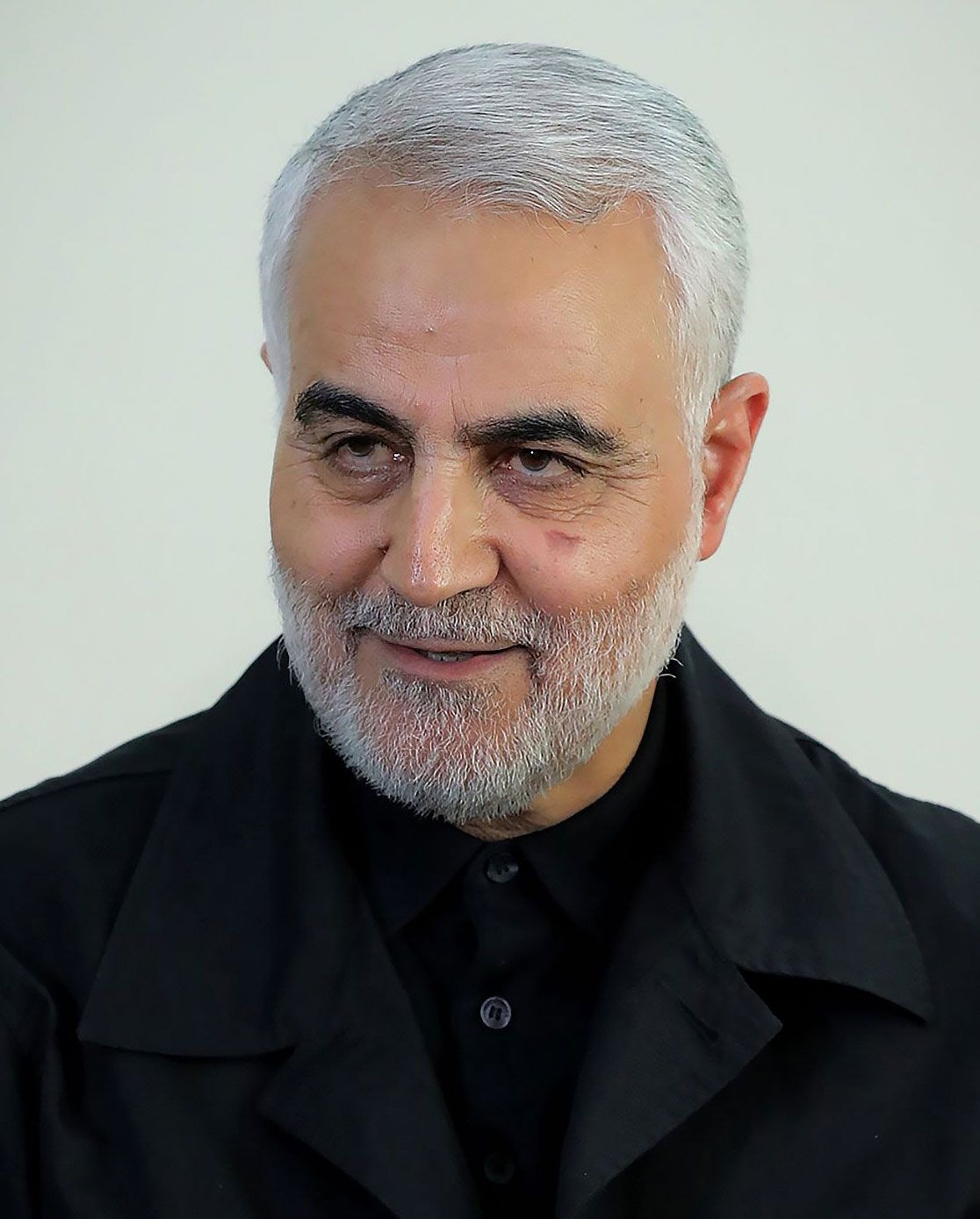
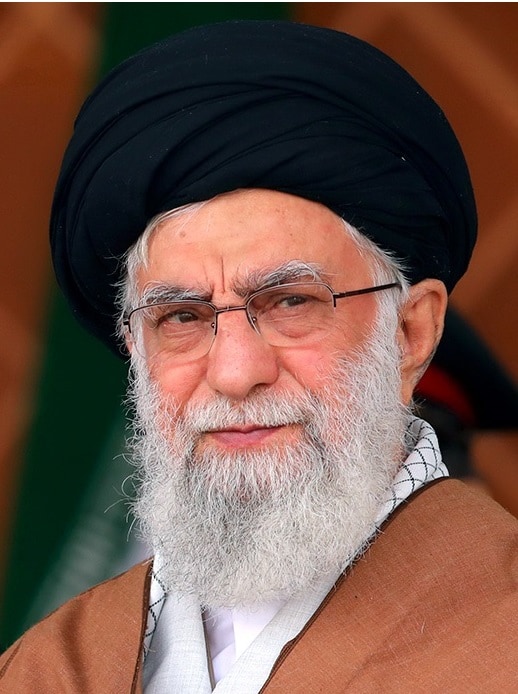
Esmail Qaani is most closely associated with Qasem Soleimani, his predecessor as commander of the Quds Force, whom he served as deputy for over two decades before succeeding him in 2020. He is also closely tied to Supreme Leader Ayatollah Ali Khamenei, who appointed him and whose directives he executes. Following the death of Hezbollah leader Naim Qassem in 2026, Qaani's threats of retaliation linked him to the broader axis of resistance, including groups in Iraq, Syria, Lebanon, and Yemen.
Relationships & Dating History
There is no public information about Esmail Qaani's romantic relationships. As a senior Iranian military and intelligence figure, his personal life is a state secret, and no credible source has ever reported on his marital status, spouse, or dating history. He is believed to be married with children, consistent with the norms for senior IRGC officers, but no names or details have been confirmed. As of 2026, his relationship status remains unknown to the public.
Salary, Net Worth In 2026
There is no credible public estimate of Esmail Qaani's net worth. As a state-employed military officer in Iran, his personal finances are not reported, and the secretive nature of the IRGC makes any figure purely speculative. His income would come from his military salary and benefits, which are not publicly disclosed. Western sanctions and the lack of financial disclosure mean that any number circulating online is unsubstantiated. Consequently, no reliable net worth figure can be provided for 2026.
Awards & Accolades
Known For
Commander of the IRGC Quds Force
2020 · Commander
Deputy Commander of the IRGC Quds Force
1990s–2019 · Deputy Commander
Keywords
Sources
Quick Facts
- Profession
- army officer
- Born
- August 8, 1957
- Birthplace
- Mashhad, Iran
- Gender
- Male
- Birth Sign
- Leo
- Age
- 68
- Nationality
- Iranian
- Military Branch
- Islamic Revolutionary Guard Corps (IRGC)
- Rank
- Brigadier General
- Current Role
- Commander of the Quds Force
Frequently Asked Questions
Is Esmail Qaani dead or alive?
Who is Esmail Qaani?
How old is Esmail Qaani?
What happened to Esmail Qaani?
Is Esmail Qaani married? Does he have kids?
Social Media
Similar People
Join the community
fans discussing