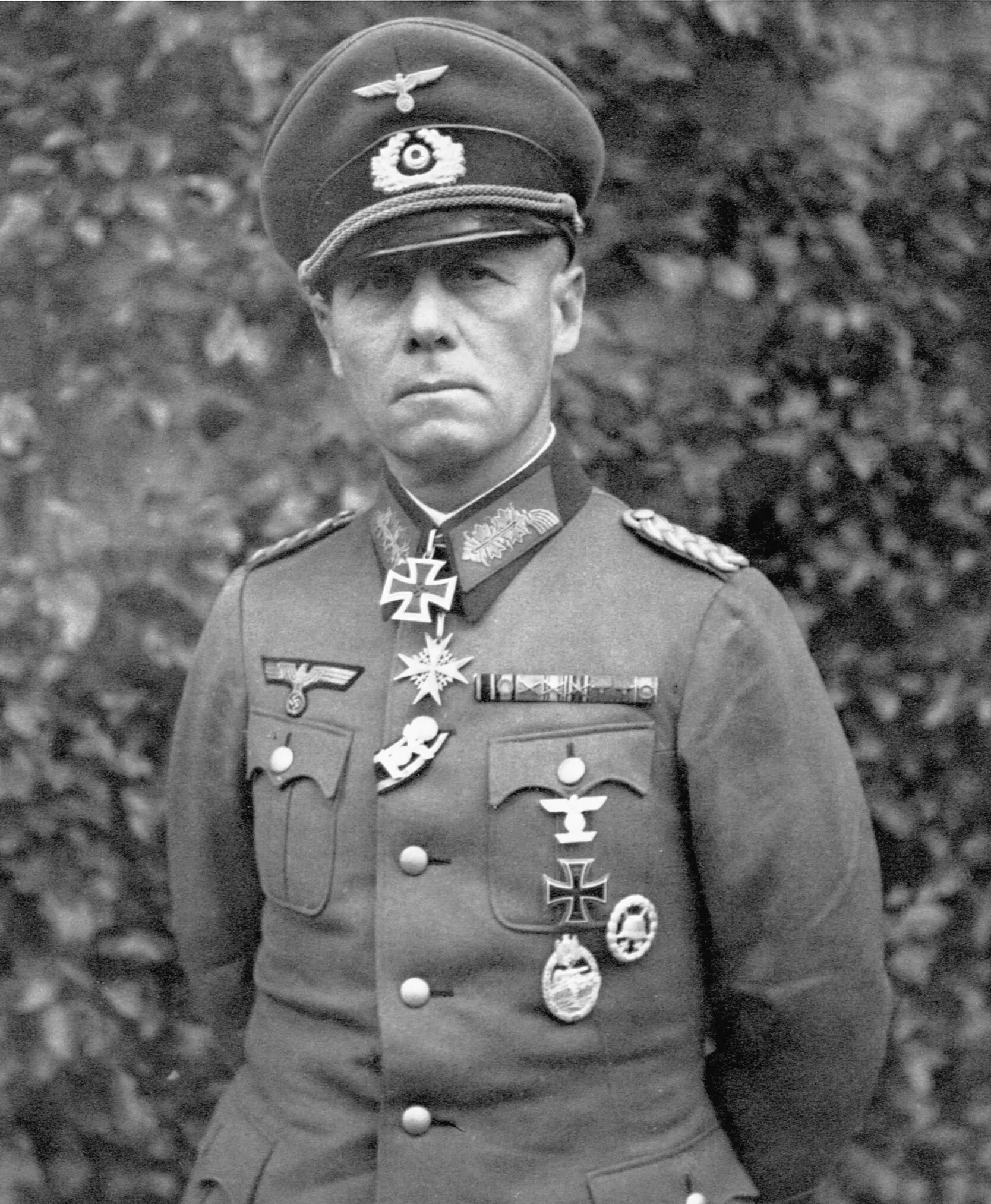
Erwin Rommel
 Germany
military officer•resistance fighter•general field marshal
Also known as: Desert Fox, Wüstenfuchs
Birthday
November 15, 1891
Birth Sign
Scorpio
Birthplace
Heidenheim an der Brenz, Kingdom of Württemberg, German Empire
Age
Died at 52
Height
5 ft 10 in (178 cm)
About
Erwin Rommel was a German field marshal widely considered one of the most skilled commanders of World War II. He is best known for his leadership of the Afrika Korps in North Africa, where his audacious tactics earned him the nickname the Desert Fox. A decorated veteran of World War I, he received the Pour le Mérite for his actions at Caporetto. His 1937 book Infantry Attacks became a standard military text, studied at institutions like West Point. Rommel rose to field marshal in 1942, the youngest in the German Army, and later commanded defenses in Normandy against the D-Day invasion. His postwar image as an apolitical, chivalrous general, the Rommel myth, has been challenged by historians who note his complicity with the Nazi regime. Rommel was forced to commit suicide in 1944 after being implicated in the July 20 plot to assassinate Hitler, but he remains a figure of enduring historical fascination.
Early Life & Background
Rommel was born in Heidenheim an der Brenz, the third of five children. His father was a schoolteacher and mathematician, his mother the daughter of a local government official. As a child, Rommel was energetic and technically minded but an indifferent student. He built his own glider and dismantled machinery, including an entire motorcycle, showing an early aptitude for engineering. He considered working at a Zeppelin factory but lacked the grades for university.
Urged by his father toward a military career, Rommel joined the 124th Württemberg Infantry Regiment as an officer cadet in July 1910. He rose quickly, promoted to corporal after three months and sergeant after six. In 1911 he entered the War Academy in Danzig, where he met his future wife, Lucia Mollin. He was commissioned as a lieutenant in January 1912. During World War I, Rommel served on the Western Front and later in Romania and Italy. His most notable feat came at the Battle of Caporetto in 1917, where he captured 9,000 Italian soldiers with only 150 men using infiltration tactics. For this he received the Pour le Mérite, Germany's highest military honor. He ended the war as a captain.
Career Growth
Rommel remained in the postwar Reichswehr, teaching at the Dresden Infantry School and writing military manuals. In 1937 he published Infantry Attacks, a bestseller that became a classic on infantry tactics. That same year he was given command of Hitler's personal security battalion, winning the Führer's respect.
At the outbreak of World War II, Rommel commanded Hitler's headquarters security during the Polish campaign. In 1940 he took command of the 7th Panzer Division for the invasion of France, where his rapid advance earned the unit the nickname Ghost Division. In February 1941 he was appointed commander of the Afrika Korps, dispatched to aid the Italian army in Libya. In North Africa, Rommel's bold surprise attacks and mobile warfare against the British made him legendary. After capturing Tobruk in June 1942, Hitler promoted him to field marshal, the youngest in the German Army. The tide turned at the Second Battle of El Alamein in late 1942, and Rommel's forces were pushed back across North Africa. He later commanded Army Group B in Italy and, in 1944, was tasked with strengthening defenses in Normandy. On D-Day, June 6, 1944, Rommel was at home celebrating his wife's birthday; he rushed back but could not prevent the Allied beachhead.
Career Timeline
Public Image & Style
Rommel's public image is deeply mythologized. Known as the Desert Fox, he was portrayed in Western media as a chivalrous, apolitical military genius, a narrative historians call the Rommel myth. This image was cultivated by Allied propaganda, which respected him as a worthy adversary, and by postwar West German efforts to rehabilitate the military. His signature style was leading from the front in an open staff car, wearing a distinctive Afrika Korps cap and goggles. He has been depicted with respect in films like The Desert Fox (1951) and Patton (1970). Military history enthusiasts and wargaming communities hold him in high regard, but the debate between his heroic legend and his actual role in Nazi Germany continues among historians.
Fame & Fandom
Erwin Rommel stands as the 79th most famous person in Germany and the 39th most famous person from Germany, placements that reflect his enduring status in historical memory. These rankings, part of the iFANN Global Fame Rankings, hold steady from the previous cycle, confirming his position among the nation's most recognized figures. His legacy commands attention across media coverage, search trends, and cultural consumption worldwide, ensuring he remains a central figure in discussions of World War II leadership.
Despite his global recognition, Rommel does not possess a modern fandom with an official name or organized community structure. There are no fan clubs, birthday billboards, or charity drives dedicated to him today. As a military commander who died in 1944, his audience consists primarily of historians, military enthusiasts, and students studying his tactics rather than a celebrity culture engaging in rituals or inside jokes. While he was once called "The People's Marshal" by his countrymen during the war, this was a title bestowed by the press for his battlefield successes, not a self-adopted moniker of a fanbase. The absence of a formal group reflects the nature of his life; he is studied as a complex historical subject rather than celebrated as a living icon.
Interesting Facts and Legends
Rommel built his own glider as a teenager and once dismantled and rebuilt an entire motorcycle. He initially wanted to work at a Zeppelin factory but lacked the grades for university. His book Infantry Attacks was used as a textbook at West Point. Rommel never joined the Nazi Party. He was the only German field marshal to command forces in both the Western Desert and Normandy. His son Manfred Rommel became mayor of Stuttgart for 22 years and attended D-Day commemorations alongside former Allied commanders. On D-Day, Rommel was at home for his wife's birthday, not at the front.
The legend of "The Desert Fox" (*Der Wüstenfuchs*) remains the most pervasive story attached to his name, originating from his audacious surprise attacks against British forces in North Africa. A widely retold account of his death describes how, following suspicion regarding the July 20 plot to assassinate Hitler, he was given a choice between a public trial for treason or suicide. Historical records confirm he chose the latter on October 14, 1944, taking cyanide, while a mythos developed around Hitler providing a state funeral to honor him as a hero despite the charges. Another iconic narrative involves his leadership style at the Battle of Gazala in 1942, where he famously commanded from the front lines, often driving his own tank into battle. Fans still discuss his "Sweat saves blood" philosophy, emphasizing preparation over luck, as a defining element of his strategic genius.
Notable Quotes
“Don't fight a battle if you don't gain anything by winning.”
“The best form of defense is attack.”
“In a man-to-man fight, the winner is he who has one more round in his magazine than his opponent.”
“The soldier is to be proud of his uniform, and the uniform is to be worthy of the soldier.”
“War without hate.”
Family & Personal Life
Rommel married Lucia Maria Mollin on November 27, 1916. They had one son, Manfred, born on December 24, 1928. Rommel wrote frequent letters to Lucie throughout his campaigns. Their marriage endured until his death. Some biographers suggest Rommel had a daughter, Gertrud, from an earlier relationship with Walburga Stemmer, but this remains unconfirmed. Rommel's father, Erwin Rommel senior, was a schoolteacher and mathematician; his mother, Helene von Luz, came from a prominent family. He had an older sister who became an art teacher, an older brother who died in infancy, and two younger brothers, one a dentist, the other an opera singer.
Notable Connections
Rommel served under Adolf Hitler, who forced his suicide. His wife Lucia and son Manfred were central to his personal life. His chief of staff Hans Speidel later played a key role in NATO. Generals Wilhelm Burgdorf and Ernst Maisel delivered the suicide ultimatum. British commander Bernard Montgomery defeated Rommel at El Alamein. Field Marshal Albert Kesselring was a fellow commander in the Mediterranean.
Relationships & Dating History
Rommel met Lucia Maria Mollin while an officer cadet at the War Academy in Danzig in 1911. They married on November 27, 1916, and had one son, Manfred, born in 1928. Rommel wrote her frequent letters throughout his campaigns. Their marriage endured until his forced suicide in 1944. Some biographers note a rumored relationship with Walburga Stemmer in the 1910s, with whom Rommel allegedly had a daughter, Gertrud, but this remains historically debated. Rommel was married to Lucia at the time of his death.
- RumouredWalburga Stemmer1912 - 1915Alleged extramarital relationship; some biographers claim a daughter, Gertrud, was born in 1913.
- MarriedLucia Maria Mollin1916 - 1944Met at the War Academy in Danzig in 1911; married November 27, 1916; one son, Manfred; marriage ended with Rommel's death.
Death & Aftermath
Died
October 14, 1944 (aged 52)
Death Place
Herrlingen, Baden-Württemberg, Germany
Cause of Death
Reported self-administered cyanide poisoning
Erwin Rommel spent his final days in the quiet of his family home in Herrlingen, near Ulm, having been relieved of his command in France and returned to Germany. On October 14, 1944, he was summoned to Berlin where General Wilhelm Burgdorf and SS-Brigadeführer Ernst Maisel presented him with a stark ultimatum following his implication in the July 20 plot: face a treason trial that would result in execution and the confiscation of his estate, or take his own life to preserve his family's honor. Rommel chose the latter option, ingesting a fatal dose of cyanide provided by the officials on behalf of Adolf Hitler. The Nazi regime immediately orchestrated a cover-up, releasing a fabricated statement claiming the Field Marshal had suffered a cerebral hemorrhage from injuries sustained during an Allied air raid earlier that day.
This narrative was supported by high-ranking witnesses who viewed his body before it was prepared for burial. The official announcement was met with shock within Germany, though propaganda efforts successfully framed his passing as a natural death, earning him the title of People's Marshal in state tributes. His funeral on October 18, 1944, was a private affair held in the Herrlingen family cemetery, attended by Field Marshal Gerd von Rundstedt and General Walter Warlimont. Despite the low-key nature of the gathering, the ceremony included full military honors such as a gun salute and a Luftwaffe flyover, fulfilling the conditions set by Hitler for a state burial. In the decades following the war, the truth emerged as West Germany officially recognized Rommel as a victim of the Nazi regime in 1958, rehabilitating his name and acknowledging the duress under which he died.
Posthumous recognition solidified his legacy through extensive literary and cinematic output, including the 1951 film The Desert Fox: The Story of Rommel and the biography Rommel: The Desert Fox. While his estate initially faced financial difficulties after the collapse of the Third Reich, the West German government eventually provided a pension to his widow, Lucie, and his son Manfred later served as Mayor of Stuttgart.
Net Worth (Estate Value)
$10 Million
iFANN Editorial Team estimate
Rommel died in 1944, and his estate has generated modest income from book royalties, documentary licensing, and museum exhibitions. His memoirs and personal papers were managed by his son Manfred until Manfred's death in 2013. The Rommel family was granted a living allowance by Hitler's regime as part of the suicide deal. Postwar, the family received pension benefits from the German government. No reliable current estate valuation exists in public sources, but per iFANN's editorial analysis, the estate is estimated at approximately $10 million as of 2026, primarily from ongoing royalties and historical interest.
Awards Won (7)
Rommel received Germany's highest military honors. In World War I, he earned the Pour le Mérite for his actions at Caporetto. In World War II, he was awarded the Knight's Cross of the Iron Cross with Oak Leaves, Swords, and Diamonds, one of only 27 recipients in the German military. He also received numerous other decorations from Germany, Austria, Italy, and Romania.
1943 · Military
Leadership in North Africa and Italy
1943 · Military
Leadership in North Africa
Known For
Afrika Korps
1941 · Commander
7th Panzer Division
1940 · Commander
Army Group B
1944 · Commander
Infantry Attacks
1937 · Author
Keywords
Sources
Quick Facts
- Profession
- military officer, resistance fighter, general field marshal
- Born
- +1891-11-15
- Birthplace
- Heidenheim an der Brenz
- Died
- +1944-10-14
- Death Place
- Herrlingen
- Gender
- Male
- Spouse
- Lucia Maria Rommel
- Birth Sign
- Scorpio
Personal Details
- Full Name
- Johannes Erwin Eugen Rommel
- Height
- 5 ft 10 in (178 cm)
- Spouse
- Lucia Maria Mollin
- Children
- Manfred Rommel (son)
- Education
- War Academy in Danzig
Frequently Asked Questions
How did Erwin Rommel die?
Was Erwin Rommel a Nazi?
What was Erwin Rommel's nickname?
Did Erwin Rommel have children?
How tall was Erwin Rommel?
Similar People
Join the community
fans discussing