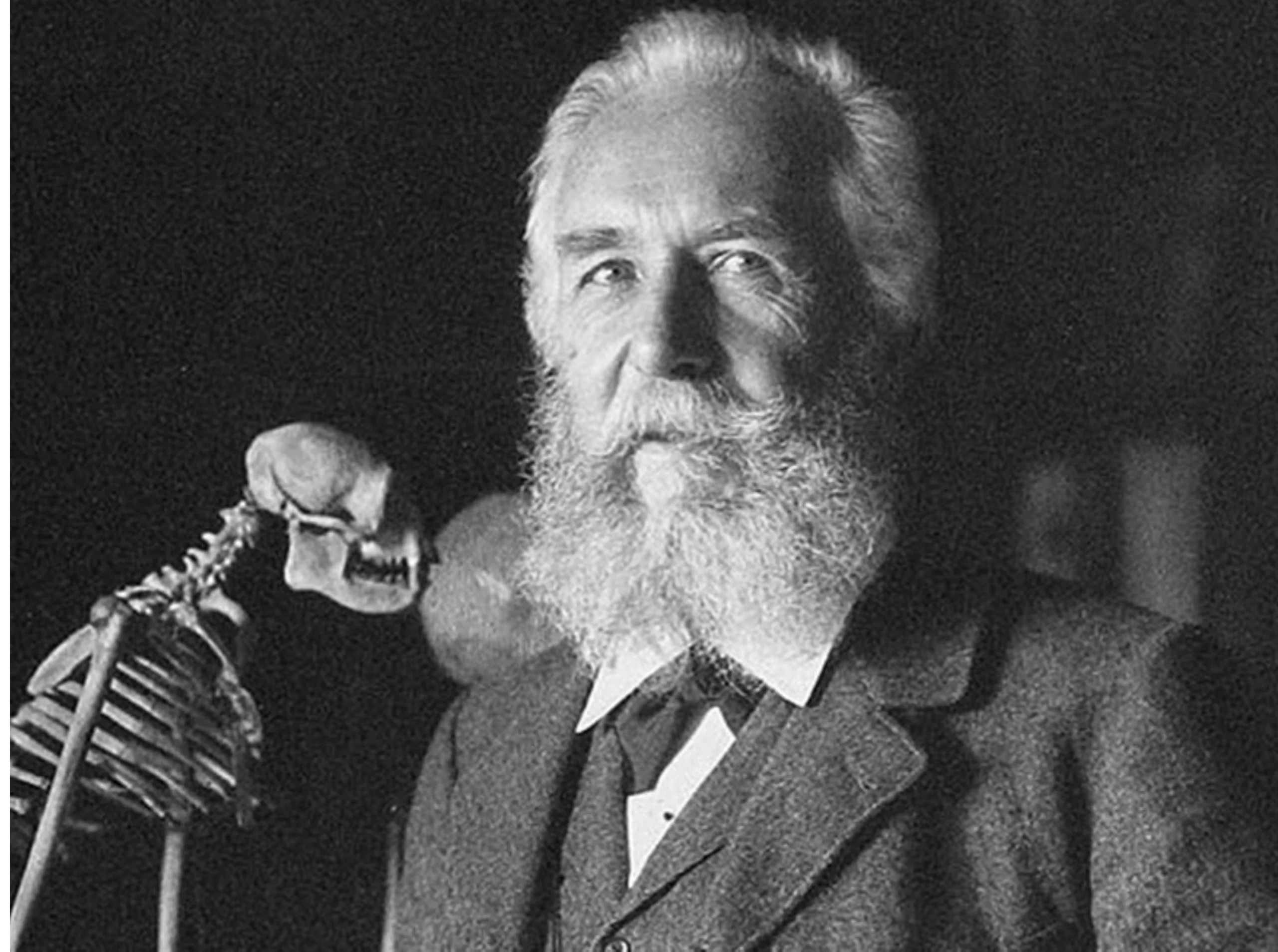
Ernst Haeckel
 Germany
zoologist•naturalist•philosopher•physician•artist
Also known as: Ernst Heinrich Haeckel
Birthday
February 16, 1834
Birth Sign
Aquarius
Birthplace
Potsdam, Prussia
Age
Died at 85
About
Ernst Heinrich Haeckel was a German zoologist, naturalist, philosopher, physician, and artist whose career bridged the gap between rigorous scientific observation and aesthetic expression. Born in Potsdam on February 16, 1834, he spent his life exploring the natural world as both a scientist and an illustrator. He is best known for his meticulous drawings of marine life collected in the book Kunstformen der Natur (Art Forms of Nature), which profoundly influenced the Art Nouveau movement. Haeckel also coined numerous biological terms that remain standard today, including ecology, phylum, and phylogeny.
A fervent advocate for Charles Darwin's theory of evolution in Germany, Haeckel proposed the controversial biogenetic law, often summarized as "ontogeny recapitulates phylogeny." This idea claimed that an individual's embryonic development mirrors the evolutionary history of its species. While later disproven, it shaped biological education for decades. His legacy is complex, marked by significant scientific contributions alongside controversial views on social Darwinism and scientific racism. He died on August 9, 1919, leaving behind a body of work that continues to be studied for both its beauty and its ethical complexities.
Early Life & Background
Ernst Heinrich Haeckel entered the world into a middle-class family in Potsdam, Prussia. His father, Karl August Haeckel, worked as a land surveyor, while his mother, Louise Henriette, came from a line of local merchants. From a very young age, Ernst displayed a profound fascination with nature. He spent countless hours exploring the forests and coastlines surrounding his hometown, developing an early connection with the natural world that would define his future path.
Haeckel pursued higher education at the University of Würzburg and later transferred to the University of Vienna to study medicine and natural sciences. During these formative years, he was deeply influenced by the works of Johann Wolfgang von Goethe and the emerging evolutionary theories sweeping through Europe. In 1857, he completed his medical degree, but his heart lay elsewhere. He soon shifted his focus entirely to zoology and embryology, dedicating himself to the anatomy and development of radiolarians, single-celled marine organisms. By the late 1850s, he had already established himself as a rising authority in this field, setting the stage for his groundbreaking discoveries.
Career Growth
Haeckel's professional ascent began in earnest when he joined the faculty at the University of Jena in 1862 as a professor of comparative anatomy. Over the next five decades, he became one of the most influential figures in European biology. His major milestones include the 1859 publication of Generelle Morphologie der Organismen, where he formally introduced the concept of phylogeny. In 1866, he was appointed Professor of Zoology at the University of Jena, a position he held until his death, during which time he discovered and named thousands of new species.
Between 1868 and 1870, he led a major expedition to the Mediterranean and the Atlantic, collecting extensive samples of marine life that formed the basis of his later illustrations. In 1874, he founded the Monists' League to promote a materialistic worldview based on science. His 1899 book Die Welträthsel reached a wide non-academic audience, synthesizing science and philosophy. The crowning achievement of his artistic career arrived in 1904 with the release of Kunstformen der Natur, a collection of 100 lithographic plates depicting the beauty of marine organisms. This work became a cultural phenomenon, influencing artists like Antoni Gaudí and the designers of the Art Nouveau style. In 1914, he publicly predicted the scale of World War I, calling it the "first world war" before the conflict fully escalated.
Career Timeline
Public Image & Style
Haeckel is portrayed as a visionary scientist-artist who blurred the lines between disciplines. Media and academic portrayals often highlight his dual legacy: the brilliance of his illustrations and the problematic nature of his racial theories. He is seen as a figure who embodied the optimism and arrogance of the 19th-century scientific era. His public image has evolved over time, shifting from a celebrated pioneer of evolutionary biology to a more nuanced figure whose scientific contributions must be weighed against his endorsement of eugenics and scientific racism. Today, he is remembered as much for his artistic impact on design movements as for his role in popularizing Darwinism.
Fame & Fandom
Ernst Haeckel commands a global legacy defined by the enduring resonance of his scientific illustrations and biological terminology rather than contemporary celebrity metrics. As a historical figure whose life concluded in 1919, his fame exists within the archives of academic history and art criticism rather than modern pop culture charts. The iFANN Global Fame Engine evaluated this subject in September 2026 and determined that he is currently not ranked among the top 1,000 most famous people worldwide or on any specific Top-100 scope list. Consequently, no numerical placement or score applies to his current standing in the published rankings. While the reach of his work spans centuries, influencing movements from Art Nouveau to evolutionary biology education, he does not hold a current ordinal position in the active fame index. Regarding his audience, there is no documented fandom name for Ernst Haeckel. The individuals who engage with his life's work are historians, scientists, biologists, and artists whose appreciation is scholarly and appreciative rather than organized into fan clubs, campaigns, or participatory communities. No formal fanbase exists to generate rituals, hashtags, or charitable drives in his name, as his engagement remains strictly within the realm of academic study and historical preservation.
Interesting Facts and Legends
Ernst Haeckel coined over 200 biological terms, many of which are still used today, including "ecology" in 1866. A persistent story in scientific lore involves accusations that he manipulated his drawings to exaggerate embryonic similarities in support of his theories. While critics have claimed he fabricated data, subsequent examinations confirm that while his illustrations were stylized for clarity, they were based on real observations rather than outright fabrication. Another widely retold aspect of his legacy concerns the Biogenetic Law, or the theory that ontogeny recapitulates phylogeny. This concept was once a cornerstone of evolutionary biology education, though it is now understood to be a significant oversimplification. Despite its scientific revision, the phrase remains central to his intellectual mythology. His ability to merge rigorous science with aesthetic beauty created images that captivated the human imagination more than photography could at the time.
Notable Quotes
“Ontogeny recapitulates phylogeny.”
“The world is a unity, and we must seek to understand it as such.”
“Man is a monkey, but a very intelligent one.”
Family & Personal Life
Ernst Haeckel was married twice, and his personal life was closely intertwined with his scientific pursuits. His first wife, Anna Sethe, was a native of Jena. They married in 1862 and had three children together: Max, who became a botanist; Ludwig, who followed in his father's footsteps as a zoologist; and Gertrud, who became a writer. Anna died in 1898 after a long illness. Two years later, in 1900, Haeckel married Agnes Huschke, a younger woman who supported him in his later years, assisting with his writing and public engagements. She remained with him until his death. There were no additional children from this second marriage.
Notable Connections
Relationships & Dating History
Ernst Haeckel was married twice. His personal life was closely intertwined with his scientific pursuits, often involving his family in his travels and research. He first married Anna Sethe in 1862. Anna was a native of Jena, and the couple had three children together: Max, who became a botanist; Ludwig, who followed in his father's footsteps as a zoologist; and Gertrud, who became a writer. Anna died in 1898 after a long illness. Two years later, in 1900, Haeckel married Agnes Huschke, a younger woman who supported him in his later years, assisting him with his writing and public engagements. She remained with him until his death in 1919. There were no additional children from this marriage. At the time of his death in 1919, Haeckel was married to Agnes Huschke.
- MarriedAnna Sethe1862 - 1898Had three children together: Max, Ludwig, and Gertrud.
- MarriedAgnes Huschke1900 - 1919Supported him in his later years until his death.
Death & Aftermath
Died
August 9, 1919 (aged 85)
Death Place
Jena, Germany
Cause of Death
Natural causes associated with old age
Net Worth (Estate Value)
$0
iFANN Editorial Team estimate
Ernst Haeckel died in 1919, so there is no current net worth or estate value in the modern sense. His wealth was derived from his salary as a professor, royalties from his books, and the sale of his illustrations. As a prominent professor and best-selling author, he was financially comfortable. His book Kunstformen der Natur was sold at a high price due to its artistic quality. His estate was managed by his family, particularly his son Ludwig. The intellectual property rights to his drawings and writings have been managed by various publishers and archives over the last century. Today, revenue is generated through the licensing of his artwork for educational materials, museum exhibitions, and art prints. The "estate" effectively consists of the copyrights held by his heirs or transferred to publishing houses, which continue to profit from reprints of Kunstformen der Natur and other works.
Awards Won (3)
Haeckel received significant academic and national distinctions during his lifetime, including election to the Royal Society of London in 1890 and the Order of Merit for Science and Arts in Prussia. He received honorary doctorates from the University of Leipzig and the University of Munich, and was awarded the Linnean Society Medal for his contributions to taxonomy.
1890 · Science
1895 · National Honor
Known For
Kunstformen der Natur
1904 · Author/Illustrator
Generelle Morphologie der Organismen
1859 · Author
Die Welträthsel
1899 · Author
Keywords
Sources
Quick Facts
- Profession
- biologist, physician, zoologist
- Born
- February 16, 1834
- Birthplace
- Potsdam
- Died
- August 9, 1919
- Death Place
- Jena
- Gender
- Male
- Spouse
- Anna Sethe, Agnes Huschke
- Birth Sign
- Aquarius
Personal Details
- Full Name
- Ernst Heinrich Haeckel
- Spouse
- Anna Sethe, Agnes Huschke
- Children
- Max Haeckel, Ludwig Haeckel, Gertrud Haeckel
- Education
- University of Würzburg, University of Vienna
Frequently Asked Questions
What did Ernst Haeckel discover?
Why is Ernst Haeckel controversial?
Did Ernst Haeckel invent the word ecology?
How did Ernst Haeckel die?
What was Ernst Haeckel's most famous book?
Similar People
Join the community
fans discussing