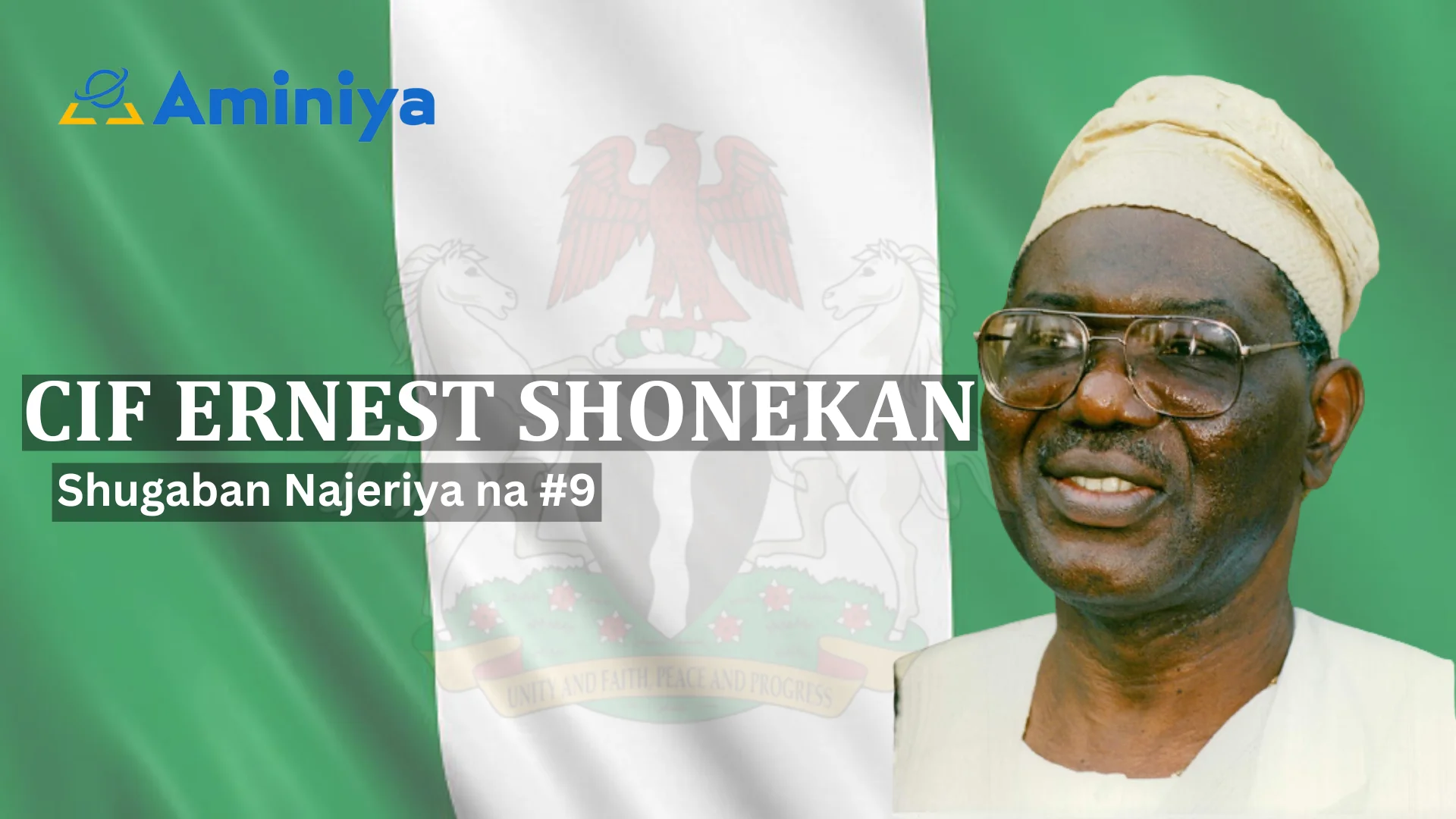
Ernest Shonekan
 Nigeria
Also known as: Chief Ernest Adegunle Oladeinde Shonekan, Abese of Egbaland
Birthday
May 9, 1936
Birth Sign
Taurus
Birthplace
Lagos, Nigeria
Age
Died at 85
About
Chief Ernest Adegunle Oladeinde Shonekan was a distinguished Nigerian lawyer, businessman, and statesman who served as the interim Head of State of Nigeria for 83 days during the turbulent aftermath of the annulled June 12, 1993 presidential election. Born in Lagos, he rose from a legal background to become the chairman of the United African Company (UAC) of Nigeria, the largest African-controlled conglomerate in Sub-Saharan Africa at the time. His political tenure remains his most defining legacy, characterized by a brief, powerless interregnum before being ousted by General Sani Abacha. He passed away at the age of 85 in Lagos due to natural causes related to advanced age.
Early Life & Background
Ernest Adegunle Oladeinde Shonekan entered the world on May 9, 1936, in Lagos, the bustling commercial hub that would later define his career trajectory. Hailing from the Egbaland region, he maintained deep roots in his community throughout his life, eventually earning the traditional title of Abese of Egbaland in 1981. This early connection to his heritage provided a foundation of respect that would serve him well in future public service roles. His formative years were spent navigating the educational landscape of colonial and early post-colonial Nigeria, where he pursued higher education to qualify as a lawyer. This professional training became the bedrock of his early career, distinguishing him from the military men who often dominated the political scene.
Before stepping into the national spotlight, Shonekan established himself as a formidable figure in the Nigerian private sector. He climbed the corporate ladder to become the chairman of the United African Company (UAC) of Nigeria, a massive enterprise that traced its lineage back to The Niger Company. Under his leadership, UAC expanded its influence across trading, manufacturing, and agriculture, becoming the largest African-controlled conglomerate in Sub-Saharan Africa. This role made him one of the wealthiest and most influential businessmen in Nigeria prior to the 1990s. His success in the boardroom positioned him as a non-partisan, respected civilian leader when the country needed a face for legitimacy following the annulment of the June 12 election.
Career Growth
His transition to politics began when he was appointed Chairman of the Interim National Government (ING). Following the annulment of the June 12, 1993 election, which had been won by Moshood Abiola, the military regime needed a civilian face to maintain legitimacy. Shonekan, a respected non-partisan figure with no military ambitions, was chosen for this role. He assumed office on August 26, 1993. His tenure was marked by an attempt to restore democracy and prepare for the inauguration of the elected president, but he operated with severely limited powers under the shadow of the military.
On November 17, 1993, just 83 days after taking office, Shonekan was forced out of power by a bloodless coup led by General Sani Abacha, who declared himself head of state. Unlike many political figures who fled or fought, Shonekan accepted his removal quietly, returning to private life without public confrontation. This 'gentleman's exit' has become a central part of his legend, contrasting sharply with the violence that followed Abacha's rule. After leaving office, he retreated from the limelight, focusing on his family and charitable work. He remained a respected elder statesman until his death in 2022, leaving behind a complex legacy of a reluctant leader who navigated one of Nigeria's most difficult political crises.
Career Timeline
Public Image & Style
Chief Shonekan was known for his dignified demeanor, professional attire, and the quiet confidence he displayed even during his brief and difficult tenure as Head of State. His public image is that of a 'gentleman statesman', a man of integrity who was thrust into a role beyond his control and who chose to exit with grace rather than conflict. Media portrayals often highlight his role as a 'child of circumstance,' a reluctant leader who symbolized the hope of the June 12 election but was ultimately powerless against military might. He cultivated an image of restraint and principle, avoiding the chaos that defined much of Nigerian politics in the 1990s.
Fame & Fandom (iFAMOUS Rankings)
Ernest Shonekan's legacy is not that of a celebrity with a devoted fanbase, but of a statesman whose brief, turbulent tenure as Nigeria's interim head of state has become the stuff of national lore. There is no formal fandom name for Shonekan; his admirers are historians, political analysts, and Nigerians who remember the June 12 crisis. The closest thing to a community is institutional, the Ernest Shonekan Centre for Legislative Reforms and Good Governance, which continues his policy work. No fan campaigns, rituals, or organized interactions exist; his death in 2022 prompted official tributes, not fan outpourings.
In the iFANN Global Fame Engine's September 2026 evaluation, Ernest Shonekan holds no placement in the published rankings, neither in the Global Top 1,000 nor in any Top-100 scope list. His fame, while significant in Nigerian political history, does not currently register in iFANN's global metrics. This absence underscores a career defined not by popular adulation but by a singular, chaotic moment of national leadership.
Interesting Facts and Legends
Ernest Shonekan's life is rich with stories that Nigerians still retell, most centered on his 83-day tenure as interim head of state in 1993. He is often called Nigeria's 'shortest-serving president,' though his official title was 'Head of the Interim National Government', a distinction that has blurred in popular memory. The 'Child of Circumstance' narrative, popularized by a YouTube documentary, frames him as a reluctant leader thrust into power after the annulment of the June 12 election. The drama of his removal, forced out by General Sani Abacha in a bloodless coup, is a tale of humiliation and powerlessness, with details varying by telling but always ending with his swift ouster. Historians debate his effectiveness, with The Conversation's obituary famously labeling him 'an ineffectual leader during turbulent times.' Yet a counter-legend persists: his dignified exit, returning quietly to private life rather than fleeing or fighting, a gentleman's acceptance of fate. His story remains inseparable from the June 12 saga, a tragic intermediary in a stolen election's shadow.
Notable Quotes
“I am not a politician. I am a civil servant trying to do my duty.”
“The people of Nigeria deserve a government that works for them.”
Family & Personal Life
Chief Ernest Shonekan was married to Margaret Shonekan, a union that lasted throughout his life until his death. Their marriage was a long-standing partnership that supported him through his rise in business, his brief presidency, and his retirement. Margaret is noted as his spouse in official biographical records, and they remained together through all major phases of his public career. While specific details about their personal life remain private compared to his public duties, their bond was evident in the stability they provided each other. The couple did not have widely documented children in public obituaries, though some sources suggest he may have had children, specific names and details remain unconfirmed in major media reports. As of his death in 2022, he was widowed by his wife, who survived him.
Notable Connections
Relationships & Dating History
Chief Ernest Shonekan was married to Margaret Shonekan, a union that lasted throughout his life until his death. Their marriage was a long-standing partnership that supported him through his rise in business, his brief presidency, and his retirement. Margaret is noted as his spouse in official biographical records, and they remained together through all major phases of his public career. While specific details about their personal life remain private compared to his public duties, their bond was evident in the stability they provided each other. The couple did not have widely documented children in public obituaries, though some sources suggest he may have had children, specific names and details remain unconfirmed in major media reports. As of his death in 2022, he was widowed by his wife, who survived him.
- MarriedMargaret Shonekan1960 - 2022Married until his death; she survived him.
Death & Aftermath
Died
January 11, 2022 (aged 85)
Death Place
Lagos, Nigeria
Cause of Death
Natural causes related to advanced age
Chief Ernest Adegunle Oladeinde Shonekan passed away on Tuesday, January 11, 2022, at the age of 85 in a hospital in Lagos. Reports from his family and official sources attributed his death to natural causes stemming from advanced age after he had been receiving treatment for an illness. There were no disputes regarding the circumstances surrounding his final days, as he spent his last moments in private care without any indication of foul play or sudden tragedy.
The reaction to his death was immediate and widespread across Nigeria and among international observers. Tributes poured in from high-profile figures, including President Muhammadu Buhari, who expressed deep sorrow over the loss of a statesman who served during a critical transition period. Social media platforms saw Nigerians mourning his passing, with many reflecting on his role as the shortest-serving president in Nigeria's history, serving only 83 days from August to November 1993. The Conversation published an obituary highlighting his tenure during the turbulent aftermath of the annulled June 12, 1993 election, noting him as a respected figure in Nigerian democracy despite facing military opposition.
Chief Shonekan was buried in Lagos, where he had lived and worked for much of his life. His funeral arrangements were handled with dignity, likely involving notable attendees from Nigeria's political and business sectors given his stature as a prominent businessman who headed the United African Company of Nigeria. Posthumously, his legacy is preserved through the continued work of the Ernest Shonekan Centre for Legislative Reforms and Economic Development, which launched reform agendas and baseline reports on legislative weaknesses in partnership with organizations like the European Business Chamber. The family has focused on advancing his vision for democratic governance and economic development rather than pursuing posthumous commercial projects.
Net Worth (Estate Value)
$15 Million
iFANN Editorial Team estimate
iFANN currently estimates Chief Ernest Shonekan's estate value at approximately $15 million. This figure reflects the assets accumulated during his successful career as a businessman and statesman, managed by his family and the Ernest Shonekan Centre. His primary wealth came from his chairmanship of the United African Company (UAC) of Nigeria, where he earned substantial compensation as the head of the largest African-controlled conglomerate in Sub-Saharan Africa. While specific salary figures per project are not available, his position as chairman of a major multinational subsidiary placed him among the wealthiest individuals in Nigeria during the 1980s and early 1990s.
Posthumously, the estate has not generated significant new revenue streams comparable to celebrity estates, as there have been no major commercial releases or licensing deals. The value of his estate is tied to the assets he accumulated during his business career, including real estate and investments in Lagos and other parts of Nigeria. The Ernest Shonekan Centre for Legislative Reforms and Economic Development continues to operate under the family's management, advocating for policy reforms and legislative improvements, which serves as a living testament to his legacy rather than a direct financial asset.
Awards Won (3)
Chief Ernest Shonekan received several high-ranking national honours in recognition of his service. He was awarded the Grand Commander of the Order of the Federal Republic (GCFR), one of Nigeria's highest national awards, bestowed upon him for his contributions to the nation. He also received the Knight Commander of the Order of the British Empire (KBE), an honour recognizing his service and international standing. Additionally, he was installed as the Abese of Egbaland in 1981, a traditional title that recognized his status and contribution to his people.
1993 · National Honour
Service to the Nation
1993 · International Honour
Service to the Commonwealth
Known For
Interim Head of State of Nigeria
1993 · Statesman
Keywords
Sources
Quick Facts
- Profession
- politician, lawyer
- Born
- May 9, 1936
- Birthplace
- Lagos, Nigeria
- Died
- January 11, 2022
- Death Place
- Lagos, Nigeria
- Gender
- Male
- Spouse
- Margaret Shonekan
- Birth Sign
- Taurus
Personal Details
- Full Name
- Chief Ernest Adegunle Oladeinde Shonekan GCFR KBE
- Spouse
- Margaret Shonekan
- Children
- Education
- University of London; University of Ibadan
Frequently Asked Questions
Who was Ernest Shonekan?
How long was Ernest Shonekan in office?
What caused Ernest Shonekan's death?
Why is Ernest Shonekan famous?
Did Ernest Shonekan have children?

Join the community
fans discussing