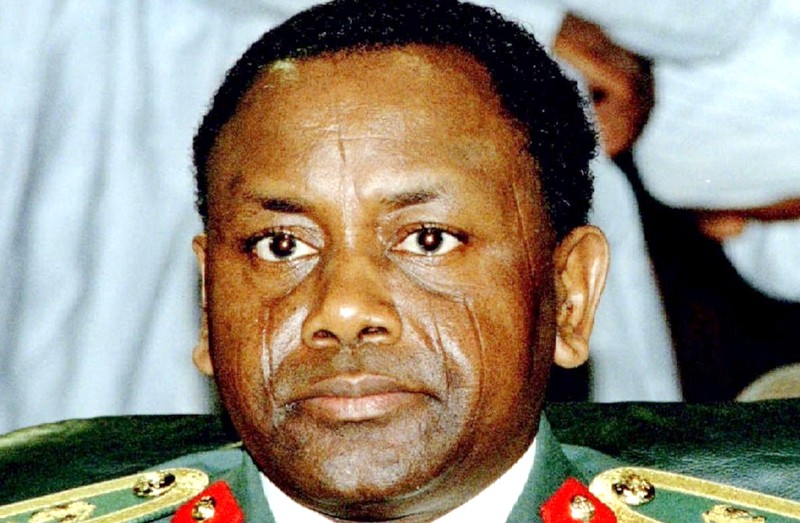
Sani Abacha
 Nigeria
Nigerian military officer and politician
Birthday
September 20, 1943
Birth Sign
Virgo
Birthplace
Kano, Nigeria
Age
Died at 54
About
Sani Abacha was a Nigerian military officer and politician who ruled as the country's military head of state from 1993 until his death in 1998. He is remembered as one of Africa's most authoritarian and corrupt leaders, a figure whose regime left an indelible mark on Nigeria's political history.
Abacha's rule was defined by the suppression of democratic institutions, widespread human rights abuses, and the systematic looting of state resources. His death in 1998 ended a five-year period that many Nigerians recall with a mixture of fear and anger, and his name remains synonymous with military dictatorship and kleptocracy.
Early Life & Background
Sani Abacha was born on September 20, 1943, in Kano, a major city in northern Nigeria. Details of his early upbringing are scarce, but he entered the Nigerian military at a young age, a career path that would define his life. He trained at the Nigerian Defence Academy and later attended the Royal Military Academy at Sandhurst in England, a common route for ambitious officers in the post-independence era.
Abacha rose steadily through the ranks, serving in various capacities during Nigeria's civil war and its subsequent military governments. He held key positions, including Chief Security Officer (CSO) to a previous head of state, a role that gave him intimate knowledge of the inner workings of power. His involvement in several coups, including the one that brought General Ibrahim Babangida to power in 1985, positioned him as a powerful and ambitious figure within the military elite.
Career Growth
On November 17, 1993, General Sani Abacha overthrew the Interim National Government and seized power as Head of State. His coup came after the annulment of the June 12, 1993 presidential election, an event that had plunged Nigeria into political crisis. Abacha quickly dissolved all democratic institutions, banned political activity, and ruled by decree.
His regime was marked by the brutal suppression of opposition. Prominent activists and journalists were arrested, and many were executed or assassinated. The execution of environmental activist Ken Saro-Wiwa in 1995 drew international outrage and led to Nigeria's suspension from the Commonwealth. Abacha also survived a reported coup attempt in 1995, responding with a wave of arrests and executions.
In April 1998, political parties unanimously adopted Abacha as their presidential candidate, a move widely seen as a sham to legitimize his rule. However, he died on June 8, 1998, before the elections could take place, ending his grip on power.
Career Timeline
Public Image & Style
Sani Abacha projected an image of iron-fisted control, rarely seen in public and ruling through a network of security services. His regime was characterized by a cult of personality, with his portrait displayed in government offices and his name chanted at rallies. Internationally, he was vilified as a dictator and a thief, while at home, many Nigerians lived in fear of his secret police. His public image remains deeply negative, with his name used as shorthand for corruption and abuse of power.
Fame & Fandom (iFAMOUS Rankings)
Sani Abacha currently holds the distinction of being the 39th most famous person from Nigeria, a standing confirmed by the iFANN Global Fame Rankings that track global attention across media coverage and historical consumption signals worldwide. This placement reflects his enduring status as a defining figure in African political history rather than a celebrity in the traditional sense. While some segments of society in northern Nigeria view his era through a lens of nostalgic discipline, there is no organized fanbase, no formal fandom name, and no collective group that identifies as supporters. Unlike entertainers who cultivate loyal followings, Abacha's public interactions were defined by surveillance and repression, leaving no room for the rituals, campaigns, or conventions typical of fandom culture. The absence of a named fan club or organized movement underscores that his legacy remains a subject of intense political debate and historical scrutiny rather than adoration.
Interesting Facts and Legends
Abacha was known for his love of polo and often hosted lavish tournaments at the presidential villa. He was a secretive leader who rarely appeared in public, preferring to rule from behind the walls of the presidential compound. His death was so sudden that many Nigerians initially refused to believe it, with rumors of poisoning circulating for years. Abacha's son, Mohammed, was convicted in absentia in Switzerland for his role in laundering the family's illicit wealth. The Abacha family returned over $1 billion in looted funds to the Nigerian government in a series of agreements with foreign governments.
The mythology surrounding his life is dominated by the circumstances of his sudden death on 8 June 1998. A persistent legend claims he died of cardiac arrest while having sex with one or more mistresses, a story that gained significant traction in July 2026 when a retired Director of the Department of State Services published a memoir confirming the account. This narrative was immediately challenged by Chief Dan Etete, who served as Petroleum Minister under Abacha, dismissing the claim as baseless. Another enduring tale suggests he was killed by eating poisoned apples, a theory that has coexisted with the sexual encounter story for decades despite official denials. These competing accounts have turned his final hours into a central piece of Nigerian folklore, with the truth remaining unresolved amidst conflicting testimonies from former officials and self-described mistresses.
Family & Personal Life
Sani Abacha was married to Maryam Abacha, who stood by him throughout his military and political career. The couple had several children, including Mohammed Sani Abacha, who became involved in the family's business dealings and later faced legal scrutiny over the recovery of stolen assets. Maryam Abacha passed away in 2017, and the family has remained a subject of public interest due to their wealth and the ongoing efforts to recover funds allegedly looted during Abacha's rule.
Notable Connections
Sani Abacha was closely associated with General Ibrahim Babangida, under whom he served as Chief of Army Staff and Minister of Defence. Babangida's memoir suggests that Abacha's forces annulled the June 12 elections, a claim that has been widely debated. Abacha also worked with political figures like Mamman Nasir and Isa Mohammed, who were involved in the attempt to legitimize his rule. His wife, Maryam, and his son, Mohammed, were also central to his inner circle.
Relationships & Dating History
Sani Abacha was married to Maryam Abacha for most of his adult life. The couple had several children, including Mohammed, who later became involved in the family's business ventures. Maryam was a supportive spouse who often accompanied her husband on official trips and was seen as a figure of some influence within the regime. After Abacha's death, Maryam became a vocal advocate for her husband's legacy, defending his rule in interviews. She passed away in 2017. As of 2026, Abacha is deceased, and his marriage to Maryam ended with his death.
- MarriedMaryam Abacha1965 - 1998Married for over 30 years, they had several children together. Maryam survived him and defended his legacy until her death in 2017.
Death & Aftermath
Died
June 8, 1998 (aged 54)
Death Place
Abuja, FCT, Nigeria
Cause of Death
Myocardial infarction
The news of Sani Abacha's passing sparked immediate street celebrations across Nigeria rather than moments of silence or mourning, as the populace greeted the end of his iron grip on power with relief and anticipation for a return to civilian rule. He died on June 8, 1998, at the Presidential Villa in Abuja after suffering a sudden cardiac arrest while playing football with his sons, according to an account from his personal physician given years later. The official cause was recorded as a myocardial infarction based solely on statements from the presidential medical team. While rumors of foul play or poisoning circulated due to the regime's opacity, these claims remained unproven theories without any police investigation or trial to support them.
A private funeral took place just two days later on June 10 within the grounds of the Presidential Villa, attended only by senior military officials and government dignitaries loyal to his administration. His body was interred in a private mausoleum on the same site to keep the burial out of public view. His estate was managed by his family, specifically his son Major-General Muhammadu Buhari, who faced significant challenges repatriating assets while international bodies like the United States and Switzerland worked to recover illicit funds stashed abroad.
Net Worth (Estate Value)
$5 Billion
iFANN Editorial Team estimate
Sani Abacha's wealth was amassed through the systematic looting of Nigeria's treasury during his five-year rule. Estimates of the total amount stolen range from $2 billion to $5 billion, with much of it hidden in offshore accounts in Switzerland, Liechtenstein, and the United Kingdom. The Abacha family's assets were frozen by several governments, and over the years, billions of dollars have been repatriated to Nigeria. Per iFANN's editorial analysis, the Abacha estate is estimated to be worth around $5 Billion as of 2026, though much of this has been recovered or is subject to ongoing legal battles. The family's financial legacy remains a subject of intense scrutiny, with the Nigerian government continuing to pursue the return of stolen funds.
Awards & Accolades
View 1 records, honours and achievementsKnown For
Military Head of State of Nigeria
1993-1998 · Head of State
Execution of Ken Saro-Wiwa
1995 · Ordered execution
Kleptocratic rule
1993-1998 · Ruler
Keywords
Sources
Quick Facts
- Profession
- Nigerian military officer and politician
- Born
- September 20, 1943
- Birthplace
- Kano, Nigeria
- Died
- June 8, 1998
- Death Place
- Nigerian Presidential Complex
- Gender
- Male
- Spouse
- Maryam Abacha
- Birth Sign
- Virgo
- Age at Death
- 54
Personal Details
- Spouse
- Maryam Abacha
- Children
Frequently Asked Questions
Who was Sani Abacha?
How did Sani Abacha die?
What was Sani Abacha's net worth?
Why is Sani Abacha famous?
Is Sani Abacha still alive?

Join the community
fans discussing