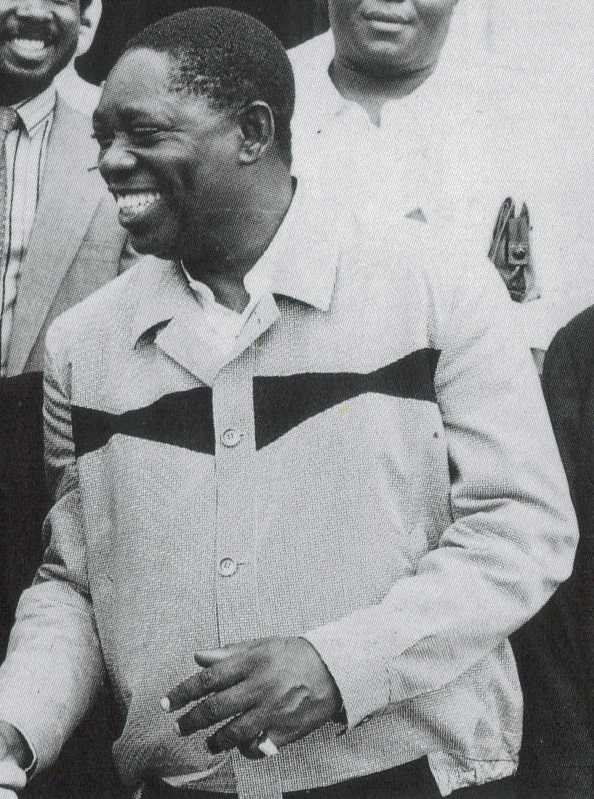
Moshood Abiola
 Nigeria
politician•businessperson•philanthropist
Birthday
+1937-08-24
Birth Sign
Sagittarius
Birthplace
Abeokuta
Age
Died at 60
About
Chief Moshood Kashimawo Olawale Abiola, widely known as M. K. O. Abiola, was a Nigerian business magnate, publisher, and politician. Born on 24 August 1937 in Abeokuta, he rose from humble beginnings to become one of the wealthiest and most influential figures in Nigeria. An aristocrat of the Egba clan and honorary supreme military commander of the Oyo Empire, Abiola's ambitions extended far beyond commerce. He is best remembered for his landmark 1993 presidential run, a race he was widely believed to have won, only for the military government to annul the results. That act would set the stage for his tragic end: Abiola died in detention on 7 July 1998, after declaring himself the rightful president. His sacrifice transformed him into an enduring symbol of democracy, and in 2018, President Muhammadu Buhari posthumously awarded him the Grand Commander of the Order of the Federal Republic (GCFR), an honour reserved for heads of state. Nigeria also moved Democracy Day to 12 June, the anniversary of the annulled election, in his memory. Abiola's business empire spanned publishing, shipping, and telecommunications, making him a household name long before politics called. He was a personal friend of military ruler Ibrahim Babangida and reportedly backed Babangida's rise to power, a connection that would later prove both a boon and a burden. When Abiola finally contested for the presidency in June 1993, he defied ethnic and religious divides, winning support across every geopolitical zone. His campaign tapped into a deep yearning for change, and his victory at the polls seemed certain. Yet the military elite, unwilling to cede control, annulled the election, plunging Nigeria into a political crisis. Abiola refused to back down, and his subsequent imprisonment and death turned him into a martyr for the pro-democracy movement. Today, he is celebrated as a hero who gave his life for the ballot, and his legacy continues to shape Nigeria's political landscape.
Fame & Fandom
Moshood Abiola commands a profound, enduring global attention that transcends the fleeting metrics of pop culture, anchoring his legacy in the annals of Nigerian history and the broader struggle for democracy. His name resonates with a depth rarely seen outside of statesmanship, yet the iFANN Global Fame Engine has evaluated this influence without assigning him a placement in the published rankings. As an EVALUATED_UNRANKED figure, he currently holds no position within the Global Top 1,000 or any specific Top-100 scope list. This absence of a numeric rank does not diminish his stature but reflects the unique nature of his fame, which is rooted in historical significance rather than contemporary celebrity consumption cycles. While many modern icons chase chart positions, Abiola's impact remains a constant fixture in political discourse, independent of algorithmic sorting. Regarding his audience, there is no documented fandom name for Moshood Abiola. Unlike entertainment figures who cultivate named tribes like Swifties or Beyhive, Abiola's supporters operate as a dedicated political constituency and historical following. They identify through their alignment with the June 12 Democratic Movement rather than a shared moniker. These followers engage through civil society groups and advocacy organizations, driven by the mandate to recognize his 1993 election victory. Their loyalty manifests in sustained political activism and calls for justice rather than fan clubs, streaming pushes, or birthday billboards. The movement remains influential, keeping his memory alive through legislative discussions and public commemorations, proving that true legacy often exists beyond the boundaries of traditional ranking systems.
Interesting Facts and Legends
Chief Moshood Kashimawo Olawale Abiola rose from humble beginnings in Abeokuta to become one of Nigeria's wealthiest men before entering politics. He was an aristocrat of the Egba clan and held the honorary title of supreme military commander of the Oyo Empire. Beyond commerce, he was a renowned philanthropist who funded educational institutions like Moshood Abiola Polytechnic. The central legend of his life is the June 12 election victory of 1993, widely considered the freest and fairest in Nigerian history, where he won decisively only for the results to be annulled by the military government. A year later, while still in custody, he declared himself the legitimate President of Nigeria, an act that triggered massive nationwide strikes and civil unrest. He died in detention on July 7, 1998, under circumstances that remain a subject of intense controversy and popular folklore regarding foul play. Many Nigerians believe he was poisoned or murdered by the state, a story that continues to drive political discourse decades later. Recent reports from 2026 indicate that human rights lawyers have called for reinvestigation into his death, suggesting new evidence may warrant reopening the case. His physical legacy endures in the Moshood Abiola National Stadium in Lagos, which remains a site of ongoing upgrades and high-profile events, serving as a monument to his name.
Death & Aftermath
Died
+1998-07-07 (aged 60)
Death Place
Abuja Central Prison, Nigeria
Cause of Death
reported heart attack
Chief Moshood Abiola spent his final years under the weight of detention, his health deteriorating from stress and limited medical care while imprisoned at the Abuja Central Prison. After a long period of silence following his last major public address at Epetedo in June 1994, he passed away on July 7, 1998, at the age of sixty. The news of his passing triggered immediate outrage across Nigeria, transforming him into a martyr for democracy and serving as a catalyst for the country's eventual transition to civilian rule in 1999. Massive vigils erupted in Lagos and other southern cities, where mourners chanted for the recognition of the June 12 election results and demanded justice for the military regime.
His funeral became a historic public event in his hometown of Abeokuta, drawing thousands of attendees including traditional rulers and politicians who viewed him as a national hero before burying him at a site that remains a pilgrimage ground for supporters today. In the decades since, his legacy has been cemented through official state honors and cultural institutions dedicated to his memory. The Nigerian government posthumously awarded him the title of Grand Commander of the Order of the Federal Republic (GCFR) and designated June 12 as the Day of Democracy. Educational landmarks like Moshood Abiola Polytechnic in Abeokuta and the Moshood Abiola National Stadium stand as enduring tributes, while the M.K.O.
Abiola Foundation continues to promote philanthropy. Although his widow Akasoba Duke-Abiola remains active in public life and cited her husband's legacy in international nominations, the estate itself has been managed privately by the family without public litigation regarding the circumstances of his death.
Awards & Accolades
Keywords
Quick Facts
- Profession
- politician, businessperson, philanthropist
- Born
- +1937-08-24
- Birthplace
- Abeokuta
- Died
- +1998-07-07
- Death Place
- Abuja
- Gender
- Male
- Spouse
- Remi Abiola, Kudirat Abiola
- Birth Sign
- Sagittarius
Personal Details
- Spouse
- Remi Abiola, Kudirat Abiola
Join the community
fans discussing