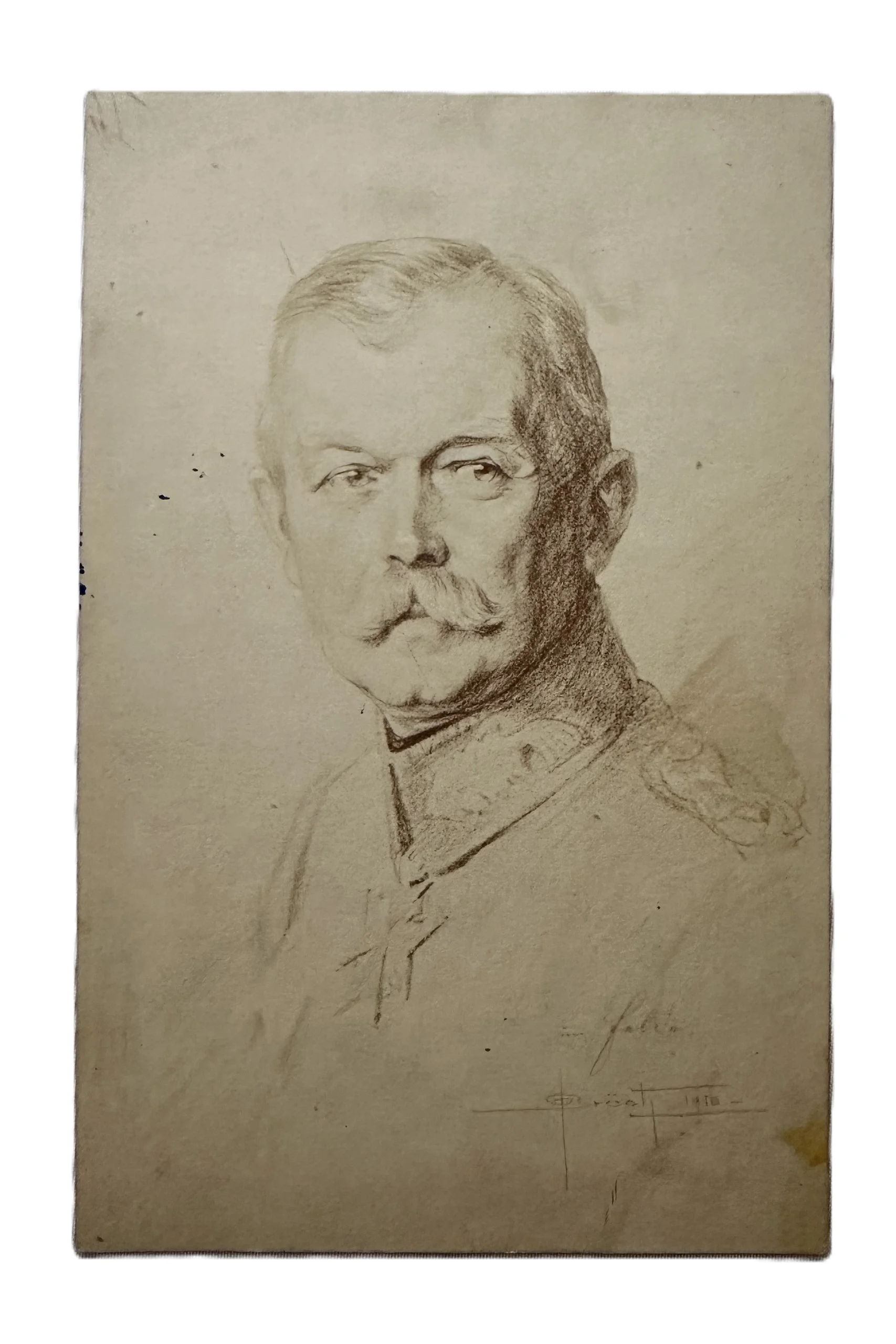
Erich von Falkenhayn
 Germany
Military strategist•General•Politician
Also known as: General Erich Georg Sebastian Anton von Falkenhayn, Erich von Falkenhayn
Birthday
September 11, 1861
Birth Sign
Virgo
Birthplace
Białochowo, Prussia (now Poland)
Age
Died at 60
Height
5 ft 11 in (180 cm)
About
Erich von Falkenhayn was a Prussian general and military strategist whose career defined the early years of World War I. Born on September 11, 1861, in Białochowo, he came from an aristocratic Junker family with deep roots in the Prussian military tradition. He entered the army as a second lieutenant in 1880 and rose steadily through the ranks, distinguished by his intellectual approach to warfare and contributions to military theory. His ascent culminated in September 1914 when he became Chief of the Imperial German General Staff, succeeding Helmuth von Moltke the Younger after the latter's failure at the First Battle of the Marne.
Falkenhayn's tenure was characterized by a strategy of attrition, most infamously implemented at the Battle of Verdun in 1916. He believed that attacking this fortress would force France to commit all its reserves, thereby bleeding the French army white. The battle lasted nearly 300 days and resulted in over 700,000 casualties on both sides, but it failed to break French resolve and instead drained German resources. By August 1916, facing setbacks on multiple fronts including the Somme offensive, he was dismissed from his post. After his dismissal, he took field commands in Romania and later served as an Ottoman Field Marshal in the Middle East, where he played a crucial role in preventing the planned deportation and massacre of Jewish communities by Ottoman forces.
Early Life & Background
Erich Georg Sebastian Anton von Falkenhayn was born into a lineage of Prussian military service on September 11, 1861, in the village of Białochowo. His father, August von Falkenhayn, held the rank of major-general, and his uncle, Albrecht von Falkenhayn, was a prominent diplomat. This family background set the trajectory for Erich's life, immersing him in the traditions and expectations of the Junker class. In 1872, at the age of eleven, he entered the Prussian cadet school at Potsdam, the standard training ground for officers of his station. The rigorous environment there honed his intellect and discipline, preparing him for a career in the infantry.
He graduated in 1880 as a second lieutenant and began his service in various staff positions throughout the late nineteenth century. During these formative decades, Falkenhayn distinguished himself not merely through combat experience but through his theoretical contributions to military strategy. He worked on the development of strategies that would eventually influence the Schlieffen Plan, demonstrating an early aptitude for complex operational planning. His rise was steady but marked by periods of controversy; he was known for a sharp intellect and sometimes abrasive personality that did not always endear him to superiors or peers. A pivotal moment occurred during his tenure as Minister of War from 1913 to 1915, where he attempted to modernize the German army and expand its structure, though these reforms faced significant political resistance.
Career Growth
Falkenhayn reached the zenith of his career in September 1914 when he assumed the role of Chief of the Imperial German General Staff. His primary strategy involved attrition, aiming to exhaust the enemy rather than achieve a decisive breakthrough through maneuver. This approach culminated in the Battle of Verdun in February 1916, where he ordered an assault designed to force France into a battle of annihilation. The operation resulted in one of the longest and bloodiest battles of the war, lasting nearly 300 days with over 700,000 casualties, yet it failed to achieve its strategic objective of breaking French will.
By August 1916, the cumulative pressure of the Somme offensive and the Brusilov Offensive led to his dismissal. He was replaced by Paul von Hindenburg and Erich Ludendorff, marking the end of his direct control over the main German front. Following his removal, Falkenhayn accepted field commands in Romania from 1916 to 1917. In 1917, he was appointed an Ottoman Field Marshal and served in the Middle East. His most notable achievement during this period was intervening to prevent the Ottoman Empire from deporting and massacring Jewish communities in Palestine. Despite these efforts, his reputation in Germany suffered due to the political machinations of the Hindenburg faction, which portrayed him as lacking the will for victory. He publicly argued that Germany needed a negotiated peace rather than a single great battle, a stance that further isolated him from hardline military leadership before his retirement in 1918.
Career Timeline
Public Image & Style
Falkenhayn is remembered as a complex figure: a brilliant strategist whose decisions led to massive loss of life, yet also a man who took moral stands in difficult circumstances. His image is shaped by historical texts and academic debates rather than popular culture. He was often portrayed in historical accounts as a stern, intellectual officer, consistent with his rank and era. His signature style was formal military attire, and his public persona was that of a man of principle who was ultimately outmaneuvered by political forces. The narrative surrounding him oscillates between viewing him as a pragmatic realist and an architect of war's grimmest impasses.
Fame & Fandom
Erich von Falkenhayn's afterlife is not one of fan clubs or hashtags. There is no formal fandom name for the Prussian general, no organized community that calls itself something clever. Instead, his audience is scattered across history forums, Reddit threads, and wargaming tables, people who argue over his Christmas memorandum and re-fight Verdun in miniature. They are enthusiasts, not devotees. That audience has kept his legend alive in peculiar ways. A 2016 Deutsche Welle retrospective called Verdun "World War I's war within a war," and the phrase stuck. YouTube videos ask whether his "bleed France white" strategy was a post-hoc fabrication, a question that still divides historians.
As of August 2026, the iFANN Global Fame Engine has evaluated Erich von Falkenhayn but placed him in no published ranking. He holds no spot in the Global Top 1,000 or any Top-100 scope list. His fame is real but niche, measured in footnotes and forum debates rather than chart positions. The discussions around his actions in Palestine and the Verdun campaign continue to generate interest among military historians and students of conflict, ensuring his name remains relevant in academic circles.
Interesting Facts and Legends
Falkenhayn is often associated with the phrase "bleed France white," a description of his strategy at Verdun. While he wrote to the Kaiser proposing an attack on a position the French would be compelled to defend with every man, some historians argue this memorandum was a justification crafted after the fact rather than a pre-battle plan. Another lesser-known legend involves his role in saving Jews in Palestine. As an Ottoman Field Marshal, he allegedly intervened to prevent planned massacres, an act that has garnered attention in historical and religious communities, though the precise chain of command remains debated.
His memoirs, particularly Der Weltkrieg 1914 bis 1918, remain a key source for understanding German military strategy during World War I. Falkenhayn also played a significant role in the development of the Schlieffen Plan's predecessor strategies while serving in staff positions before the war. He was one of the few German officers to oppose the mass deportation of Jews in Palestine, an act that saved countless lives despite the broader context of wartime atrocities.
Notable Quotes
“The enemy must be forced to throw in every man they have.”
“Germany cannot win through a single great battle; we must seek a negotiated peace.”
Family & Personal Life
Erich von Falkenhayn was married to Gertrud von Falkenhayn, née von der Goltz. The couple had children, though specific details regarding their number and names are not widely documented in public sources. There is no record of other romantic relationships or dating history, as Falkenhayn was a man of his time and his personal life remained largely private. His wife survived him, and they lived together until his death in 1922. The family maintained a private household, reflecting the reserved nature of the Prussian aristocracy.
Notable Connections
Helmuth von Moltke the Younger, Paul von Hindenburg, Erich Ludendorff, Theobald von Bethmann Hollweg, Gertrud von Falkenhayn
Relationships & Dating History
Erich von Falkenhayn was married to Gertrud von Falkenhayn, née von der Goltz. Their union was the only significant romantic relationship recorded in his life. Historical records indicate that they had children together, although the specific names and numbers of their offspring are not widely documented in public sources. There is no evidence of other dating history or flings, as Falkenhayn was a man of his time who kept his personal life strictly private. As of his death in 1922, he was married to Gertrud, who survived him. No current relationship status applies given his passing over a century ago.
- MarriedGertrud von Falkenhayn? - 1922Married until his death; she survived him.
Death & Aftermath
Died
April 8, 1922 (aged 60)
Death Place
Lindstedt Castle, near Berlin, Germany
Cause of Death
Natural causes
Erich von Falkenhayn spent his final years in Berlin, a retired general navigating the turbulent early days of the Weimar Republic after stepping away from military command. On April 8, 1922, the former Prussian Minister of War passed away at the age of sixty following a natural course of events. Public reaction to his death remained formal rather than emotional, characterized by official military tributes rather than mass vigils or organized moments of silence. Unlike many contemporaries who received state funerals, Falkenhayn was a polarizing figure whose controversial strategy at Verdun had alienated many within the German military and public sphere. His funeral appears to have been a private affair attended by family and close associates without public ceremony.
The aftermath of his life was defined not by immediate institutional honors but by the written word. Falkenhayn left behind memoirs and military treatises, most notably Der Weltkrieg 1914 bis 1918, which contributed significantly to the historiography of World War I even as they fueled ongoing debates about his command decisions. His estate was handled privately by his family. His legacy persists through academic discourse that continues to weigh his strategic choices against the bloodiest stalemates of the twentieth century, with modern works revisiting his role as either a pragmatic strategist or an architect of war's grimmest impasses.
Net Worth (Estate Value)
$0
iFANN Editorial Team estimate
As a deceased historical figure from the early twentieth century, Erich von Falkenhayn does not possess a net worth in the modern sense of liquid assets or investment portfolios. His estate was handled privately by his family upon his death in 1922, and there are no public records detailing its value. Any posthumous earnings derived from his writings, such as his memoirs Der Weltkrieg 1914 bis 1918, or licensing deals related to his legacy are managed by his descendants or literary estates. Specific figures regarding these earnings remain unavailable to the public. The financial landscape of his life was typical for a high-ranking Prussian officer, relying on salary, land ownership, and inheritance rather than commercial ventures.
Awards Won (3)
Falkenhayn received several prestigious honours during his lifetime, including the Knight Grand Cross of the Order of the Red Eagle and the Pour le Mérite, Prussia's highest military order. He was also awarded the Ottoman Order of the Medjidie (1st Class) and the Ottoman Order of the Iron Crescent for his service in the Middle East. Posthumously, he has been recognized in military historiography for his strategic theories and actions in Palestine.
1915 · Military Decoration
Service in World War I
1913 · Order
Service to Prussia
Known For
Battle of Verdun
1916 · Chief Strategist
German General Staff
1914 · Chief of Staff
Palestine Intervention
1917 · Ottoman Field Marshal
Keywords
Sources
Quick Facts
- Profession
- politician, military personnel, military advisor
- Born
- September 11, 1861
- Birthplace
- Białochowo
- Died
- April 8, 1922
- Death Place
- Lindstedt Castle
- Gender
- Male
- Birth Sign
- Virgo
Personal Details
- Full Name
- Erich Georg Sebastian Anton von Falkenhayn
- Height
- 5 ft 11 in (180 cm)
- Spouse
- Gertrud von Falkenhayn
- Children
- Children (names not widely documented)
- Education
- Prussian Cadet School at Potsdam
Frequently Asked Questions
What was Erich von Falkenhayn's role in World War I?
Why was Erich von Falkenhayn dismissed from command?
Did Erich von Falkenhayn save Jews in Palestine?
How did Erich von Falkenhayn die?
Is there a famous quote by Erich von Falkenhayn?
Similar People
Join the community
fans discussing