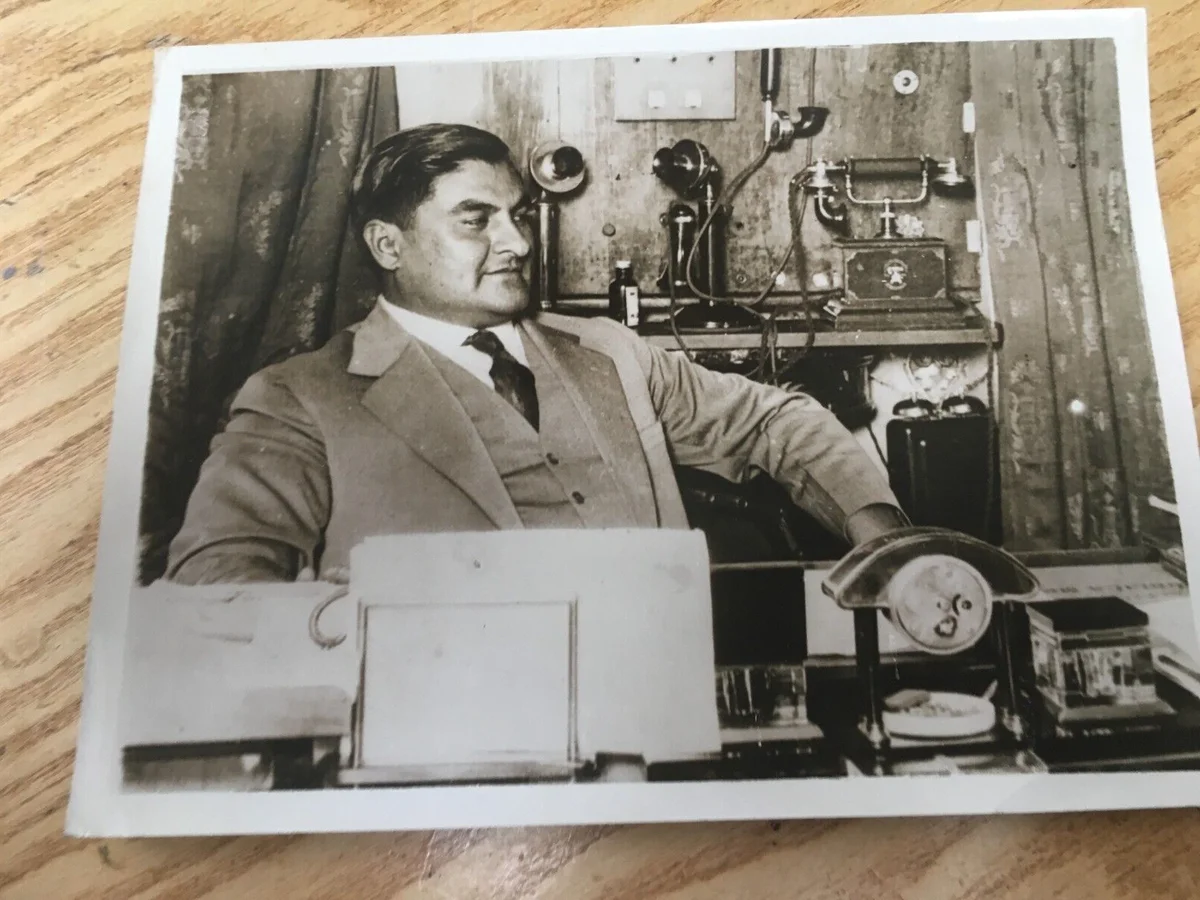
Emilio Portes Gil
 Mexico
Also known as: Emilio Cándido Portes Gil
Birthday
October 3, 1890
Birth Sign
Libra
Birthplace
Ciudad Victoria, Tamaulipas, Mexico
Age
Died at 88
About
Emilio Portes Gil was a Mexican politician, lawyer, and diplomat who served as the 48th President of Mexico from December 1, 1928, to March 1930. His presidency came at a turbulent time, following the assassination of President-elect Álvaro Obregón.
Portes Gil is remembered as a steady hand during the Maximato, a period when former president Plutarco Elías Calles, known as the "Jefe Máximo," held significant behind-the-scenes power. He navigated this complex political landscape while working within the constraints of the 1917 Constitution, which forbade presidential re-election.
Beyond the presidency, he had a long career in law and public service, including a stint as Attorney General of Mexico. He died in Mexico City on December 10, 1978, at the age of 88.
Early Life & Background
Emilio Cándido Portes Gil was born on October 3, 1890, in Ciudad Victoria, Tamaulipas, to Domingo Portes and Adela Gil. His early life was shaped by the Mexican Revolution, which he joined at a young age. He entered the service of the revolution in 1914, taking on various governmental posts that would lay the foundation for his political career.
Before reaching the presidency, Portes Gil held a series of positions that gave him a deep understanding of the country's political and legal systems. He worked as a lawyer and judge, gaining a reputation for his legal acumen. These roles were crucial during a time when Mexico was rebuilding its institutions after years of conflict.
By the late 1920s, he had become a trusted figure within the revolutionary establishment, which positioned him for the unexpected call to lead the nation.
Career Growth
Portes Gil's presidency began on December 1, 1928, under extraordinary circumstances. The assassination of President-elect Álvaro Obregón in July of that year had thrown the country into political uncertainty. As a loyal ally of Plutarco Elías Calles, Portes Gil was chosen as provisional president to restore stability.
His time in office was defined by the Maximato, where Calles wielded considerable influence. Portes Gil focused on consolidating the gains of the revolution and maintaining order. He also served as Attorney General of Mexico, a role he held both before and after his presidency.
After leaving office in March 1930, he continued his career in law and diplomacy, representing Mexico in various capacities. His post-presidential years were marked by a continued commitment to public service, though he never again held the highest office.
Career Timeline
Public Image & Style
In the public memory, Emilio Portes Gil is often overshadowed by the towering figure of Plutarco Elías Calles. Yet he is respected as a capable administrator who kept the country on course during a delicate transition. Historians describe him as a pragmatic leader who worked within the limits of the Maximato.
His legal background gave him a reputation for careful, methodical governance. While he lacked the charisma of some of his contemporaries, he was seen as a reliable and steady presence. Today, his legacy is preserved in the many streets and neighborhoods across Mexico that bear his name.
Fame & Fandom (iFAMOUS Rankings)
Emilio Portes Gil's global footprint is modest, a historical figure whose name echoes in Mexican civic life rather than in the chatter of modern celebrity culture. As of August 2026, iFANN's Global Fame Engine has evaluated him, but he does not currently hold a placement in the published rankings, neither in the Global Top 1,000 nor in any Top-100 scope list. He remains an unranked figure, a presence acknowledged by the engine but not yet quantified among the world's most famous.
The absence of a ranking is telling: Portes Gil's fame is archival, not viral. He is remembered in history books and institutional commemorations, schools, neighborhoods, and a medal bear his name, but his name does not trend, his face does not grace merchandise, and his life does not fuel fan fiction. His fanbase, if it can be called that, has no formal name; there is no organized community, no fan campaigns, no birthday billboards, no charity drives in his honor. He belongs to a bygone era of public figures whose interactions were limited to speeches and state functions, not the intimate, fan-driven engagement of today's celebrities.
In the digital age, Portes Gil's legacy is preserved by historians and civic institutions, not by a devoted following. His stories are the stuff of archives: the assassination attempt against him, the granting of university autonomy, his diplomatic exchange with Khrushchev. These are verified events, not legends spun by fans. For those who encounter him, he is a figure of stability and legal acumen, a man who navigated the Maximato with quiet competence. His fame is a footnote in the broader narrative of Mexican history, a steady presence rather than a blazing star.
Interesting Facts and Legends
Portes Gil was born in Ciudad Victoria, the city that would become the capital of Tamaulipas. A street in Matamoros, the Libramiento Emilio Portes Gil, made headlines in 2022 when a tanker truck carrying ethylene overturned there. A portrait of him, painted by an anonymous Mexican artist in the 19th century, was listed for sale on Artnet in 2023, a reflection of the enduring curiosity about his image. His presidency is often cited as the start of the Maximato, the period of Calles's dominance, and his legal expertise shaped both his judicial and presidential roles. Despite his political prominence, he kept a relatively low public profile compared to other revolutionary leaders.
One of the most retold stories from his presidency is the assassination attempt against him, a verified event that remains a point of historical interest. In 2022, a conference on the subject confirmed its place in the record. Another iconic moment came in 1929 when he granted autonomy to the National University of Mexico, a move covered by The New York Times and celebrated as a major legislative act. Later, as a former president, he asked Soviet Premier Nikita Khrushchev about Soviet domestic and foreign policy during a reception in Moscow, an exchange preserved in the Wilson Center Digital Archive. These are the stories that define his legacy: political, institutional, and quietly significant.
Family & Personal Life
Emilio Portes Gil was the son of Domingo Portes and Adela Gil. He married Carmen García González, who stood by him throughout his political career. The couple had no publicly documented children. Details about his family life are sparse, but his marriage to Carmen was a stable presence in his personal life.
His parents' support during his early years likely influenced his dedication to public service, though little is known about their own backgrounds.
Notable Connections
Portes Gil's political career was closely intertwined with several key figures of post-revolutionary Mexico. He was a loyal ally of Plutarco Elías Calles, the powerful "Jefe Máximo" who dominated the political landscape during the Maximato. His presidency was a direct consequence of the assassination of Álvaro Obregón, whose death created a power vacuum. His wife, Carmen García González, was his lifelong partner.
Relationships & Dating History
Emilio Portes Gil was married to Carmen García González, and their union lasted until his death. There are no public records of other significant relationships. Their marriage was a stable and private partnership, with Carmen supporting his political career.
- MarriedCarmen García González? - 1978Married until his death; details of their wedding date are not documented.
Death & Aftermath
Died
December 10, 1978 (aged 88)
Death Place
Mexico City
Cause of Death
Natural causes (undisclosed)
Emilio Portes Gil spent his final years in the quiet of Mexico City, where he passed away at the age of 88. On December 10, 1978, the former president and diplomat died within the capital city that had hosted his political life for decades. While biographical records confirm the date and location of his passing, the specific medical details surrounding his final days remain unrecorded in standard historical summaries. The reaction to his death followed the dignified path expected of a former head of state who served during the turbulent Maximato era.
Commemorative recognition appeared consistent with his status. His legacy has endured primarily through academic analysis of the Mexican Revolution and continued references in encyclopedic entries rather than new cultural works created specifically after his passing. A social media post from the Poder Judicial CDMX now commemorates his birth anniversary annually, reinforcing his place in the nation's legal and political history. Details regarding his funeral service, including the specific date of interment or the list of notable attendees, were not explicitly reported in the sources available. The handling of his estate remains unconfirmed.
Net Worth (Estate Value)
As a historical figure who passed away in 1978, Emilio Portes Gil's financial status is not a subject of contemporary reporting. His wealth would have been tied to his career as a lawyer, judge, and public official. During his lifetime, political salaries were modest, and he did not engage in business ventures that would have built a significant personal fortune.
His estate, if any, would have been passed to his wife, Carmen García González. There are no public records detailing his assets or investments. Given the era and his public service focus, his net worth was likely modest by modern standards.
Awards & Accolades
Known For
President of Mexico
1928-1930 · Provisional President
Keywords
Sources
Quick Facts
- Profession
- Politician, lawyer, diplomat
- Born
- October 3, 1890
- Birthplace
- Ciudad Victoria, Tamaulipas, Mexico
- Died
- December 10, 1978
- Death Place
- Mexico City
- Gender
- Male
- Spouse
- Carmen García González
- Birth Sign
- Libra
- Presidential Term
- December 1, 1928 - March 1930
Personal Details
- Full Name
- Emilio Cándido Portes Gil
- Spouse
- Carmen García González
Frequently Asked Questions
Who was Emilio Portes Gil?
When and where was Emilio Portes Gil born?
What was Emilio Portes Gil's role during the Mexican Revolution?
When did Emilio Portes Gil die?
Who was Emilio Portes Gil's spouse?
Similar People
Join the community
fans discussing