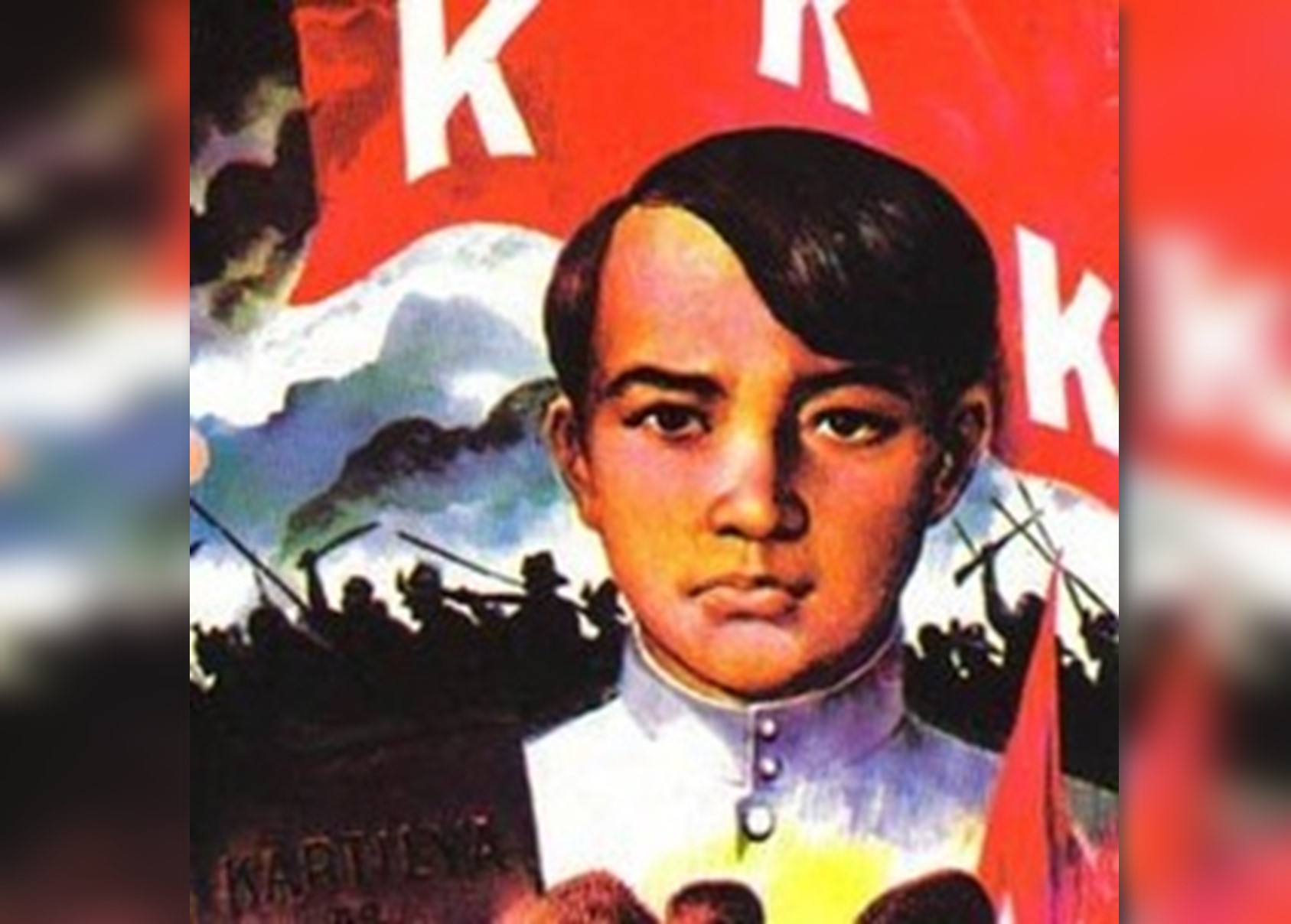
Emilio Jacinto
 Philippines
Also known as: Emilio Jacinto y Dizon, The Brains of the Katipunan
Birthday
December 15, 1875
Birth Sign
Sagittarius
Birthplace
Trozo, Manila, Philippines
Age
Died at 23
About
Emilio Jacinto y Dizon was a Filipino revolutionary, writer, and general who played a pivotal role in the Philippine Revolution against Spanish colonial rule. Born on December 15, 1875, in Trozo, Manila, he served as the principal writer and intellectual architect of the Kataas-taasang, Kagalang-galang na Katipunan (KKK). Known universally as the "Brains of the Katipunan," he authored its constitution, the Kartilya ng Katipunan, and edited its newspaper, Kalayaan. His literary genius and strategic leadership helped transform the society from a secret club into a disciplined revolutionary movement.
Jacinto joined the revolution at just 21 years old and rose quickly through the ranks. By 1897, he was appointed Secretary of State for the Haring Bayang Katagalugan and promoted to General in the Philippine Revolutionary Army, becoming one of the youngest generals of the conflict. Despite his short life, his contributions defined the moral and ethical code of the revolutionaries. He died prematurely on April 16, 1899, at the age of 23, leaving behind a legacy of courage and intellectual leadership that continues to inspire generations.
Early Life & Background
Emilio Jacinto was born into a working-class family in Trozo, Manila. His father, José María Jacinto, worked as a clerk at the San Juan de Dios Hospital, where the family lived. This environment exposed young Emilio to the struggles of the poor and the realities of colonial administration early in life. He displayed exceptional academic prowess during his childhood, attending the Ateneo Municipal de Manila, a prestigious institution run by the Jesuits. However, his education was cut short when his father died, forcing him to leave school without graduating to support his mother and siblings.
Poverty marked his early adulthood, yet it did not dampen his commitment to self-education or the nationalist cause. He taught himself various subjects and honed his writing skills in both Spanish and Tagalog. Before entering the revolution, he was already known for his sharp intellect and ability to articulate complex ideas. At the age of 21, he joined the Katipunan, a secret society dedicated to independence. His eloquence and organizational skills allowed him to rise rapidly within the ranks, eventually becoming the primary writer and strategist for the organization. His work before the Cry of Pugad Lawin laid the groundwork for the ideological foundation of the Philippine Revolution.
Career Growth
Jacinto's career began in earnest when he joined the Katipunan in 1892. He quickly became the editor of the society's official newspaper, Kalayaan, starting in 1896. His most significant contribution came with the authorship of the Kartilya ng Katipunan, a document that outlined the moral and ethical principles for members of the revolution. This text transformed the society from a loose group of conspirators into a disciplined force with a clear vision for an independent Philippines.
In 1897, his political influence grew as he was appointed Secretary of State for the Haring Bayang Katagalugan, the revolutionary government established by Andrés Bonifacio. That same year, he was promoted to General in the Philippine Revolutionary Army, making him one of the youngest generals in the conflict. He led military campaigns in Batangas and Laguna against Spanish forces, combining his intellectual strategy with active field command. When the Philippine-American War broke out in 1899, he continued to fight despite falling ill. His career ended abruptly when malaria forced him to withdraw from the front lines, leading to his death later that year.
Career Timeline
Public Image & Style
Emilio Jacinto is portrayed as the quintessential intellectual revolutionary. Media and educational materials depict him as stoic, brilliant, and selfless. His aesthetic is that of the 19th-century Filipino scholar-revolutionary, often shown in simple attire, holding a pen or a rifle. His content tone is solemn and patriotic, focusing on liberty and sacrifice. Unlike modern celebrities, his image does not rely on fashion or social media trends but on the enduring power of his writings and the respect he commands as a national hero.
His public persona is deeply tied to the concept of kalayaan (freedom). He is often described as the "mind" to Jose Rizal's "heart," representing the strategic and philosophical backbone of the revolution. This duality has cemented his place in the cultural consciousness of the Philippines, where he is celebrated not just for his military actions but for the moral clarity he brought to the struggle for independence.
Fame & Fandom
Emilio Jacinto stands as the 74th most famous person in Philippines, a position he has climbed from the 79th rank in the previous cycle. This standing places him firmly within the iFANN Global Fame Rankings, where global attention across media coverage, search, and consumption signals worldwide continues to honor his historical weight. Though the modern world lacks fan clubs or unofficial fandom names for the revolutionary general, reverence for him manifests through formal institutions rather than organic campaigns. The National Historical Commission of the Philippines and local government units serve as the de facto guardians of his legacy, organizing state-sponsored commemorations that function as collective acts of homage.
The primary ritual occurs on December 15, marking his birth anniversary with wreath-laying ceremonies at the Emilio Jacinto Monument in San Juan City. In December 2025, these observances drew filmmaker Real Florido, who paid tribute to his great-grandfather during the 150th-birthday celebrations, blending personal lineage with national pride. Cultural production also drives this engagement; studios announce projects like "Liwanag at Dilim (Heneral Emilio Jacinto)" to cement his place in cinematic mythology, while the Philippine Navy keeps his name active in military lore with vessels conducting patrols off Zambales. Unlike contemporary stars, Jacinto does not interact with followers, yet his presence remains palpable through monuments, streets, and the ongoing study of his writings.
Interesting Facts and Legends
Emilio Jacinto earned the title "Brains of the Katipunan" for his role as the principal writer of the society's documents, including the Kartilya ng Katipunan and the newspaper Kalayaan. He entered the movement at just 23 years old, becoming one of the youngest generals of the Philippine Revolution before dying prematurely on April 16, 1899. His early death at age 24 is often cited as a tragic loss to the nation, symbolizing the sacrifice of the youth during the conflict against Spanish rule.
A story fans still retell involves a newly discovered poem addressed to his mother, surfacing in May 2026. The text revealed deep personal sentiments, including the line "Forgive me," adding a layer of human vulnerability to his public image as a stoic revolutionary. Another enduring legend highlights his literary versatility, noting his ability to write compelling works in both Spanish and Tagalog. Modern culture further elevates his status through the film project "Liwanag at Dilim (Heneral Emilio Jacinto)," which positions him alongside Jose Rizal as a dual pillar of national heroism.
Notable Quotes
“Ang pag-ibig sa bayan ay ang pinakamahalagang dugo sa ugat ng bawat Pilipino.”
“Ang katarungan ay hindi dapat ipagkait sa sinumang tao.”
“Pagkamatay ko, huwag ninyong kalimutan ang mga taong nagtiwala sa akin.”
Family & Personal Life
Emilio Jacinto was born to José María Jacinto and Josefa Dizon. His father worked as a clerk at the San Juan de Dios Hospital in Manila, where the family resided. After his father's death, Emilio took on the responsibility of supporting his mother and siblings, a duty that shaped his character and sense of sacrifice. He remained close to his mother throughout his life, a bond highlighted by a newly discovered poem addressed to her in May 2026, which expressed his deep affection and guilt over their shared hardships.
There are no records of a spouse or children, as Jacinto dedicated his entire short life to the revolutionary cause. He is remembered as a bachelor who gave everything for the freedom of the Philippines. His legacy lives on through his great-grandson, Director Real Florido, who has participated in various tributes to honor his ancestor's memory, including the 150th-birthday celebrations in San Juan City in 2025.
Notable Connections
Andrés Bonifacio, Gregoria de Jesús, Real Florido, José María Jacinto, Josefa Dizon
Relationships & Dating History
Emilio Jacinto lived during a time of intense political upheaval and died at the young age of 23, leaving no record of romantic relationships, dating history, or marriage. Historical accounts focus entirely on his dedication to the nation rather than personal romance. He was known to be close to his mother, whose existence is highlighted by a newly discovered poem addressed to her in May 2026. There are no children or spouses documented. His legacy is that of a bachelor who dedicated his entire short life to the freedom of the Philippines. As of 2026, he remains deceased, with no current partner status applicable to his historical persona.
Death & Aftermath
Died
April 16, 1899 (aged 23)
Death Place
Magdalena, Rizal (then Morong)
Cause of Death
Malaria
Emilio Jacinto died on April 16, 1899, in Magdalena, Rizal, while serving in the Philippine-American War. The young revolutionary succumbed to malaria, a disease exacerbated by the harsh conditions of combat, malnutrition, and a lack of medical care. Historical records from the era do not contain formal autopsy reports; the cause was determined based on the circumstances of his service and the common ailments affecting soldiers at the time. He was buried in a pauper's grave in Montalban, now known as Rodriguez, Rizal, a detail that has sparked historical debate regarding the proper burial of national heroes.
Posthumous honors have been extensive and continue to grow. In 2025, San Juan City Mayor Francisco Javier M. Zamora led ceremonies at the Emilio Jacinto Monument to honor his 150th birth anniversary. Director Real Florido, identified as Jacinto's great-grandson, participated in these tributes alongside other officials recognizing him as a leading intellectual and military leader. The Philippine Navy commissioned the BRP Emilio Jacinto, which conducted patrols and test fires off Zambales in late 2025. In June 2026, the Philippine Postal Corporation released commemorative stamps featuring Jacinto and Gregoria de Jesus to mark the 128th Independence Day. A newly discovered poem addressed to his mother surfaced in May 2026, offering a rare glimpse into his personal vulnerability and deep affection for his family.
Net Worth (Estate Value)
$0
iFANN Editorial Team estimate
Emilio Jacinto passed away in 1899, leaving no estate or financial assets. Consequently, his net worth is recorded as $0. He did not accumulate wealth through salary, business ventures, or endorsements. Any financial value associated with his name today relates to the cultural capital of his legacy, managed by the National Historical Commission of the Philippines and various state institutions, rather than personal assets. The iFANN Editorial Team's analysis of X's earnings, ventures and assets points to roughly $0, reflecting the reality that a revolutionary of the 19th century left no material fortune.
While there is no personal wealth, the economic impact of his legacy is visible in the state-funded monuments, schools, and vessels bearing his name. The Philippine Navy's BRP Emilio Jacinto represents a significant investment in maintaining his memory, with operations continuing into 2025 and beyond. Commemorative stamps and publications generated by the government also contribute to the cultural economy surrounding his life, though these funds go to public institutions rather than heirs.
Awards & Accolades
View 7 records, honours and achievementsKnown For
Kartilya ng Katipunan
1896 · Author
Kalayaan
1896 · Editor
Liwanag at Dilim (Heneral Emilio Jacinto)
2026 · Subject
Keywords
Sources
Quick Facts
- Profession
- writer, revolutionary general
- Born
- December 15, 1875
- Birthplace
- Trozo, Manila, Philippines
- Died
- April 16, 1899
- Death Place
- Magdalena, Rizal
- Gender
- Male
- Birth Sign
- Sagittarius
Personal Details
- Full Name
- Emilio Jacinto y Dizon
- Children
- Education
- Ateneo Municipal de Manila (now Ateneo de Manila University)
Frequently Asked Questions
Who was Emilio Jacinto?
How old was Emilio Jacinto when he died?
What caused Emilio Jacinto's death?
Is Emilio Jacinto still alive?
What is the significance of the Kartilya ng Katipunan?
Similar People
Join the community
fans discussing