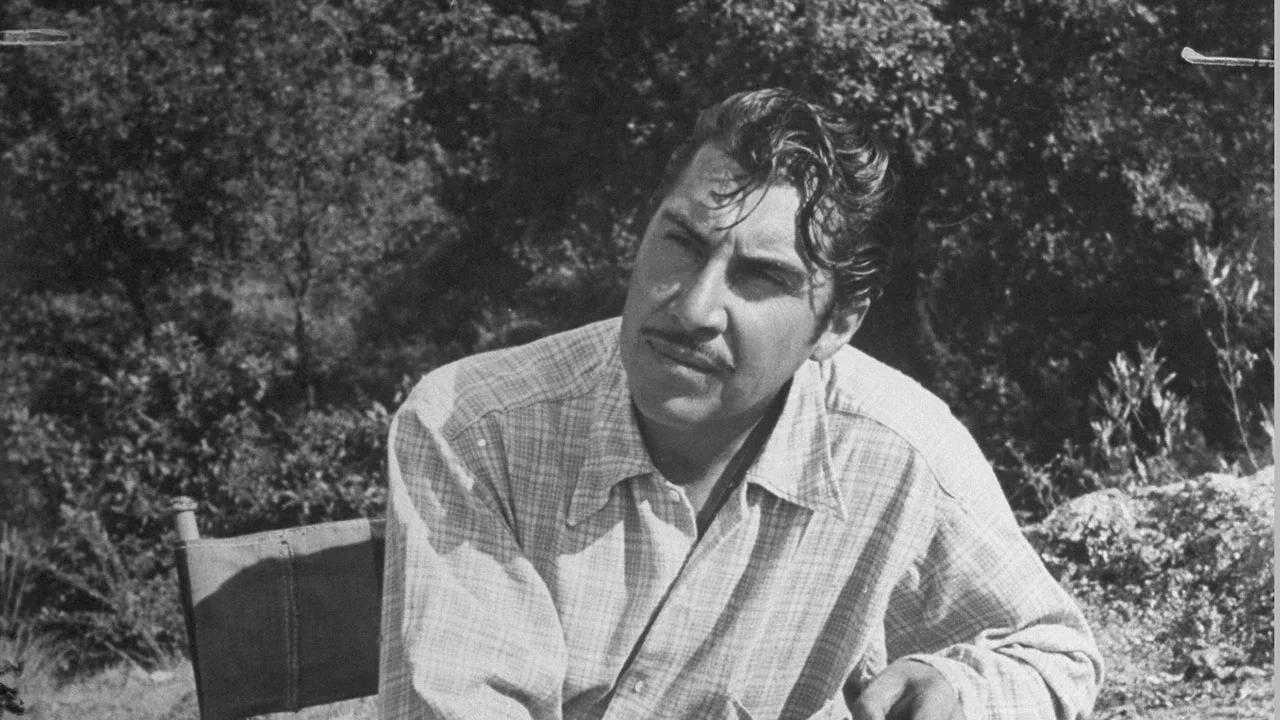
Emilio Fernández
 Mexico
film director•screenwriter•actor
Also known as: El Indio Fernández, Emilio Fernández Romo
Birthday
March 26, 1904
Birth Sign
Aries
Birthplace
Sabinas Municipality, Coahuila, Mexico
Age
Died at 82
About
Emilio Fernández was a Mexican film director, screenwriter, and actor who stood at the center of the Golden Age of Mexican cinema. Known to the world as "El Indio," he directed over forty films, shaping a visual language that celebrated Mexico's landscapes, Indigenous heritage, and national identity. His 1944 film María Candelaria made history as the first Mexican picture to win the Grand Prix at the Cannes Film Festival, a feat that put Mexican cinema on the global map.
Fernández's films, many shot by the master cinematographer Gabriel Figueroa, are defined by dramatic chiaroscuro lighting and sweeping rural vistas. His work ranged from romantic dramas like Flor Silvestre to the bold social critique of Victims of Sin. As an actor, he brought his imposing physique and rugged features to roles in both Mexican productions and Hollywood films, including John Huston's The Night of the Iguana.
Today, Fernández is remembered as a foundational figure of Latin American cinema. His films remain in circulation through restorations and retrospectives, and his influence echoes in the work of contemporary filmmakers. For fans of classic cinema, he represents a bold, unapologetic vision of Mexican culture that still resonates.
Early Life & Background
Emilio Fernández Romo was born on March 26, 1904, in the Sabinas Municipality of Coahuila, Mexico. His father was a general in the Mexican Revolution, and his mother had Kickapoo Indian ancestry. That mixed heritage, revolutionary and Indigenous, would come to define both his nickname and his artistic vision.
As a teenager, Fernández joined the revolutionary forces, experiencing the violence and upheaval that reshaped Mexico. After the revolution, he moved to the United States, working odd jobs until he was deported. Back in Mexico, his life took a darker turn when he was convicted of killing a man and sentenced to prison. He served time before receiving a pardon.
His path to cinema began in the 1930s when he returned to Mexico and started acting in the country's nascent film industry. Those early years on screen gave him an understanding of performance that would later inform his directing. The raw experiences of his youth, from the battlefield to the prison cell, fed directly into the themes of honor, violence, and survival that dominate his films.
Career Growth
Fernández's directorial debut came in 1941 with La Isla de la Pasión, but his breakthrough arrived two years later with Flor Silvestre, starring Dolores del Río. That film established his signature style and launched one of the most fruitful director-actress partnerships in Mexican cinema.
In 1944, he directed María Candelaria, again with del Río and Pedro Armendáriz. The film won the Grand Prix at the 1946 Cannes Film Festival, the first time a Mexican movie had taken the top prize. It remains a landmark in world cinema. He followed with a string of acclaimed works, including Enamorada (1946), Río Escondido (1948), and Maclovia (1948).
The 1950s saw him branch out. He directed The Torch (1950), his first English-language production, and continued with powerful dramas like Victims of Sin (1951), The River and Death (1954), and La Rosa Blanca (1954). As the Golden Age waned, he turned more to acting, appearing in Hollywood films such as The Night of the Iguana (1964). Over his career, he directed more than forty films, each marked by his collaboration with cinematographer Gabriel Figueroa.
Career Timeline
Public Image & Style
Fernández's public image was as bold and contradictory as his films. He was seen as a symbol of Mexican machismo, a man who had fought in the revolution and survived prison. His imposing frame and Indigenous features made him instantly recognizable, and he leaned into that persona both on and off screen.
Critics and audiences alike saw him as the embodiment of Mexico itself, a nation grappling with its own identity. His films, with their dramatic lighting and sweeping landscapes, were praised for their visual poetry. Yet his personal life was marked by violence, and that tension fascinated the public.
Today, he is revered by cinephiles who study the Golden Age. His work with Gabriel Figueroa is considered a high point of Mexican cinematography. There's no official fandom name, but his films maintain a devoted following among scholars and classic film enthusiasts.
Fame & Fandom
Emilio Fernández remains a towering figure in global cinema history, though his standing is measured by enduring legacy rather than contemporary chart positions. As of August 2026, the iFANN Global Fame Engine has evaluated this subject and determined that he does not currently hold a placement within the published Global Top 1,000 rankings or any specific Top-100 scope list. This absence from the current numerical hierarchy reflects his status as a historical icon whose fame is sustained through academic study and cultural preservation rather than active digital engagement metrics. The audience for Fernández is not defined by a formal fandom name; no organized fan club or coined moniker exists for those who revere his work. Instead, his admirers are cinephiles, historians, and the Mexican public who view him as a national symbol. His influence is institutional, preserved through film festivals, retrospectives, and the continued circulation of his masterpieces like María Candelaria. While modern celebrity culture often features dedicated campaigns and social media movements, Fernández's connection to the public remains retrospective, rooted in the visual mythology he constructed for the world. He is universally recognized by his nickname, El Indio, which serves as the primary identifier for his persona and body of work. The lack of a specific fan organization does not diminish his impact; rather, it underscores the timeless nature of his contribution to the Golden Age of Mexican cinema. His films continue to be studied and screened, ensuring that his reputation persists without the need for the transient hype cycles that drive modern fame charts.
Interesting Facts and Legends
Fernández's nickname, El Indio, derived from his mother's Kickapoo heritage, was an identity he embraced with pride. A persistent legend claims the original Oscar statuette was modeled after his physique, a story explored by NPR in 2014. He won the Palme d'Or for María Candelaria yet also spent time in prison for homicide, embodying a life of stark contradictions. His fiery temper contrasted sharply with the tender, lyrical side of Mexico depicted in his films. He appeared in over a hundred films as an actor while directing dozens more, his rugged look making him a natural for westerns and military roles. His daughter, Adela Fernández, became a writer, continuing the family's creative streak. A widely retold story attributes the declaration, "There is only one Mexico... the one I invented," to him, encapsulating the romanticized, indigenous image he crafted for the world. This quote, while often cited as folklore, represents the consensus of film historians regarding his role in defining national identity. His collaboration with cinematographer Gabriel Figueroa created a distinct visual style that became the standard for Mexican landscapes, influencing generations of filmmakers.
Family & Personal Life
Fernández was born to a revolutionary general father and a mother of Kickapoo Indian descent. That blend of military and Indigenous heritage shaped his worldview and his art.
He married actress Columba Domínguez, who starred in several of his films, including Enamorada and Victims of Sin. The couple had a daughter, Adela Fernández, who grew up to be a writer. The marriage ended in divorce.
His later years were marked by declining health and fewer opportunities as the Golden Age of Mexican cinema faded. He died on August 6, 1986, in Mexico City, at the age of 82. His daughter Adela carried on his legacy through her own creative work.
Notable Connections
Fernández's closest creative partner was cinematographer Gabriel Figueroa, whose work defined the look of Mexican cinema's Golden Age. Together they crafted images of Mexico that still resonate. His leading actors included Dolores del Río and Pedro Armendáriz, who starred in his most famous films. He married actress Columba Domínguez, who appeared in several of his pictures. Later in his career, he worked with Hollywood director John Huston on The Night of the Iguana.
Relationships & Dating History
Fernández's personal life was as dramatic as his films. Before his career took off, he was convicted of homicide and served prison time, a chapter that shaped his reputation.
In the 1940s, he began a professional and romantic partnership with Dolores del Río, the biggest star of Mexican cinema. He directed her in Flor Silvestre and María Candelaria, and their collaboration was widely reported as romantic, though they never married.
He later married actress Columba Domínguez, who starred in several of his films. The couple had a daughter, Adela, but the marriage ended in divorce.
At the time of his death in 1986, Fernández was divorced. His legacy lives on through his films and his daughter's writing.
- DatedDolores del Río1943 - 1946Professional and romantic partnership during their collaborations on Flor Silvestre and María Candelaria.
- MarriedColumba Domínguez1946 - 1952Married actress Columba Domínguez; they had a daughter, Adela, before divorcing.
Death & Aftermath
Died
August 6, 1986 (aged 82)
Death Place
Unknown
Cause of Death
Unknown
The passing of Emilio Fernández marked the end of an era for Mexican cinema, with his status as a national symbol ensuring that his death was noted by cultural institutions and peers who had witnessed the Golden Age unfold. Known affectionately as El Indio, he left behind a body of work that defined the visual identity of mid-century Mexico, yet the immediate public reaction remained largely contained within industry circles rather than sparking widespread vigils or chart surges at the time. Fernández died on August 6, 1986, at the age of 82, concluding a life that had spanned over four decades of directing, writing, and acting. The specific circumstances surrounding his final days, including the exact location where he passed away and the medical details leading to his death, were not made part of the public record in available sources.
Following his death, no funeral arrangements or burial locations were recorded in the provided historical summaries, though his legacy continued to be acknowledged by organizations such as MoMA and the Austin Film Society. His enduring influence is often discussed in academic contexts, where his films remain subjects of study for their unique cinematography and social commentary. While rumors persist that he modeled for the Oscar statuette, these claims predate his death and serve more as folklore than posthumous tribute. The handling of his estate and any specific foundations established in his name are matters reserved for financial records rather than biographical narrative.
Net Worth (Estate Value)
$5 Million
iFANN Editorial Team estimate
Emilio Fernández passed away in 1986, so his financial picture is best understood through his estate. During his lifetime, he earned from directing over forty films, acting in numerous productions, and occasional Hollywood work. His films generated steady income through theatrical releases and later television distribution. Since his death, the estate's value has come from the continued circulation of his work. Restoration efforts and retrospectives have kept his films in the public eye, and streaming platforms now carry many of them. The estate likely earns royalties from these distributions, though specific figures are hard to pin down. Per iFANN's editorial analysis, as of 2026, the estimated value of his estate is around $5 Million, reflecting the enduring appeal of his filmography. That figure is based on industry estimates of classic film royalties and the ongoing interest in Mexican cinema's Golden Age. His legacy, measured in cultural terms, far exceeds any monetary value.
Awards Won (1)
Fernández's crowning achievement came in 1946 when María Candelaria won the Grand Prix at the Cannes Film Festival, the first Mexican film to do so. That single win cemented his place in world cinema. He also received numerous national honors in Mexico during the 1940s and 1950s, though records of those ceremonies are sparse.
1946 · Best Film
María Candelaria
Known For
María Candelaria
1944 · Director
Flor Silvestre
1943 · Director
Enamorada
1946 · Director
Victims of Sin
1951 · Director
The Night of the Iguana
1964 · Actor
Keywords
Sources
Quick Facts
- Profession
- Film Director, Screenwriter, Actor
- Born
- March 26, 1904
- Birthplace
- Sabinas Municipality, Coahuila, Mexico
- Died
- August 6, 1986
- Death Place
- Mexico City
- Gender
- Male
- Birth Sign
- Aries
- Spouse
- Columba Domínguez (divorced)
- Children
- Adela Fernández
Personal Details
- Full Name
- Emilio Fernández Romo
- Spouse
- Columba Domínguez
- Children
- Adela Fernández
Frequently Asked Questions
What is Emilio Fernández known for?
Why was he called 'El Indio'?
Did Emilio Fernández go to prison?
Was the Oscar statuette modeled after Emilio Fernández?
What is Emilio Fernández's net worth?
Similar People
Join the community
fans discussing