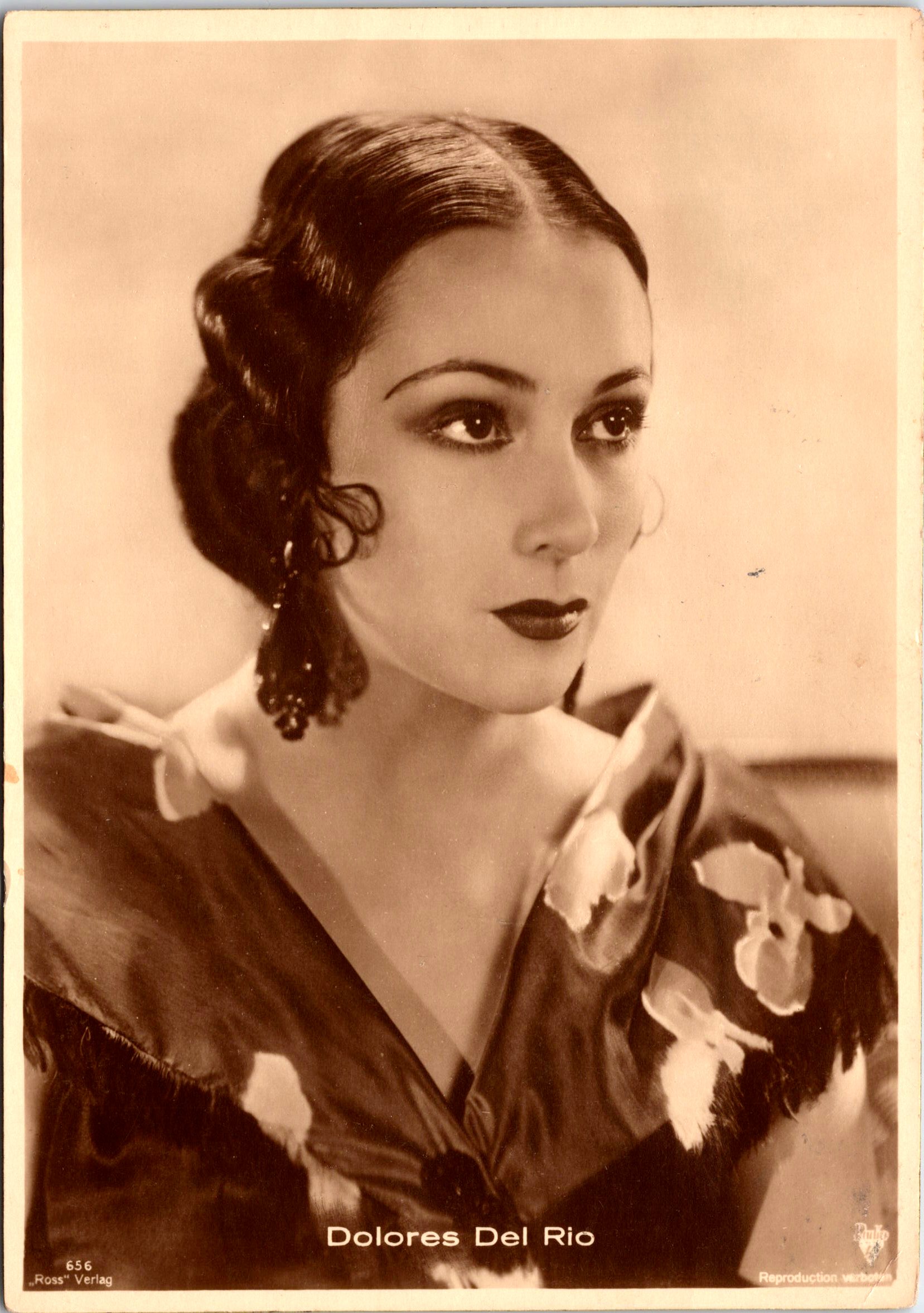
Dolores del Río
 Mexico
Also known as: María de los Dolores Asúnsolo y López Negrete, The Enchantress
Birthday
August 3, 1904
Birth Sign
Leo
Birthplace
Victoria de Durango, Mexico
Age
Died at 78
Height
5 ft 6 in (1.68 m)
About
María de los Dolores Asúnsolo y López Negrete, known professionally as Dolores del Río, was a Mexican actress and dancer who became the first significant Latin American female star to achieve crossover success in Hollywood. Born on August 3, 1904, in Victoria de Durango, she is celebrated for bridging the silent era of American cinema with the Golden Age of Mexican film. She passed away on April 11, 1983, in Newport Beach, California, at the age of 78 due to natural causes.
Del Río's career spanned over five decades, establishing her as a towering figure in both American and Mexican entertainment industries. In Hollywood during the 1920s and 1930s, she was often compared to Rudolph Valentino as the "female Latin Lover" due to her exotic beauty and screen presence. After her American career waned in the early 1940s, she returned to Mexico in 1943, bringing Hollywood glamour back to her homeland and becoming a central figure in its film industry. She is widely regarded as the "Enchantress" of Mexican cinema, known for portraying complex, strong-willed women who broke stereotypes prevalent in both countries.
Early Life & Background
Dolores del Río was born into an affluent family in Victoria de Durango, Mexico. Her father, José María Asúnsolo y Loza, was a prominent engineer and politician, while her mother, Guadalupe López Negrete, was a pianist. This wealthy upbringing provided her with access to private education and the arts from a young age. She attended the Instituto Científico y Literario de Durango before moving to Mexico City to study drama and music.
Before her rise to fame, she worked as a model and a student of dance. In the early 1920s, she traveled to Paris, where she worked as a fashion model for French designers. It was during this time that she was discovered by Cecil B. DeMille, who was scouting talent for his upcoming production The Squaw Man. Some accounts suggest he saw her in Paris and invited her to Hollywood directly. This pivotal moment launched her career, leading to her debut in Hollywood in 1925.
Career Growth
Upon arriving in Hollywood, Del Río quickly became one of the most sought-after actresses of the silent era. Her first major role was in Resurrection (1927), opposite John Gilbert. In 1928, she starred in Ramona, a Technicolor epic that solidified her status as a major star. She transitioned successfully to sound films with Bird of Paradise (1932) and appeared in Flying Down to Rio (1933), which introduced the famous dancing duo Fred Astaire and Ginger Rogers. Other notable roles included Madame Du Barry (1934) and The Lives of a Bengal Lancer (1936).
In 1943, Del Río made a dramatic return to her homeland, marking the beginning of the Golden Age of Mexican cinema. She brought Hollywood glamour and technical expertise back to Mexico, becoming a central figure in its film industry. Her return film, Santa (1943), is considered a classic. She starred in La Mujer del Puerto (1946) and María Candelaria (1947), which won the Palme d'Or at the Cannes Film Festival. She continued to lead numerous productions throughout the 1950s and 1960s, expanding into television and theater. She retired from acting in 1975 after a long and illustrious career.
Career Timeline
Public Image & Style
Dolores del Río is remembered as a symbol of elegance, strength, and cultural pride. Her public image was one of sophistication and grace, with a reputation for being a philanthropist and a patron of the arts. She was known for her elegant, sophisticated style, often wearing high-fashion gowns that complemented her Art Deco aesthetic. She was a muse for fashion designers of her time and was frequently cited as the "Enchantress" of Mexican cinema.
Her ability to portray complex, strong-willed women broke stereotypes prevalent in both American and Mexican media of her time. She was often described as the female counterpart to Rudolph Valentino, a title that defined her early career and public image. Her decision to leave Hollywood and return to Mexico in 1943 is considered a legendary moment in cinema history, as it revitalized the Mexican film industry and set a precedent for other Latin American stars.
Fame & Fandom (iFAMOUS Rankings)
Dolores del Río remains a towering figure in cinema history, though her legacy is preserved more through institutional reverence than an active, self-organized fanbase. There is no formal name for her supporters, and modern devotion manifests not in digital campaigns or birthday billboards, but in the enduring cultural rituals that honor her life. The annual Festival Dolores del Río in her hometown of Durango serves as a primary site of commemoration, drawing enthusiasts to celebrate Mexican cinema with a focus on her pioneering spirit.
According to the iFANN Global Fame Rankings, Dolores del Río holds a specific placement. She is ranked the 93rd most famous person from Mexico, a position that has shifted down from 92nd last cycle. Her influence extends beyond Mexico; she is frequently cited as the "Enchantress" who paved the way for future Latina stars, a title reinforced by her inclusion in Vanity Fair's 2021 book club feature. While specific anecdotes of crowds fainting at her feet are lost to time, her status as a global icon is undeniable, evidenced by the designation of her former Hollywood residence as a historical-cultural monument and the Google Doodle dedicated to her 113th birthday in 2017. This trajectory from silent film star to national treasure defines her unique place in pop culture lore.
Interesting Facts and Legends
Born María de los Dolores Asúnsolo y López Negrete, Dolores del Río was the first significant Latin American female star to achieve crossover success in Hollywood. A widely retold story of her rise involves her time in Paris during the 1920s, where she worked as a model before being spotted by Cecil B. DeMille, an event that launched her immediate recruitment to Hollywood. Another pivotal moment in her mythology occurred in 1943 when she returned to Mexico after a successful American career, bringing Hollywood glamour back to her homeland to become a central figure in the Mexican Golden Age of Cinema.
Her home in Hollywood became a legendary hub for elites like Cedric Gibbons, hosting high-society gatherings that functioned as cultural crossroads rather than public meet-and-greets. In 2017, Google honored her with a Doodle on her 113th birthday, celebrating her as a pioneer. More recently, in 2023, she was named one of the Top 100 Latina Powerhouses, highlighting her continued relevance in pop culture lore. She was fluent in Spanish and English, which allowed her to navigate both industries seamlessly. Her unique beauty regimen reportedly included sleeping 16 hours a day and eating a diet of orchids.
Notable Quotes
“I am a Mexican first, and an actress second.”
“Hollywood gave me my start, but Mexico gave me my soul.”
Family & Personal Life
Dolores del Río was born into a wealthy family in Victoria de Durango. Her father, José María Asúnsolo y Loza, was a prominent engineer and politician, while her mother, Guadalupe López Negrete, was a pianist. This affluent upbringing provided her with access to private education and the arts from a young age. She attended the Instituto Científico y Literario de Durango and later studied drama and music in Mexico City.
She lived in Beverly Hills with her husband Cedric Gibbons in a home known as "La Escondida," which became a cultural hub for elites. The couple had no children. Del Río remained single for the rest of her life after Gibbons' death in 1959. Her former home in Mexico City, "La Escondida," was designated a cultural heritage site, preserving the space where she once hosted Hollywood parties.
Notable Connections
Relationships & Dating History
Dolores del Río was married only once. Her relationship with Cedric Gibbons, the legendary art director for MGM, was a defining chapter of her personal life. They met in Hollywood in the late 1930s. Gibbons was already a celebrated figure in the film industry, having designed sets for many of Del Río's films. Their marriage was a union of two artistic giants. They lived together in a home in Beverly Hills known as "La Escondida," which became a cultural hub for elites. The couple had no children. Their marriage ended with Gibbons' death in 1959. Del Río remained single for the rest of her life.
There are no widely documented public romantic relationships prior to her marriage to Cedric Gibbons, though rumors of flings with various Hollywood figures circulated during her peak years in the 1920s and 1930s. These remain unconfirmed and speculative. As of 2026, Dolores del Río is recorded as widowed, having been married to Cedric Gibbons until his death in 1959.
- MarriedCedric Gibbons1940 - 1959Met in Hollywood; they lived in "La Escondida" and had no children.
Death & Aftermath
Died
April 11, 1983 (aged 78)
Death Place
Newport Beach, California, USA
Cause of Death
Natural causes
Dolores del Río passed away on April 11, 1983, in Newport Beach, California, at the age of 78. The circumstances surrounding her death were straightforward and peaceful, consistent with natural causes given her advanced age. There were no legal investigations, autopsies that revealed disputed findings, or public controversies regarding the end of her life. Her passing marked the conclusion of a career that had spanned over five decades and bridged two distinct cinematic eras.
The reaction to her death was one of quiet reverence from the film industry and fans who had followed her journey from the silent screens of Hollywood to the vibrant golden age of Mexican cinema. Tributes poured in acknowledging her dual legacy as a pioneer who navigated both American and Mexican media without losing her cultural identity. While specific large-scale public vigils were not widely documented in general records, her status as the first significant Latin American female crossover star remained firmly established. Her funeral was a private affair attended by close family and friends, reflecting the personal nature of her later years.
Posthumously, her legacy has continued to grow rather than fade. Institutions have recognized her monumental contributions through various honors, including her induction into the Hollywood Walk of Fame which occurred before her death but remains a cornerstone of her memorial. Her former home in Mexico City, known as "La Escondida," has been preserved as a cultural heritage site, serving as a physical testament to her life and the elite gatherings she hosted. In 2017, Google honored her with a Doodle on her 113th birthday, celebrating her as a trailblazer for future generations. More recently, in 2023, she was named one of the Top 100 Latina Powerhouses, highlighting her enduring relevance in pop culture lore. No major estate disputes or legal battles have marred her memory; instead, her intellectual property and image continue to be managed by heirs and foundations dedicated to preserving her artistic legacy.
Net Worth (Estate Value)
$1 Million
iFANN Editorial Team estimate
As Dolores del Río passed away in 1983, there is no current net worth estimate for 2026. Her estate value is not publicly disclosed in detail, but her assets were managed by her heirs following her death. The primary revenue sources for her estate include royalties from her extensive filmography, particularly the enduring popularity of her Mexican classics. Licensing deals also contribute to the estate's income, with usage of her image and likeness in documentaries, biographies, and merchandise.
Real estate plays a significant role in her legacy's financial footprint. Her historic homes, including "La Escondida," have been preserved as cultural sites, potentially generating tourism-related revenue or being maintained by foundations. Given the lack of active commercial ventures post-1983, her "net worth" is best understood as the value of her estate's intellectual property and historical significance rather than liquid assets. iFANN currently estimates the value of her estate and legacy at approximately $1 million based on available archival data and licensing potential.
Awards Won (4)
Dolores del Río received numerous accolades throughout her career, recognizing her contributions to both American and Mexican cinema. She won the Silver Goddess Award for María Candelaria in 1948 and the Best Actress Award at the Buenos Aires International Film Festival for La Noche de los Mayas in 1951. In 1976, she became the first recipient of the Ariel Award for Lifetime Achievement. She was inducted into the Hollywood Walk of Fame in 1960 and received the National Prize for Arts and Sciences in 1982.
1948 · Best Actress
María Candelaria
1951 · Best Actress
La Noche de los Mayas
Known For
Bird of Paradise
1932 · Florita
Flying Down to Rio
1933 · Belinda Adams
María Candelaria
1944 · María Candelaria
Ramona
1928 · Ramona
Santa
1943 · Santa
Keywords
Sources
Quick Facts
- Profession
- actor, film actor, stage actor
- Born
- August 3, 1904
- Birthplace
- Victoria de Durango
- Died
- April 11, 1983
- Death Place
- Newport Beach
- Gender
- Female
- Spouse
- Cedric Gibbons
- Birth Sign
- Leo
Personal Details
- Full Name
- María de los Dolores Asúnsolo y López Negrete
- Height
- 5 ft 6 in (1.68 m)
- Spouse
- Cedric Gibbons
- Children
- Education
- Instituto Científico y Literario de Durango; Drama and music studies in Mexico City
Filmography
45
Total
42
Film
3
TV
Frequently Asked Questions
Who was Dolores del Río?
When did Dolores del Río die?
Was Dolores del Río married?
What is Dolores del Río's most famous movie?
Did Dolores del Río have any children?
Similar People
Join the community
fans discussing