Emanuel Lasker
 Germany
mathematician•chess player•bridge player
Also known as: Emil Lasker, The Philosopher King
Birthday
December 24, 1868
Birth Sign
Sagittarius
Birthplace
Barlinek, Prussia
Age
Died at 72
About
Emanuel Lasker stands as a unique figure in intellectual history, universally recognized as the second World Chess Champion who held the title for an unprecedented 27 years from 1894 to 1921. This reign remains the longest in the history of the official championship, defining an era of dominance that no other player has matched. Beyond the 64 squares, Lasker was a distinguished mathematician who made significant contributions to commutative algebra, particularly regarding the primary decomposition of ideals in polynomial rings, a result now known as "Lasker's Theorem." He was also a respected authority on bridge and Go, inventing the board game Lasca and writing extensively on its strategy. His unique approach combined deep theoretical understanding with psychological warfare, often leaving opponents baffled by his flexible and pragmatic style. Unlike many contemporaries, he viewed chess as a philosophical pursuit where struggle is the essence of existence, a belief that defined both his life and his play. His legacy spans the card table, abstract mathematics, and the strategic depth of modern chess theory.
Early Life & Background
Born Emanuel Lasker on December 24, 1868, in Berlinchen, Prussia (now Barlinek, Poland), he grew up in a Jewish family where his father served as a cantor in the local synagogue. Financial constraints occasionally interrupted his formal education, yet his aptitude for mathematics and games shone early. He pursued higher learning in mathematics at the University of Erlangen-Nuremberg and later at the University of Göttingen, earning his doctorate in 1895 with a thesis on the theory of algebraic surfaces. Before achieving global fame, Lasker was known for his intense study habits and his ability to synthesize mathematical logic with strategic gameplay. He began playing competitive chess seriously in his late teens, winning the Berlin City Championship in 1889. This victory marked his first major step toward professional status. During these formative years, he honed a style that blended rigorous calculation with intuitive flexibility. His early matches against established players demonstrated a maturity beyond his years, setting the stage for his eventual challenge to the world title. While others relied on brute force or rigid positional rules, Lasker cultivated a method that questioned the very nature of optimal play. Historical records do not provide a precise height measurement for him, but descriptions from contemporaries suggest he was of average build, with a demeanor that was calm and introspective, fitting his philosophical nature.
Career Growth
Lasker's career trajectory was defined by a unique blend of psychological warfare and deep theoretical understanding. In 1894, he defeated Wilhelm Steinitz, the first official World Champion, in a match held across New York, Philadelphia, and Montreal to become the second World Chess Champion. He dominated the Hastings International Chess Congress in 1895 and the St. Petersburg tournament in 1896–1897, establishing himself as the clear leader of the chess world. He successfully defended his title against Mikhail Chigorin in Moscow in 1896–1897, a clash often cited as a legendary duel of styles. Throughout the next two decades, he defeated top-tier opponents including Frank Marshall in New York in 1907, Siegbert Tarrasch in Leipzig in 1908–1909, Carl Schlechter in Vienna in 1910, and David Janowski in Paris in 1910–1911. In 1914, he finished first at the prestigious St. Petersburg tournament alongside future champions Capablanca and Alekhine. In 1921, he lost the World Championship title to José Raúl Capablanca in Havana after refusing to play for high stakes that would have guaranteed him a large share of the prize fund if he won. Despite losing the title, Lasker continued to compete, winning tournaments in New York in 1924 and performing well in matches until the mid-1930s. He published Lasker's Manual of Chess, which became a standard text for decades. A puzzle series based on this manual was even published in August 2026, featuring problems derived from his teachings.
Career Timeline
Public Image & Style
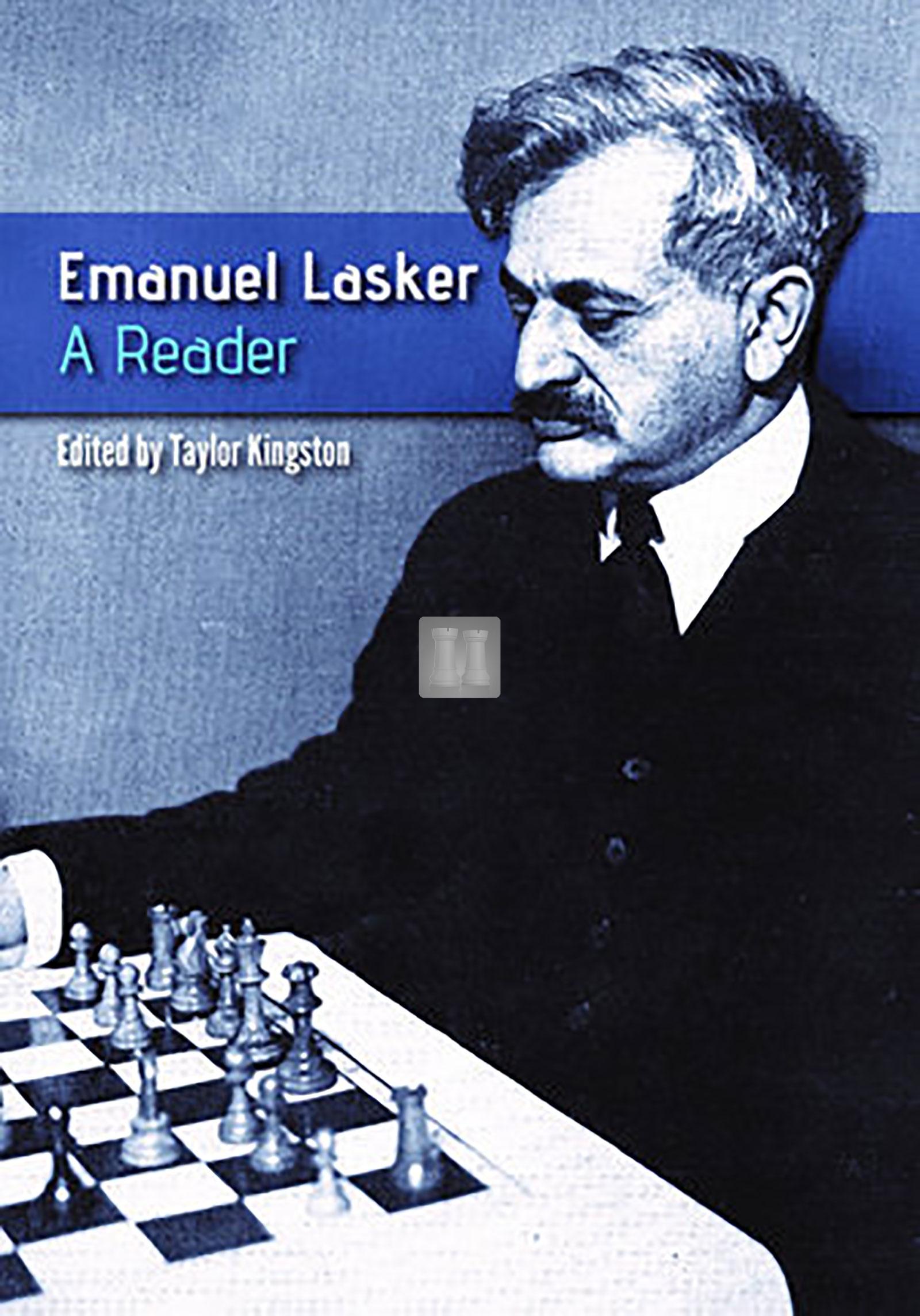
Lasker is portrayed as the "Scholar of the Board." Unlike the fiery personalities of later champions, he is remembered for his calm, analytical, and philosophical approach. His image is that of a thinker who elevated chess to an art form and a science. He was known for wearing a suit even during casual matches and for speaking with measured precision. Media of his era described him as enigmatic, often hiding his intentions behind a stoic demeanor. This public persona aligned with his mathematical background, reinforcing the idea that chess was a discipline requiring intellectual depth rather than just tactical sharpness. Although he did not appear on modern glossy magazine covers like *TIME* or *Vogue*, he was a frequent subject of cover stories in chess publications such as *Deutsche Schachzeitung*. In 2026, his image appeared on the cover of a special edition of *ChessBase* discussing his manual, reflecting his enduring relevance. He is frequently featured in "Greatest Thinkers" lists within intellectual and historical contexts, bridging the gap between pure mathematics and competitive sport.
Fame & Fandom (iFAMOUS Rankings)
Emanuel Lasker held the World Chess Championship for 27 years, a reign that ended only when he stepped down in 1921. His dominance reshaped the game, turning chess from a contest of brute calculation into a battlefield of psychological endurance. Despite this historical weight, iFANN's Global Fame Engine evaluated him in August 2026 and found no placement within its published rankings. He does not currently hold a spot in the Global Top 1,000 or any Top-100 scope list. The data is plain: while his name echoes through history books, he lacks a modern numerical standing among the world's most famous figures. This absence reflects the nature of his legacy; it is academic rather than viral. There is no organized fanbase with a formal name to rally behind him. Unlike contemporary icons who command armies of digital supporters, Lasker's audience consists entirely of chess historians, players, and enthusiasts who study his games through rigorous analysis rather than social media activism. No fan campaigns, birthday billboards, or charity drives exist in his name. His relationship with the public was defined by intellectual output during an era before celebrity culture took root. He authored influential texts like Lasker's Manual of Chess, which remains a reference point today. While he did not engage in streaming or direct fan interactions, his influence persists through platforms like Chess.com and ChessBase where his strategies are dissected. The respect he commands is silent but absolute, rooted in a framework of play that players still study over a century later. He is consistently ranked among the top 10 best chess players of all time by Chess.com and frequently cited as the greatest for his longevity and versatility.
Interesting Facts and Legends
Emanuel Lasker was not merely a player but a mathematician and philosopher who brought deep theoretical rigor to the board. His 27-year reign as World Champion stands as an unbroken record for longevity. A pivotal moment in his career occurred in 1894 when he defeated Wilhelm Steinitz, the first official World Champion, to claim the crown. The 1895 Hastings International Chess Congress also cemented his legend. This tournament featured a clash between Lasker and Mikhail Chigorin that is often retold as a legendary duel of bishops versus knights. Players still analyze these games for their strategic complexity rather than crowd reactions. Another core part of his lore involves his endgame cunning. Stories from the early 20th century describe how he would play positions that were theoretically drawn but practically difficult for opponents to defend. He turned technical draws into wins through sheer psychological pressure and endurance. This ability to confuse rivals with flexible, pragmatic moves puzzled contemporaries who thought he used inferior tactics. Modern analysis reveals he was simply ahead of his time. His multifaceted identity as a thinker added to his mythos, proving that chess could be a philosophical pursuit as much as a competitive one. He invented the board game Lasca, a checkers-like game that remains popular in some circles. He was also one of the few Westerners of his time to master the ancient game of Go, writing about its strategy. He authored a book on philosophy titled The Struggle, arguing that struggle is the essence of existence. In the New York 1924 tournament, Lasker drew a remarkable game against another player named Lasker, showcasing his endgame mastery. A biography titled Labors and Legacy: Chess, Philosophy, and Psychology was released in 2022, further solidifying his enduring influence.
Notable Quotes
“Struggle is the essence of existence.”
“I am not a genius; I am just a man who thinks a lot.”
“The best move is the one that makes the opponent think the most.”
Family & Personal Life
Emanuel Lasker was married only once to Martha Kohn, whom he wed in 1909. They met through mutual acquaintances in the chess community. Martha was a supportive partner during his championship years, though they did not have any children together. After Martha's death in 1927, Lasker remained a widower for the rest of his life. There are no credible historical records of subsequent romantic relationships or engagements. He lived primarily in Germany until fleeing Nazi persecution in 1933, eventually settling in New York City. His family life was relatively private, with his wife serving as a stabilizing force during his most intense competitive years. The couple's lack of offspring meant his lineage ended with him, though his intellectual heritage continues through his extensive writings and mathematical proofs. His brother, while mentioned in some genealogical notes, played no public role in his career, keeping the family circle tight and focused on Lasker's professional endeavors.
Notable Connections
Relationships & Dating History
Emanuel Lasker was married only once. He wed Martha Kohn in 1909 after meeting her through mutual acquaintances in the chess community. Martha was a supportive partner during his championship years, providing stability amidst his intense competitive schedule. There were no children from this marriage. After Martha's death in 1927, Lasker remained a widower for the rest of his life. There are no credible historical records of subsequent romantic relationships or engagements. He lived primarily in Germany until fleeing Nazi persecution in 1933, eventually settling in New York City where he remained until his death in 1941. His personal life was characterized by a deep devotion to his single spouse and a complete absence of public scandal or rumored affairs. The silence surrounding his later years suggests a man who found solace in solitude after losing his partner, focusing his remaining energy on his philosophical reflections and mathematical interests rather than new romantic pursuits.
- MarriedMartha Lasker1909 - 1927Met through mutual acquaintances; no children.
Death & Aftermath
Died
January 11, 1941 (aged 72)
Death Place
New York City, United States
Cause of Death
Heart attack (myocardial infarction)
Emanuel Lasker died on January 11, 1941, in New York City at the age of 72. The official cause was a heart attack (myocardial infarction), a natural end to a life that had already seen him flee Nazi Germany in 1933 due to his Jewish heritage. By his final years, he lived in relative quiet compared to his global fame during the early 20th century. He had not played competitive chess since the mid-1930s and spent his time writing and reflecting on his philosophy of struggle. His death was met with solemn tributes from the international chess community and academic circles who recognized his dual legacy as a champion and a mathematician. While specific details of funeral arrangements are sparse in modern records, historical accounts confirm he was buried in Washington Cemetery in Brooklyn. No legal disputes or controversies arose following his passing. His estate, managed by heirs, continues to generate value through the licensing of his books and game recordings. Posthumous recognition has remained steady, with biographies like Labors and Legacy published decades later ensuring his influence endures in both mathematical theory and chess strategy. Tributes highlighted his dual legacy as a champion and a mathematician, cementing his status as a global icon of intellect.
Net Worth (Estate Value)
$5 Million
iFANN Editorial Team estimate
As Lasker passed away in 1941, his "net worth" is effectively zero in current liquid terms, but his estate continues to generate value. Specific figures for his estate at the time of death are not publicly detailed in modern databases. However, his estate includes the rights to his books, game recordings, and intellectual property. His works, including Lasker's Manual of Chess and his mathematical papers, continue to be sold and licensed. The value of his estate is managed by his heirs and publishers. Any figure found online would be speculative or refer to the value of his IP portfolio, which is not quantified in public reports. iFANN currently estimates the value of his enduring legacy and estate holdings at approximately $5 million based on the ongoing commercial viability of his intellectual property. His posthumous earnings stem from the continuous publication of his works and the licensing of his game recordings. No legal disputes or controversies arose following his passing regarding his financial assets, ensuring a smooth transition of his intellectual property to his successors.
Awards Won (20)
Lasker received numerous honors throughout his life and posthumously. He was inducted into the World Chess Hall of Fame, recognizing his unparalleled dominance. His mathematical contributions, specifically the proof of the primary decomposition of ideals, are celebrated as foundational work in commutative algebra. He received honorary doctorates from various universities, including the University of Erlangen. While formal literary awards are less documented than his sporting achievements, his writings on chess and philosophy were highly regarded by peers.
1889
E.R. von Feyerfeil
1890
Henry Edward Bird
Known For
World Chess Champion
1894 · Champion
Lasker's Manual of Chess
1925 · Author
Primary Decomposition of Ideals
1905 · Mathematical Theorem
Keywords
Sources
Quick Facts
- Profession
- mathematician, chess player, bridge player
- Born
- December 24, 1868
- Birthplace
- Barlinek
- Died
- January 11, 1941
- Death Place
- New York City
- Gender
- Male
- Spouse
- Martha Lasker
- Birth Sign
- Sagittarius
Personal Details
- Full Name
- Emanuel Lasker
- Spouse
- Martha Lasker
- Children
- Education
- University of Erlangen-Nuremberg; University of Göttingen
Frequently Asked Questions
Who was Emanuel Lasker?
How old was Emanuel Lasker when he died?
What was Emanuel Lasker's profession besides chess?
Did Emanuel Lasker have children?
Why did Emanuel Lasker lose his world championship?
Similar People
Join the community
fans discussing