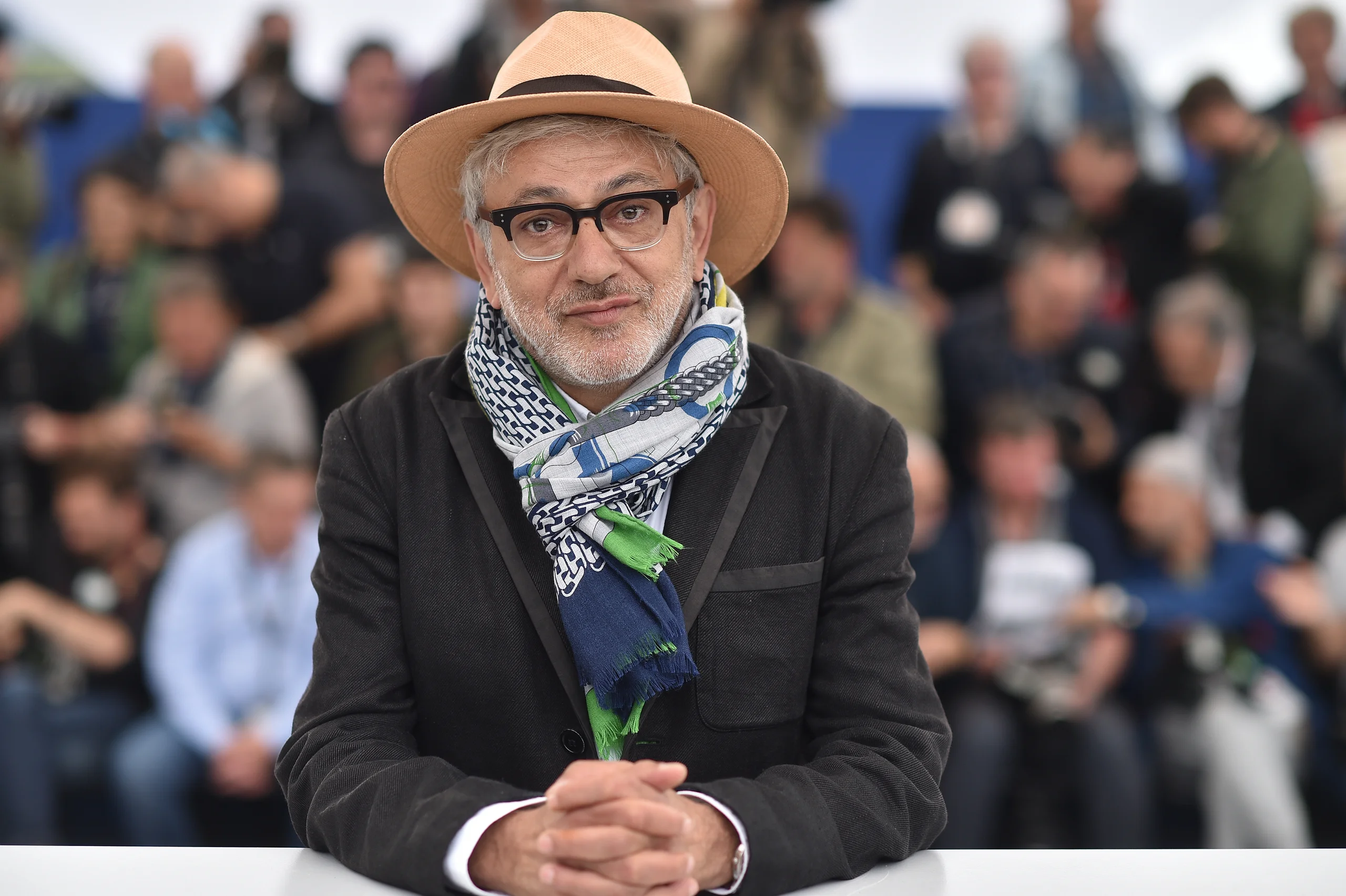
Elia Suleiman
 Israel
film director•screenwriter•actor
Birthday
July 28, 1960
Birth Sign
Leo
Birthplace
Nazareth, Palestine
Age
66 years old
Height
5 ft 9 in (175 cm)
About
Elia Suleiman is a Palestinian filmmaker, screenwriter, and actor whose work uses silence, deadpan humor, and precise visual composition to examine displacement, identity, and the absurdities of life under occupation. Often compared to Jacques Tati and Buster Keaton, Suleiman builds scenes that unfold with minimal dialogue, letting gesture and framing carry the weight. He typically appears in his own films as a nearly mute observer, a stand-in for himself, drifting through worlds he cannot quite belong to.
His trilogy of features, Chronicle of a Disappearance (1996), Divine Intervention (2002), and It Must Be Heaven (2019), has earned him a devoted following in arthouse circles and top prizes at Venice and Cannes. As of 2026, Suleiman remains an active voice in global cinema, teaching, appearing at festivals, and working on new projects that continue to probe the meaning of home.
Early Life & Background
Elia Suleiman was born into a Christian Palestinian family in Nazareth in 1960, a city still marked by the aftermath of the 1948 Nakba. Growing up in that atmosphere of political tension and everyday dislocation shaped his later artistic instincts, though he has rarely spoken in detail about his childhood.
In 1981, at age 21, Suleiman moved to New York City, where he would live for the next twelve years. He supported himself with odd jobs, including a stretch as a street performer and what he later called being a "bum but a thinking bum." That period of drift and observation became a kind of education in human absurdity, sharpening the eye he would later turn on the world. He studied at the School of Visual Arts and later at the American Film Institute, learning both acting and directing.
The turning point came when he decided to return to Palestine to document everyday life under occupation. That decision led directly to his first feature, and it set the course for a career built on watching, waiting, and letting the camera sit still long enough for truth to surface.
Career Growth
Suleiman's directorial debut, Chronicle of a Disappearance (1996), won the Best Film award at the Venice Film Festival. Shot in Nazareth with a static camera and long takes, it introduced his signature style: quiet observation of three characters during a period of tension.
His breakthrough came six years later with Divine Intervention (2002), a darkly comic series of vignettes about life under Israeli occupation. The film won the Jury Prize at Cannes and included the now-famous image of a man dressed as Santa Claus with a knife in his chest. It traveled far beyond festival audiences and cemented his international reputation.
In 2019, Suleiman completed his trilogy with It Must Be Heaven, which premiered at Cannes in competition for the Palme d'Or. The film is a satirical travelogue through Paris, New York, and Nazareth, poking at the absurdities of being a Palestinian filmmaker in the West. It earned some of the best reviews of his career.
Alongside the features, Suleiman has directed shorts and documentaries, including The End of an Argument (2009), a tribute to the poet Mahmoud Darwish. He has also appeared as an actor in other directors' work, such as the anthology 7 Days in Havana (2011). In 2024, he received a lifetime achievement award at the Sarajevo Film Festival, where he spoke about the challenges facing Palestinian directors after October 7.
Career Timeline
Public Image & Style
Elia Suleiman's public persona is that of the silent observer. In his films, he appears with a neutral expression, often standing still while chaos unfolds around him. Critics and fans read this as a form of resistance, a way of refusing to engage with the noise of politics while still making deeply political art.
He is regarded as one of the most distinctive voices in Palestinian cinema, though he has pushed back against being labeled "the leading Palestinian filmmaker," calling such titles reductive. His films are studied in film schools and celebrated at festivals, but they have never been mainstream hits. Instead, they circulate in arthouse circuits, where audiences appreciate his precise framing and deadpan wit.
On social media, Suleiman is nearly absent. He lets his films and festival appearances speak for him, maintaining an air of mystery that fits his on-screen persona.
Fame & Fandom (iFAMOUS Rankings)
Elia Suleiman commands a dedicated global audience that spans film critics, festival attendees, and academic scholars rather than the mass-market following of pop culture icons. His influence is deeply rooted in the arthouse circuit where his work on displacement and identity resonates with cinephiles worldwide. iFANN has evaluated this profile thoroughly; however, he does not currently hold a placement in the published Global Top 1,000 rankings or any specific Top-100 scope list. While his films frequently appear alongside legends like Jacques Tati and Buster Keaton in retrospectives, Suleiman remains an unranked figure in the current global fame metrics. The fanbase associated with his work has no formal name documented in available records. Unlike mainstream celebrities who inspire organized campaigns or street-side gatherings, Suleiman's interactions remain intellectual and confined to Q&A sessions at major festivals like Cannes and Sarajevo. His presence is defined by quiet engagement rather than celebrity worship, with audiences seeking insight into Palestinian identity and cinematic style rather than personal adoration.
Interesting Facts and Legends
Suleiman is a trained actor who often plays a version of himself on screen, blurring the line between autobiography and fiction. He has said he avoids dialogue to reach universal audiences, and his films are frequently screened at silent-film retrospectives alongside Tati and Keaton. He once described his New York years as "a street kid who became a bum but a thinking bum." In interviews, he has called Israel "an enemy place" rather than an enemy country, a distinction that has sparked debate. He is also known for appearing at festivals in a simple, unassuming wardrobe, letting his work do the talking. A defining moment in his cultural mythology occurred with the 2002 release of Divine Intervention, which won the Jury Prize at the Cannes Film Festival. This film features surreal imagery such as a man dressed as Santa Claus with a kitchen knife protruding from his chest, cementing his reputation for blending silence and satire. Another pivotal story emerged in 2019 with It Must Be Heaven, where Suleiman travels from Palestine to Paris and New York seeking an alternative homeland but finding that "Palestine is trailing behind him." More recently, in 2024, he discussed the complexities of being a Palestinian director in the post-October 7 world at the Sarajevo Film Festival, explicitly rejecting the label of "leading Palestinian filmmaker."
Notable Quotes
“I don't cater to Israel at all. It's not an enemy country – it's an enemy place.”
“I was a street kid who became a bum – but a thinking bum.”
“Silence is a form of resistance.”
Family & Personal Life
Elia Suleiman is married to Yasmine Hamdan, the Lebanese singer-songwriter known for her work in Arabic indie and electronic music. The couple met through mutual artistic circles, and their partnership has been a quiet constant in his life. They keep their relationship largely out of the spotlight, though Hamdan has occasionally joined him at festival premieres. There are no publicly confirmed children from the marriage. Suleiman rarely discusses his parents or siblings in interviews, and little is known about his extended family beyond his Christian Palestinian roots in Nazareth.
Notable Connections
Yasmine Hamdan, his wife, is a prominent Lebanese singer whose music blends Arabic tradition with electronic and indie sounds. Mahmoud Darwish, the late Palestinian poet, was the subject of Suleiman's documentary The End of an Argument. Suleiman has repeatedly cited Jacques Tati and Buster Keaton as major influences on his visual style.
Relationships & Dating History
Elia Suleiman is married to Yasmine Hamdan, the Lebanese singer-songwriter. The couple met through mutual artistic circles, likely in the mid-2000s, and have been together since. They are known for keeping their relationship private, though Hamdan has appeared with him at film premieres and events. As of 2026, they remain married, with no reports of separation or divorce. There are no publicly confirmed children from their union.
- MarriedYasmine Hamdan2005 - presentCurrentLebanese singer-songwriter; the couple met through artistic circles and have kept their relationship private.
Salary, Net Worth In 2026
$5 Million
iFANN Editorial Team estimate
Per iFANN's editorial analysis, Elia Suleiman's net worth is estimated at around $5 million as of 2026. His income streams are diverse yet distinct from commercial directors, relying primarily on film production grants, festival prizes, royalties from his film library, and teaching residencies at universities. Unlike peers with major endorsement deals or real estate holdings, Suleiman's financial stability comes from European cultural funds, particularly from France and Germany, which have consistently supported his projects. The continued distribution of his catalog, including Divine Intervention and It Must Be Heaven, provides steady royalty income that sustains his career. He also receives fees for lectures and masterclasses at film schools and festivals around the world. In recent years, his net worth has grown modestly, reflecting the enduring interest in his work and his active presence in the festival circuit.
Awards Won (3)
Elia Suleiman has won top prizes at two of the world's most prestigious film festivals. His debut feature Chronicle of a Disappearance took the Best Film award at the Venice Film Festival in 1996. Six years later, Divine Intervention won the Jury Prize at Cannes. In 2024, he received a lifetime achievement award at the Sarajevo Film Festival, recognizing his contributions to global cinema.
2024 · Lifetime Achievement
2002 · Cannes Film Festival
Divine Intervention
Known For
Divine Intervention
2002 · Director, Writer, Actor
It Must Be Heaven
2019 · Director, Writer, Actor
Chronicle of a Disappearance
1996 · Director, Writer
Keywords
Sources
Quick Facts
- Profession
- film director, screenwriter, actor
- Born
- July 28, 1960
- Birthplace
- Nazareth, Palestine
- Gender
- Male
- Spouse
- Yasmine Hamdan
- Birth Sign
- Leo
- Height
- 5 ft 9 in (175 cm)
- Education
- School of Visual Arts, American Film Institute
Personal Details
- Height
- 5 ft 9 in (175 cm)
- Spouse
- Yasmine Hamdan
- Education
- School of Visual Arts, New York; American Film Institute
Filmography
15
Total
12
Film
3
TV
Frequently Asked Questions
What is Elia Suleiman best known for?
Who is Elia Suleiman married to?
Where was Elia Suleiman born?
What is Elia Suleiman's net worth in 2026?
Is Elia Suleiman still active in film?


Join the community
fans discussing