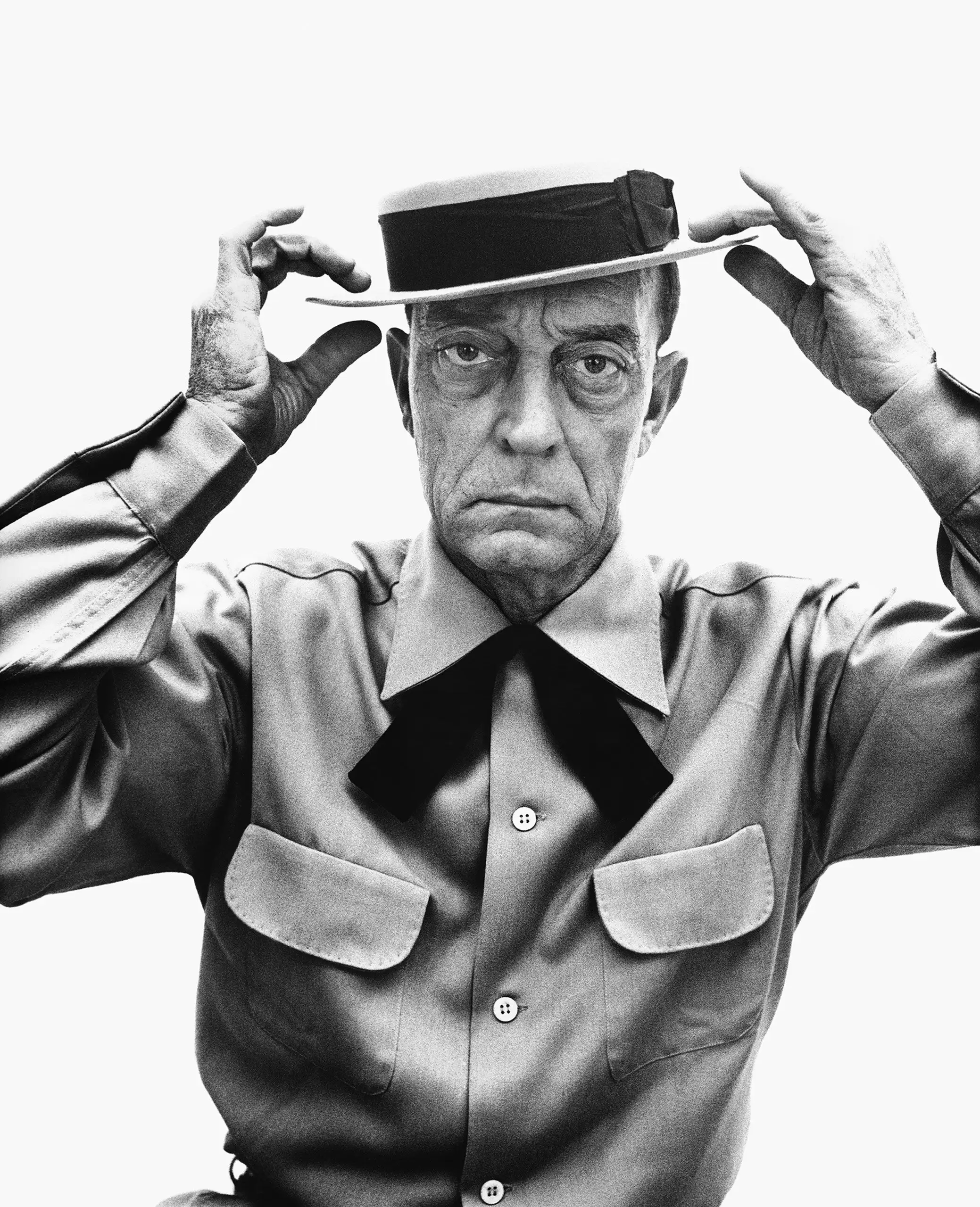
Buster Keaton
Also known as: The Great Stone Face, Joseph Frank Keaton
Birthday
October 4, 1895
Birth Sign
Libra
Birthplace
Piqua, Kansas
Age
Died at 70
Height
5 ft 8 in (1.73 m)
About
Joseph Frank "Buster" Keaton was an American actor, comedian, and filmmaker whose deadpan expression and fearless stunts made him one of the most influential figures in silent cinema. Known as "The Great Stone Face," he created a string of masterpieces in the 1920s, including The General (1926), which Orson Welles called "the greatest comedy ever made...and perhaps the greatest film ever made." Keaton's precise physical comedy and innovative visual gags continue to inspire filmmakers and comedians today.
After a career slump in the 1930s, Keaton made a celebrated comeback, appearing in Sunset Boulevard (1950) and Limelight (1952). He received an honorary Academy Award in 1960 and remains a towering figure in film history. His work is celebrated through screenings, documentaries, and the ongoing preservation of his films.
Early Life & Background
Buster Keaton was born in Piqua, Kansas, to Joe and Myra Keaton, a vaudeville duo. At just three months old, he joined their act, becoming the youngest performer in vaudeville history. By age five, he was a full participant in "The Three Keatons," learning acrobatics and timing on the road. The story goes that his father would toss him around to teach him not to show pain, which shaped his signature stoic face. He attended school only intermittently, but the stage was his real education.
One pivotal moment came when he fell off a stage during a stunt and realized the audience didn't laugh because he stayed perfectly still. This cemented his belief in the power of the straight face. His early life was a whirlwind of travel and performance, and he never had a conventional childhood. That background gave him an extraordinary physical control and a unique understanding of comedy timing that he would later bring to film.
Career Growth
Keaton's film career took off in 1917 when he joined Roscoe "Fatty" Arbuckle's company, learning the craft of film comedy. In 1920, he formed his own production company and released a series of brilliant shorts like One Week (1920) and Cops (1922), establishing his reputation for elaborate stunts and visual gags. He then moved to features, creating Our Hospitality (1923), Sherlock Jr. (1924), The Navigator (1924), and Seven Chances (1925), culminating in The General (1926) and Steamboat Bill, Jr. (1928).
In 1928, Keaton signed with MGM, but lost creative control, and his career declined. He was fired in 1933 and spent years as a gag writer for Laurel and Hardy. A comeback began in the 1940s with supporting roles and cameos, including Sunset Boulevard (1950) and Limelight (1952). He received an honorary Oscar in 1960, and his later years saw a renewed appreciation for his silent work.
Career Timeline
Public Image & Style
Keaton's public persona is defined by his "Great Stone Face," an expressionless mask that contrasted with the chaos around him. He was known for his athleticism and willingness to risk injury for a gag. Fans and critics see him as a tragic figure who lost creative freedom, but also as a resilient artist who made a comeback. The fandom, often called "Keatonians," celebrates his work through live-accompanied screenings and festivals. His influence on modern physical comedians like Johnny Knoxville is frequently noted.
Fame & Fandom (iFAMOUS Rankings)
Buster Keaton's global fame is immense, though the iFANN Global Fame Engine has evaluated him without assigning a placement in the published rankings as of August 2026. He does not currently hold a spot in the Global Top 1,000 or any Top-100 scope list, a status that reflects the unique nature of his legacy, celebrated by enthusiasts and historians rather than measured by contemporary popularity metrics. His influence, however, is undeniable: his films are screened at festivals worldwide, and his name is synonymous with silent comedy.
The fanbase, while lacking a formal name, is deeply organized through the International Buster Keaton Society, which serves as the de facto official fan club. This society hosts annual gatherings and milestone celebrations, such as the planned centennial events for The General and Battling Butler in October 2026. Fans, often described as silent film enthusiasts or Keaton aficionados, engage in rituals like attending live-accompanied screenings, a tradition that keeps the silent film experience alive. The community is preservation-focused, with members actively involved in restoration and festival programming, ensuring Keaton's work remains accessible to new generations.
Interesting Facts and Legends
Buster Keaton's nickname "Buster" came from his father, who claimed he could "bust" anything thrown at him. He performed all his own stunts, including the famous house facade fall in Steamboat Bill, Jr. He was a skilled magician and could perform card tricks. He never learned to swim, despite performing water stunts. His porkpie hat was a personal trademark, and he owned the same one for decades. In 2026, his grandson Peter Keaton attended the Kansas Silent Film Festival to celebrate his legacy.
One of the most retold legends is the house facade stunt, a genuine feat of precise calculation that has become a cornerstone of cinematic lore. Another story fans love involves his on-set injury during Sherlock Jr., where he broke his neck without realizing it until years later. His vaudeville origins, including the tale that Harry Houdini witnessed his nickname-worthy fall as a baby, are treated as canon, though the details are embellished over time.
Notable Quotes
“I want to be remembered as a man who made people laugh.”
“The funniest thing I ever saw was a man falling down a flight of stairs.”
“I never smiled on camera. If I smiled, it would ruin the illusion.”
Family & Personal Life
Keaton's parents, Joe and Myra, were vaudeville performers, and his brother Harry also worked in show business. He married Natalie Talmadge in 1921, and they had two sons, Joseph Jr. and Robert (though Robert died in infancy). The marriage ended in divorce in 1932. In 1940, he married Eleanor Norris, a dancer, who helped him overcome alcoholism and manage his career. They had no children together. His grandson, Peter Keaton, has been active in preserving his legacy.
Notable Connections
Keaton was mentored by Roscoe "Fatty" Arbuckle and collaborated with producer Joseph M. Schenck and director Edward F. Cline. He worked with Charlie Chaplin in Limelight and was directed by Billy Wilder in Sunset Boulevard. He also wrote gags for Laurel and Hardy. His influence extends to filmmakers like Steven Spielberg and Martin Scorsese.
Relationships & Dating History
Keaton's first marriage was to Natalie Talmadge, sister of actresses Constance and Virginia Talmadge. They married in 1921 and had two sons, Joseph Jr. and Robert (who died in infancy). The marriage deteriorated due to Keaton's alcoholism and Natalie's affair with actor Johnny Mack Brown. They divorced in 1932, a bitter and public split that contributed to his depression.
In 1940, he married Eleanor Norris, a former dancer and model. She helped him overcome alcoholism and managed his career during his comeback. They had no children together. Eleanor remained with him until his death in 1966 and continued to preserve his legacy until her own death in 1991.
- MarriedNatalie Talmadge1921 - 1932Married in 1921, divorced in 1932; had two sons, one died in infancy.
- MarriedEleanor Norris1940 - 1966Married in 1940, remained together until his death in 1966; she helped him recover from alcoholism.
Death & Aftermath
Died
February 1, 1966 (aged 70)
Death Place
Sherman Oaks, California, USA
Cause of Death
Lung cancer
Joseph Frank Keaton died on February 1, 1966, at his home in Sherman Oaks, California. The cause of death was lung cancer, a condition linked to his lifelong heavy smoking habit that claimed him at the age of seventy. His final days were spent in relative privacy after years of retirement from active film production, following earlier struggles with alcoholism and the loss of creative control during the studio era. Tributes poured in from peers and institutions who recognized him as one of the greatest comic actors in history, often placing him alongside Charlie Chaplin. He was interred privately at Forest Lawn Memorial Park Cemetery in Glendale, California. Posthumous management of his estate focused on preserving his artistic contributions through film library releases and honors. The International Buster Keaton Society continues to maintain his legacy, while recent decades have seen renewed critical interest, including the 2018 documentary The Great Stone Face.
Net Worth (Estate Value)
$10 Million
iFANN Editorial Team estimate
Buster Keaton passed away in 1966, so his financial status is best understood through his estate. As of 2026, iFANN currently estimates the estate's value at approximately $10 million, a figure reflecting ongoing revenue from his films. Research by the iFANN Editorial Team puts the estate's worth between $5 million and $10 million, with the higher end accounting for recent licensing deals. The estate earns money from royalties on home media sales, streaming rights, and merchandise. For example, the 2025 Blu-ray release of The Buster Keaton Show generated significant revenue. Licensing his likeness for documentaries and commercials also adds to the income. The estate is managed by his descendants, who have been active in promoting his work, such as attending the Kansas Silent Film Festival in 2026.
Awards Won (1)
Keaton received an Honorary Academy Award in 1960 for his unique artistry and contributions to film. He was also inducted into the Hollywood Walk of Fame and received the Legion of Honour from France. His films have been recognized by the American Film Institute, with The General ranked high on comedy lists.
1960 · Honorary
For his unique artistry and contributions to film
Known For
The General
1926 · Johnnie Gray
Sherlock Jr.
1924 · Sherlock Jr.
Steamboat Bill, Jr.
1928 · William Canfield Jr.
Our Hospitality
1923 · Willie McKay
The Navigator
1924 · Rollo Treadway
Keywords
Sources
Quick Facts
- Profession
- comedian, film producer, writer
- Born
- +1895-10-04
- Birthplace
- Piqua, Kansas
- Died
- +1966-02-01
- Death Place
- Woodland Hills, California
- Gender
- Male
- Spouse
- Natalie Talmadge, Eleanor Keaton
- Birth Sign
- Libra
- Height
- 5 ft 8 in (1.73 m)
Personal Details
- Full Name
- Joseph Frank Keaton
- Height
- 5 ft 8 in (1.73 m)
- Spouse
- Natalie Talmadge, Eleanor Keaton
- Children
- Joseph Frank Keaton Jr., Eleanor Keaton
Filmography
100
Total
90
Film
10
TV
Frequently Asked Questions
Who was Buster Keaton?
How did Buster Keaton die?
What was Buster Keaton's most famous movie?
Was Buster Keaton married?
Did Buster Keaton have children?
Similar People
Join the community
fans discussing