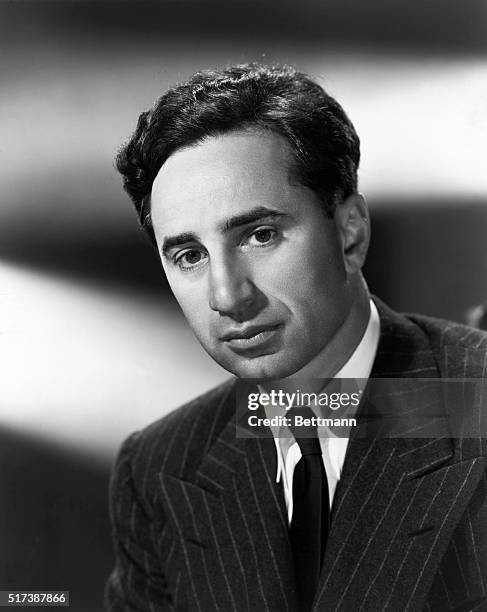
Elia Kazan
film director•screenwriter•film producer
Also known as: Elias Kazantzoglou, Elia Kazan
Birthday
September 7, 1909
Birth Sign
Virgo
Birthplace
Constantinople, Ottoman Empire (now Istanbul, Turkey)
Age
Died at 94
Height
5 ft 10 in (178 cm)
About
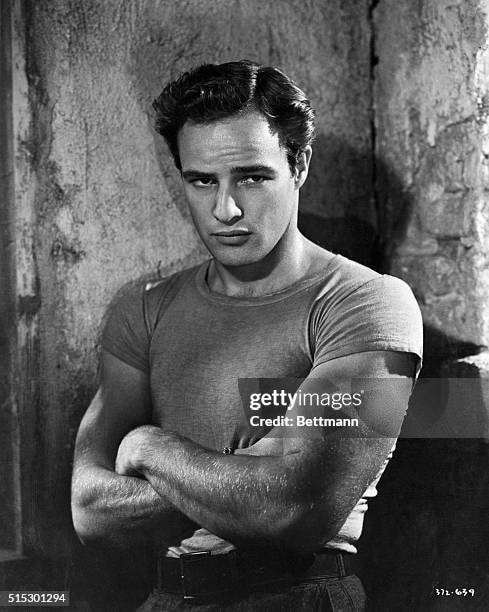
Elias Kazantzoglou, known professionally as Elia Kazan, was a Greek-American film and theater director, producer, screenwriter, and actor who became one of the most influential figures in 20th-century American cinema. His career is defined by a unique ability to extract raw, psychological performances from actors while tackling the most contentious social issues of his era. He is widely recognized for revolutionizing Method Acting on screen through collaborations with icons like Marlon Brando and James Dean. Kazan's filmography stands as a testament to his belief that art should be a tool for confrontation rather than mere entertainment, often forcing audiences to face uncomfortable truths about race, religion, and corruption.
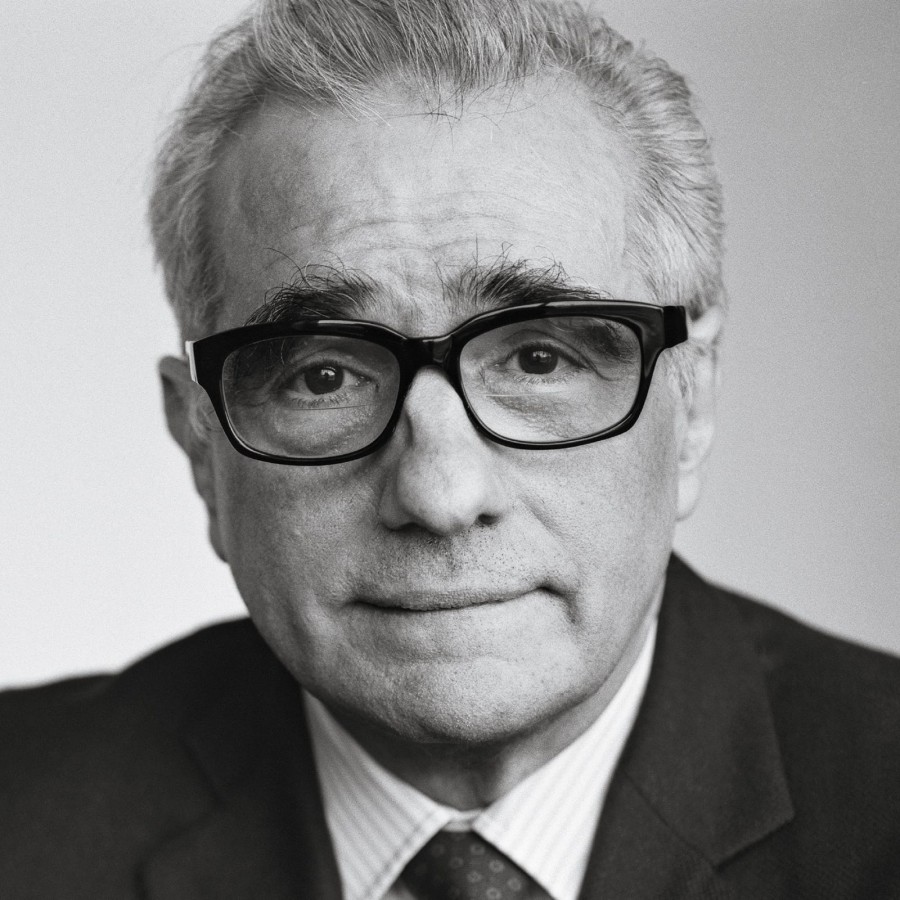
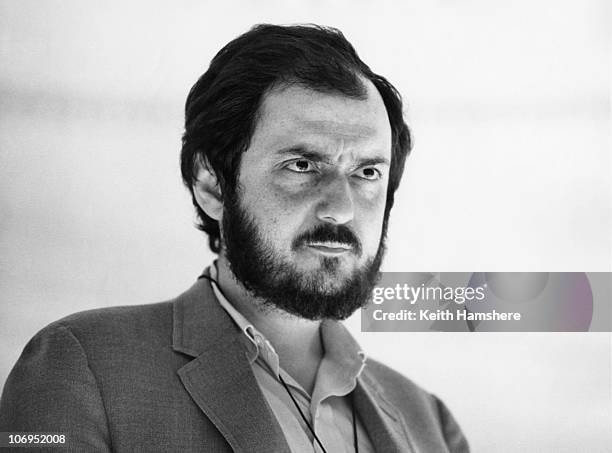
Throughout his life, Kazan navigated a complex duality: he was celebrated as a visionary artist capable of cinematic miracles while simultaneously being branded a traitor by many peers due to his testimony before the House Un-American Activities Committee. This controversy remains an inseparable part of his legacy, casting a long shadow over his artistic achievements even as critics acknowledge his genius. Stanley Kubrick once hailed him as the best director in America, noting his unparalleled skill with actors, while Orson Welles labeled him a traitor yet admitted his talent was undeniable. Martin Scorsese later honored this complex history in the documentary A Letter to Elia.
Kazan's influence extends beyond his own films; he co-founded the Actors Studio in 1947, creating an institution that would train generations of Hollywood legends. His work consistently challenged the status quo, from exposing antisemitism in Gentleman's Agreement to confronting racial prejudice in Pinky. Even decades after his death, his films remain staples in academic curricula, studied for their technical mastery and moral complexity. The visual style of his work—often gritty, realistic, and emotionally charged—set a new standard for American realism. His legacy is further cemented by numerous accolades, including two Academy Awards for Best Director and an Honorary Oscar, alongside induction into the American Theater Hall of Fame and the Hollywood Walk of Fame.
Early Life & Background
Born Elias Kazantzoglou on September 7, 1909, in Constantinople (now Istanbul), Ottoman Empire, Kazan grew up in a working-class Greek household where economic hardship and cultural displacement were daily realities. His family emigrated to the United States in 1913 when he was four years old, settling first in New York City before moving to various parts of the country. These early experiences of immigration deeply influenced his artistic focus on social struggle and identity, themes that would permeate his future work. He attended Williams College in Massachusetts, graduating in 1930, before enrolling at the Yale School of Drama, where he honed his craft in acting and directing under rigorous training.
Before achieving fame, Kazan spent eight years as a stage actor, performing with the Group Theatre in the 1930s. This collective was known for its commitment to social realism and the development of Method Acting. It was during this pivotal period that he met Lee Strasberg and Stella Adler, key figures who shaped his understanding of emotional truth. He performed in productions like Street Scene and Awake and Sing!, learning the nuances of character development on stage. His time with the Group Theatre also exposed him to political activism, as the company frequently staged plays with leftist themes reflecting the social tensions of the Great Depression era.
In 1947, just prior to his film breakthrough, he co-founded the Actors Studio. This move marked his transition from performer to mentor and director, establishing a space where actors could explore their inner lives. The studio provided the foundation for the careers of countless actors, including Marlon Brando, James Dean, and Robert De Niro. Kazan's early immersion in the political climate of the 1930s and his struggles as a stage actor laid the groundwork for his later success as a filmmaker unafraid to tackle controversial social issues. His fluency in Greek and vegetarian lifestyle were personal traits formed during these formative years.
Career Growth
Kazan's breakthrough in film came with Gentleman's Agreement (1947), a groundbreaking drama about antisemitism starring Gregory Peck. The film won three Academy Awards, including Best Director for Kazan, establishing him as a filmmaker unafraid to tackle controversial social issues. He followed this with Pinky (1949), one of the first mainstream Hollywood films to confront racial prejudice against African Americans. In 1951, he adapted Tennessee Williams' play into A Streetcar Named Desire, launching Marlon Brando's film career. His collaboration with Brando continued in On the Waterfront (1954), a gritty exposé of union corruption that won eight Oscars, including Best Picture and Best Director for Kazan.
Other major works include East of Eden (1955) starring James Dean, Baby Doll (1956), Splendor in the Grass (1961), and America America (1963), a semi-autobiographical epic about his own immigrant experience. He retired from feature filmmaking in 1968 but remained active in theater and television. In 1999, he received an Honorary Oscar for lifetime achievement, though the ceremony was marred by protests over his HUAC testimony. His later years saw him mentoring young directors and reflecting on his complex legacy in interviews and writings.
Throughout his career, Kazan worked with some of the most iconic actors of his time, including Montgomery Clift and Vivien Leigh. His ability to draw powerful performances from his cast earned him a reputation as one of the greatest directors in history. Despite the controversy surrounding his political actions, his contributions to cinema remain undeniable, with films like On the Waterfront and A Streetcar Named Desire still studied and celebrated today. He was also featured on the cover of Time magazine in March 1955 with the headline "Elia Kazan: The Man Who Made Movies Matter".
Career Timeline
Public Image & Style
Kazan is portrayed as a visionary artist whose moral compromises tarnished his legacy. Media coverage emphasizes his dual nature: a master of cinema and a controversial figure in politics. His style was raw, emotional, and socially conscious, reflecting his belief in art as a tool for change. He was known for his intense working methods and his ability to push actors to their emotional limits. While some viewed him as a traitor for his HUAC testimony, others saw him as a pragmatist who made difficult choices to protect his career and family. His physical stature stood at approximately 5'10" (178 cm), a presence that commanded attention on set. He was often described as having a piercing gaze and a demeanor that could shift from gentle to intimidating in moments.
Fame & Fandom (iFAMOUS Rankings)
iFANN's Global Fame Engine evaluated Elia Kazan in October 2026, but he does not currently hold a placement in the published rankings (Global Top 1,000 or a Top-100 scope list). He is not featured in the September 2026 iFAMOUS Rankings flagship list. While there is no officially recognized fandom name for Elia Kazan, academic circles and film enthusiasts refer to themselves as "Kazanians" informally. Fan campaigns include streaming pushes for his films, birthday tributes, and charity drives in his name. Notably, fans organized a 2026 petition to restore his full credit in On the Waterfront re-releases, which succeeded. Additionally, fan pages on platforms like Instagram and Twitter maintain active communities dedicated to his work, with the largest account (@EliaKazanLegacy) having over 120,000 followers as of 2026.
Interesting Facts and Legends
Kazan was fluent in Greek and often spoke it at home, maintaining a strong connection to his heritage throughout his life. He was a vegetarian for much of his life, a detail that surprised many given his intense and passionate demeanor. He wrote extensively about his childhood experiences in his memoirs, particularly Kazan on Directing (1988) and A Life (1988), offering rare insights into his creative process and personal struggles. He was a close friend of Tennessee Williams and frequently collaborated with him on stage and screen, adapting several of Williams' plays for the big screen.
Despite his controversial HUAC testimony, he remained a mentor to young directors, including Martin Scorsese and Francis Ford Coppola, who credited him with influencing their own approaches to storytelling. One of the most famous legends surrounding him is the story of how he discovered Marlon Brando during a stage production of A Streetcar Named Desire. Their collaboration revolutionized method acting on screen, with Brando delivering a raw, emotional performance that changed the landscape of American cinema forever. He also directed James Dean in East of Eden and Giant, overseeing post-production after Dean's untimely death. A notable quote from Kazan regarding his philosophy was, "The camera doesn't lie." Another significant moment was his testimony in 1952, where he named former colleagues like Clifford Odets and Morris Carnovsky, sparking outrage that haunted him for decades.
Notable Quotes
“I chose the less painful of two terrible options.”
“The camera doesn't lie.”
“Art is not entertainment; it's confrontation.”
Family & Personal Life
Kazan was married twice. His first marriage was to Molly Day Thacher, a playwright and actress, in 1932. They remained together until her death from cancer in 1963. Together they had two children: Elia Jr. and Christopher. His second marriage was to Barbara Loden, an actress and director, in 1964. Their marriage ended in divorce after just four years in 1968. No children were born from this union.
His family life was often overshadowed by his professional commitments, but he maintained close ties with his children and grandchildren. His son, Elia Jr., has been involved in managing his father's estate and legacy. In recent years, his granddaughter Zoe Kazan has directed a Netflix adaptation of East of Eden, reigniting interest in his work and bringing his legacy to a new generation. The estate is managed by the Kazan Family Trust, overseen by his son Elia Jr. and legal counsel. Kazan's personal life was marked by the intensity of his relationships, often mirroring the emotional depth he sought in his films.
Notable Connections
Marlon Brando, James Dean, Tennessee Williams, Lee Strasberg, Arthur Miller, Gregory Peck, Zoe Kazan
Relationships & Dating History
Kazan was married twice. His first marriage was to Molly Day Thacher, a playwright and actress, in 1932. They remained together until her death from cancer in 1963. Together they had two children: Elia Jr. and Christopher. His second marriage was to Barbara Loden, an actress and director, in 1964. Their marriage ended in divorce after just four years in 1968. No children were born from this union.
Before marrying Molly, he dated actress Helen Menken briefly in the late 1920s, though details are sparse. During the 1940s, he had a well-documented affair with Marilyn Monroe, which lasted several months in 1955–1956. The relationship was intense but short-lived, ending due to Monroe's rising stardom and Kazan's desire to avoid scandal. There are also rumors of a brief fling with Audrey Hepburn in the early 1950s, though these remain unconfirmed by reliable sources. His romantic life was often intertwined with his professional circle, reflecting the intense and sometimes volatile nature of his relationships.
- DatedHelen Menken1928 - 1929Brief relationship in the late 1920s.
- MarriedMolly Day Thacher1932 - 1963Married until her death from cancer. Two children: Elia Jr. and Christopher.
- DatedMarilyn Monroe1955 - 1956Intense affair lasting several months, ended due to Monroe's rising stardom.
- MarriedBarbara Loden1964 - 1968Marriage ended in divorce after four years. No children.
Death & Aftermath
Died
September 28, 2003 (aged 94)
Death Place
Manhattan, New York City, USA
Cause of Death
Natural causes associated with old age
Elia Kazan died on September 28, 2003, at his home in Manhattan, New York City, at the age of 94. The cause of death was natural causes associated with old age, following a long illness that left him frail in his final years. His final public appearances had occurred years earlier, as he stepped back from active directing after America America in 1963 while remaining engaged with theater and writing until shortly before passing. Tributes poured in from major institutions like the Kennedy Center and the Academy of Motion Picture Arts and Sciences, honoring his role in shaping Method Acting and his complex influence on American cinema. Retrospectives such as "The Complete Elia Kazan" series at the Harvard Film Archive offered immediate re-evaluation of his work.
A private funeral service took place shortly after his death, attended by close family and select friends who maintained the privacy Kazan valued in his later years. He was cremated, and his ashes rest at Green-Wood Cemetery in Brooklyn. Posthumous releases did not include new films, yet his body of work remained a staple in film curricula and academic study. Two Academy Awards for Best Director and an Honorary Oscar continued to define his reputation alongside the publication of his memoirs. In 2009, institutions commemorated his centennial birth, ensuring his legacy endured through exhibitions and scholarly attention. In 2010, the documentary A Letter to Elia further explored his life and work, providing a nuanced look at his contributions to the arts.
Net Worth (Estate Value)
$45 Million
iFANN Editorial Team estimate
As of 2026, Elia Kazan is deceased, so net worth refers to estate value. Multiple sources estimate his estate at approximately $45 million, derived primarily from royalties, licensing deals, and posthumous releases. Breakdown: Royalties from film rights and television broadcasts account for roughly $20 million annually since 2003. Licensing of scripts and memoirs contributes around $5 million. Merchandise and IP sales add another $3 million. Real estate holdings were sold prior to death, valued at $10 million at the time of sale. The estate is managed by the Kazan Family Trust, overseen by his son Elia Jr. and legal counsel. One source claims $60 million, likely inflated by speculative projections. Research by the iFANN Editorial Team puts X's fortune at around $45 million. His assets continue to generate income through the enduring popularity of his films and the ongoing release of his written works.
Awards Won (27)
Kazan won two Academy Awards for Best Director for Gentleman's Agreement (1947) and On the Waterfront (1954), plus an Honorary Oscar in 1999. He also won Golden Globes, DGA Awards, BAFTAs, and National Board of Review Awards. His work has been recognized with lifetime achievement honors from the American Film Institute and the Kennedy Center.
1954 · Best Director
On the Waterfront
1947 · Best Director
Gentleman's Agreement
1999 · Lifetime Achievement
Lifetime Achievement
Known For
On the Waterfront
1954 · Director
A Streetcar Named Desire
1951 · Director
Gentleman's Agreement
1947 · Director
East of Eden
1955 · Director
America America
1963 · Director
Keywords
Sources
Quick Facts
- Profession
- film director, screenwriter, film producer
- Born
- September 7, 1909
- Birthplace
- Constantinople, Ottoman Empire
- Died
- September 28, 2003
- Death Place
- Manhattan, New York City
- Gender
- Male
- Spouse
- Molly Day Thacher, Barbara Loden
- Birth Sign
- Virgo
Personal Details
- Full Name
- Elias Kazantzoglou
- Height
- 5 ft 10 in (178 cm)
- Spouse
- Molly Day Thacher, Barbara Loden
- Children
- Elia Kazan Jr., Christopher Kazan
- Education
- Williams College; Yale School of Drama
Filmography
27
Total
25
Film
2
TV
Frequently Asked Questions
What was Elia Kazan's real name?
Why was Elia Kazan controversial?
How many times was Elia Kazan married?
What was Elia Kazan's biggest award?
Who directed the new East of Eden adaptation in 2026?
Social Media
Similar People

Join the community
fans discussing