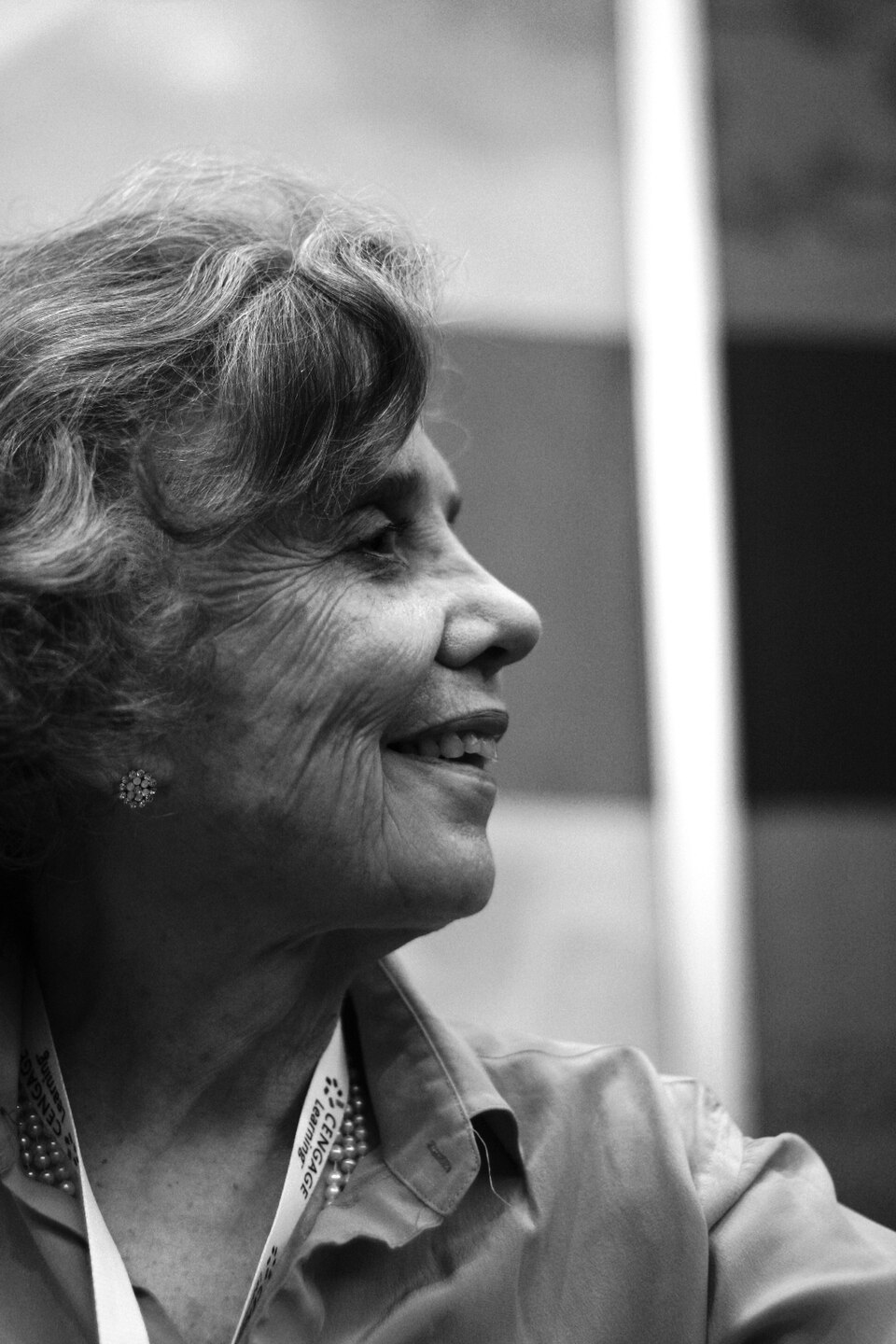
Elena Poniatowska
 Mexico
Also known as: Elenísima, La Poni, Polaquita-Poleczka, the Red Princess
Birthday
May 19, 1932
Birth Sign
Taurus
Birthplace
Paris, France
Age
94 years old
About
Elena Poniatowska is a French-born Mexican journalist and author, widely regarded as one of Mexico's most important literary voices. Her work centers on social and political issues, particularly the lives of the disenfranchised, including women and the poor. She is best known for her oral history La noche de Tlatelolco (Massacre in Mexico), which chronicles the 1968 student massacre in Mexico City. Over a career spanning more than six decades, she has written over forty books, blending journalism with literature in a distinctive style called the crónica.
Poniatowska's leftist views earned her the nickname "the Red Princess," and she is often called "Mexico's grande dame of letters." Her work has been recognized with numerous awards, including the Miguel de Cervantes Prize in 2013, the highest honor for literature in the Spanish language. As of 2026, she continues to write from her home in Mexico City's Chimalistac neighborhood, remaining an active and influential figure in Latin American letters.
Early Life & Background
Born into an aristocratic family in Paris, Elena Poniatowska's early life was marked by displacement. Her father, Prince Jean Poniatowski, was a Polish nobleman descended from a collateral line of Stanisław August Poniatowski, the last king of Poland. Her mother, Paula Amor Iturbide, was a Mexican aristocrat whose family had fled Mexico during the Mexican Revolution. Following the Nazi occupation of Paris, she, her mother, and her younger sister Kitzia fled to a country estate in the zone libre before crossing into Francoist Spain, where the family boarded an ocean liner bound for Havana.
She arrived in Mexico in 1942 at age ten, speaking no Spanish. She learned the language from her nana and household staff, which gave her written Spanish a colloquial, intimate quality. She grew up speaking French and learned English in a private British school. This early connection with the Mexican lower class gave her a deep sense of belonging to Mexican culture. At age 18, she began her career as a society reporter and celebrity interviewer for the newspaper Excélsior in 1953, doing interviews and society columns. Despite limited opportunities for women in journalism from the 1950s to the 1970s, she wrote about social and political issues, soon moving on to interviewing cultural and political figures such as muralist Diego Rivera. Most of these early writings were collected in Palabras cruzadas (1961).
Career Growth
Poniatowska's first novel, Lilus Kikus, was published in 1954, a coming-of-age story about Mexican women before feminism. Her breakthrough came with the publication of La noche de Tlatelolco in 1971, an oral history of the 1968 student protests and their violent suppression. The book denounced the cruel repression with which the army and police crushed a student demonstration at the Plaza de Tres Culturas, and it brought her international acclaim.
She developed a unique, diary-like style of reportage that was fully realized in her book on the 1985 Mexico City earthquake, Nada, nadie: las voces del temblor. Her novel Tinísima is a fictionalized biography of Italian photographer and political activist Tina Modotti, the result of ten years of research. Querido Diego (Dear Diego) is an epistolary recreation of Diego Rivera's relationship with his first wife, Russian painter Angelina Beloff, aiming to "de-iconize" him.
She was one of the founders of the newspaper La Jornada, the feminist magazine Siglo XXI, and the film institute Cineteca Nacional. In 2013, she won the Miguel de Cervantes Prize, the highest award for literature in Spanish, and received it in 2014 at age 82. In 2023, at age 91, she received the Belisario Domínguez Medal of Honor, Mexico's supreme state honor.
Career Timeline
Public Image & Style
Elena Poniatowska is perceived as the conscience of Mexico, a chronicler who looks the rich and powerful straight in the eye and gives voice to those who have none. Her leftist views and aristocratic background earned her the nickname "the Red Princess." She is often called "Mexico's grande dame of letters." Her signature style is the crónica, a unique, diary-like form of reportage that blends journalism with literature. She writes about the common Mexico better than most local writers, turning neglected streets and rundown neighborhoods into poetry. Her admirers affectionately call her "Elenísima" and "La Poni," while Polish circles refer to her as "Polaquita-Poleczka." Her public persona is one of humility and dedication to social justice, despite her noble origins.
Fame & Fandom
Elena Poniatowska currently holds no placement in the iFANN Global Top 1,000 or any scope-based ranking list as of August 2026. The iFANN Global Fame Engine has evaluated her presence but finds she does not occupy a specific numeric slot in the published hierarchy. While she lacks a formalized fandom with a collective name like 'Poniatowskians,' her audience is defined by deep reverence rather than participatory rituals. There are no fan-funded campaigns, charter pushes, or subway ads dedicated to her, distinguishing her from pop stars who cultivate active digital communities. Instead, her influence manifests as a national icon status within Mexico, where interactions remain limited to literary gatherings and academic discussions. Her legend is anchored in the creation of *La noche de Tlatelolco*, a definitive document born from her risk to compile survivor testimonies during the 1968 massacre when the state enforced silence. This act established her as an anti-princess who sided with the marginalized. Recent confirmations of her enduring relevance include the inauguration of the 'Utopía Elena Poniatowska' community hub in Coyoacán in August 2026, a project championed by Mexico City Mayor Clara Brugada. Her relationship with the public is one of mentorship; authors like Sandra Cisneros describe a decades-long love affair with her work. She remains a living legend whose moral stance serves as a benchmark for ethical journalism, celebrated through infrastructure and commemoration rather than viral crowds or merchandise.
Interesting Facts and Legends
Known affectionately as 'Elenísima' and 'La Poni' by admirers, and 'Polaquita-Poleczka' in Polish circles, Poniatowska describes her aristocratic heritage as 'absurd nobility.' She seeks redemption for this background by caring for the disadvantaged and famously performs all her own chores in her book-lined Chimalistac home despite her age. Her brother's death in the 1968 Tlatelolco massacre deeply shaped her career. In 2020, she appeared as a guest at the International Literature Festival Berlin. Her writing style blends compassionate humor with subtle irony and adept use of colloquial language. A central pillar of her cultural mythology is her rejection of privileged origins to live among the poor, starting with her pivot from society reporter to investigative journalist at *Excélsior* in 1953. The most widely retold story of her career involves compiling oral histories for *La noche de Tlatelolco* in 1971, creating a counter-narrative that became a cornerstone of Mexican literature. By April 2026, her personal artifacts, including a Smith Corona typewriter, were displayed to cement her physical presence in cultural memory. In May 2026, she turned 94, celebrating privately with her three children rather than retiring.
Notable Quotes
“I am not a princess, I am a chronicler.”
“The poor are the ones who teach me to write.”
“I write to give voice to those who have none.”
Family & Personal Life
Elena Poniatowska was born into an aristocratic family. Her father, Prince Jean Poniatowski, was a Polish nobleman, and her mother, Paula Amor Iturbide, was a Mexican aristocrat. She had a younger sister, Kitzia, and a brother who was killed in the 1968 Tlatelolco massacre. Her mother's family had fled Mexico during the Mexican Revolution, losing part of their landholdings and fortune. Her birthplace was a palace in Paris belonging to her maternal grandparents, Mexican aristocrats who had immigrated to Paris in the mid-19th century.
She married Guillermo Haro, a prominent Mexican astronomer, and they had three children: Emmanuel (born 1955), Felipe (born 1968), and Paula (born 1970). Her son Felipe has served as a photographer for her literary appearances. As of her later years, she lives in Mexico City's Chimalistac neighborhood, surrounded by books.
Notable Connections
Elena Poniatowska's life and work are closely associated with her late husband, astronomer Guillermo Haro, and with Mexican muralist Diego Rivera, whom she interviewed early in her career. Her novel Tinísima focuses on Italian photographer Tina Modotti, and Querido Diego on Russian painter Angelina Beloff. She was a contemporary of writer Carlos Fuentes, who playfully ribbed her for not participating in literary circles. Her son Felipe Haro Poniatowski has photographed her at literary events.
Relationships & Dating History
Elena Poniatowska's documented romantic life centers on her marriage to Guillermo Haro, a prominent Mexican astronomer. They married and had three children together: Emmanuel (born 1955), Felipe (born 1968), and Paula (born 1970). The couple's marriage lasted until Haro's death, making her a widow. No other public relationships have been reported in available sources. As of 2026, she remains widowed, with no current romantic partner reported.
- MarriedGuillermo Haro1954 - 1988Married to the prominent astronomer; they had three children together.
Salary, Net Worth In 2026
$5 Million
iFANN Editorial Team estimate
iFANN currently estimates Elena Poniatowska's net worth at $5 Million. Her income primarily stems from a prolific writing career spanning over six decades, generating royalties from more than forty books that remain in print and serve as staples in academic settings. Her seminal work, *La noche de Tlatelolco*, has been continuously published since 1971, ensuring steady royalty income from its status in Mexican literature courses. Earnings also derive from her extensive journalism career, featuring columns and interviews for major publications such as Excélsior and La Jornada. Her international recognition, highlighted by the receipt of the Miguel de Cervantes Prize in 2013 which included a cash award, has bolstered her financial standing. Throughout her career, she has received various honors and speaking engagements that contribute to her wealth. While she is not a commercial entertainer, her literary legacy guarantees a modest but stable income from book sales and rights management.
Awards Won (2)
Elena Poniatowska has won several major literary awards, most notably the Miguel de Cervantes Prize in 2013, the highest honor for Spanish-language literature. She also received Mexico's Belisario Domínguez Medal of Honor in 2023. Her work has been recognized with numerous other distinctions throughout her career, cementing her status as a leading figure in Latin American letters.
2023 · State Honor
Lifetime achievement
2013 · Literature
Lifetime body of work
Known For
La noche de Tlatelolco
1971 · Author
Tinísima
1992 · Author
Querido Diego
1978 · Author
Nada, nadie: las voces del temblor
1988 · Author
Keywords
Sources
Quick Facts
- Profession
- journalist, writer, novelist
- Born
- May 19, 1932
- Birthplace
- Paris, France
- Gender
- Female
- Spouse
- Guillermo Haro
- Children
- 3
- Net Worth
- $5 Million
Personal Details
- Full Name
- Hélène Elizabeth Louise Amélie Paula Dolores Poniatowska Amor
- Spouse
- Guillermo Haro
- Children
- 3
Frequently Asked Questions
How old is Elena Poniatowska?
What is Elena Poniatowska's net worth in 2026?
Is Elena Poniatowska still writing in 2026?
What is Elena Poniatowska best known for?
Did Elena Poniatowska win the Cervantes Prize?
Social Media
Join the community
fans discussing