Ela Gandhi
 South Africa
Birthday
July 1, 1940
Birth Sign
Cancer
Birthplace
Durban, South Africa
Age
86 years old
About
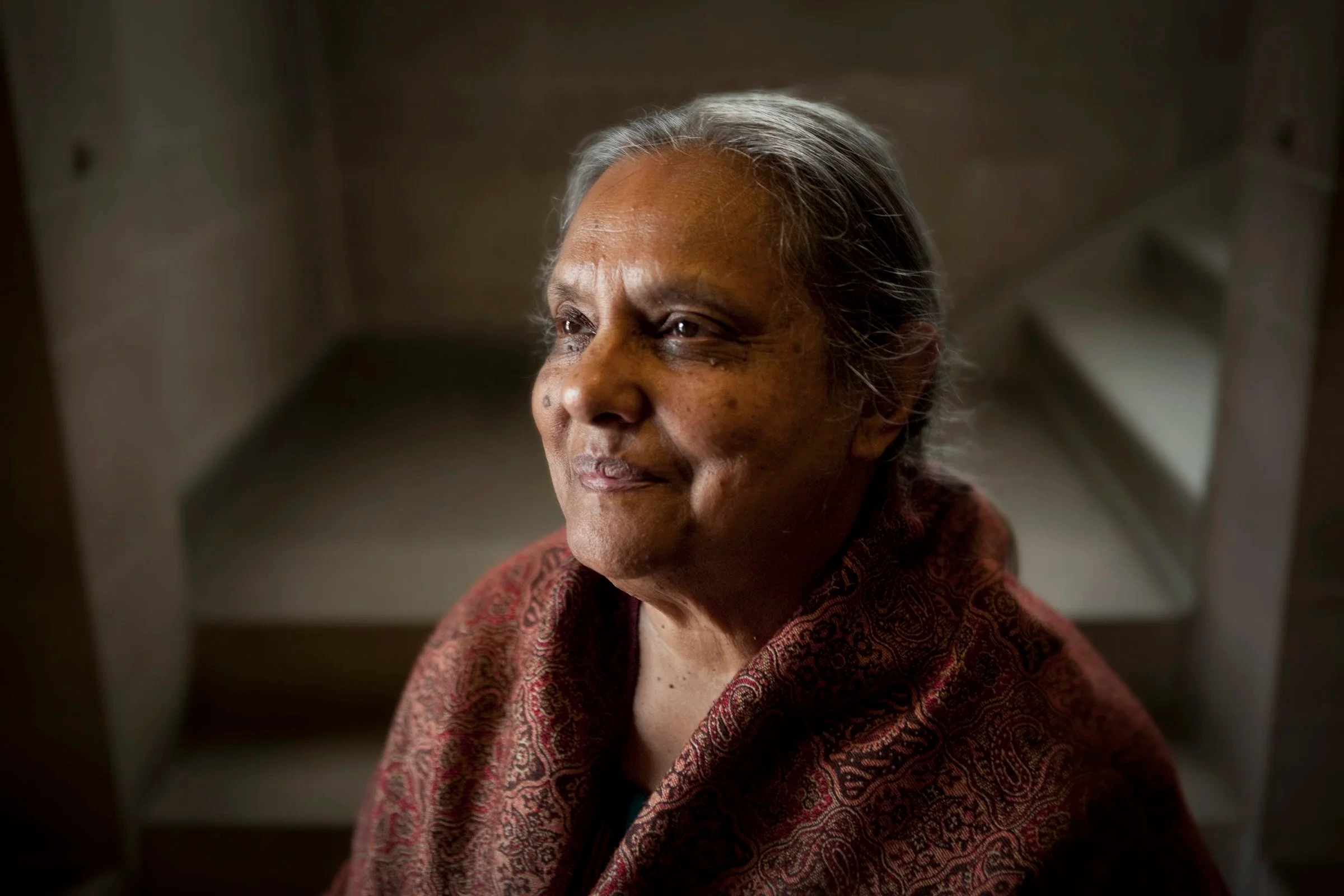
Ela Gandhi is a South African peace activist, social worker, and former politician. She served as a Member of Parliament for the African National Congress from 1994 to 2004, representing the Phoenix area of Inanda in KwaZulu-Natal. As the granddaughter of Mahatma Gandhi, she has dedicated her life to non-violence and social justice, carrying forward a legacy that spans continents and generations.
Her activism predates her parliamentary career. During the apartheid era, she was banned from political activity in 1973 and spent nine years under house arrest, yet continued to work underground for change. She co-founded the Natal Organisation of Women and met with Nelson Mandela just before his release from prison. Today, she remains a sought-after speaker on peace and interfaith dialogue, and she founded the Gandhi Development Trust to promote non-violence.
Gandhi's work has earned her international recognition, including the Padma Bhushan from the Indian government in 2007. She continues to inspire activists and scholars with her unwavering commitment to the principles her grandfather championed.
Early Life & Background
Ela Gandhi was born on July 1, 1940, in the Phoenix Settlement in the Inanda district of Durban, a community founded by her grandfather Mahatma Gandhi. She spent her first six years in a basic wood-and-iron house before her father, Manilal Gandhi, built a brick home by hand. Her mother, Sushila Mashruwala, and father, who edited the Indian Opinion newspaper and managed the settlement, educated her at home initially. Seeing neighbours' children head off to school, she insisted on attending at age eight or nine, calling it her first rebellion.
She walked two kilometres to a local school, a wood-and-iron building without water or electricity, and later attended Durban Indian Girls High School. She earned a B.A. from Natal University's non-European section and a B.A. in social science with honours from UNISA. Growing up in Phoenix meant enduring apartheid's harsh realities: no electricity, unpaved roads, segregated schools, and exclusion from public amenities. These experiences shaped her lifelong activism.
Before entering politics, Gandhi worked as a social worker for 15 years with the Verulam Child and Family Welfare Society and five years with the Durban Indian Child and Family Welfare Society. In 1973, the apartheid government banned her from political activism, placing her under house arrest for nine years. Undeterred, she worked underground, co-founding the Natal Organisation of Women to unite women around issues like maternity rights and childcare. Alongside Mama Sisulu, she met with Nelson Mandela and the United Democratic Front leadership the day before his release from Pollsmoor Prison.
Career Growth
Ela Gandhi's political career began in earnest in the early 1990s when she served on the Transitional Executive Council, helping South Africa navigate its peaceful transition to democracy. In 1994, she was elected to Parliament as an ANC member, representing the Phoenix area of Inanda. Over her decade in office, she contributed to the Welfare and Public Enterprises committees, the ad hoc committee on Surrogate Motherhood, and Theme Committee 5 on Judiciary and Legal Systems.
After leaving Parliament in 2004, Gandhi founded the Gandhi Development Trust, which promotes non-violence and community building. She also chaired the Mahatma Gandhi Salt March Committee, commemorating her grandfather's historic act of civil disobedience. Her post-political work has focused on peace-building and interfaith dialogue, leading to speaking engagements worldwide, including at the Temple of Understanding in New York and Florida Atlantic University.
In 2007, the Indian government honoured her with the Padma Bhushan for her efforts to promote Mahatma Gandhi's legacy in South Africa. She continues to be a vocal advocate against all forms of violence, drawing on her experiences to inspire new generations of activists.
Career Timeline
Public Image & Style
Ela Gandhi is publicly portrayed as a lifelong peace activist who carries forward her grandfather's legacy of non-violence and social justice. She is widely respected in interfaith and peace-building communities, often invited to speak at international forums. Her speaking style is described as sharing messages of social justice gathered during a lifetime of establishing democracy through non-violence. She does not have a pop-culture fandom; her audience consists of activists, scholars, and interfaith communities who admire her steadfast commitment to Gandhian principles.
Fame & Fandom
Ela Gandhi currently holds no placement in the iFANN Global Top 1,000 or any Top-100 scope list. The Global Fame Engine evaluated her profile in August 2026 but found she does not yet occupy a ranked position among the world's most famous figures. Her influence operates through decades of moral leadership rather than viral metrics or mass-market consumption signals that typically drive global fame rankings. While millions follow pop icons and entertainers who dominate search trends, Ela Gandhi's reach remains concentrated within specific spheres of activism, academia, and interfaith diplomacy. She is widely respected in peace-building communities and frequently invited to speak at international forums, yet this stature has not translated into a formalized celebrity fanbase. There is no documented name for her supporters; unlike musicians or actors whose followers organize around hashtags, birthday campaigns, or dedicated subreddits, Ela Gandhi's audience consists of scholars, activists, and political observers who engage with her work on its own terms. No organized groups fund projects in her name, nor do crowds gather to witness her appearances with the hysteria seen in entertainment circles. Her interactions are defined by lectures at universities like Stellenbosch, panels discussing the diaspora, and summits focused on nonviolence. This absence of a named fandom reflects her identity as a stateswoman and activist rather than a cultural icon. The lack of a fan-driven mythology means her legacy is built entirely on verified historical contributions: her role in the anti-apartheid struggle, her time in Parliament, and her stewardship of her grandfather's principles. When she speaks, the room listens because of what she represents, truth and resilience, not because of a manufactured persona. The iFANN evaluation confirms that while her impact is profound, it exists outside the parameters of modern celebrity fame.
Interesting Facts and Legends
Ela Gandhi grew up picking vegetables in shared market gardens and running next door to borrow ghee. She tended mango and lemon trees that her grandfather Mahatma Gandhi himself had planted. Her childhood home lacked electricity and running water, forcing her to walk two kilometres to attend school. Her first act of rebellion was insisting on going to school at age eight or nine despite the obstacles. After her son was killed, she drew on multi-faith prayers learned in childhood to control her anger, describing them as an anchor for resilience. These early struggles shaped a life dedicated to nonviolence. A defining moment in her public legacy occurred when she was banned from political activity in 1973 due to her involvement in the anti-apartheid struggle. Rather than retreating, she worked underground and co-founded the Natal Organisation of Women. Another iconic chapter unfolded after apartheid ended, when she served as a Member of Parliament from 1994 to 2004, representing the Phoenix area of Inanda. Her voice continues to resonate globally; in March 2026, she addressed students at Stellenbosch University on nonviolence in an age of power politics. Later that year, she participated in a Global Peace Summit, reinforcing her status as a bridge between generations of activists. Her literary contribution in 2021 further cemented her role as an educator, sharing lessons from the resistance movement. The story of her lineage remains central to her legend, often retold as a reflection of carrying forward values of truth across continents.
Notable Quotes
“I saw my neighbour's children were all going to school. I was a little child and I said, No, I have to go to school now. I was eight or nine years old... This was my first rebellion.”
“It helps me controlling the anger, it's some sort of anchor, to help me build resilience. It's helped me get over the pain, even though you never really get over losing a child.”
Family & Personal Life
Ela Gandhi's family is deeply intertwined with the struggle for justice. Her father, Manilal Gandhi, was the editor of the Indian Opinion and manager of the Phoenix Settlement. Her mother, Sushila Mashruwala, married Manilal in India in 1927. Her grandmother was Kasturba Gandhi, and her brother was Arun Manilal Gandhi. In 1960, she married Mewa Ramgobin, with whom she had five children; they divorced in 1990. Their son was shot dead in a home invasion in 1993, a tragedy that occurred during the anti-apartheid struggle. Their daughter Ashish Lata Ramgobin was sentenced to seven years imprisonment for fraud in 2021.
Notable Connections
Ela Gandhi is associated with Mahatma Gandhi, her grandfather, whose principles she has championed; Nelson Mandela, whom she met before his release; and Mama Sisulu, with whom she met Mandela. Her father Manilal Gandhi and brother Arun Manilal Gandhi are also notable figures in her family's activist legacy.
Relationships & Dating History
Ela Gandhi married Mewa Ramgobin in 1960, and the couple had five children together. They divorced in 1990 after three decades of marriage. Following the divorce, there is no public record of her remarrying or being in a long-term relationship. As of 2026, her relationship status is best described as divorced, with no current partner documented.
- MarriedMewa Ramgobin1960 - 1990Married in 1960, divorced in 1990; had five children together.
Salary, Net Worth In 2026
As of 2026, there is no publicly available estimate of Ela Gandhi's net worth. Unlike celebrities or business magnates, her career as a social worker, activist, and parliamentarian did not generate substantial personal wealth. Her income would have come from parliamentary salaries and speaking engagements, but specific figures are not documented. She is not deceased, so estate value is not applicable.
Awards Won (2)
Ela Gandhi has been recognized for her peace activism with the Community of Christ International Peace Award in 2002 and the Padma Bhushan from the Indian government in 2007. She is also a member of the KAICIID Advisory Forum, reflecting her standing in interfaith dialogue.
2002 · Peace
Lifetime peace activism
2007 · Civilian Honour
Promoting Mahatma Gandhi's legacy in South Africa
Known For
Member of Parliament (ANC)
1994-2004 · Member of Parliament
Anti-apartheid activism
1970s-1990s · Activist
Gandhi Development Trust
2004 · Founder
Keywords
Sources
Quick Facts
- Profession
- politician
- Born
- July 1, 1940
- Birthplace
- Durban, South Africa
- Gender
- Female
- Spouse
- Mewa Ramgobin
- Birth Sign
- Cancer
- Children
- 5
- Education
- B.A. from Natal University; B.A. in social science with honours from UNISA
Personal Details
- Full Name
- Ela Gandhi
- Spouse
- Mewa Ramgobin
- Children
- 5
- Education
- B.A. from Natal University; B.A. in social science with honours from UNISA
Frequently Asked Questions
Who is Ela Gandhi?
Is Ela Gandhi related to Mahatma Gandhi?
What did Ela Gandhi do during apartheid?
How many children does Ela Gandhi have?
What awards has Ela Gandhi won?
Similar People
Join the community
fans discussing