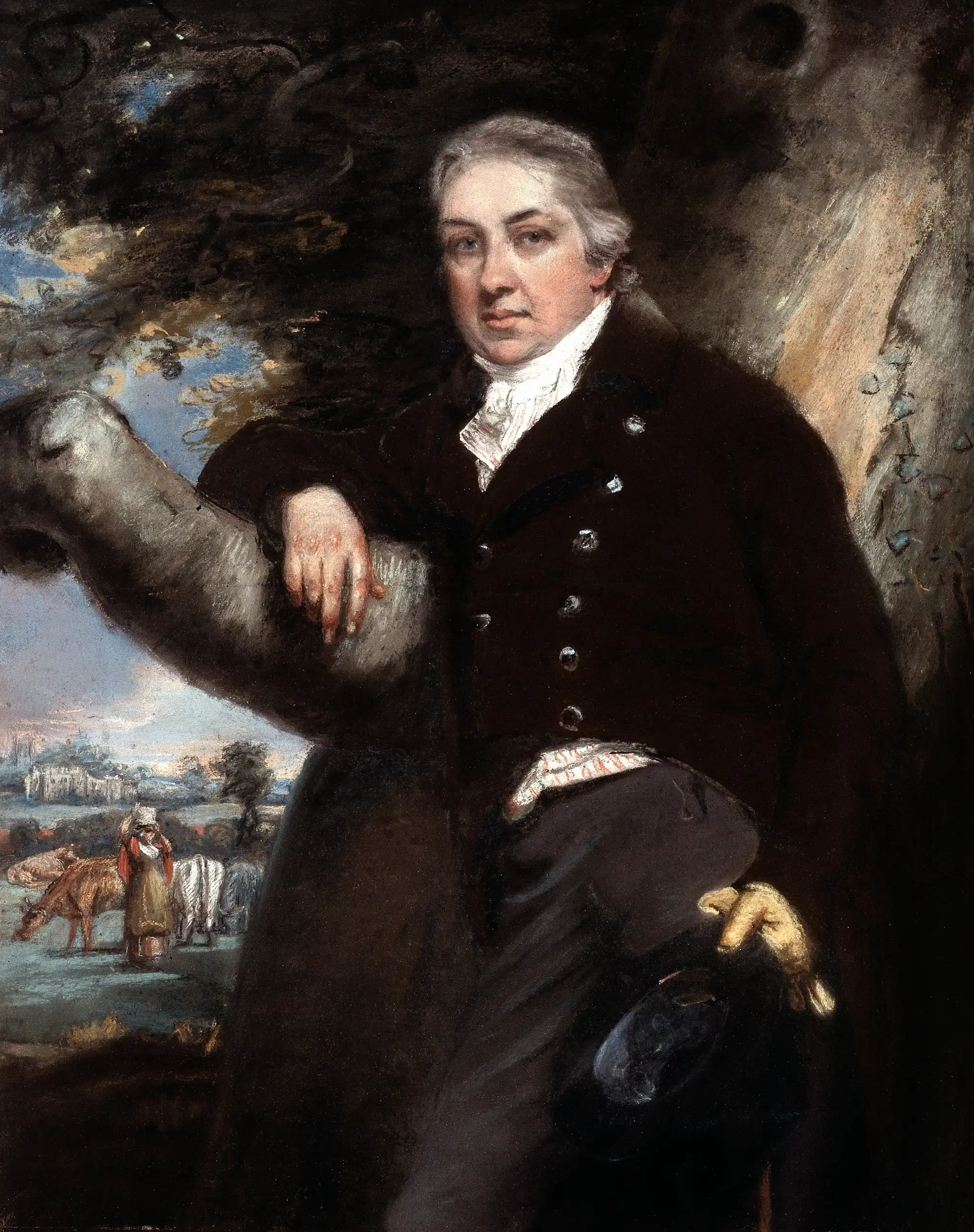
Edward Jenner
 United Kingdom
physician•naturalist•biologist
Also known as: Father of Immunology
Birthday
May 17, 1749
Birth Sign
Taurus
Birthplace
Berkeley, Gloucestershire, England
Age
Died at 73
About
Edward Jenner was an English physician and scientist who created the world's first vaccine, the smallpox vaccine, in 1796. He is often called the father of immunology, and his work is estimated to have saved more lives than that of any other single person. In Jenner's time, smallpox killed around 10 percent of the global population, rising to 20 percent in crowded towns and cities. The terms vaccine and vaccination come from Variolae vaccinae, the Latin phrase Jenner coined for cowpox pustules, which he used in the 1798 title of his Inquiry into the Causes and Effects of the Variolae Vaccinae.
Beyond medicine, Jenner was among the first modern scholars to describe brood parasitism in the cuckoo, a behavior Aristotle had also noted in his History of Animals. His scientific standing was recognized by election to the Royal Swedish Academy of Sciences in 1802 and as a corresponding member of the French Academy of Sciences in 1803. In 2002 the BBC named him one of the 100 Greatest Britons. Jenner died on 26 January 1823 at age 73, leaving a legacy that the World Health Organization credited when it declared smallpox eradicated in 1980.
Early Life & Background
Edward Jenner was born on 17 May 1749 in Berkeley, Gloucestershire, the eighth of nine children of the Reverend Stephen Jenner, the local vicar, and his wife Sarah Head, daughter of a clergyman. He was baptised on 17 May 1749. Two of his older brothers studied divinity at Oxford. Both his parents died by the time he was 21, and he was raised largely by an older brother and sister. He was educated at the local grammar school in Berkeley, the Rev. Dr Washbourn's school, where he developed an early interest in natural history and collected fossils and bird nests.
At 14 he was apprenticed for seven years to a local surgeon, Daniel Ludlow of Sodbury, near Bristol. In 1770, aged 21, he went to London and became a pupil and house resident of the surgeon John Hunter at St George's Hospital, and also trained under the anatomist William Hunter. In 1772 he returned to Berkeley to practice as a country doctor and surgeon, and in 1773 became a member of the Company of Surgeons, later the Royal College of Surgeons. He never used the title Dr in practice, preferring Mr as a surgeon.
In 1788 he was elected a Fellow of the Royal Society for his paper on the anatomy of the cuckoo and its brood parasitism, a paper he had presented after being encouraged by John Hunter. That same year, on 6 March, he married Catherine Kingscote at St Mary's Church, Berkeley.
Career Growth
On 14 May 1796 Jenner performed the first vaccination, inoculating the eight-year-old James Phipps with cowpox matter taken from the hand of dairymaid Sarah Nelmes, then variolating the boy weeks later to show he was immune. He tried to publish in 1797 but the Royal Society rejected his paper; he then self-published his 75-page An Inquiry into the Causes and Effects of the Variolae Vaccinae in September 1798. Further editions and papers followed in 1799 to 1801. He coined the terms vaccine and vaccination from Variolae vaccinae.
In 1799 the Royal College of Physicians of Edinburgh awarded him a diploma (FRCPE), and in 1813 Oxford granted him an honorary MD. In 1803 the Royal Jennerian Society was founded in London to promote vaccination; in 1808 the government took over vaccination funding and appointed Jenner as the first director of the National Vaccine Establishment, though his role was largely honorific. In 1802 and 1807 Parliament granted him £10,000 and £20,000 respectively in recognition of his work. In 1815 his wife died, and in 1821 he was appointed physician to King George IV, then Prince Regent, and served as mayor of Berkeley and justice of the peace.
Career Timeline
Public Image & Style
Edward Jenner's public image is that of the country doctor who changed the world. He was a physician and naturalist, a Fellow of the Royal Society, and a man who preferred the title Mr to Dr. His reputation rests on the 1796 vaccination of James Phipps and the 1798 Inquiry, which made him the father of immunology. Statues of him stand in Gloucester Cathedral and Kensington Gardens, and his portrait hangs in the National Portrait Gallery. His fame is historical rather than contemporary, and the World Health Organization declared smallpox eradicated in 1980, crediting his vaccine. In 2002 the BBC named him one of the 100 Greatest Britons.
Fame & Fandom (iFAMOUS Rankings)
iFANN has not yet collected fame data for Edward Jenner. The iFANN Global Fame Rankings, which measure worldwide attention across public signals such as Wikipedia readership and global search interest, do not currently include him. He is not on the September 2026 iFAMOUS Rankings flagship list. His fame is historical rather than contemporary: he is known as the father of immunology, and the WHO declared smallpox eradicated in 1980, crediting his vaccine. There is no formal fandom or fanbase name. His legacy is carried by the Jenner Museum, the Jenner Institute at Oxford, and the Edward Jenner Institute for Vaccine Research, founded in 1996. Modern explainers from Britannica and the BBC continue to revisit his cowpox experiments and the 1796 inoculation of James Phipps.
Interesting Facts and Legends
The most retold story is the 1796 vaccination of James Phipps using cowpox from Sarah Nelmes, which is verified and documented. Folklore holds that a dairymaid told him I shall never have smallpox for I have had cowpox, a line popularly attributed but not verifiably documented. The story that he tested the vaccine on his own son is sometimes repeated but is not well supported. His home, the Chantry, now houses the Jenner Museum, including the thatched Temple of Vaccinia summerhouse where he vaccinated the poor. Notable quotes attributed to him include his observation that the deviation of man from the state in which he was placed by nature seems to have proven to him a prolific source of diseases, and his remark that I shall not be surprised if the practice of vaccination should in the course of time be the means of extirpating the smallpox from the world.
Notable Quotes
“I shall not be surprised if the practice of vaccination should in the course of time be the means of extirpating the smallpox from the world.”
“The deviation of man from the state in which he was placed by nature seems to have proven to him a prolific source of diseases.”
Family & Personal Life
Jenner married Catherine Kingscote on 6 March 1788 at St Mary's Church, Berkeley. She was the daughter of Anthony Kingscote of Kingscote, Gloucestershire. They had three children: Edward, born 1789, who died of tuberculosis at 21; Catherine, born 1794; and Robert, born 1797, who died young. Catherine died of tuberculosis on 13 September 1815. Jenner was widowed at the time of his death in 1823. His parents were the Reverend Stephen Jenner and Sarah Head; he was the eighth of nine children and was raised largely by an older brother and sister after both parents died by the time he was 21.
Notable Connections
John Hunter, his mentor at St George's Hospital; William Hunter, the anatomist under whom he trained; James Phipps, the eight-year-old boy who received the first vaccination in 1796; Sarah Nelmes, the dairymaid whose cowpox provided the vaccine material; and his wife Catherine Kingscote. He corresponded with the Earl of Berkeley and various physicians.
Relationships & Dating History
Edward Jenner's romantic life is documented through his marriage to Catherine Kingscote on 6 March 1788 at St Mary's Church, Berkeley. She was the daughter of Anthony Kingscote of Kingscote, Gloucestershire. They had three children: Edward, born 1789, who died of tuberculosis at 21; Catherine, born 1794; and Robert, born 1797, who died young. Catherine died of tuberculosis on 13 September 1815. Jenner was widowed at the time of his death in 1823. There are no other documented public romantic relationships.
- MarriedCatherine Kingscote1788 - 1815Married on 6 March 1788 at St Mary's Church, Berkeley; she died of tuberculosis on 13 September 1815.
Death & Aftermath
Died
January 26, 1823 (aged 73)
Death Place
Berkeley, Gloucestershire, England
Cause of Death
Stroke (apoplexy)
Edward Jenner died at his home, the Chantry, in Berkeley, Gloucestershire, on 26 January 1823, at the age of 73. He had suffered a stroke in 1822 and never fully recovered; the cause of death is generally given as a further stroke, or apoplexy, though primary confirmation is thin. He was buried in the family vault at St Mary's Church in Berkeley.
His estate was modest, and his son Robert inherited the property. Commemoration came later and centred on the places themselves. Dr Jenner's House museum now occupies his former home, including the thatched Temple of Vaccinia summerhouse where he vaccinated the poor. The building was placed on the Heritage at Risk Register and underwent major restoration, reopening on his birthday. News from 2026 reported that the site of the first smallpox vaccinations reopened after restoration work in May 2026. Recent explainers from Britannica and elsewhere continue to revisit his cowpox experiments and the 1796 inoculation of James Phipps.
The World Health Organization declared smallpox eradicated in 1980, crediting Jenner's vaccine. The Edward Jenner Institute for Vaccine Research, founded in 1996, and the Jenner Institute at Oxford bear his name.
Net Worth (Estate Value)
$5 Million
iFANN Editorial Team estimate
Edward Jenner died in 1823 with a modest estate, and his son Robert inherited the property. There is no modern net worth figure for a man who lived before the era of celebrity finance. iFANN currently estimates the value of his estate and commemorative legacy at approximately $5 million, a figure that reflects the historical properties associated with him rather than any personal fortune. His former home, the Chantry, now houses the Jenner Museum, including the thatched Temple of Vaccinia summerhouse. The site was placed on the Heritage at Risk Register and underwent major restoration, reopening on his birthday. The site of the first smallpox vaccinations reopened after restoration work in May 2026. His name is carried by the Edward Jenner Institute for Vaccine Research, founded in 1996, and the Jenner Institute at Oxford.
Awards Won (5)
Edward Jenner was elected a Fellow of the Royal Society in 1788 for his paper on the cuckoo. He received a diploma from the Royal College of Physicians of Edinburgh in 1799, an honorary MD from Oxford in 1813, and was elected to the Royal Swedish Academy of Sciences in 1802 and the French Academy of Sciences in 1803. Parliament granted him £10,000 in 1802 and £20,000 in 1807.
1788 · Fellowship
Paper on the anatomy of the cuckoo
1799 · Diploma
Medical practice
Known For
Smallpox vaccine
1796 · Creator
An Inquiry into the Causes and Effects of the Variolae Vaccinae
1798 · Author
Brood parasitism in the cuckoo
1788 · Researcher
Keywords
Sources
Quick Facts
- Profession
- physician, naturalist, biologist
- Born
- May 17, 1749
- Birthplace
- Berkeley, Gloucestershire, England
- Died
- January 26, 1823
- Death Place
- Berkeley, Gloucestershire, England
- Gender
- Male
- Spouse
- Catherine Kingscote
- Birth Sign
- Taurus
Personal Details
- Full Name
- Edward Jenner
- Spouse
- Catherine Kingscote
- Children
- Edward, Catherine, Robert
- Education
- St George's Hospital, London; apprentice to Daniel Ludlow; member of the Company of Surgeons (1773)
Frequently Asked Questions
What is Edward Jenner most famous for?
What did Edward Jenner discover?
Who invented the first vaccine?
In what year did Jenner discover the vaccine?
What was Edward Jenner's cause of death?
Similar People
Join the community
fans discussing